
Shorthorn sculpin
Shorthorn sculpin is a cottid of the eastern and western North Atlantic and the Arctic, ranging from Greenland and Iceland to the Bay of Biscay and from James Bay to New York. It is demersal and unusually tolerant, occupying rocky, sandy and muddy ground from the surface to 451 m in polar and brackish water. The species reaches 78 cm and 18 years, with a common length near 24 cm.
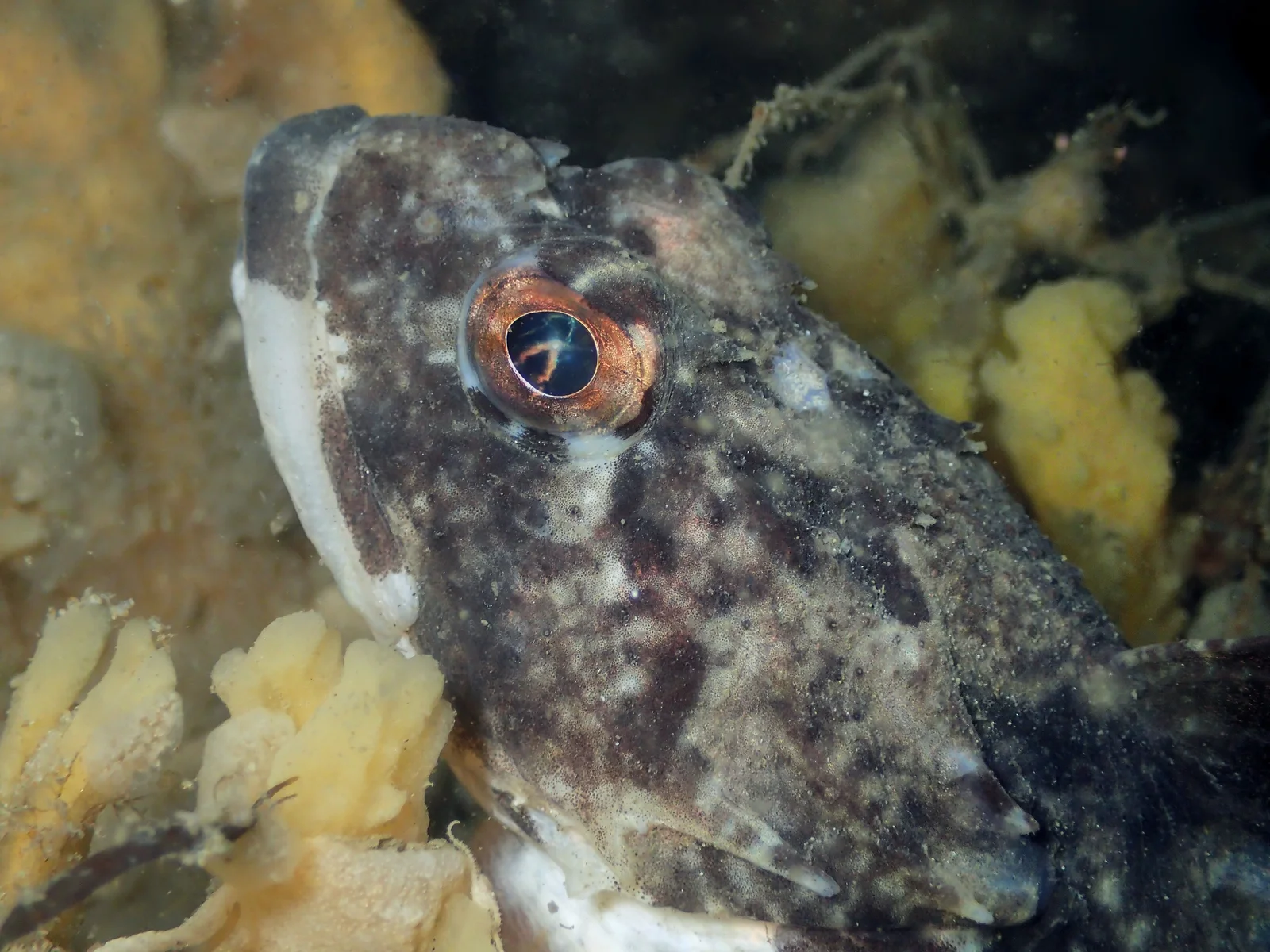
Shorthorn sculpin is a cottid of the eastern and western North Atlantic and the Arctic, ranging from Greenland and Iceland to the Bay of Biscay and from James Bay to New York. It is demersal and unusually tolerant, occupying rocky, sandy and muddy ground from the surface to 451 m in polar and brackish water. The species reaches 78 cm and 18 years, with a common length near 24 cm. It is landed commercially and kept in public aquariums, assessed Least Concern, but no gamefish use is recorded.
Identification
Wikipedia gives the species two working names, shorthorn sculpin and bull-rout, then lists Arctic sculpin, daddy sculpin, father-lasher, goat sculpin, Greenland sculpin and several other regional variants. FishBase carries a comparably long list by country, and its Chinese name is . Few species arrive with so many aliases and so little agreement about which one is primary.
This one has a full fin formula: dorsal spines 7–11, dorsal soft rays 13–19, anal spines zero, anal soft rays 9–15, vertebrae 34–39. That set is enough to separate the fish from its congeners at a bench.
The size table needs care. Length at first maturity is 17.8 cm, range 15–30 cm; maximum length is 78.0 cm TL; common length is 24.0 cm SL; maximum age is 18 years; no weight is given. The common figure is the smaller number, but it is on a different scale from the maximum and should not be read as a fraction of it. Maturity begins at 15–30 cm, well below the maximum, and an 18-year life is long for a sculpin.
Habitat and distribution
The distribution text runs from the south-east coast of Greenland, Jan Mayen and Iceland to the British Isles and south to the Bay of Biscay, plus the North Sea, Baltic, Spitsbergen and the southern Barents Sea including the White Sea; western Atlantic from James Bay in Canada to New York; and the Arctic Ocean. Twenty-two country rows are all native, with no introduced entry.
It is recorded as marine and brackish, demersal, from 0 to 451 m, polar, 80°N–40°N and 95°W–60°E. "Polar" is the climate category, and it is the right one for a fish that reaches the White Sea and James Bay. The depth range starts at the surface and ends at 451 m, so the species spans shore water and slope water in the same record.
Four habitat keywords are carried — rocky, sandy, muddy and deep — and four diet groups: crustaceans, fishes, algae and worms. Four bottom types is broad tolerance, explaining a range from Baltic brackish water to Arctic coasts.
GBIF returns 45 rows: 22 without a country code, Belgium 6, the Netherlands 6, Canada 2, France 2, Sweden 2, and Denmark, the United Kingdom, Ireland, Norway and Poland one each. Of those rows, three are native and 42 carry no means. iNaturalist holds 1,323 observations, consistent with a shallow-water fish over several bottom types.
Season and fishing approach
Two spawning rows are recorded. One is unspecified in place and runs December to March; the other is from Tromsø in Norway and runs January to March. Together they place spawning in winter, the Norwegian record confirming the early part.
The use line is commercial, with public aquariums noted and no gamefish flag. It is landed, kept for display and not designated a rod-and-line target.
Depth begins at zero and the habitat includes rocky, sandy and muddy ground, so the fish is available from shore; method, bait and regulation are all absent.
Edibility and regulations
The commercial flag is the only food-related field. Neither FishBase nor Wikipedia adds a culinary note, a market size or a handling instruction. The page can say the fish is landed commercially and cannot say what is done with it.
IUCN lists the species as Least Concern, assessed 29 November 2023. No size, season or bag rule is captured. A commercial landing does not create an angling rule, and an angler should check the local regulation rather than infer one from the fisheries flag.
Where these facts come from
Check these pages before you rely on a size, range or protection status.
- FishBase — Myoxocephalus scorpius — FishBase · T2
- GBIF — Myoxocephalus scorpius occurrence records — GBIF · T2
- IUCN Red List — Myoxocephalus scorpius — IUCN · T1
- Photo record — iNaturalist — iNaturalist · T3
Fish in the same water
These fish live in the same place.
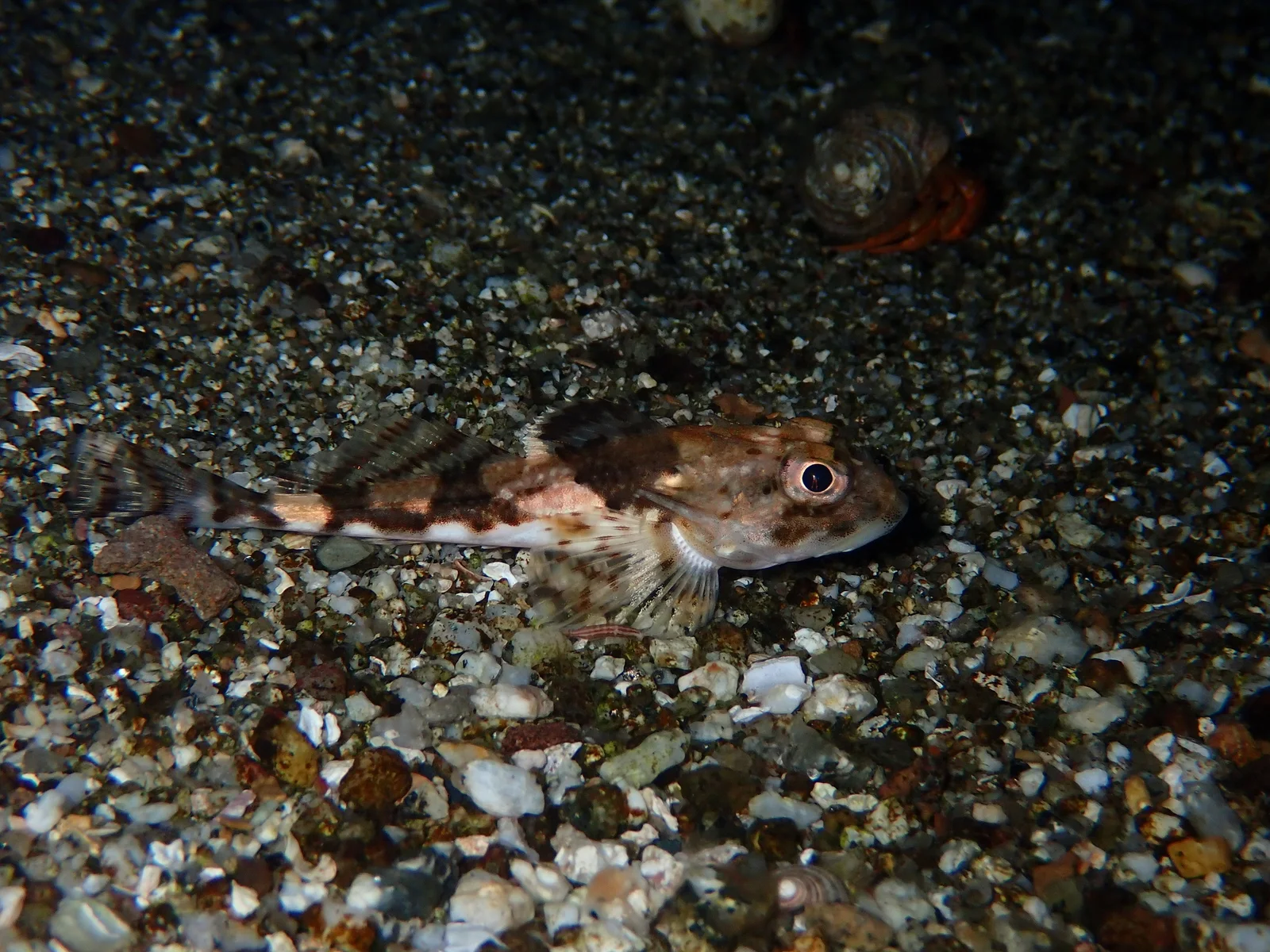
Longhorn sculpin
- Family
- Cottidae
- Depth
- 1–190 m
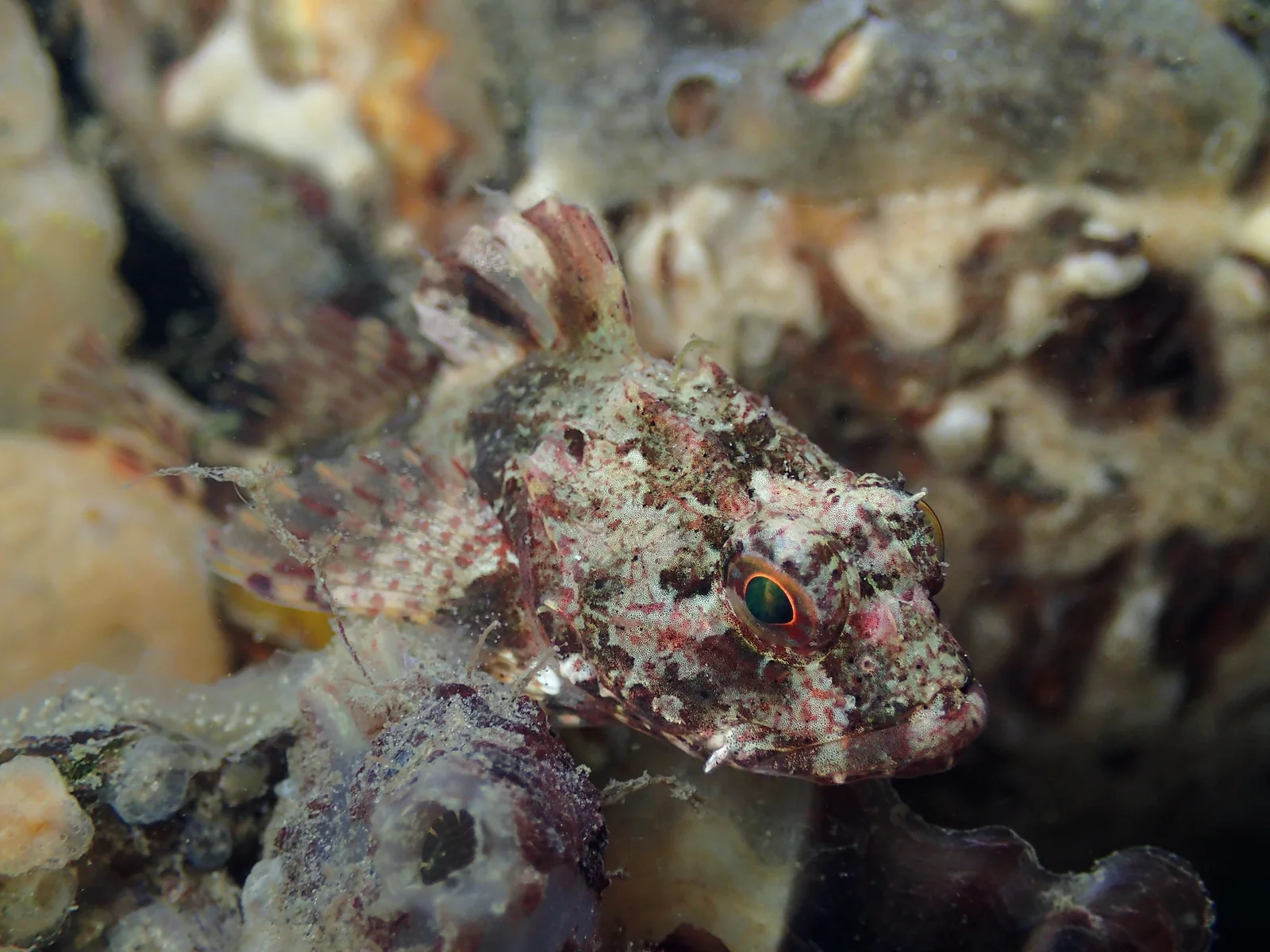
Longspined bullhead
- Family
- Cottidae
- Depth
- 0–200 m

Acoupa weakfish
- Family
- Sciaenidae
- Depth
- 1–20 m
- Season
- Jan, Feb, Mar, Apr, May, Jun, Jul, Aug, Sep, Oct, Nov, Dec
Guides for this water
Technique, gear and safety guides that fit Shorthorn sculpin.