
Longspined bullhead
The longspined bullhead is a cottid, one of the bottom-dwelling sculpins whose names point to a spiny head. It ranges through the eastern Atlantic from Murmansk and Iceland to Portugal, entering the Baltic and reaching the northern Mediterranean, and is recorded from the shoreline down to 200 m. Most fish are around 12 cm; males reach 17.5 cm standard length and females a little more.
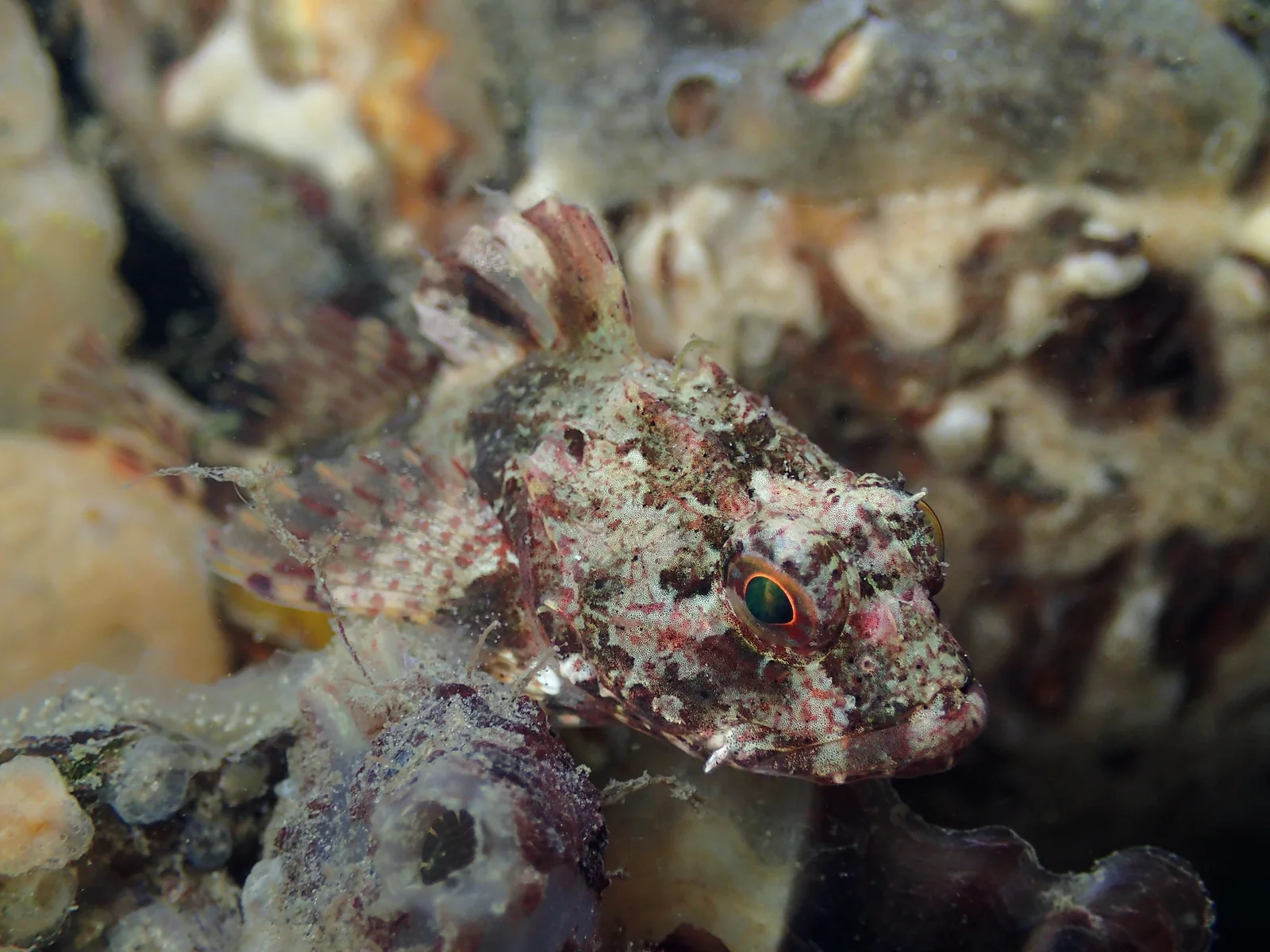
The longspined bullhead is a cottid, one of the bottom-dwelling sculpins whose names point to a spiny head. It ranges through the eastern Atlantic from Murmansk and Iceland to Portugal, entering the Baltic and reaching the northern Mediterranean, and is recorded from the shoreline down to 200 m. Most fish are around 12 cm; males reach 17.5 cm standard length and females a little more. It is of no interest to commercial fisheries and is not a sport target, but it is a familiar rockpool and pier capture, and its spine-covered head makes careful handling worthwhile.
Identification
The names do more work than the anatomy here. FishBase lists Fatherlasher, Longspined bullhead as the FAO form, Longspined sea-scorpion, Lucky proach, Rock sculpin and Sea scorpion; Wikipedia opens with "the long-spined bullhead, also known as the long-spined sea-scorpion, and the long-spined scorpion fish". Chinese is . Both names are shared across cottids, so either one has to be qualified.
Wikipedia places the fish in the sculpin family Cottidae and calls it a coastal species of European marine waters. The capture agrees on family but adds no anatomy: dorsal, anal and vertebral counts, body shape and cross-section are all blank. Identification therefore rests on the head and the spination the names imply, neither described here.
The size line is the one place where real numbers appear, and it mixes two measuring bases. Males reach 17.5 cm SL, females 25.0 cm SL, while the common length is 12.0 cm TL. Females grow substantially larger than males, but the common figure is on a different basis from the maxima. No conversion factor is captured, so the page reports both bases as they stand.
Habitat and distribution
The range runs from Iceland and the Shetlands along the eastern Atlantic from Murmansk south to Portugal, into the Baltic as far as the Gulf of Finland, and along the northern Mediterranean coast to the Gulf of Genoa. Twenty-six country rows are all native, with no introduced entry.
The environment line is marine and brackish, demersal, non-migratory, depth 0–200 m, temperate, 72°N–35°N and 24°W–33°E. Non-migratory is the operative word: a fish that stays put, so a shore observer can expect it in the same rocky ground across seasons. Habitat keywords are rocky and coastal, and the diet is fishes, algae and worms.
GBIF returns 20 rows: six without a country code, Belgium 4, France 2, Norway 2, Sweden 2, and Denmark, the United Kingdom, Ireland and Poland one each. Three rows are marked native and 17 carry no means. iNaturalist holds 1,557 observations, a sign of how often people meet the fish in shallow water.
Season and fishing approach
The spawning field is null: no rows, no months. Wikipedia supplies no season either, and no temperature threshold is captured. For a non-migratory coastal fish the absence matters less: it is present all year. What the page cannot say is when it breeds.
The use line is of no interest for fisheries, with public aquariums noted and no gamefish flag. The fish is neither a commercial nor an angling target, but one that public aquariums keep and people photograph. The 1,557 iNaturalist records fit that profile better than they fit a fishery.
The depth range starts at zero and the habitat is rocky and coastal, so the fish is reachable from shore. The capture gives no method, no bait and no tide advice.
Edibility and regulations
The record carries no food use at all: fisheries are of no interest, and there is no culinary note in either the database fields or Wikipedia. For a cottid of this size that is consistent with its absence from markets, and the page should not invent a kitchen use.
IUCN lists the species as Least Concern, assessed 17 October 2013. No size, season or bag rule is captured. Neither eaten nor targeted, it is unlikely to carry a specific angling rule, though general local rules apply; live capture for display is regulated separately.
Where these facts come from
Check these pages before you rely on a size, range or protection status.
- FishBase — Taurulus bubalis — FishBase · T2
- GBIF — Taurulus bubalis occurrence records — GBIF · T2
- IUCN Red List — Taurulus bubalis — IUCN · T1
- Photo record — iNaturalist — iNaturalist · T3
Fish in the same water
These fish live in the same place.
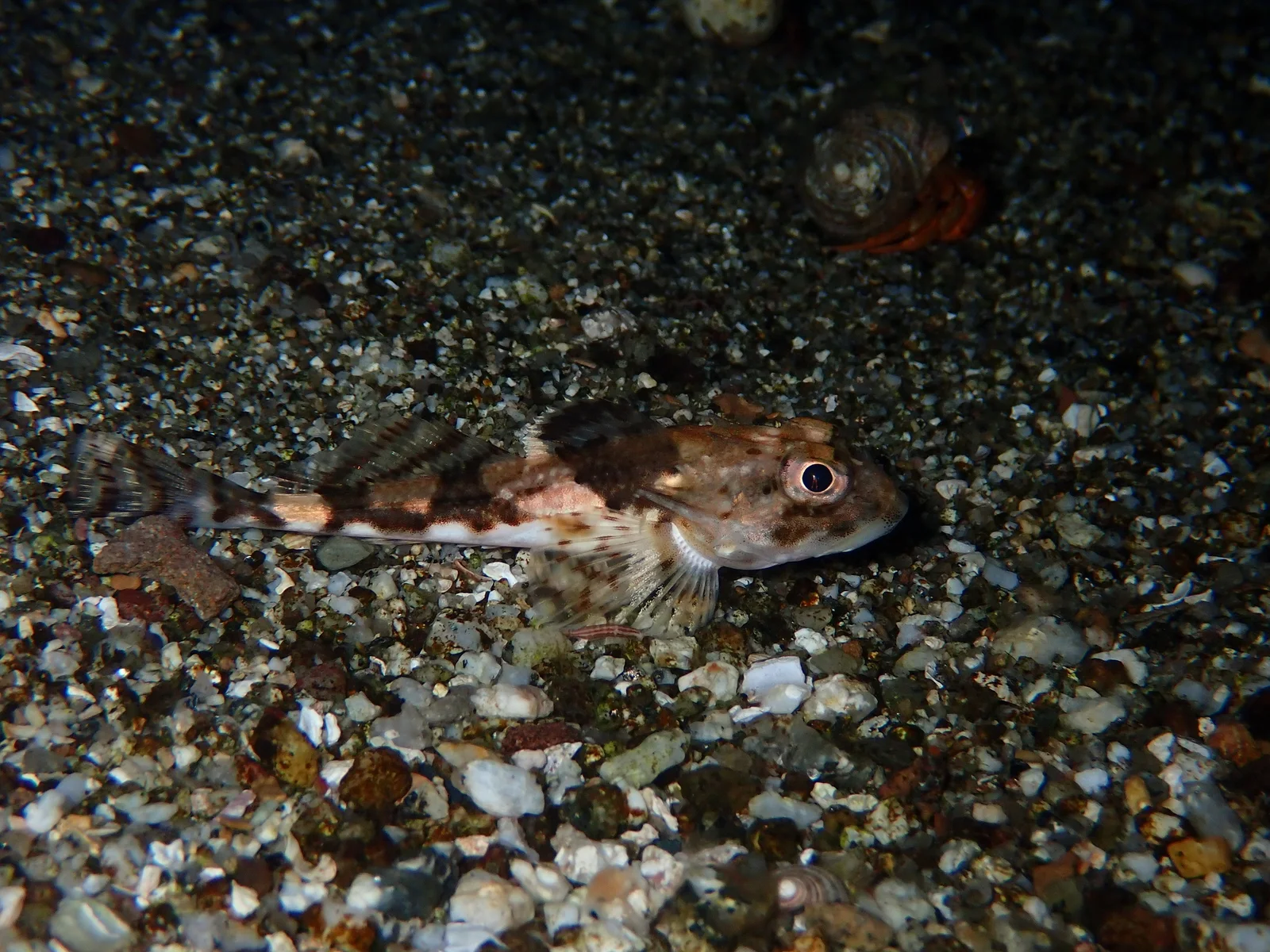
Longhorn sculpin
- Family
- Cottidae
- Depth
- 1–190 m
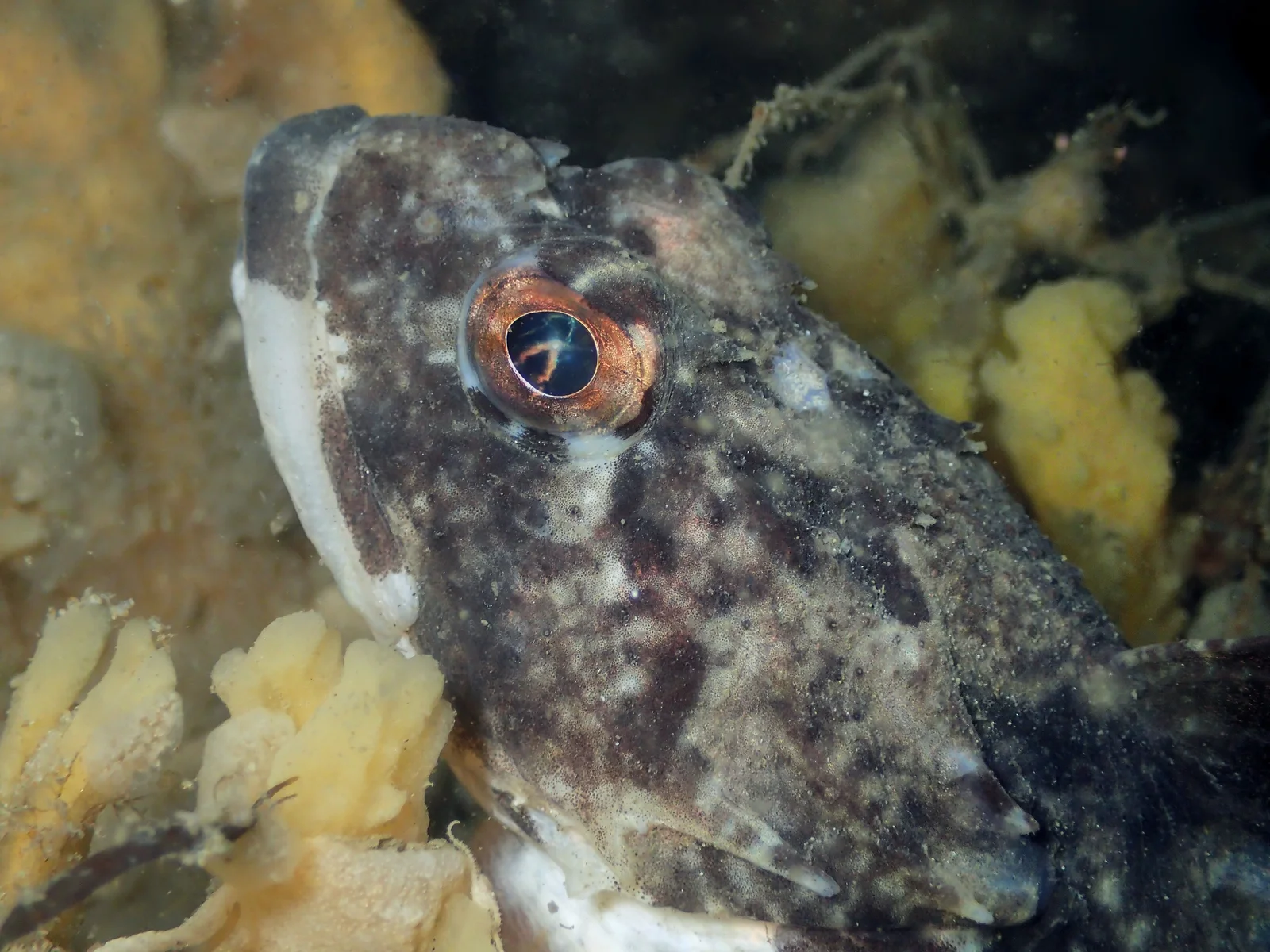
Shorthorn sculpin
- Family
- Cottidae
- Depth
- 0–451 m
- Season
- Jan, Feb, Mar, Dec

Acoupa weakfish
- Family
- Sciaenidae
- Depth
- 1–20 m
- Season
- Jan, Feb, Mar, Apr, May, Jun, Jul, Aug, Sep, Oct, Nov, Dec
Guides for this water
Technique, gear and safety guides that fit Longspined bullhead.