
Broadnose sevengill shark
Broadnose sevengill shark has seven pairs of gill slits, a wide blunt head, a single dorsal fin set far back and dark spots over a grey-brown body. It is recorded from South Africa and Namibia between the surface and 570 m. It reaches 300 cm TL with a common length of 150 cm, about 107 kg, maturity near 200 cm and a maximum age of 49 years. Shore casting and boat bottom fishing are the methods listed.
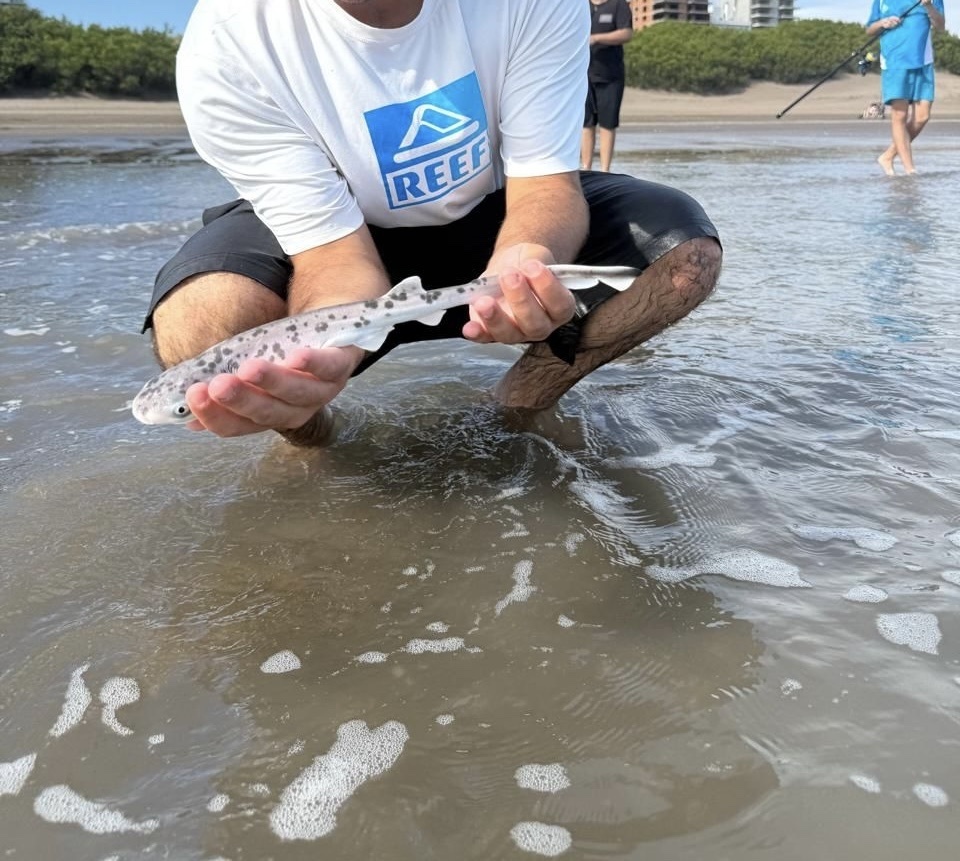
Notorynchus cepedianus is a hexanchid shark with seven pairs of gill slits, a wide blunt head, a single dorsal fin positioned far back and dark spots scattered over a grey-brown body. FishBase gives a maximum of 300 cm total length, a common length of 150 cm, about 107 kg, maturity near 200 cm and a maximum age of 49 years. It is recorded from 0 to 570 m, usually shallower than 80 m, and preys on sharks, rays, chimaeras, bony fishes, dolphins, seals, egg cases and carrion. IUCN lists it as Vulnerable.
Identification
A cow shark with seven pairs of gill slits, the only regional sevengill besides the sharpnose. The head is broad and blunt, the body heavy, and the single dorsal fin sits far back near the caudal fin rather than over the back.
Colour is grey-brown above with scattered small dark spots and a pale belly. The mouth is wide and ventral, with comb-like upper teeth and saw-like lower teeth.
FishBase gives 300 cm total length, a common length of 150 cm, about 107 kg, maturity near 200 cm and a maximum age of 49 years. A 3 m fish is a genuine handling problem on shore.
Distribution and Habitat
Widely distributed in temperate seas of both hemispheres. In southern Africa it is recorded from Namibia around the Cape and east along the South African coast.
Depth is recorded from the surface to 570 m, but usually shallower than 80 m. It uses shallow bays, sandy flats and inshore channels.
That bay habit is why shore and small-boat anglers meet it, and why encounters cluster in bays rather than on open coast.
Habits and Diet
An opportunistic predator and scavenger. FishBase lists sharks, rays, chimaeras, bony fishes, hagfish, dolphins, seals, egg cases, snails and carrion — about as broad as a shark diet gets.
It hunts in shallow water, including at night, and uses its broad head and heavy body to subdue prey rather than chase it over distance.
Growth is slow and maturity comes at about 200 cm, so removing a large female takes a long-lived breeder out of a bay.
Fishing Methods and Gear
Shore shark fishing from a sandy bay: a whole sardine, mackerel or fish head on a large hook, a heavy wire trace and enough lead to hold bottom. Fishing is mostly at night around the flood tide.
From a boat, a slow drift over sand with a fresh fish bait beats anchoring. Let the fish take and turn before setting the hook.
Use a 12 ft shore rod or a short boat rod rated well above the fish's weight, 50 lb or heavier braid, and a wire trace. Plan for release: a wet towel over the eyes, no dragging over sand, and the fish back in the water quickly.
Seasonal Window
Present year-round. In southern African bays it is most often met in the warmer months when it moves shallow, but winter captures occur too.
Night and the middle of the flood tide are the strongest shore combination; daytime fish are usually deeper.
FishBase gives no monthly spawning season for the southern African population, so none is claimed here.
Edibility and Handling
Edible but not prized: soft flesh, usually used for soup or dried, and worth more alive than on a plate.
Handle with care. The teeth cut through gloves and the tail can injure anyone standing behind the fish. Keep hands clear of the mouth and support the body behind the pectorals.
Given the Vulnerable status, the default is release.
Regulations and Conservation
South Africa: recreationally taken cartilaginous fishes are limited to one per person per day per species, and a recreational permit is required. No separate cow-shark size limit appears in the recreational linefish table.
Namibia: the species is covered by Namibian fisheries rules on recreational and commercial shark capture, which differ from South African rules; confirm the recreational provision with the Ministry of Fisheries and Marine Resources.
IUCN: Vulnerable (A2bd), assessed 2020.
How to catch it
Shore casting
Boat bottom fishing
Release first
Where these facts come from
Check these pages before you rely on a size, range or protection status.
- GBIF — Notorynchus cepedianus occurrence records — GBIF · T2
- IUCN Red List — Notorynchus cepedianus — IUCN · T1
- Photo record — iNaturalist — iNaturalist · T3
Fish in the same water
These fish live in the same place.
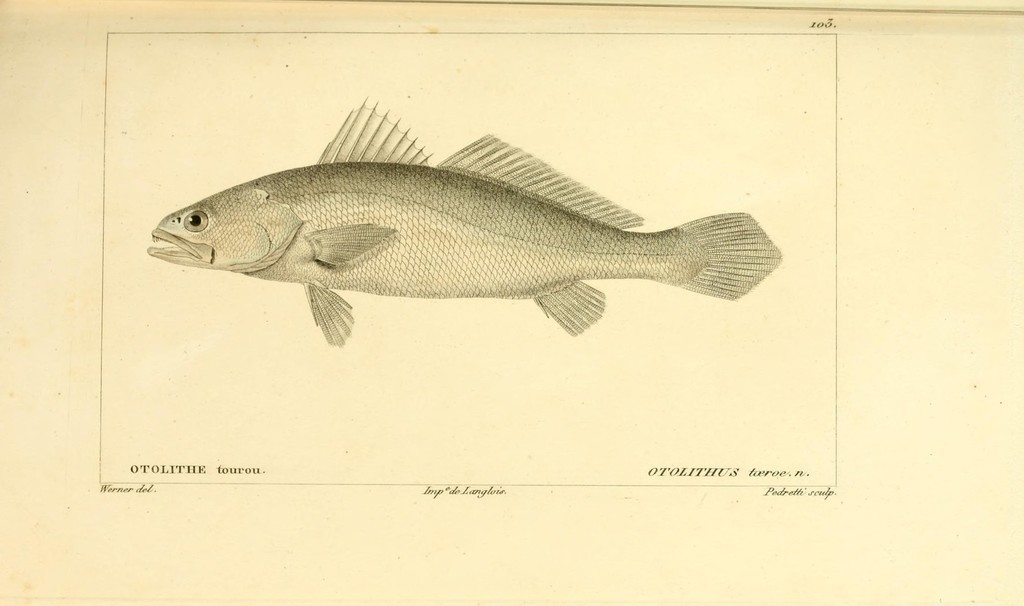
Acoupa weakfish
- Family
- Sciaenidae
- Depth
- 1–20 m
- Season
- Jan, Feb, Mar, Apr, May, Jun, Jul, Aug, Sep, Oct, Nov, Dec
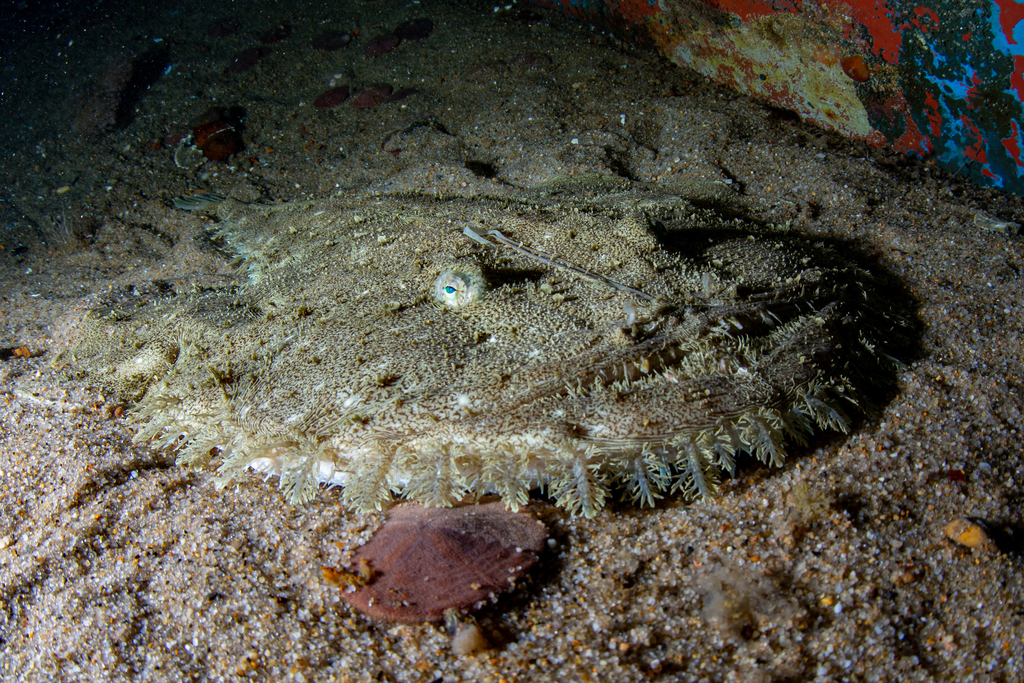
American angler
- Family
- Lophiidae
- Depth
- 0–800 m
- Season
- Mar, Apr, May, Jun

American eel
- Family
- Anguillidae
- Depth
- 0–464 m
- Season
- Jan, Feb, Mar, May, Jun, Jul
Guides for this water
Technique, gear and safety guides that fit Broadnose sevengill shark.