
Saddled seabream
Saddled seabream is a small sparid of the eastern Atlantic and Mediterranean, from the Azores and Bay of Biscay to Angola, including Madeira, Cape Verde and the Canaries. It lives shallower than 30 m in subtropical water, reaches 36.6 cm TL and 0.525 kg, and feeds on fish and algae. It is present year-round.
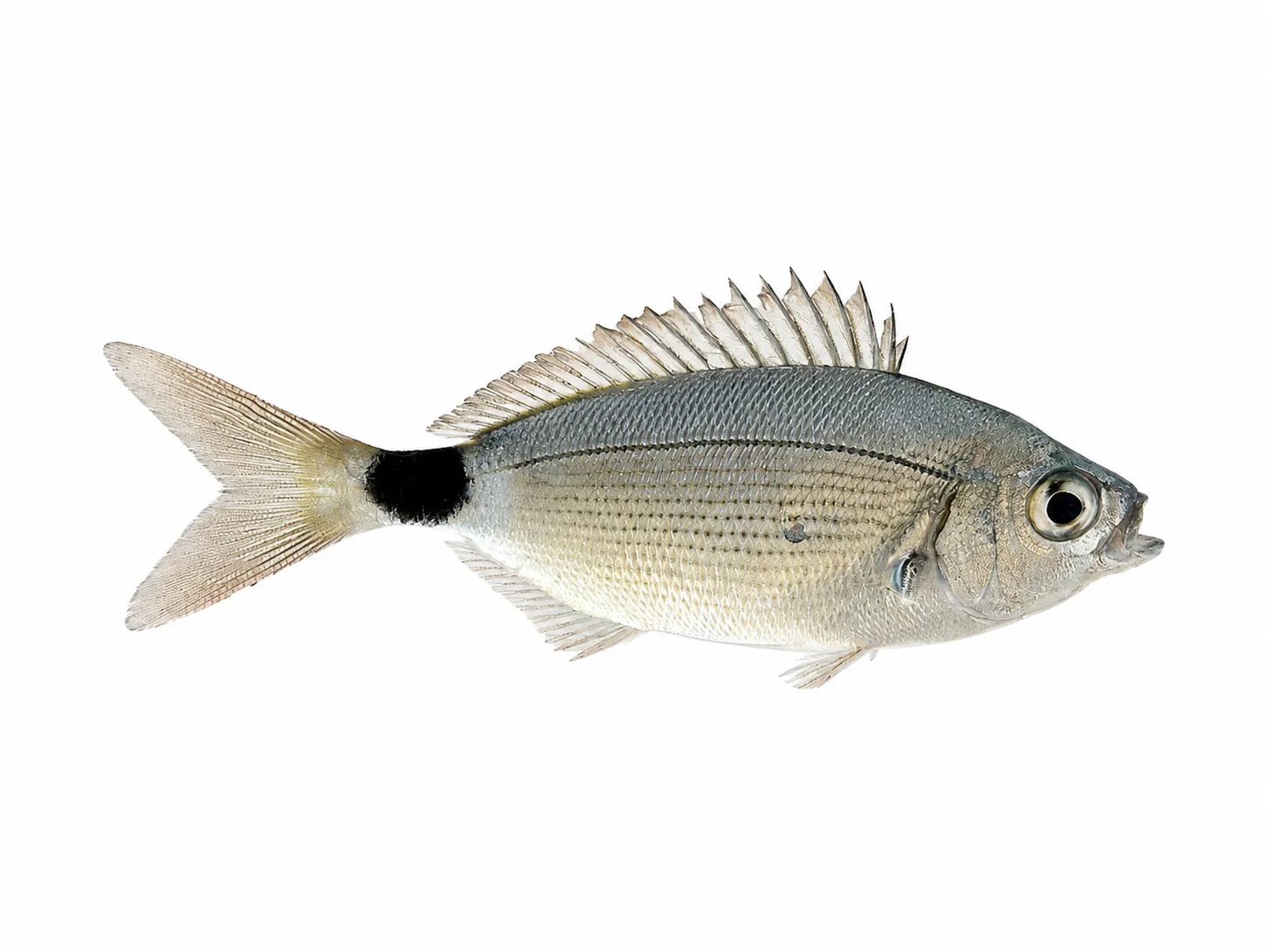
Saddled seabream (Oblada melanura) is a fish of the family Sparidae. FishBase gives its range as: Eastern Atlantic: from Pico Island, Azores to Bay of Biscay, the Mediterranean, and from the Strait of Gibraltar to Angola, including Madeira, Cape Verde and the Canary Islands. It is recorded shallower than 30 m, in subtropical water. The recorded maxima are 36.6 cm TL, 0.525 kg. Diet includes fishes and algae. IUCN status: Least Concern (LC). Chinese name: .
One genus, one species, two endings
The genus Oblada is listed with a single species, melanura. The FishBase page itself uses melanura, while the common-name and country-list URLs under the same record are built with melanurus.
The two strings are a form of one name rather than two taxa, but nothing on the page says so. A reader comparing a database export with a web address will meet both and has no way to know from the strings alone that they are one fish. The lesson is narrow and useful: when a name search returns nothing, try the other ending before concluding the species is absent.
Blacktail is another fish
This site calls the species Blacktail seabream. In FishBase's English table, Blacktail without a qualifier is the name attached to Diplodus capensis, a southern African sparid that is also covered in this batch. For O. melanura, FishBase offers Saddle bream, Saddled bream and Saddled seabream instead.
So a report that says "blacktail" can mean a Mediterranean fish or a South African fish, and the common name does not distinguish them. The qualifier "seabream" helps only if the reader already knows which coast the report came from. This is exactly the situation in which a common name travels further than the evidence behind it.
Saddle, saddled, seabream
The FishBase English entries are Saddle bream, Saddled bream and Saddled seabream, and the FAO name is Saddled seabream. iNaturalist prefers Saddled Seabream. The words describe a saddle-shaped mark, and they describe it consistently across sources.
Consistency is not accuracy. Three names that all say "saddle" tell you what the person naming the fish noticed, not what separates it from the other sparids on the same reef. The record carries no morphology section, so the name is doing work the description cannot back up. An identification that rests on "it has a saddle" rests on a naming convention.
counted three ways
FishBase's Chinese table gives in simplified and traditional forms. The expansion list that brought this species onto the site uses . And is the Chinese name of Diplodus capensis, the same fish that owns the English Blacktail.
Two genera, one colour phrase, three Chinese strings. The phrase is accurate for both fish in the sense that both have dark tail regions, which is precisely why it cannot sort them. A Chinese-language report and an English-language report can agree on "black tail" and still be describing different species on different sides of Africa.
Why the binomial is the only sort key
The country table runs to 47 entries, from Albania and Algeria through Lebanon and Libya to Slovenia and Syria, with Cabo Verde, Madeira and the Canary Islands in the Atlantic part of the range. Across that many jurisdictions, the local name changes at almost every border.
The binomial does not. Oblada melanura is the same string in a Turkish market, a Tunisian landing sheet and an Atlantic angling log, which is why the distribution sentence can run from the Azores to Angola without a translation step. Names are for conversation; the binomial is for comparison.
GBIF's eight declarations show where the species is actually pinned to a coast: Spain's Doñana checklist, which also marks breeding, the Greek EEZ and Israel's eastern Mediterranean have country names, while a Swedish entry is marked irregular and a second Swedish record is a plain EEZ presence. Wikipedia's revision 1354742880 adds the commercial fact — it calls the fish "an important food fish within its range". For a cook or an angler, that means size and bag rules are the ones to check locally, not a species-wide recommendation; and the Swedish "irregular" flag says the northern end is a marginal record, not a destination.
Four spawning records, four seasons
The spawning table covers all twelve months, assembled from four entries: France in September, the Mediterranean from April through June, the northern Aegean in Türkiye across the whole year, and the Strait of Messina in March to June.
Those four do not describe one season. They describe one species measured in four places, and the only reason they can sit in a single table is that all four carry the same binomial. Under local names, a September record from France and an all-year record from Türkiye would look like two different fish. Under the binomial they are a disagreement about timing, which is a much more useful thing to have.
The practical reading is that this species has no single spawning window to plan around. A twelve-month table is not a year-round spawn everywhere; it is four local windows that do not overlap neatly.
Six thousand photographs and a name that travels
iNaturalist records 6,983 observations of it. That outnumbers every other species in this batch, and it says something about the fish: it is common, accessible, and photographed constantly.
A large photo pool is normally an identification aid. Here it is also a risk, because the name attached to a photograph is the weakest part of the record. The photographs show the fish; the labels show what the uploader called it, and the labels inherit every collision described above. Use the images for shape and colour, use the binomial for filing, and do not treat a cluster of same-named photos as proof that all of them are the same species.
What to write on the label
The size block gives a 36.6 cm maximum, a 20 cm common length, 525 g maximum weight and first maturity at 18.8 cm. The typical fish sits a little above the maturity line, and the maximum is nearly twice the common fish.
For a log, write the binomial and the measured length. For a release decision, 18.8 cm is the maturity line the record supplies, and a 20 cm fish is the typical one. Everything else on this page — the saddle names, the blacktail collision, the four spawning windows — is an argument for care with labels, not a reason to distrust the fish.
Where these facts come from
Check these pages before you rely on a size, range or protection status.
- FishBase — Oblada melanura — FishBase · T2
- GBIF — Oblada melanura occurrence records — GBIF · T2
- IUCN Red List — Oblada melanura — IUCN · T1
- Photo record — iNaturalist — iNaturalist · T3
Fish in the same water
These fish live in the same place.
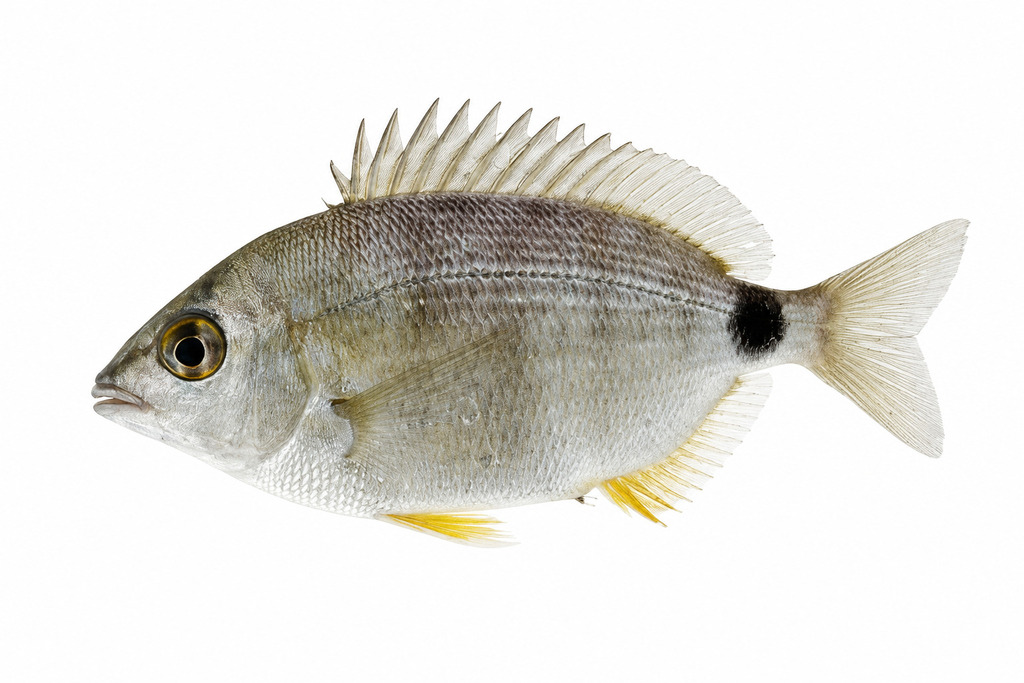
Annular seabream
- Family
- Sparidae
- Depth
- 0–90 m
- Season
- Jan, Feb, Mar, Apr, May, Jun, Jul, Aug, Sep
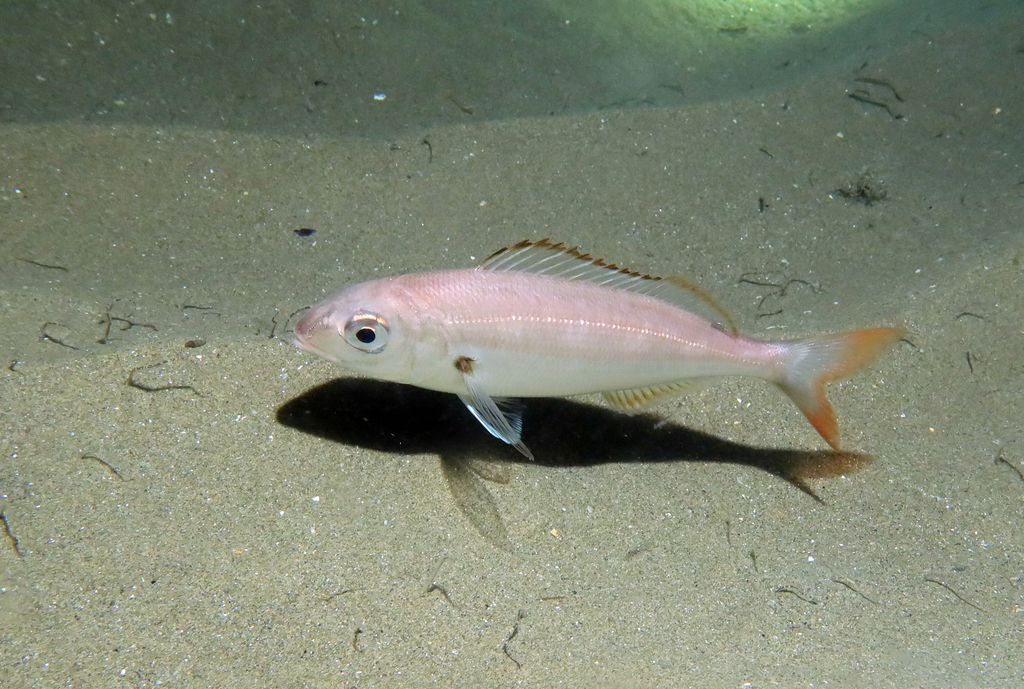
Axillary seabream
- Family
- Sparidae
- Depth
- 0–500 m
- Season
- Jan, Feb, Mar, Apr, May, Jun, Jul, Aug, Sep, Oct, Nov, Dec
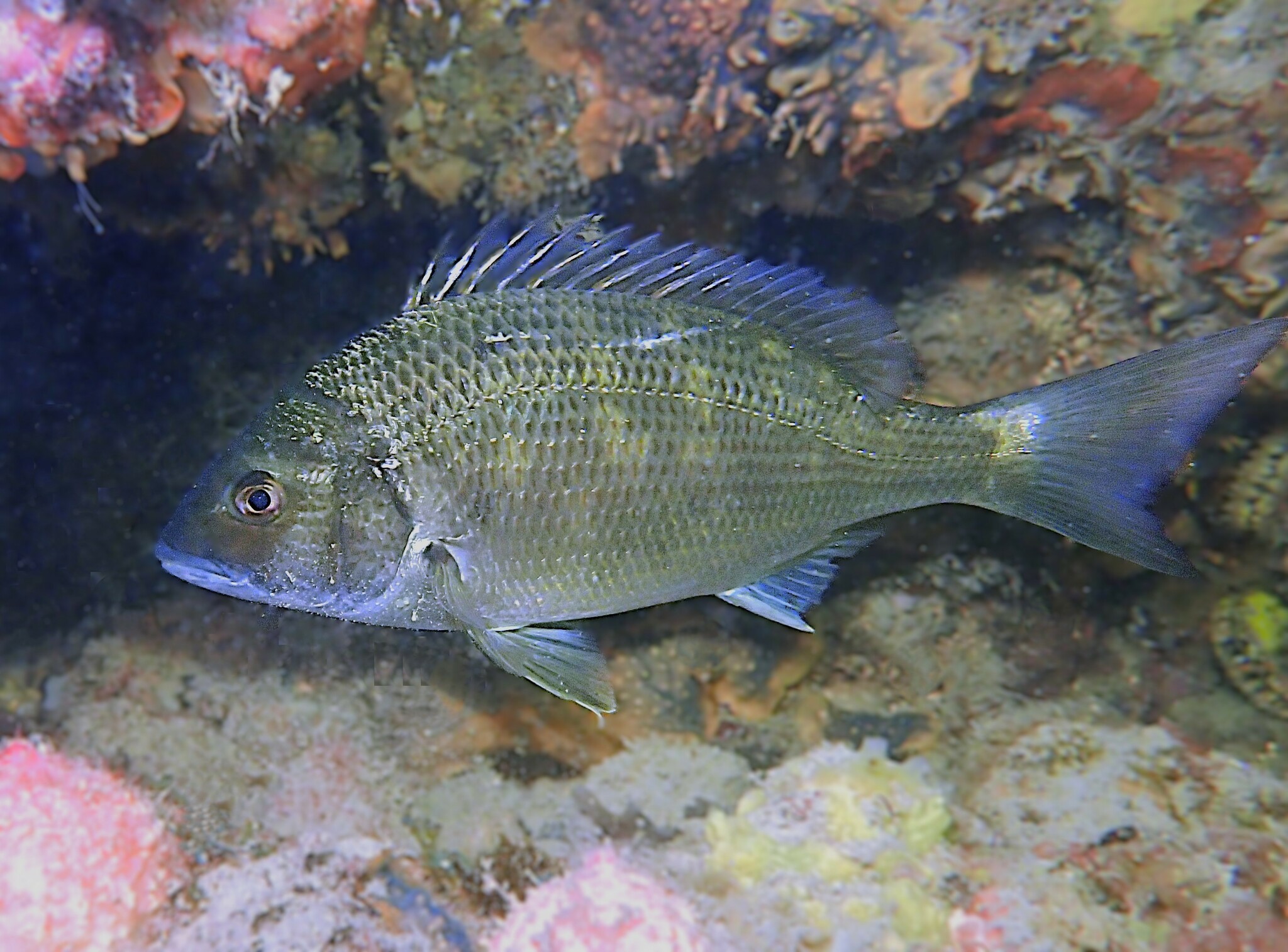
Black bream
- Family
- Sparidae
- Season
- Jan, Feb, Jul, Aug, Sep, Oct, Nov, Dec
Guides for this water
Technique, gear and safety guides that fit Saddled seabream.