
Blue hottentot
Pachymetopon aeneum is a South African endemic sparid recorded from Sodwana Bay in northern KwaZulu-Natal south and west to the Cape. FishBase gives a maximum of 55 cm total length, a common length of 30 cm and maturity at about 25 cm. It lives over reef at 20 to 50 m and feeds on worms, ascidians, crustaceans, molluscs and algae. It is a recognised food fish and is taken mainly by boat anglers fishing bottom baits over reef.
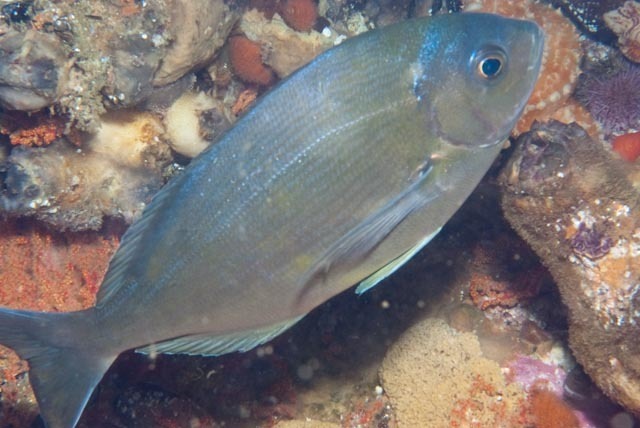
Pachymetopon aeneum is a South African endemic sparid recorded from Sodwana Bay in northern KwaZulu-Natal south and west to the Cape. FishBase gives a maximum of 55 cm total length, a common length of 30 cm and maturity at about 25 cm. It lives over reef at 20 to 50 m and feeds on worms, ascidians, crustaceans, molluscs and algae. It is a recognised food fish and is taken mainly by boat anglers fishing bottom baits over reef.
Identification
A deep, compressed sparid with a small head and a steep forehead. Colour is blue-grey above, fading to silvery below, with a bronzy tinge on the head and fins in fresh fish.
The teeth are incisiform with a sharp cutting edge rather than the molars of most seabreams, and this is the feature the genus name refers to. The dorsal fin is continuous, with the anterior spines shorter than the soft-rayed posterior section.
FishBase gives 55 cm total length, a common length of 30 cm and maturity at about 25 cm. It is a South African endemic, so there is no sister population elsewhere to confuse it with.
Distribution and Habitat
Recorded from Sodwana Bay in northern KwaZulu-Natal south and west to the Cape. It is a South African endemic and does not occur outside the country.
It lives over reef and rocky ground at 20 to 50 m, deeper than the inshore breams and shallower than the deep-reef species. That band is boat water, reached with a short run from most KwaZulu-Natal and Eastern Cape launches.
Reef edge, where rock meets sand, produces more fish than either pure reef or open sand.
Habits and Diet
An omnivorous bottom picker: FishBase lists worms, ascidians, crustaceans, molluscs and algae. The cutting teeth let it crop encrusting growth and shear off pieces that a molar-toothed bream could not take.
It is often encountered in groups over reef, so a boat that finds fish can usually take several from the same patch before the shoal moves.
Maturity at 25 cm against a common length of 30 cm means most of the catch is mature, unlike several heavily fished local sparids.
Fishing Methods and Gear
Reef bottom bait is the standard method: a whole sardine, a prawn or a squid strip on a 2/0 to 4/0 hook, with enough lead to hold in 20 to 50 m of current.
A slow drift over the reef edge, rather than anchoring, covers more ground and keeps the bait moving along the sand-rock boundary where the fish feed.
A 7 ft boat rod, a 4000 to 6000 reel, 30 lb braid and a 30 to 40 lb leader handle the species comfortably. Small 60 to 100 g jigs worked just off the bottom take fish as well.
Seasonal Window
FishBase gives no monthly spawning data for the species, so no breeding months are claimed here. It is present year-round and is caught in every month by boats working reef.
Moving water is the useful daily cue: the first hours of a new tide produce better than slack water, when the fish sit tight to structure.
Calm, clear days are also the days when light jigs and small baits fish best; after heavy swell the reef goes quiet for a day or two.
Edibility and Handling
A recognised food fish with white, firm flesh that suits frying, baking or soup; it is sold fresh and is a common recreational meal.
Bleed and ice promptly. Like most reef fish it benefits from gilling and gutting before it goes into the cooler.
There is a general ciguatera caution for reef fish in warmer parts of the range; large individuals deserve more caution than small ones.
Regulations and Conservation
South Africa: blue hottentot (Pachymetopon aeneum) has a bag limit of five per person per day and no minimum size in the recreational linefish table. A recreational permit is required, boat-based fishing needs a vessel licence, and recreational catch may not be sold.
IUCN: Least Concern, assessed in 2009. The species is not currently considered threatened, but the 2009 assessment predates recent catch trends and should be read with that age in mind.
South Africa is the only jurisdiction in the range, so there is no second regulatory regime to reconcile.
How to catch it
Boat bottom fishing
20–50
Drift fishing
Jigging
60–100
Where these facts come from
Check these pages before you rely on a size, range or protection status.
- GBIF — Pachymetopon aeneum occurrence records — GBIF · T2
- IUCN Red List — Pachymetopon aeneum — IUCN · T1
- Photo record — iNaturalist — iNaturalist · T3
Fish in the same water
These fish live in the same place.
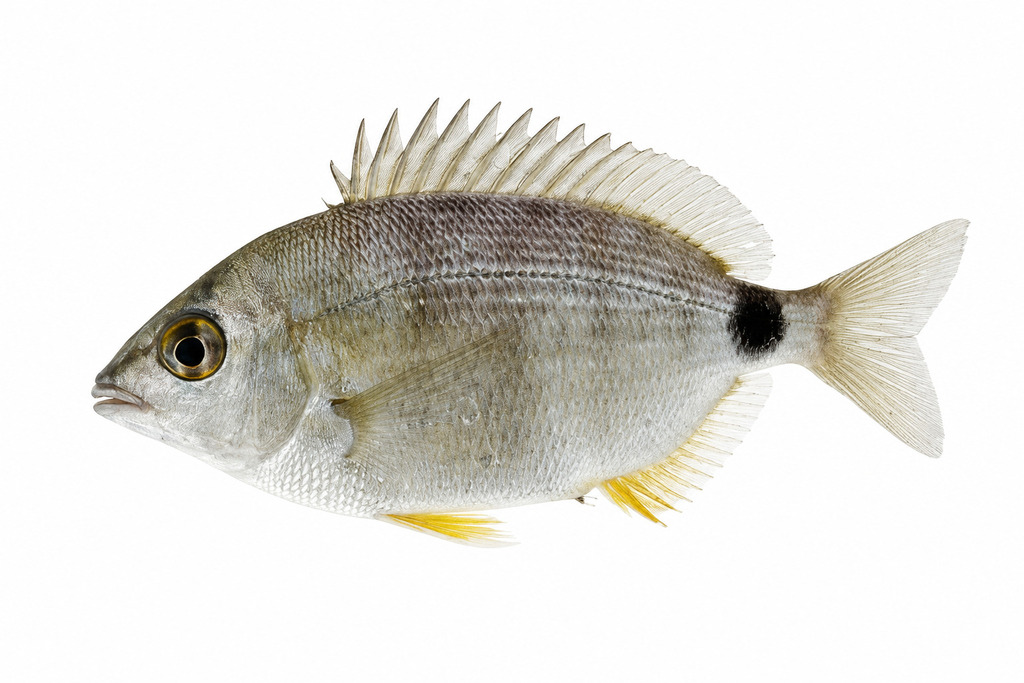
Annular seabream
- Family
- Sparidae
- Depth
- 0–90 m
- Season
- Jan, Feb, Mar, Apr, May, Jun, Jul, Aug, Sep
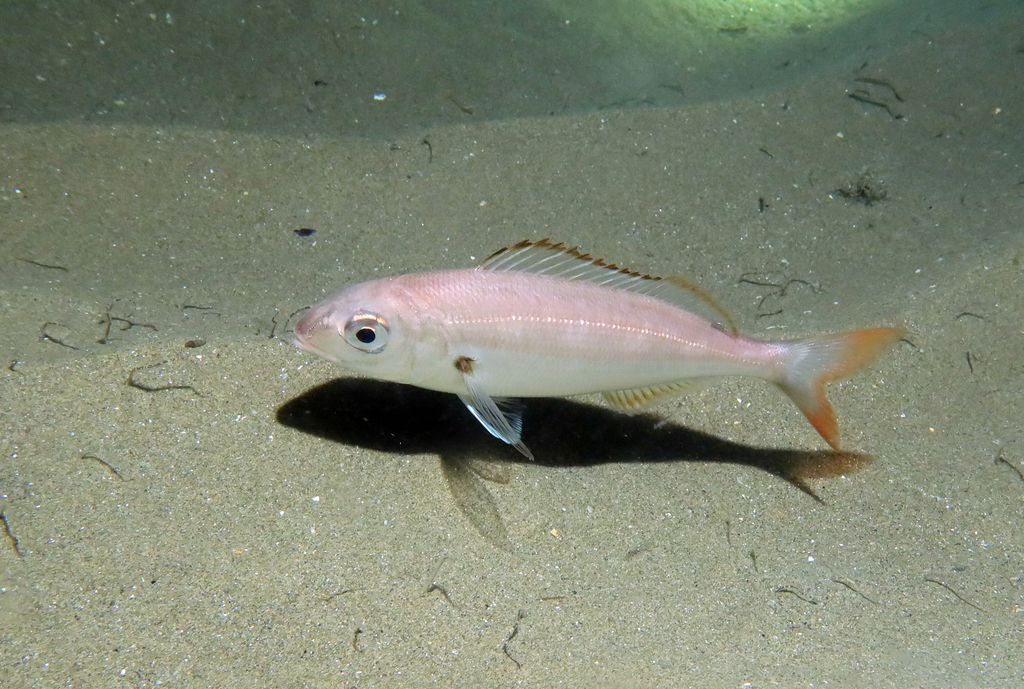
Axillary seabream
- Family
- Sparidae
- Depth
- 0–500 m
- Season
- Jan, Feb, Mar, Apr, May, Jun, Jul, Aug, Sep, Oct, Nov, Dec
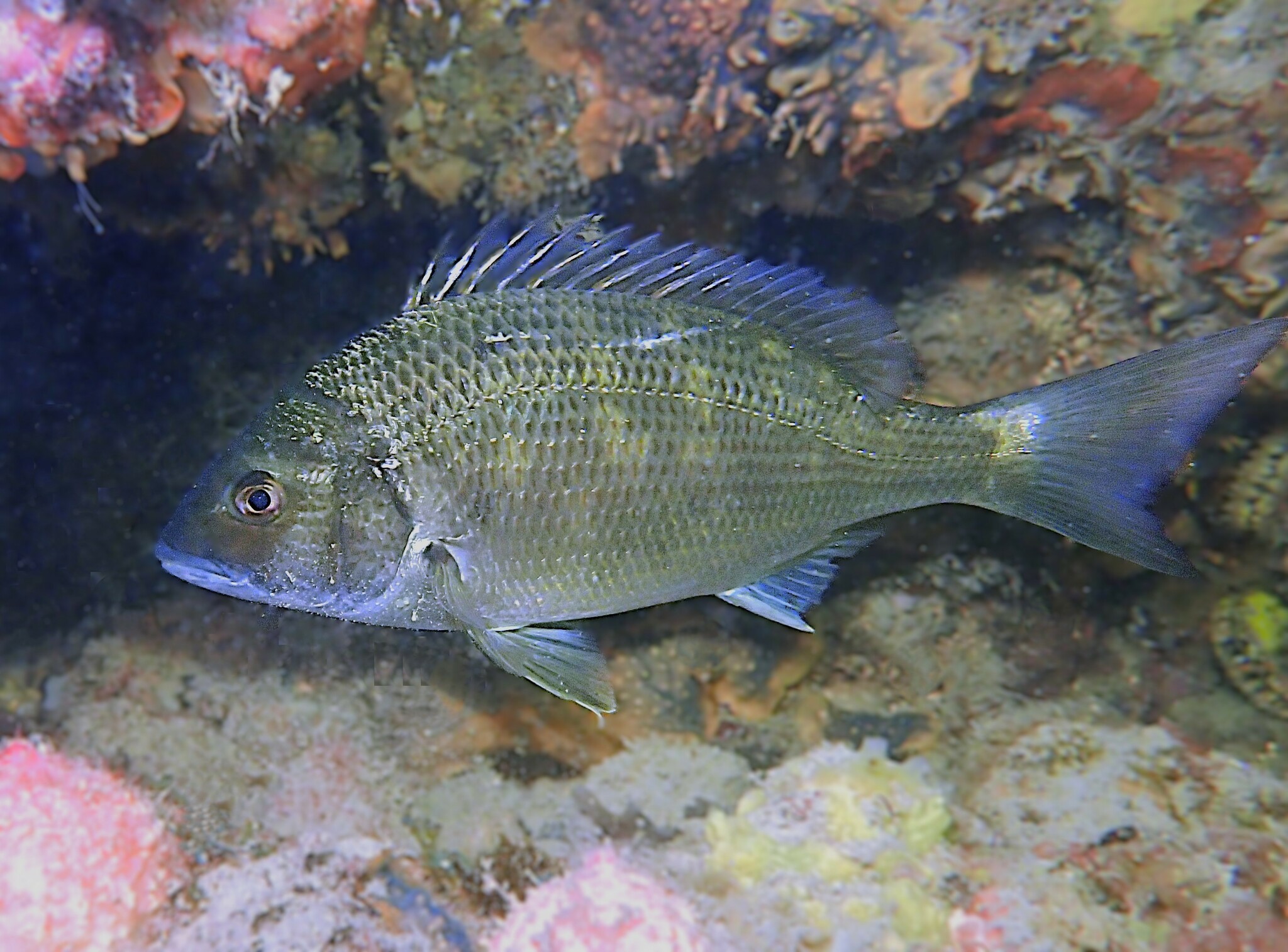
Black bream
- Family
- Sparidae
- Season
- Jan, Feb, Jul, Aug, Sep, Oct, Nov, Dec
Guides for this water
Technique, gear and safety guides that fit Blue hottentot.