
Hottentot
FishBase gives *Pachymetopon blochii* 46 cm TL maximum, 25 cm TL common, 1.7 kg heaviest published and first maturity at 22.0 cm. The range is the southeast Atlantic, Angola to the west coast of South Africa, and the species is recorded as non-migratory. South Africa allows ten a day at 22 cm TL. iNaturalist holds 776 observations, more than any other sparid in this group, and that number says more about access than about abundance.

FishBase gives *Pachymetopon blochii* 46 cm TL maximum, 25 cm TL common, 1.7 kg heaviest published and first maturity at 22.0 cm. The range is the southeast Atlantic, Angola to the west coast of South Africa, and the species is recorded as non-migratory. South Africa allows ten a day at 22 cm TL. iNaturalist holds 776 observations, more than any other sparid in this group, and that number says more about access than about abundance.
Identification
FishBase counts 10 dorsal spines, 11–12 soft dorsal rays, three anal spines and 10 soft anal rays, with a fusiform body and a colour described as bronzy brown, lighter below. The 10 soft anal rays are the highest count among these five sparids, against 7–9 in Roman and 8 in slinger and Scotsman.
The genus name is glossed on the page as Greek for fat and brow, which fits the heavy forehead the fish shows; that reading is inference from the etymology, not a description the entry itself gives.
Range and habitat
The distribution text runs from Angola to the west coast of South Africa, inside a latitude band of 13°S to 28°S. The occurrence data covers two countries. GBIF returns 1,130 present records, 1,040 from South Africa and 76 from Namibia, with nothing from Angola. iNaturalist carries 776 observations.
Two things follow. The Angolan part of the range is textual only in these sources, with no occurrence record behind it. And the 776 iNaturalist observations are the largest photographic count in this group, about twelve times the slinger figure. That is a citizen-science signal: a shallow, shore-accessible fish that many people photograph. It is not a stock estimate. It does not say the population is large; it says the fish is easy to meet.
The habitat line is shallow water over rocky bottoms. The depth range starts at 1 m and the page gives no maximum, so the entry does not state how deep the species goes. The environment field adds demersal, non-migratory and subtropical.
Habits and diet
The diet is unusual for the family as recorded here: seaweeds, echinoderms, crustaceans, molluscs and worms. Seaweed and echinoderms put a grazing element into the feeding, which separates it from the fish-and-crustacean diets of Roman and slinger.
The non-migratory note is the second biological fact with consequences. A fish that stays on its reef is not repopulated from elsewhere when a mark is worked over, and the page gives no movement or larval-dispersal data to soften that. No age, no growth rate and no natural mortality are recorded.
Season and time of day
The spawning table as held lists every month of the year for South Africa. Read literally, that is a year-round spawning record. It may also be how the record was entered rather than twelve separate observations; the page does not say which, and this article does not decide.
With no migration and a shallow rocky range there is no seasonal movement to follow. No time of day and no tide are recorded, so any hour-of-day advice would be inference and is marked as such below.
South Africa lists no closed season for hottentot in the brochure checked.
Tackle and techniques
Depth and size decide this one. The species is recorded from 1 m over rocky bottom, with no stated maximum depth, and the common length is 25 cm against a 46 cm maximum at 1.7 kg. A shallow, small, rock-dwelling sparid is shore and light-tackle work, and the maximum is a 1.7 kg fish, so nothing in the entry calls for heavy gear.
The diet adds a placement hint. Seaweeds and echinoderms are on the list, so weedy rock reads as feeding ground rather than incidental cover. That is inference from the diet; the page names no mark.
Bait follows less directly. Crustaceans, molluscs and worms are recorded too, which supports small bottom baits, but the page records no bait, no rig and no method. The firm statement is only that the fish takes animal food on rocky bottom in shallow water.
Ten a day at 25 cm common means the catch is made of small fish. Gear sized for 25 cm lands them and leaves the 46 cm fish undergunned rather than unstoppable, which is the right trade for a species with a ten-fish bag.
Kitchen and handling
The entry records commercial use and gamefish use. It does not say the fish is sold fresh, and it gives no flesh description, no fat content and no culinary note; those blanks stay blank.
The species is harmless to humans. No toxin warning and no parasite record appear on the page.
The size on the table is 25 cm common and 1.7 kg at the maximum. Ten fish at the common length is a household meal rather than a single plate, which is the practical shape of the bag; the arithmetic is this page's, not the regulation's.
Regulations and conservation
South Africa requires a recreational angling permit; catch is for own use only, no sale; the overall daily bag is 10 fish unless a species rule applies. For hottentot the species rule is 10 fish per person per day at 22 cm TL.
Those two numbers are the point. The 22 cm minimum is the same figure as the recorded first maturity of 22.0 cm. There is no margin between the size at which the fish may be kept and the size at which the page says it matures. In the other species here the limit sits above maturity; here it sits on it.
Namibia requires a recreational permit. Regulation 8(2) sets a combined ten fish a day across blacktail, galjoen, kob and West Coast steenbras, with Annexure J sizes for those four. Hottentot is not one of the four, and no separate Namibian size or bag limit for it was located in the regulation checked. Namibian records exist, 76 in GBIF, but no Namibian rule for this fish was found.
Angola is on the FishBase country list and has no GBIF record and no rule in these sources.
The IUCN entry is Least Concern, assessed 3 December 2009, with no trend and no stock estimate. A ten-fish bag on a non-migratory shallow-water fish caught from the shore is the combination worth watching; whether the 2009 assessment still describes the stock is not something the page answers.
How to catch it
Shore fishing
Fished with the listed approach, matched to the recorded depth and size.
Boat bottom fishing
Fished with the listed approach, matched to the recorded depth and size.
Rock fishing
Fished with the listed approach, matched to the recorded depth and size.
Where these facts come from
Check these pages before you rely on a size, range or protection status.
- FishBase — Pachymetopon blochii — FishBase · T2
- GBIF — Pachymetopon blochii occurrence records — GBIF · T2
- IUCN Red List — Pachymetopon blochii — IUCN · T1
- Photo record — iNaturalist — iNaturalist · T3
Fish in the same water
These fish live in the same place.
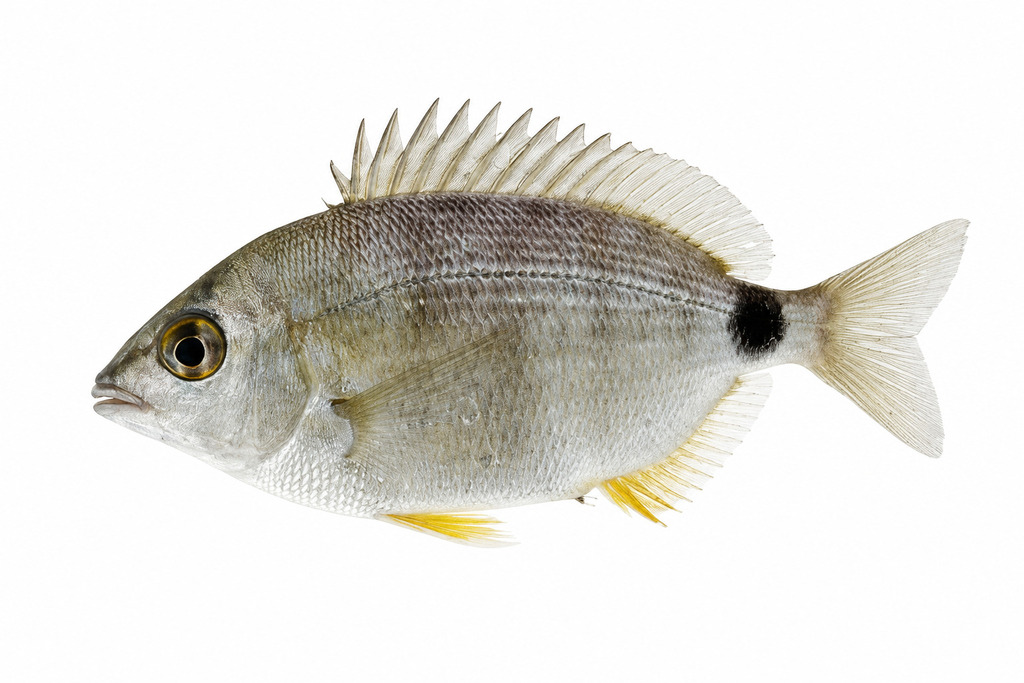
Annular seabream
- Family
- Sparidae
- Depth
- 0–90 m
- Season
- Jan, Feb, Mar, Apr, May, Jun, Jul, Aug, Sep
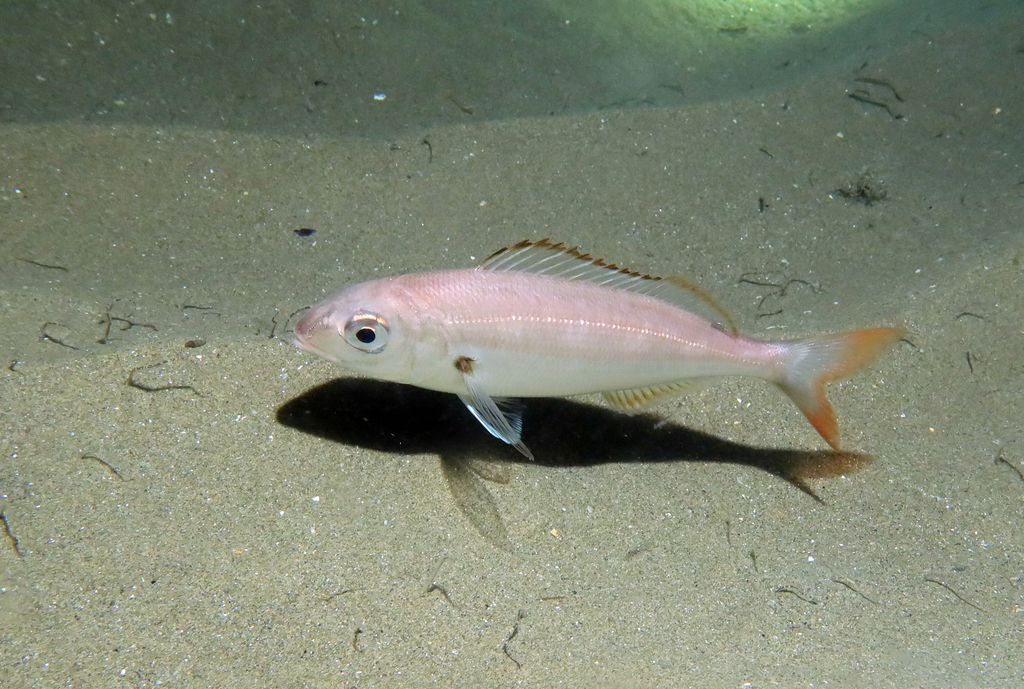
Axillary seabream
- Family
- Sparidae
- Depth
- 0–500 m
- Season
- Jan, Feb, Mar, Apr, May, Jun, Jul, Aug, Sep, Oct, Nov, Dec
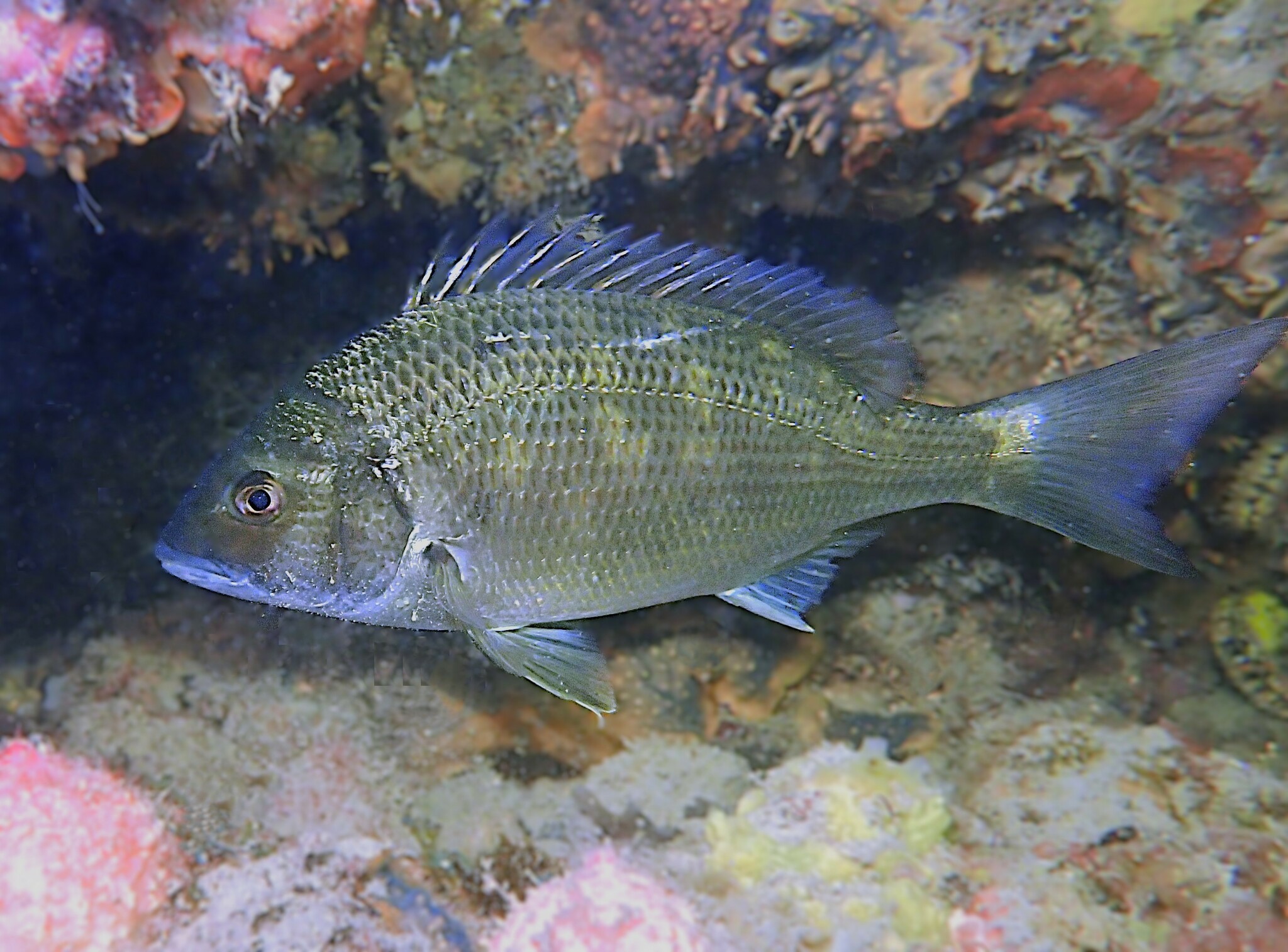
Black bream
- Family
- Sparidae
- Season
- Jan, Feb, Jul, Aug, Sep, Oct, Nov, Dec
Guides for this water
Technique, gear and safety guides that fit Hottentot.