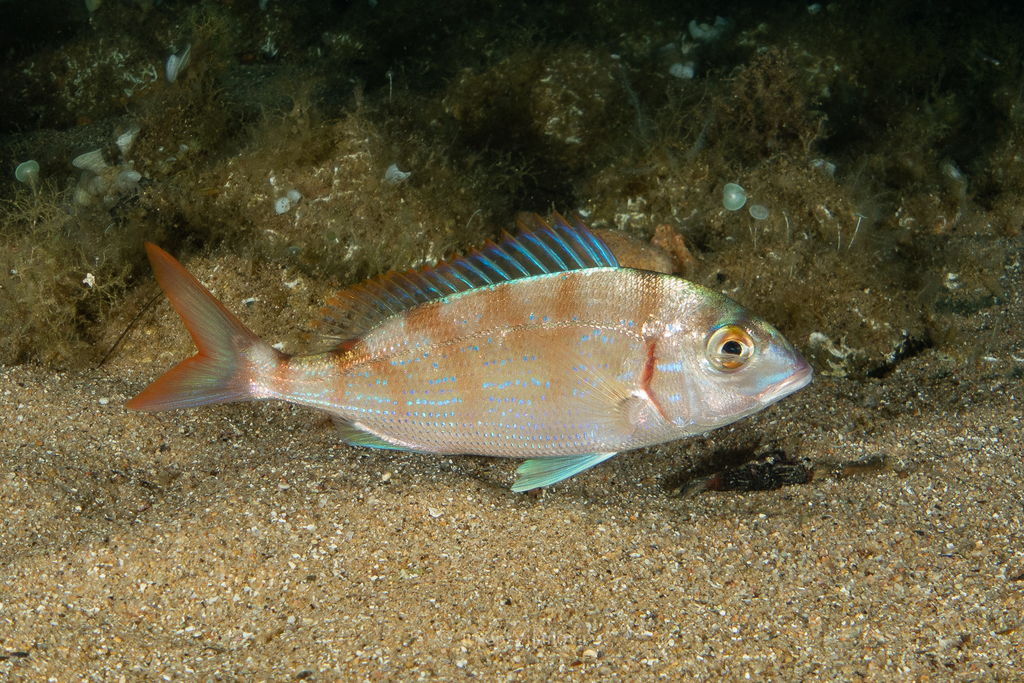
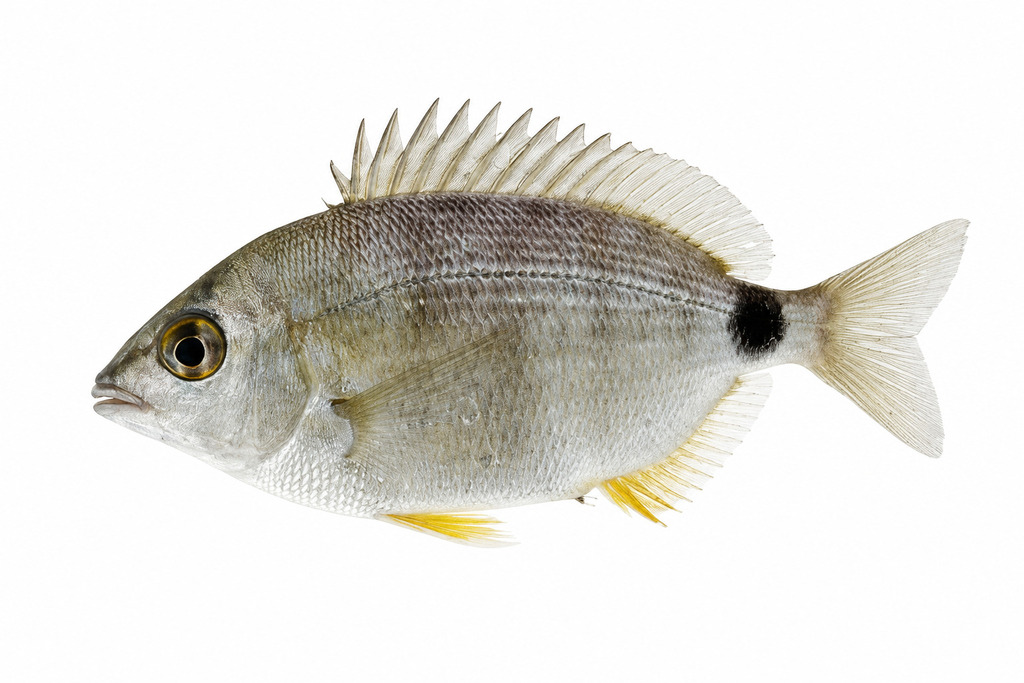
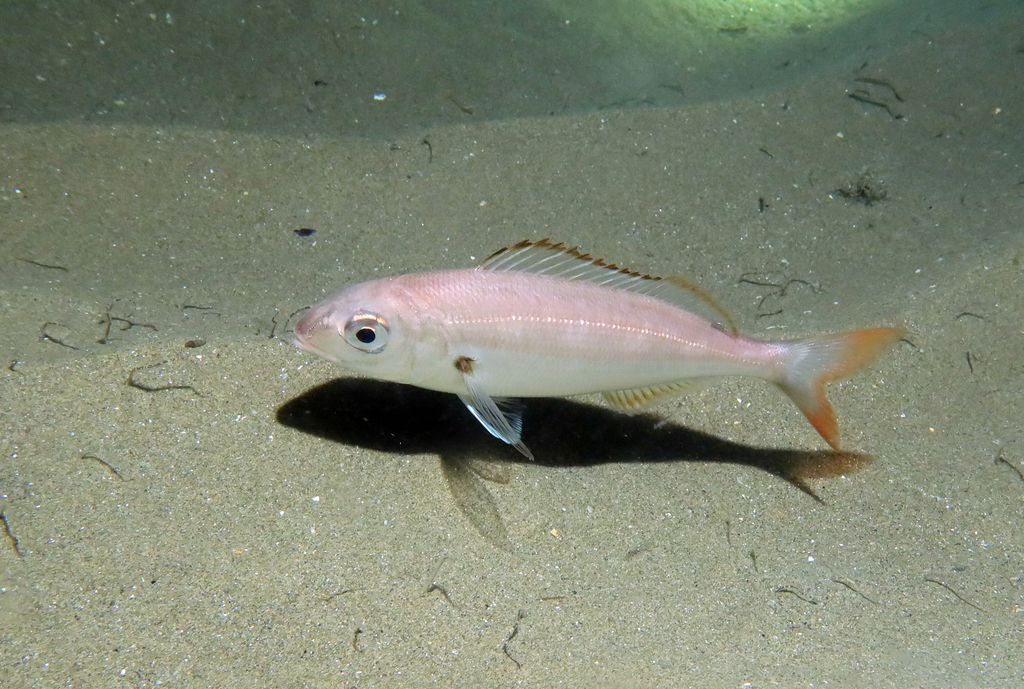
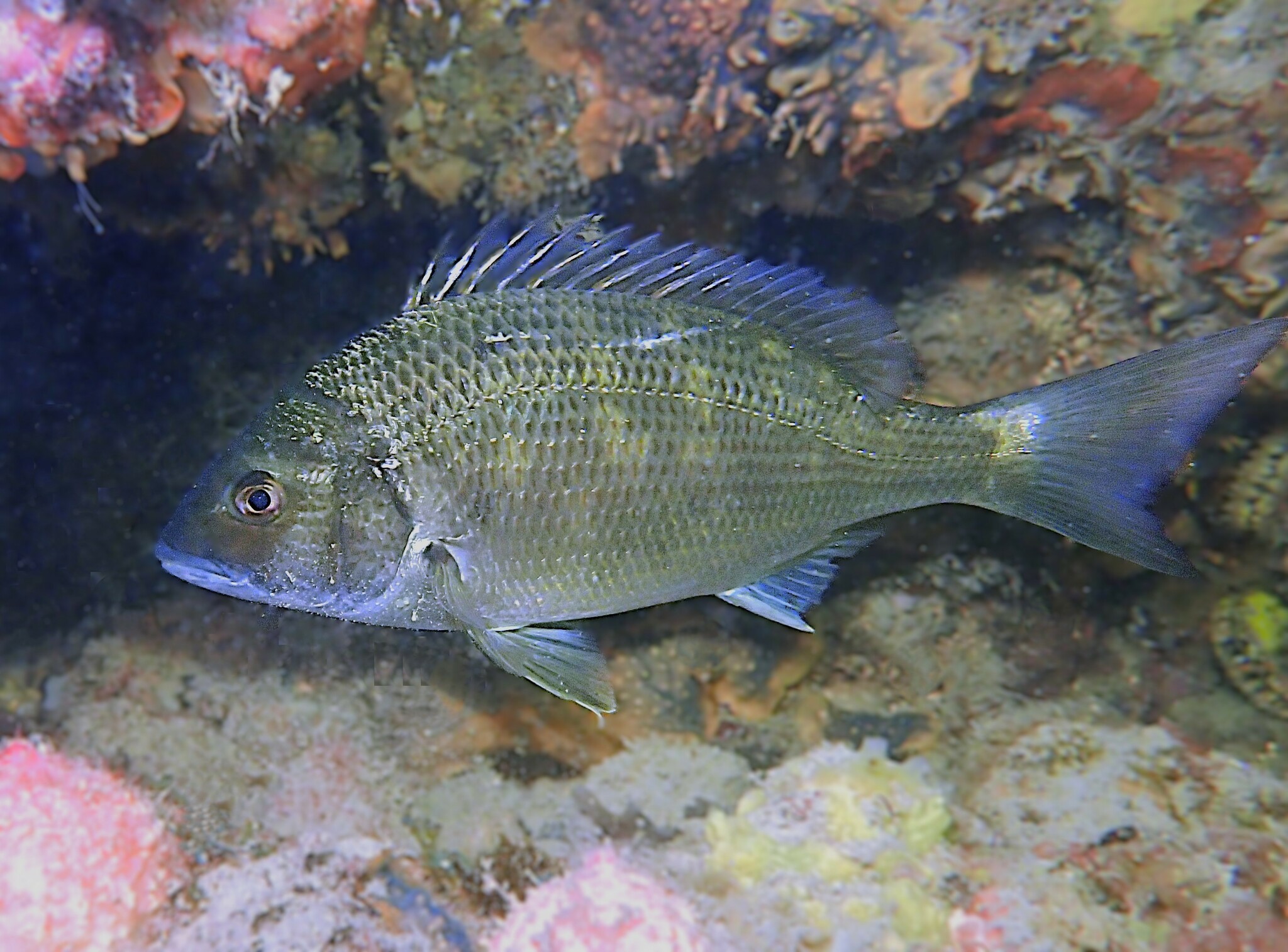
Common pandora (Pagellus erythrinus) is a fish of the family Sparidae. FishBase gives its range as: Eastern Atlantic: Norway and the Mediterranean to Guinea-Bissau, including Cape Verde, Madeira and the Canary Islands. Rarely recorded in Scandinavia. It is recorded from 20 to 320 m, in subtropical water. The recorded maxima are 60 cm SL, 3.2 kg. Common length is recorded at 25 cm. Diet includes fishes. IUCN status: Least Concern (LC). Chinese name: .
Identification
The species belongs to the family Sparidae. FishBase's morphology record gives 10-11 soft dorsal rays; 3 anal spines and 8-9 soft anal rays. These are identification aids rather than a complete diagnosis; the accompanying photographs show the live colour pattern.
Habitat and behaviour
It is recorded in marine water, with a benthopelagic mode, a recorded depth range of 20-320 m and a subtropical climate. Habitat notes mention rocky, sandy, muddy, coastal. Diet records mention fishes. These are source records, not a guarantee that the same habitat exists at every local mark.
Seasonal window
FishBase's spawning table lists records in Jan, Feb, Mar, Apr, May, Jun, Jul, Aug, Sep, Oct, Nov, Dec for Algeria, Croatia, Ghana, Greece, Senegal, Türkiye. This is a spawning record, not a fishing-season forecast; check the local season, weather and regulations before planning a trip.
Gear and approach
Match hook, leader and drag to a fish that can reach 60 cm and 3.2 kg. Use tackle that can present the bait or lure at the deeper end of the recorded range. No exact gear ratings are published here because they are equipment choices, not source facts. Adjust the terminal tackle to the bait or lure you can obtain locally.
Edibility and regulations
FishBase's human-use record lists Fisheries use: commercial; gamefish: yes. The species is marketed as food. The IUCN Red List category is LC (Least Concern), assessed 17 August 2009. Threat to humans: Threat to humans Reports of ciguatera poisoning (Ref. 4690 ). CITES: Not Evaluated; CMS: Not Evaluated. No official regulation text was verified for this draft. Check the current national and local fisheries rules, size limits and closed seasons before keeping catch.
Where to look
For trip planning: GBIF holds 8,904 preserved occurrence records for the matched taxon; the largest country counts are ES (5,367), FR (790), PT (694), IL (644), HR (315); FishBase territories include Albania, Algeria, Azores Islands, Bosnia and Herzegovina, Bulgaria, Cabo Verde, Canary Islands, Channel Islands; the sea regions represented are Mediterranean Sea, Eastern Atlantic; habitat keywords point to rocky-shore, sandy-bottom, muddy-bottom, coastal. These are distribution and habitat signals, not spot coordinates; use them to narrow the search, then check local access and conditions.
How to catch it
Boat bottom fishing
Anchored or drifting boat, bait or lure worked near the recorded bottom.
Regulations before you keep it
These are the published regulations for this fish. Read the number first. The notice below it is the actual regulation.
Minimum size3
≥22 cm
Spain — Canary Islands · ES-CN
The minimum size for Common pandora in the Canary Islands is ≥22 cm.
| Pagel (Pagellus erythrinus) | Breca | 22 |
The minimum size for Common pandora in France is ≥15 cm.
| PAGEOT ROUGE | Pagellus erythrinus | 15 cm |
The minimum size for Common pandora in Portugal is ≥15 cm.
Bica (Pagellus erythrinus) | 15 cm
Every record above names its source and the date it was retrieved. See the regulation register for the full list, or how to read these regulations.
Where these facts come from
Check these pages before you rely on a size, range or protection status.
-
FishBase — Pagellus erythrinus
— FishBase · T2
-
GBIF — Pagellus erythrinus occurrence records
— GBIF · T2
-
IUCN Red List — Pagellus erythrinus
— IUCN · T1
-
Photo record — iNaturalist
— iNaturalist · T3