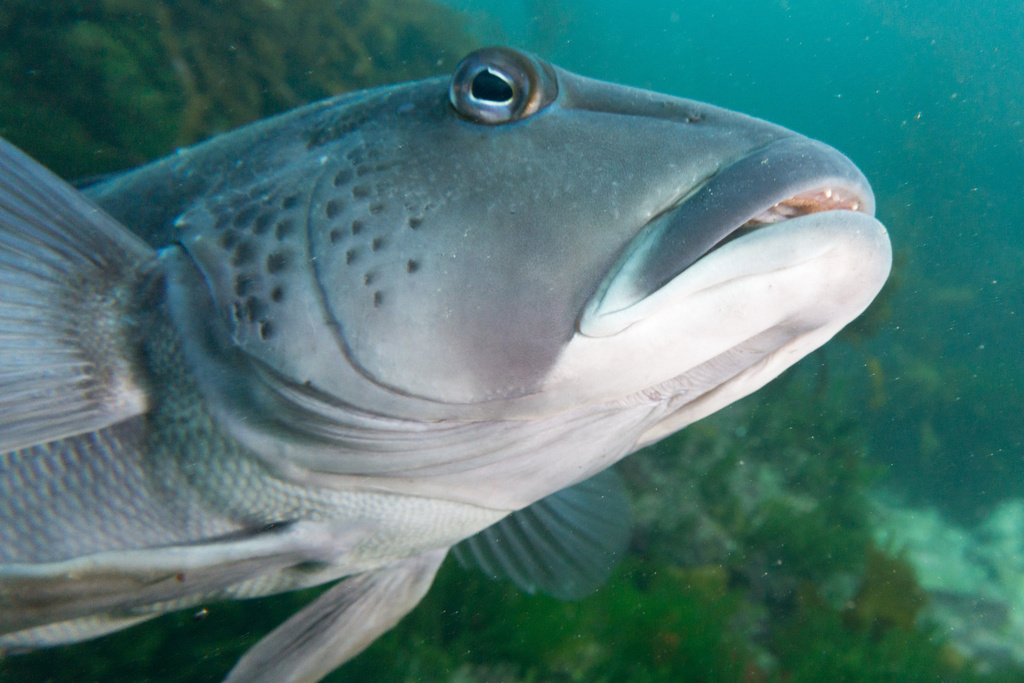
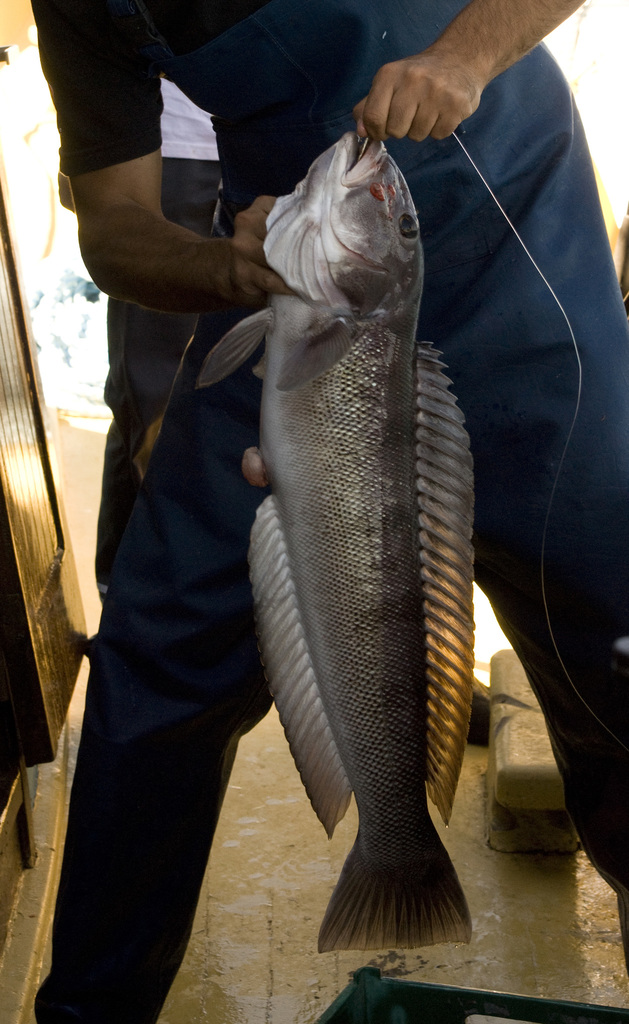
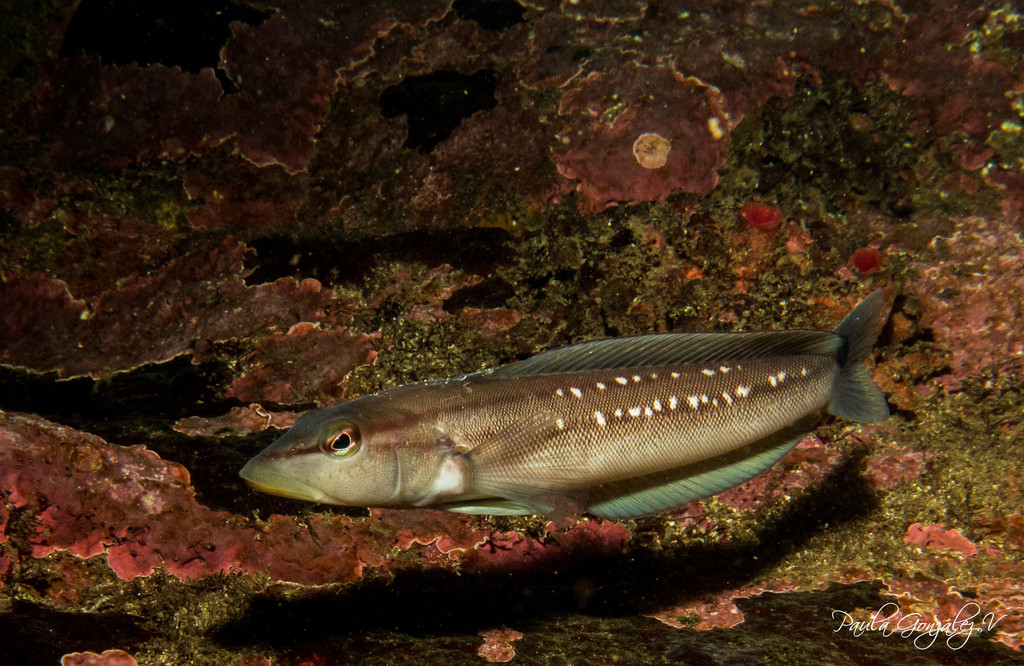
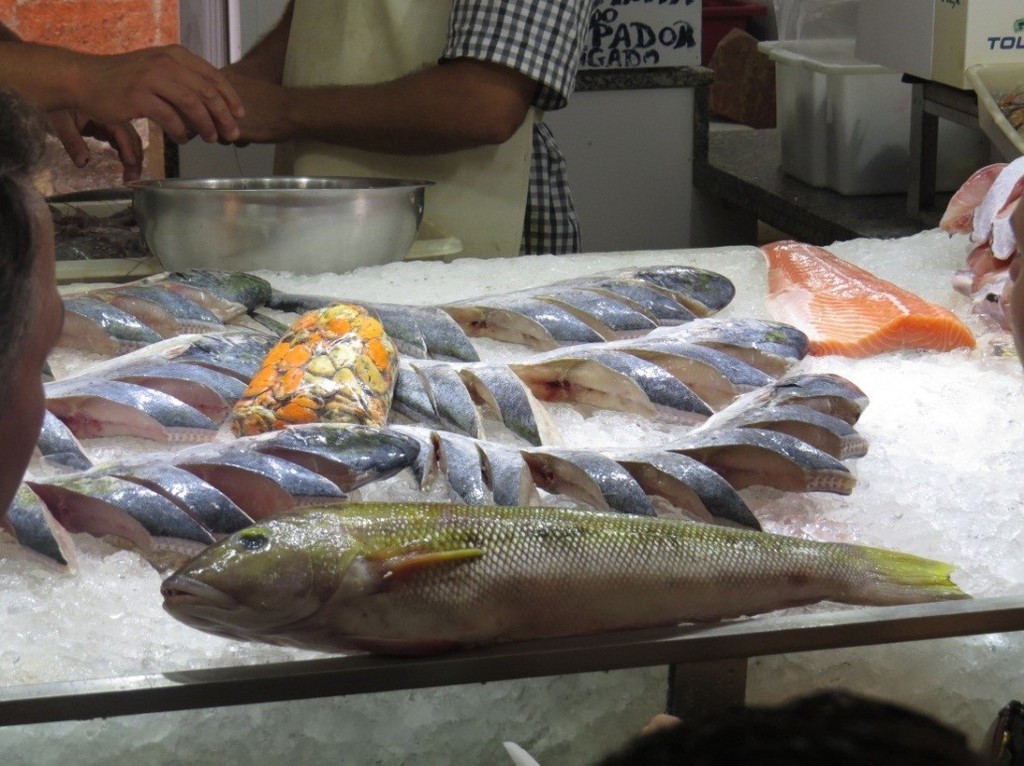
Blue cod is two fisheries wearing one name. On the market side it is a commercial line item; on the wild side it is a recreational bag limit with a 33 cm minimum and area rules that range from 2 to 10 fish. Both descriptions are official, and both apply to the same animal.
A quota line and a bag limit
FishBase lists the species under commercial fisheries and as a gamefish. The Ministry for Primary Industries publishes separate recreational rules: a 33 cm minimum length in the South-East area, and daily limits that depend on where you are. The two systems do not use the same unit. One counts landings; the other counts fish per fisher per day.
The market side does not publish a size in the FishBase record. The wild side does: 33 cm. That is the first place the two descriptions separate, and it is the reason a fish can be legal on a plate and illegal in a bin.
35 cm is the fish, 45 cm is the record
The largest fish measured 45 cm TL; the standard one is 35 cm TL; the heaviest recorded fish weighed 2.5 kg; the oldest reached 17 years. The gap between common and maximum is 10 cm, narrower than on many reef species. A 45 cm blue cod is large, but a 35 cm one is the standard fish.
The 17-year maximum matters for the wild side. A long-lived fish targeted by both sectors is a fish whose age structure can be read from landings. The page gives no growth curve, so the 17-year figure is a maximum, not a schedule.
Maturity at 14.5 cm
Blue cod are mature well before they are legal: the estimate is 14.5 cm, and the published bracket runs from 10 to 19 cm, while the recreational minimum is 33 cm. The 33 cm line therefore protects spawners rather than marking first maturity. Since a fish cannot be assigned to a stock from this page, the safe release rule stays simple: anything under 33 cm goes back, and any fish you are unsure about goes back too.
52–150 m on rock
Blue cod is a demersal fish of hard ground in 52–150 m, taking fish rather than scavenging. Wikipedia places it among the temperate marine fishes of the family Pinguipedidae. The depth band is deeper than a typical inshore rock trip, and the substrate is hard ground.
That combination sets the method. A bait fished on the bottom over rock at 52–150 m needs weight to hold and a rig that can be lifted clear of snags. It is not a surface fishery, and it is not a sand-flat fishery.
One country, two GBIF rows
The species is recorded from New Zealand, including the North Island, South Island, Stewart Island and the Chatham Islands. Wikipedia calls it the New Zealand blue cod and gives the Māori names rāwaru, pākirikiri and patutuki. GBIF's distribution statement contains a Global row from the IUCN Red List and the country's exclusive economic zone, both marked PRESENT; the response also reported that the record set was complete.
Two rows for a national endemic is a thin distribution statement, but it is consistent with the range. There is no second country in either source. A fish that exists in one jurisdiction is a fish whose market and wild rules are both national, which is why the MPI tables can be written as one document with area exceptions.
The 754 iNaturalist observations sit inside one national range, which is consistent with an endemic that never crosses a border.
The spawning row is empty
There is no spawning row for this species. A biological closed season cannot be built from that blank, so the only season a fisher can act on is the management calendar — the open dates and area rules set by MPI, not a spawning month. A closed area or a bag limit is a rule; an empty spawning row is not a season.
The management calendar is what a fisher can obey: area closures, bag limits and the minimum size. None of those dates comes from the spawning table, and the page offers no biological date to compare with them.
The 33 cm line and the area limits
The MPI South-East rules set a 33 cm minimum for blue cod and then split the daily limit by area: 6 per fisher per day in the Kaikōura Marine Area, 2 in the Te Taumanu o Te Waka a Maui Taiāpure and 2 in the Oaro-Haumuri Taiāpure, 10 outside those areas; 2 in the Canterbury management area including Akaroa Taiāpure; 10 in North Otago; 2 in the East Otago Taiāpure; 10 in the Southern management area.
The same page requires blue cod to be landed in a measurable state, with whole-or-gutted rules that vary by area, and allows fish eaten on board to count toward the daily limit. None of this is on the FishBase record. It is the wild side of the same fish, written in a different document.
Fishing the wild side of the market
Start with the rule for the area you are actually fishing, not the national headline. The 33 cm minimum is constant in the South-East table, but the daily limit is not: 2, 6 or 10 depending on the management area. Carry a measure, and land the fish in the state the area requires.
Then fish the depth and the substrate. The 52–150 m band and the rocky keyword are the two biological numbers the page gives. If the drift is over sand, the habitat line gives no reason to stay; if it is over rock in the band, both the fish and the rule set are aligned.
Regulations before you keep it
These are the published regulations for this fish. Read the number first. The notice below it is the actual regulation.
Minimum size1
≥33 cm
New Zealand — South East · NZ-SE
Blue cod must be at least 33 cm in the South-East fishing area.
The page sets area-specific daily limits for blue cod, including 10 per fisher per day outside the listed management areas and taiāpure.
Blue cod | See below | 33 | — |
Bag limit1
10 per fisher per day (6 in the Kaikoura Marine Area) · 2 in some taiāpure and Canterbury areas
New Zealand — South East · NZ-SE
New Zealand allows 10 blue cod per fisher per day in the South-East area, with lower limits in specified management areas.
Blue cod | See below | 33 | — ... Outside these areas, 10 per fisher per day. ... Canterbury blue cod management area (Hurunui River to Rakaia River): 2 per fisher per day including Akaroa Taiāpure.
Every record above names its source and the date it was retrieved. See the regulation register for the full list, or how to read these regulations.
Where these facts come from
Check these pages before you rely on a size, range or protection status.
-
FishBase — Parapercis colias
— FishBase · T2
-
GBIF — Parapercis colias occurrence records
— GBIF · T2
-
IUCN Red List — Parapercis colias
— IUCN · T1
-
Photo record — iNaturalist
— iNaturalist · T3