
Namorado sandperch
Namorado sandperch is a pinguipedid of the Brazilian and Argentine shelf, from Rio de Janeiro to Santa Catarina and south to Nuevo Gulf. It works 15 to 300 m, reaches 120 cm TL with a common length of 40 cm and 20.2 kg, and no maturity figure is published. It is listed as both a commercial fish and a gamefish, and IUCN assessed it as Least Concern in 2009. Boat bottom fishing and jigging are the methods listed.
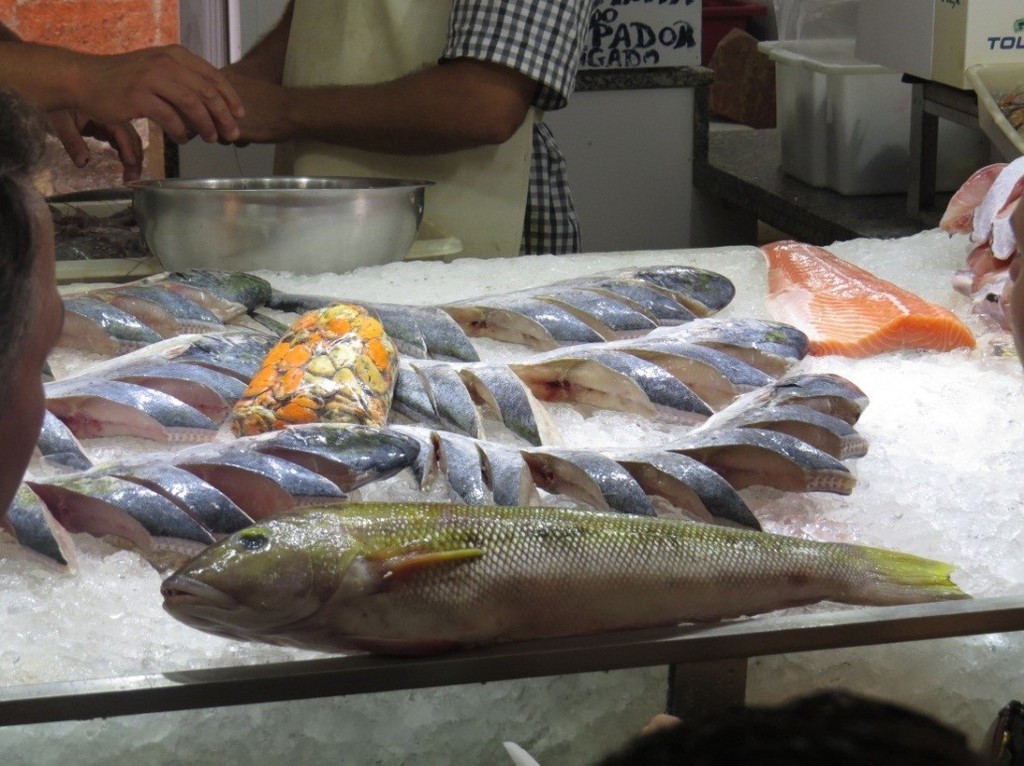
*Pseudopercis numida*, the namorado sandperch, is a pinguipedid of the Brazilian and Argentine shelf, recorded from Rio de Janeiro to Santa Catarina and, at the southern end, to Nuevo Gulf. FishBase gives 120 cm TL as the maximum, 40 cm TL as the common length and 20.2 kg as the heaviest published weight, with no maturity figure at all. It is listed as both a commercial and a gamefish, and was assessed as Least Concern in 2009. This page sets out the depth band, the naming overlap, and the rules that apply.
Identification
The fin counts are 7 dorsal spines, 26–28 dorsal soft rays, 1–2 anal spines and 24–27 anal soft rays, on a fusiform body. No colour, scale count or dental detail is given.
The lengths are the useful part. Common length is 40 cm TL, the maximum is 120 cm TL and the largest published weight is 20.2 kg. That is a threefold gap; the page does not say where the biomass sits. There is no maturity length: the field is blank. A 40 cm fish therefore cannot be placed against first spawning, and 120 cm is a maximum, not a target.
No Chinese common name is recorded by FishBase. The site uses , following the master plan, with namorado kept as the working name. In Portuguese it is namorado, in French pinge namorade; neither word separates it from other sandperches on a slab.
Range and habitat
The distribution text runs from Rio de Janeiro to Santa Catarina, Brazil, with the range extended to Nuevo Gulf, Argentina. It adds a caution: citations off Uruguay are probably misidentifications of P. semifasciata.
GBIF returns 45 present records, 39 from Brazil, 3 from Uruguay and 2 from Argentina; iNaturalist carries 8 observations. The three Uruguayan records sit where FishBase warns of confusion, so they need a specimen check. The two Argentine records are a thin basis for a range that the text carries to Nuevo Gulf.
The environment line is marine, demersal, 15–300 m, usually 100–300 m, tropical, between 21°S and 44°S. The biology notes give sand, rubble and rock, and add shallow rocky reef. That sits awkwardly against a usual depth of 100–300 m; the page records both without reconciling them.
Habits and diet
Habitat is all the biology section contains: deeper continental-shelf water, sandy, rubble and rocky bottoms, and shallow rocky reef. There is no diet, no prey list and no feeding note.
Reproduction is equally empty. No spawning record, no season, no ground and no maturity length appear. With a 120 cm maximum and a 40 cm common length, the missing maturity figure is the number that would make a size limit meaningful, and it is not on the page.
The IUCN entry is Least Concern, assessed on 4 February 2009. That is the oldest assessment in this group of species, and the page gives no population trend, stock estimate or regional split.
Season and time of day
No spawning period is recorded, so no month can be recommended and none can be closed on the strength of this source. The climate line reads tropical across 21°S to 44°S, which spans more than a tropical band; the page does not explain the label.
Time of day is not recorded either. An inference, labelled as one, follows from the depth: with a usual band of 100–300 m, the fish lives where light is weak through the whole day, so the dawn and dusk pattern familiar from shallow reefs should matter less. The page's own mention of shallow rocky reef leaves open the possibility of fish in shallow water, where that pattern would return.
Neither season nor hour can be fixed from the source; depth is the one variable to plan around.
Tackle and techniques
A usual depth of 100–300 m makes this a boat fish, and a deep one. The page records no method, no gear and no bait, so the rig must be reasoned from depth, substrate and size rather than copied from a record.
At 100–300 m, lead weight and line capacity are set by the water column, not by the fish; the bottom is sand, rubble and rock, which means a rig that can be worked over uneven ground without pinning itself. The common length is 40 cm, so a routine fish is modest, but the maximum of 120 cm and 20.2 kg means the terminal tackle should not be chosen for the average alone.
Diet is unknown, so bait is a guess. A bottom presentation with fish or squid is the conventional starting point for a deep demersal fish, and that is inference, not a record.
Identification should be settled before the fish is kept. The page's warning that Uruguayan records are probably P. semifasciata applies to anglers as well as to databases: the two species overlap in name and, at the southern edge, in water.
Kitchen and handling
FishBase records commercial use and a gamefish entry; no price, quality note or culinary description. There is no common weight, so the 40 cm common length cannot be converted into a kilogram grade.
The 20.2 kg figure is the heaviest published weight, not a routine landing. Read against a 40 cm common length, it belongs to the rare large fish. Treat a fish near 120 cm as the top of the distribution; the page gives no data on how often such fish occur.
Nothing is recorded about killing, bleeding, storage or filleting, and those blanks stay blank here. The only handling rule the source supports is regulatory, in the next section.
Regulations and conservation
IUCN lists the species as Least Concern, assessed on 4 February 2009. The page gives no population trend and no regional breakdown. LC is a global label from an assessment now more than fifteen years old, and it sits alongside entries for commercial and game fishing, which are two forms of removal the label does not measure.
Brazil: a recreational licence is required, and the marine transport limit is 15 kg plus 1 specimen per angler per day. No federal minimum size for namorado was located in the sources checked; size and bag rules for this species are set by the state or by ICMBio and must be checked locally.
Argentina: the Buenos Aires recreational rules name their directed and variado costero groups, and namorado is not among the species listed for either. No species-specific size or bag number for P. numida was located in the Argentine sources checked. Other provinces and national waters differ.
Uruguay: no species-specific recreational number was located, and the occurrence records there are uncertain in any case.
The Brazilian federal rule is the only relevant instrument found, and it sets a transport limit, not a size.
How to catch it
Boat bottom fishing
Fished with the listed approach, matched to the recorded depth and size.
Jigging
Fished with the listed approach, matched to the recorded depth and size.
Where these facts come from
Check these pages before you rely on a size, range or protection status.
- FishBase — Pseudopercis numida — FishBase · T2
- GBIF — Pseudopercis numida occurrence records — GBIF · T2
- IUCN Red List — Pseudopercis numida — IUCN · T1
- Photo record — iNaturalist — iNaturalist · T3
Fish in the same water
These fish live in the same place.
Guides for this water
Technique, gear and safety guides that fit Namorado sandperch.