
Chilean sandperch
The Chilean sandperch is a 51 cm demersal fish with a 100 m depth ceiling, a 1.6 kg weight record and no published shallow limit. FishBase lists it from Tumbes in Peru to Magallanes in Chile, but 517 of its 542 GBIF records are Chilean. This account's editorial regions are both countries, and that difference between a two-country range and an one-country record set is the first thing to keep straight.
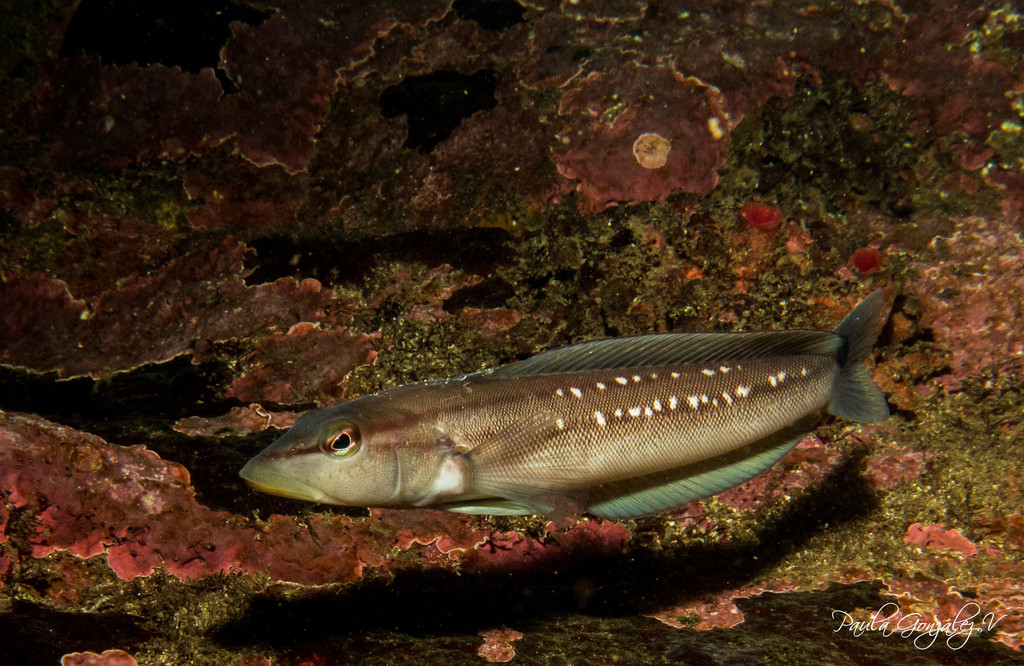
The Chilean sandperch is a 51 cm demersal fish with a 100 m depth ceiling, a 1.6 kg weight record and no published shallow limit. FishBase lists it from Tumbes in Peru to Magallanes in Chile, but 517 of its 542 GBIF records are Chilean. This account's editorial regions are both countries, and that difference between a two-country range and a one-country record set is the first thing to keep straight.
51 cm and 1.6 kg are the whole size record
The maximum published length is 51.0 cm TL and the maximum published weight is 1.6 kg. The page publishes no common length, no maximum age and no maturity length; the maturity line carries a question mark instead of a figure. A 51 cm fish at 1.6 kg returns a weight-length ratio of 1.206, which is a plausible figure for this body shape.
The record gives six dorsal spines and 28 soft rays, and an anal fin with one spine and 25 soft rays. No body-shape or cross-section field is filled. The page lists no similar species, so the fin formula, the locality and a clear photograph carry the identification rather than a full count.
The depth range has a ceiling but no floor
The environment line reads "?–100 m", so 100 m is the deepest record and the shallow bound is not published. The species is demersal, marine, and labelled temperate. The coordinates run from 3°S to 54°S and from 82°W to 70°W.
That is 51 degrees of latitude, from the equator to the southern tip of the continent. A demersal fish with an unknown shallow limit can be present in wading depth or in the first metre of a rocky shore, but the page does not say so, and this account does not convert a missing number into a mark. The only firm depth statement is that the record stops at 100 m.
517 of 542 GBIF records are Chilean
FishBase gives the range as the Southeast Pacific, from Tumbes in Peru to Magallanes in Chile. GBIF holds 542 records: 517 from Chile and 11 from Peru. iNaturalist carries 69 observations.
The Peruvian share is 11 records, which is a sampling result rather than a range boundary. The same page also lists both countries as native, and the editorial regions are CL and PE. Read together, the three statements describe a fish whose confirmed records are concentrated in Chile and whose published range crosses into Peru. A trip planned on the Peruvian side is inside the range but outside the record cluster.
Mud, sand and rock, and no diet at all
The biology note is two sentences: "On muddy bottoms or sandy and rocky bottoms. Spawns during spring." Three substrates appear in one line, with no ranking and no regional split. The habitat keywords repeat rocky, sandy and muddy, and the diet keyword list is empty.
That empty diet field matters more than the substrate list. No prey item, no feeding time and no food size is published, so bait choice cannot be derived from the page. What the record does support is a bottom presentation over one of the three named grounds. Whether the fish is more often over mud than over rock is not stated.
Spring is the only season word
The spawning statement is "during spring", with no month, no temperature and no region. The species spans 3°S to 54°S, so a single spring label cannot describe one calendar window along that whole coast. There is no spawning table, no larval record and no preferred temperature on the page.
The practical result is a page with no seasonal forecast. An angler can use the spring note as a reason to check the local closed season, but not as a reason to book a month. The date of the veda and the size rules are jurisdiction-specific and are not restated here as numbers.
Two mainstream methods, one 100-metre ceiling
Two methods are listed as mainstream: shore casting and boat bottom fishing, with no region attached to either. The terrain tags are sandy bottom, rocky shore and coastal. With a 100 m ceiling and no published floor, a shore angler can only work the shallow end of the range, while a boat can cover the rest.
The page gives no gear specification, no line class and no bait. The 1.6 kg maximum weight sets the upper scale of the tackle, and the 51 cm maximum sets the length of the fish; neither number says anything about the average catch. On a rocky shore, the leader is the part that meets the substrate, and the page's own substrate list is the only guidance available.
No fishery interest, no assessment
The human-uses field says "Fisheries: of no interest", and no aquaculture, gamefish or aquarium use is recorded. The IUCN category is Not Evaluated, and both CITES and CMS are Not Evaluated. The species is listed as harmless to humans.
Not Evaluated is not a finding of abundance; it means no assessment exists. The 69 iNaturalist observations are encounters, not a survey, and they do not offset the missing assessment. For a fish that reaches 51 cm and 1.6 kg, the absence of a stock assessment is a data gap rather than a management position. The page also publishes no handling, bleeding or storage guidance.
Two jurisdictions, no bag or size number
In Chile, SUBPESCA sets the recreational fishing rules and SERNAPESCA enforces them; a recreational licence, daily limits, minimum sizes and closed seasons (veda) apply, and marine protected areas include AMCP-MU sites and Parque/Reserva Marina designations such as Juan Fernández and Nazca-Desventuradas. In Peru, PRODUCE sets the fisheries rules and IMARPE provides the scientific assessment; management relies on minimum sizes, closed seasons and area measures, and SERNANP's Reserva Nacional de Paracas and Reserva Nacional San Fernando do not allow recreational fishing.
No bag limit, minimum size or closed-season date is given on this page. The species is recorded from both countries, so the rule that applies is the rule of the port, not the rule of the range. Check the current licence, bag and protected-area map before the trip.
Where these facts come from
Check these pages before you rely on a size, range or protection status.
- FishBase — Pinguipes chilensis — FishBase · T2
- GBIF — Pinguipes chilensis occurrence records — GBIF · T2
- IUCN Red List — Pinguipes chilensis — IUCN · T1
- Photo record — iNaturalist — iNaturalist · T3
Fish in the same water
These fish live in the same place.
Guides for this water
Technique, gear and safety guides that fit Chilean sandperch.