
Red steenbras
FishBase gives *Petrus rupestris* 200 cm TL maximum, 100 cm TL common, 80 kg heaviest published and first maturity at 57.5 cm, and calls it the largest of the porgies. The FishBase account places it in South Africa from Mossel Bay to Natal, and nowhere else. The IUCN entry is Critically Endangered, assessed 11 July 2024. South Africa allows one fish a day at 60 cm TL, with a closed season in spring.

FishBase gives *Petrus rupestris* 200 cm TL maximum, 100 cm TL common, 80 kg heaviest published and first maturity at 57.5 cm, and calls it the largest of the porgies. The FishBase account places it in South Africa from Mossel Bay to Natal, and nowhere else. The IUCN entry is Critically Endangered, assessed 11 July 2024. South Africa allows one fish a day at 60 cm TL, with a closed season in spring. That single-fish rule is a restriction on a depleted stock, not a sign that the stock is large.
Identification
FishBase gives 11 dorsal spines, 10–11 soft dorsal rays, three anal spines and 8 soft anal rays on a fusiform body. The colour is reddish, bronzy or golden-yellow, and young fish carry a blotch behind the dorsal fin. At 200 cm and 80 kg it is the largest sparid in the region by the page's own description; the 100 cm common length means an ordinary adult is a metre long.
The name steenbras is used for more than one South African sparid, and the common-name list here also carries yellow steenbras and copper steenbras. At a counter or in a logbook, the scientific name is the only label that does not drift.
Range and habitat
The distribution text is short and confined: southeast Atlantic, Mossel Bay to Natal in South Africa, inside a latitude band of 28°S to 34°S. The FishBase country list contains one territory, South Africa, hence the usual description as endemic.
The occurrence data does not sit inside that text. GBIF returns 516 present records: 401 from South Africa, 88 from Namibia, 10 from Mozambique, and one each from Britain, Gambia and Madagascar. iNaturalist holds 60 observations. The Namibian figure is the awkward one — 88 records against a one-country account. Either some identifications are wrong or the range is wider than the text; the sources do not settle it, and these records are not used here to claim a Namibian range.
The habitat line is rocky banks in coastal waters, including estuaries; the environment field adds brackish and demersal. The depth range starts at 10 m and the page gives no maximum, so how deep the adults sit is unstated.
Habits and diet
Adults are solitary and territorial. The diet is octopus, crabs and fish, with Spondyliosoma named as a preferred genus. No age, growth rate or natural mortality is given.
Solitary and territorial is a combination with a practical reading: a mark holds few adults, and they are the ones that live there. That reading is inference, and it matters most for a species with a one-fish bag.
Season and time of day
The spawning table has one entry: Transkei, August to October. The South African closed season runs from 1 September to 30 November. The closure therefore covers two of the three recorded spawning months and leaves August open. That overlap is arithmetic across two sources; neither source comments on it.
The ORI linefish regulation summary gives the same closed season as 1 October to 30 November, a month later at the start. The two documents disagree, and the DFFE brochure date is the one used above. Anyone planning around the closure should confirm the current version before travelling.
No time of day and no tide are recorded. With a solitary, territorial adult on rocky banks, fishing a known mark is the only advice the entry supports, and it is about place.
Tackle and techniques
The size sets the gear. A common fish is 100 cm and the maximum 200 cm at 80 kg. That is the heaviest class in this group, and the page gives no weight for a 100 cm fish, so the drag setting for a normal adult has to be estimated from length.
Depth and bottom set the approach. The species is recorded from 10 m over rocky banks, with no stated maximum. The shallow end is within boat range and sometimes within shore range; the adults are solitary and territorial, so the technique is to fish a known bank rather than to cover water.
The diet points to bait size. Octopus and crabs are listed, with fish secondary and Spondyliosoma singled out. Large bottom baits follow; the page records no bait, no rig and no method, so the details are inference.
One release point is arithmetic. The minimum is 60 cm and the recorded maturity range runs from an Lm of 57.5 cm up to 70 cm. A legal 60 cm fish can therefore be one that has not yet spawned.
Kitchen and handling
FishBase calls the flesh highly esteemed. It also states that the liver is poisonous, because of a high vitamin A content that causes hypervitaminosis. The threat field on the same page reads poisonous to eat; the liver note is the specific statement, and the two are consistent only if the poison is treated as an organ rather than the fillet.
That is the hard handling rule here: the liver is not food, and not a trimmings item. Nothing else about preparation is recorded, and no culinary claim is added here.
The bag is one fish, so handling capacity is not the constraint; one large fish is the trip's kill.
Regulations and conservation
South Africa requires a recreational angling permit; catch is for own use only, no sale; the overall daily bag is 10 fish unless a species rule applies. For red steenbras the species rule is 1 fish per person per day at 60 cm TL, with a closed season from 1 September to 30 November. The ORI summary gives 1 October to 30 November for the closure; the discrepancy is unresolved here.
The 60 cm minimum sits 2.5 cm above the Lm of 57.5 cm, but the recorded maturity range extends to 70 cm. The rule was not written to that upper figure, so a legal fish may still be immature.
The conservation status is the part that should change how the rule is read. IUCN lists the species as Critically Endangered, assessed 11 July 2024. The page gives no population trend, no stock estimate and no recovery target. One fish a day is not evidence of abundance; it is what a collapsed stock is allowed to yield. A bag of one on a 100 cm common length also means the take is concentrated in large, old, mature fish, which is the segment a Critically Endangered long-lived sparid can least replace.
The record carries a second inconsistency: the Wikipedia extract held with it says endangered, while the FishBase IUCN field reads Critically Endangered. The category above is the one dated 11 July 2024.
MPA zoning and any provincial rule sit on top of the national rule and must be checked locally. No Namibian, Mozambican or Malagasy rule is stated here, because those occurrences are not accepted range in the FishBase account.
How to catch it
Boat bottom fishing
Fished with the listed approach, matched to the recorded depth and size.
Shore fishing
Fished with the listed approach, matched to the recorded depth and size.
Where these facts come from
Check these pages before you rely on a size, range or protection status.
- FishBase — Petrus rupestris — FishBase · T2
- GBIF — Petrus rupestris occurrence records — GBIF · T2
- IUCN Red List — Petrus rupestris — IUCN · T1
- Photo record — iNaturalist — iNaturalist · T3
Fish in the same water
These fish live in the same place.
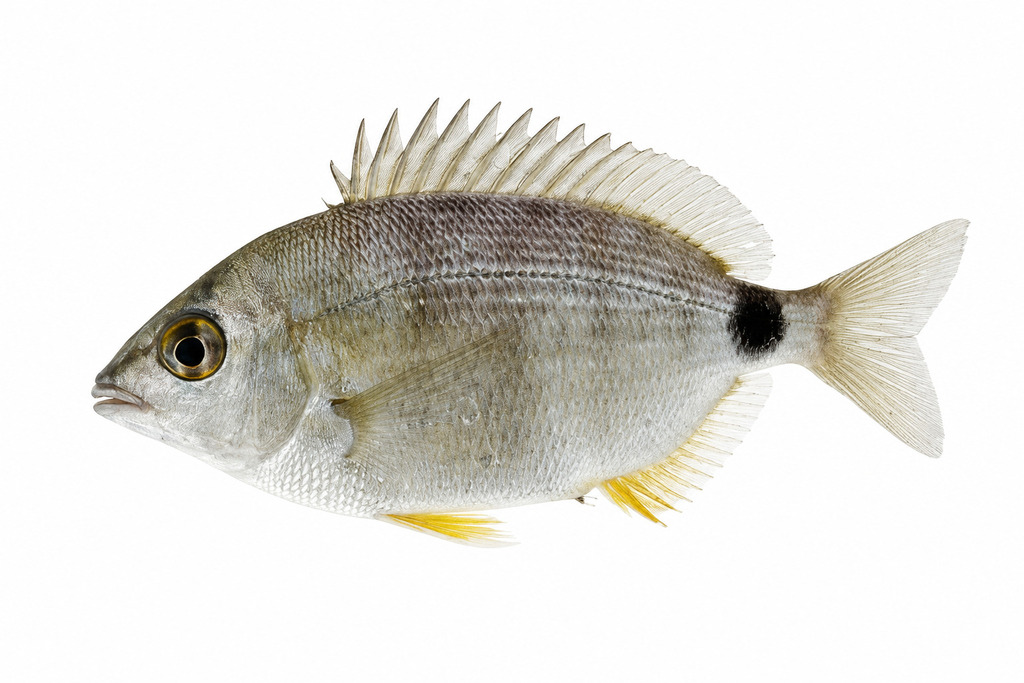
Annular seabream
- Family
- Sparidae
- Depth
- 0–90 m
- Season
- Jan, Feb, Mar, Apr, May, Jun, Jul, Aug, Sep
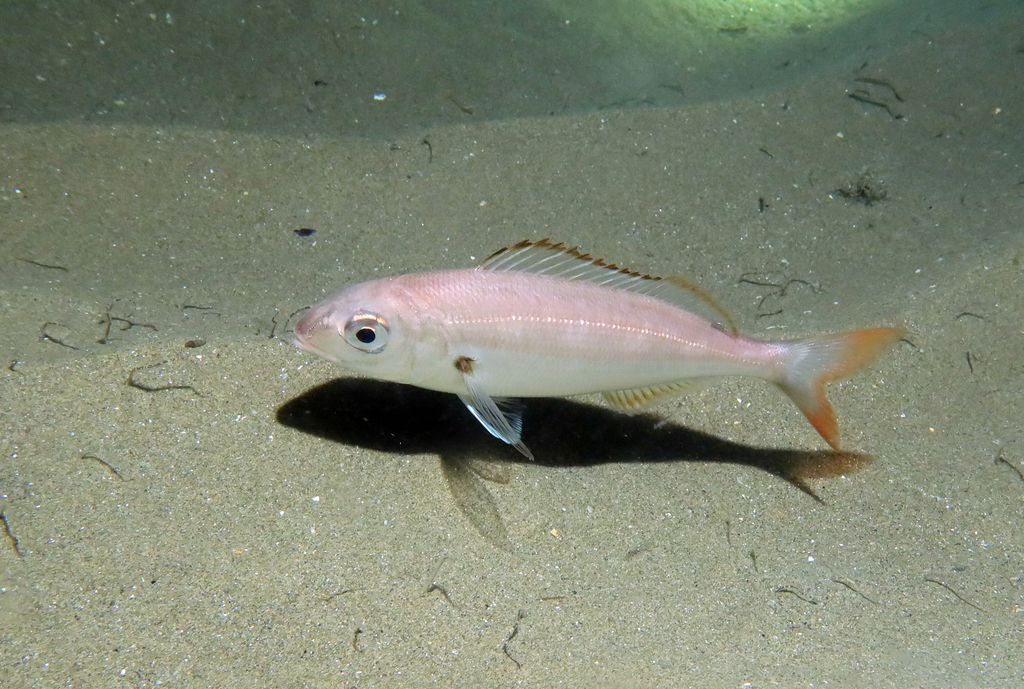
Axillary seabream
- Family
- Sparidae
- Depth
- 0–500 m
- Season
- Jan, Feb, Mar, Apr, May, Jun, Jul, Aug, Sep, Oct, Nov, Dec
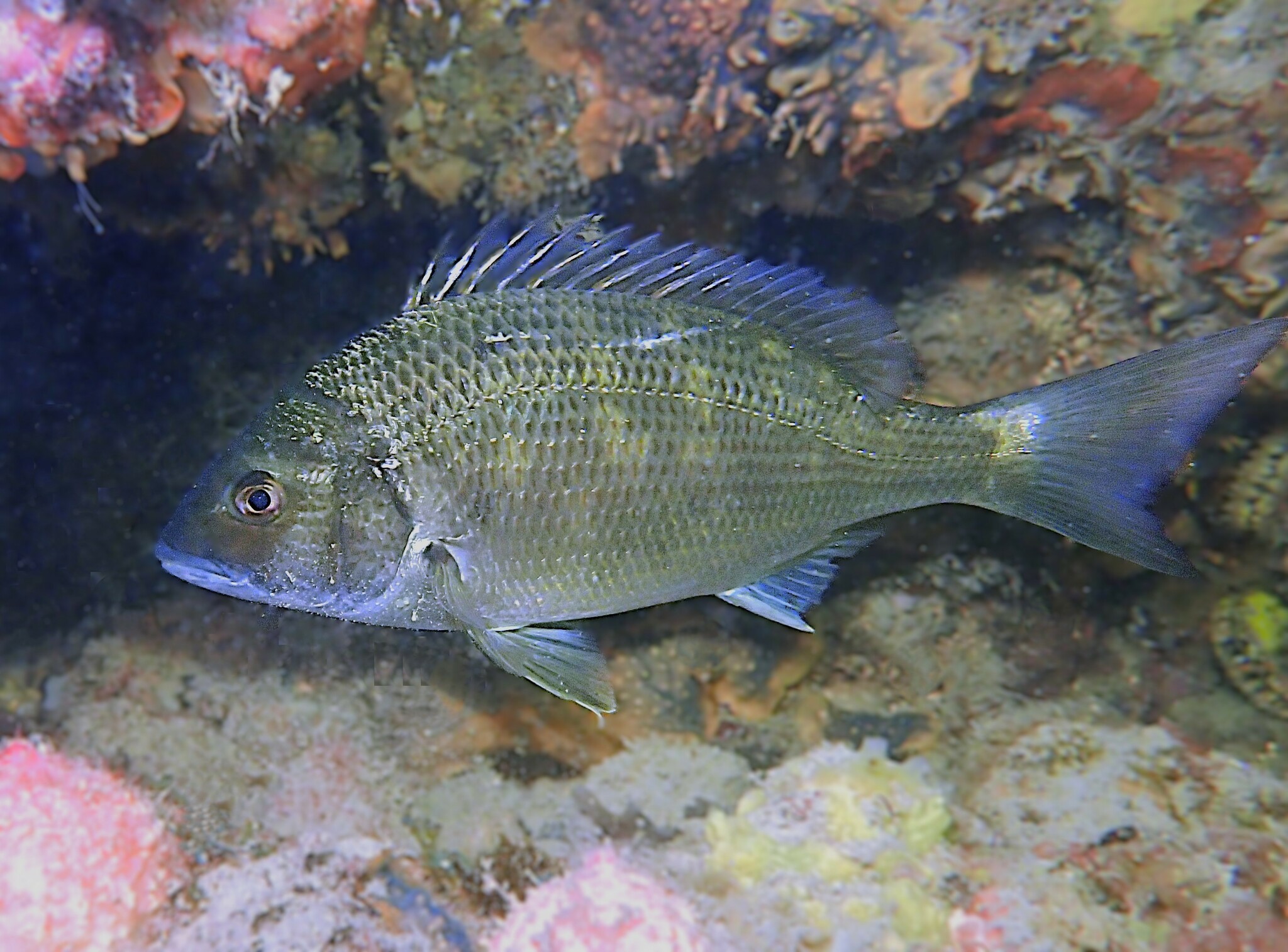
Black bream
- Family
- Sparidae
- Season
- Jan, Feb, Jul, Aug, Sep, Oct, Nov, Dec
Guides for this water
Technique, gear and safety guides that fit Red steenbras.