
Forkbeard
Forkbeard is a cod-like fish of the northeast Atlantic and Mediterranean, found from the Bay of Biscay down to Morocco and Cape Verde, with the Azores and Mediterranean islands included. It lives from 13 to 614 m in subtropical water and feeds on fish. Adults reach 65 cm TL and 3.9 kg. It is present year-round.

Forkbeard (Phycis phycis) is a fish of the family Phycidae. FishBase gives its range as: Northeast Atlantic : Bay of Biscay to Morocco, south to Cape Verde, and including off-lying islands. Also in the Mediterranean and the Azores. It is recorded from 13 to 614 m, in subtropical water. The recorded maxima are 65 cm TL, 3.9 kg. Diet includes fishes. IUCN status: Least Concern (LC). Chinese name: .
Identification
Phycis phycis is recorded at 65 cm total length and 3.9 kg, with a common length of 25 cm and no age figure. Maturity is entered at 36 cm, inside a range that begins at 32 cm and has no upper bound. A 25 cm common fish is recorded shorter than the 36 cm maturity entry; which of the two describes the landed catch is a question for local sampling rather than this page.
No meristic counts are entered for the species, so identification rests on the gadoid body form rather than on a fin-ray key. The English names are forkbeard and fork-beard, two spellings of one word. On iNaturalist the taxon carries 876 observations, a large record for a fish that is rarely the target of a trip.
Habitat and distribution
The range runs from the Bay of Biscay to Morocco and south to Cape Verde, including the off-lying islands, the Mediterranean and the Azores. Twenty-four jurisdictions are listed, among them the Canaries, Madeira, Cyprus and Western Sahara. The environment line is marine and benthopelagic, non-migratory, in subtropical water. Depth runs from 13 to 614 m, with a usual band of 100 to 200 m. That span is the practical fact: the species is within reach of a small boat at the shallow end and beyond most recreational gear at the deep end.
GBIF's distribution file holds nine records and ends there. The set is mostly area-based: the ITIS Eastern Atlantic entry, two Azores exclusive-economic-zone records, European marine waters, a Greek zone, an Israeli Mediterranean zone, and a Portuguese Azores biota list marked native. One Spanish entry comes from the 2025 Doñana Biosphere Reserve checklist and is marked native. These nine statements do not add a jurisdiction beyond FishBase, but they place the species in named sea areas rather than only in national lists.
Season and fishing approach
Every month from January to December appears in the spawning table. The records behind it are regional and uneven: Croatian Elafiti Islands for the full year, the Mediterranean for January to May, the Azores for January, February and December, and Portuguese waters off Peniche for all twelve months. A year-round table built from four regional rows is a statement about the species across its range, not about any one coast.
The usual 100 to 200 m band is boat water. A benthopelagic, non-migratory gadoid on mixed ground will take baits fished close to the bottom, and the 13 m shallow record means a deep mark is not always required. The diet is fish, so strip baits and small whole fish are the match. At 3.9 kg maximum, a medium rod and a leader that survives rock are enough; the real constraint is lead for 100 m of line and the drift.
Edibility and regulations
The Red List category is Least Concern, assessed on 2 February 2015. The species has no CITES listing and no CMS listing; the account treats them as two blanks.
Fisheries use is recorded as minor commercial. Twenty-four jurisdictions appear in the range, so the rule is national or local. Nothing in the text gives a size threshold, a bag cap or a closed period; each is set independently.
Where these facts come from
Check these pages before you rely on a size, range or protection status.
- FishBase — Phycis phycis — FishBase · T2
- GBIF — Phycis phycis occurrence records — GBIF · T2
- IUCN Red List — Phycis phycis — IUCN · T1
- Photo record — iNaturalist — iNaturalist · T3
Fish in the same water
These fish live in the same place.
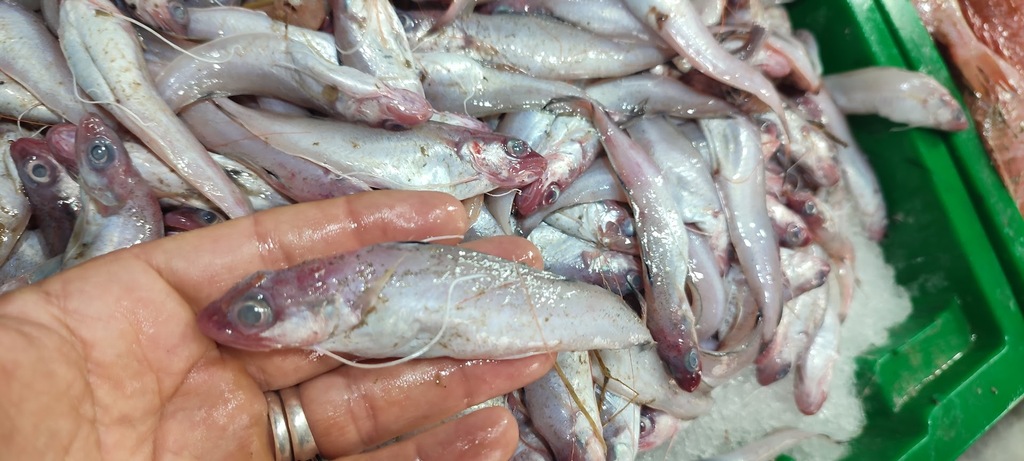
Greater forkbeard
- Family
- Phycidae
- Depth
- 10–1351 m
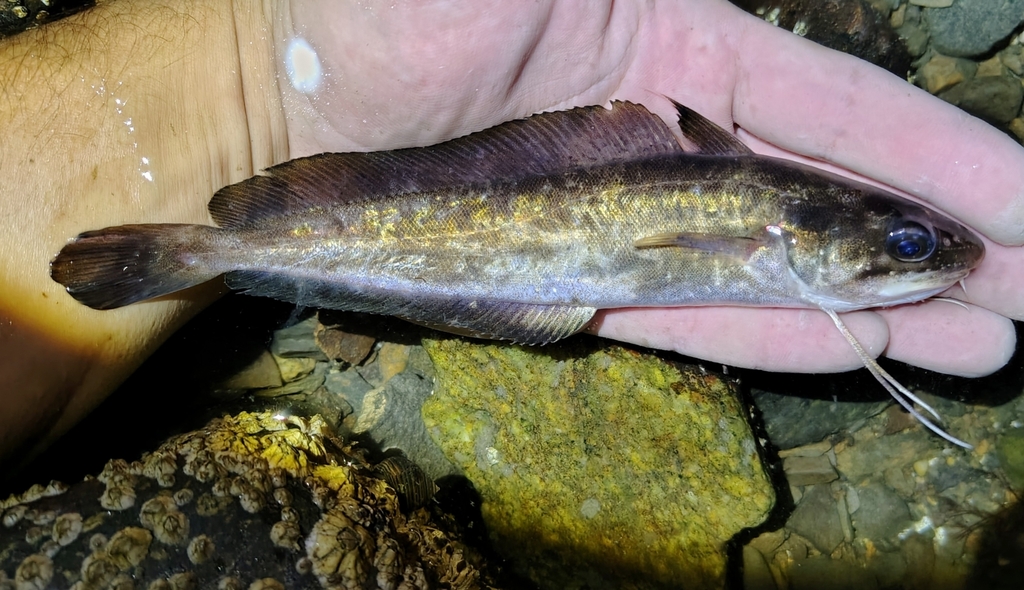
Red hake
- Family
- Phycidae
- Depth
- 35–1152 m
- Season
- Mar, Apr, May, Jun, Jul, Aug, Sep, Oct, Nov

White hake
- Family
- Phycidae
- Depth
- 100–1000 m
- Season
- Apr, May, Jul, Aug, Sep
Guides for this water
Technique, gear and safety guides that fit Forkbeard.