No minimum size · no bag limit
United States — Maine · US-ME
Maine sets no size or bag limit for red hake.
RED HAKE (Urophycis chuss) Size: No minimum size Bag limit: none

Red hake is a phycid of the northwest Atlantic, from North Carolina north to southern Nova Scotia, with strays reaching the Gulf of St Lawrence. It lives from 35 to 1,152 m in temperate water and feeds on crustaceans and fish. Adults reach 66 cm TL and 3.6 kg. The season runs March to November.
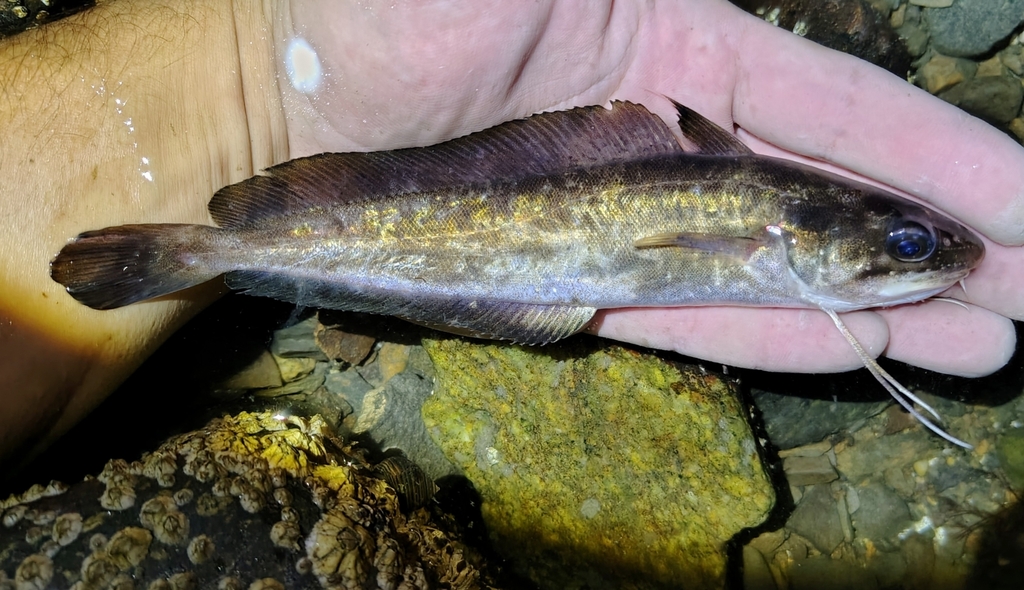
Red hake (Urophycis chuss) is a fish of the family Phycidae. FishBase gives its range as: Northwest Atlantic: North Carolina to southern Nova Scotia, straying to the Gulf of St. Lawrence. It is recorded from 35 to 1152 m, in temperate water. The recorded maxima are 66 cm TL, 3.6 kg. Diet includes crustaceans and fishes. IUCN status: Not Evaluated (NE). Chinese name: .
Urophycis chuss is recorded at 66 cm total length and 3.6 kg, with first maturity at 26 cm and no common length or age figure. The account gives no range around the maturity value, so 26 cm is a single entry rather than an interval. English names are red hake, squirrel hake and ling; the last is shared with other gadoids and is the least useful of the three. iNaturalist holds 188 observations for the taxon.
The morphology field carries no meristic counts, which puts the identification on body form and the hake family rather than on a fin-ray key. A 66 cm ceiling and a 26 cm maturity value are the only size anchors; nothing on the page supplies a growth curve.
The range runs from North Carolina to southern Nova Scotia, with straying fish reaching the Gulf of St. Lawrence. The same account says rare European records are probably misidentifications of Urophycis tenuis. Canada and the contiguous United States are the two countries listed. The environment line is marine and demersal, oceanodromous in temperate water. Depth runs from 35 to 1152 m, with a usual band of 110 to 130 m.
GBIF returns six distribution statements, and the list ends at that number. The set includes an ITIS Western Atlantic entry, a World Register of Marine Species entry for European marine waters, a north-west Atlantic entry, two Gulf of Maine records and a Gulf of St. Lawrence record. The European entry stands beside FishBase's warning that European records are likely another species; the two statements are kept side by side and neither is used to delete the other.
Spawning months run from March to November, leaving December to February out of the table. Two regional rows sit behind the months: Cape Sable to Block Island for May to August, and a row labelled western Ireland for the full March to November span. That second row is an odd companion to a distribution that treats European records as probable misidentifications, and it is reported here as the page records it.
The usual 110 to 130 m band is boat water over mixed ground. A demersal hake holding on mixed ground will take baits fished hard on the bottom, and an oceanodromous habit means local movement rather than a fixed mark. The diet is crustaceans and fish, so squid strips and small fish baits fit. At 3.6 kg maximum, a medium conventional rod is enough; 110 m of line and current decide the lead.
The Red List column reads Not Evaluated. There is no CITES entry and no CMS entry either; the page holds them as two separate blanks.
Uses are commercial fishing and gamefishing. Only two countries appear in the range, but the rules are set below national level in both, so a state or provincial regulation is the one that applies. No size floor, no daily cap and no closed dates appear in the account, and each is a distinct rule to check.
These are the published regulations for this fish. Read the number first. The notice below it is the actual regulation.
Maine sets no size or bag limit for red hake.
RED HAKE (Urophycis chuss) Size: No minimum size Bag limit: none
Every record above names its source and the date it was retrieved. See the regulation register for the full list, or how to read these regulations.
Check these pages before you rely on a size, range or protection status.
These fish live in the same place.


Technique, gear and safety guides that fit Red hake.