No minimum size · no bag limit
United States — Maine · US-ME
Maine sets no size or bag limit for white hake.
WHITE HAKE (Urophycis tenuis) Size: No minimum size Bag limit: none

White hake is a large phycid of the northwest Atlantic, from Labrador and the Grand Banks of Newfoundland down to the coast of North Carolina. It is a deep-water fish, recorded from 100 to 1,000 m in temperate seas, feeding on crustaceans and fish. Adults reach 133 cm TL and 21 kg and can live 23 years. April to September is the season.

White hake (Urophycis tenuis) is a fish of the family Phycidae. FishBase gives its range as: Western Atlantic: Labrador and the Grand Banks of Newfoundland to the coast of North Carolina. Straying to Iceland in the east and Florida in the south. It is recorded from 100 to 1000 m, in temperate water. The recorded maxima are 133 cm TL, 21 kg, 23 years. Diet includes crustaceans and fishes. IUCN status: Not Evaluated (NE). Chinese name: .
Urophycis tenuis reaches 133 cm total length as a male and 135 cm as a female, with a common length of 70 cm, a maximum weight of 21 kg and a maximum reported age of 23 years. First maturity is entered as 46 cm, and the range beside it starts at 48 cm; the two entries do not agree, and neither is corrected here. The 70 cm common length sits between the maturity figures and the 133 cm ceiling, so the typical fish is a mature adult well short of the record.
The English names are white hake, black hake, Boston hake, mud hake, ling and, simply, hake. No meristic counts are entered in the morphology field, so the identification rests on the gadoid shape rather than a fin-ray key. iNaturalist holds 75 observations for the species.
The range runs from Labrador and the Grand Banks of Newfoundland to the North Carolina coast, with strays reaching Iceland to the east and Florida to the south. Canada, Greenland and the contiguous United States are listed, with Saint Pierre and Miquelon as the fourth jurisdiction. The account places it in temperate marine water, demersal and oceanodromous. Depth runs from 100 to 1000 m, with a usual band of 100 to 247 m.
GBIF's distribution file holds eight records and ends at that count. One is the ITIS Western Atlantic entry, two are Gulf of St. Lawrence records, one is Iceland, two are from the Gulf of Maine, one covers the north-west Atlantic and one sits in European marine waters. Iceland matches the stray record in FishBase; the European marine waters entry does not add a coast that the FishBase text names, and the two are read together rather than one being used to strike the other.
Spawning months are April, May, July, August and September, with March, June and October to December absent. The rows behind them are New Jersey and Virginia for April and May, and a north-west Atlantic row covering July to September. The table therefore describes two regional windows rather than a continuous season.
The usual 100 to 247 m band is deep boat water. A demersal, oceanodromous hake in that range is a bottom-fishing target: heavy lead, a bait hard on the seabed and a rod that can lift 21 kg without collapsing. The 1000 m record is outside normal recreational reach, and the 100 m shallow end is the only part of the band a small boat can work. Diet is crustaceans and fish, so fish strips and whole small baits are the match.
The Red List column reads Not Evaluated. CITES and CMS each return an empty field; the two blanks sit apart rather than forming a joint status.
Fisheries use is recorded as highly commercial, and the species is also listed as a gamefish. Four jurisdictions carry the range, but the practical rules are provincial and state-level. No size threshold, no bag cap and no closed period is printed on the page.
These are the published regulations for this fish. Read the number first. The notice below it is the actual regulation.
Maine sets no size or bag limit for white hake.
WHITE HAKE (Urophycis tenuis) Size: No minimum size Bag limit: none
Every record above names its source and the date it was retrieved. See the regulation register for the full list, or how to read these regulations.
Check these pages before you rely on a size, range or protection status.
These fish live in the same place.

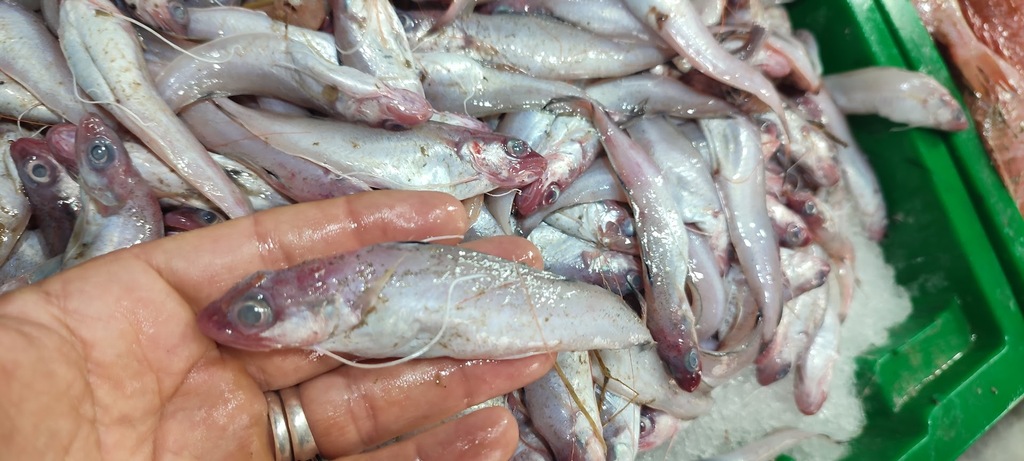
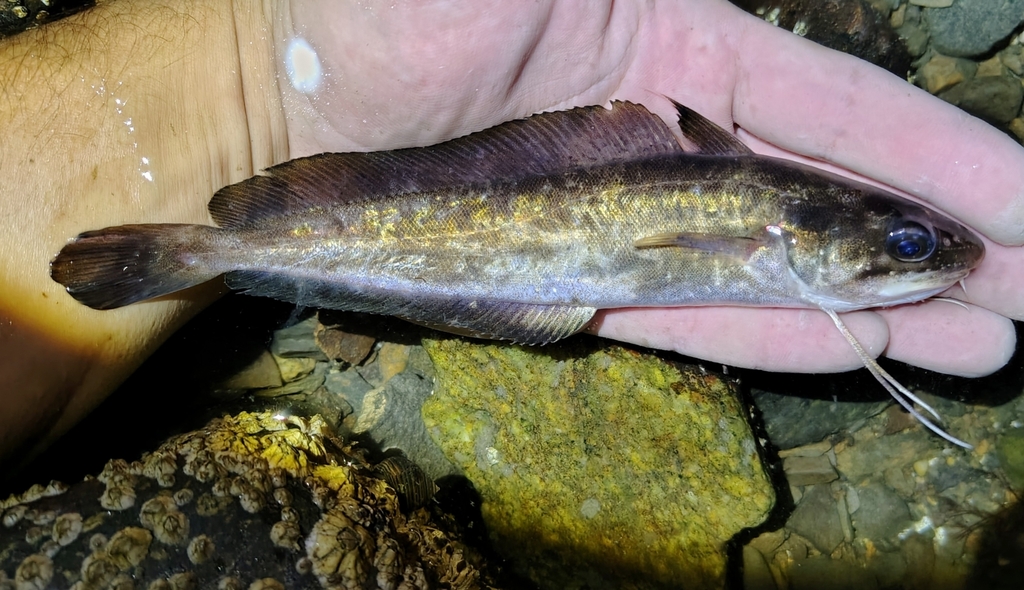
Technique, gear and safety guides that fit White hake.