
Tiger flathead
The first decision on a tiger flathead trip is not lure size or leader class; it is which side of a bottom change the rig should land on. The habitat terms and the depth line frame that decision, and the sources disagree often enough to be worth reading against each other.
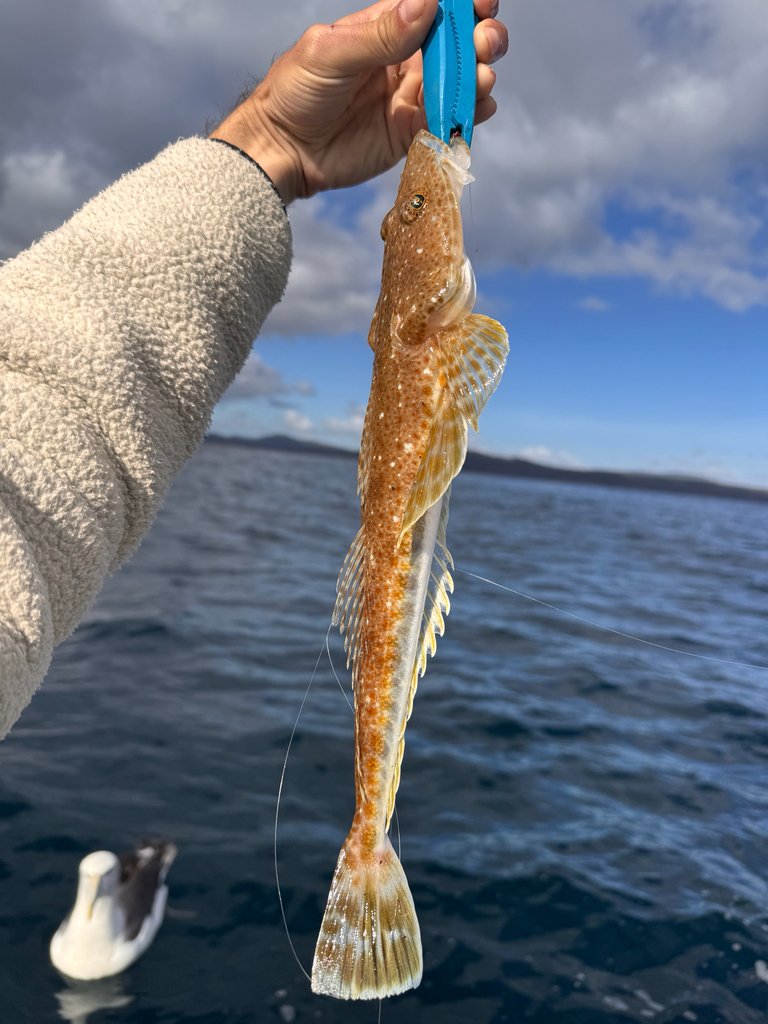
The first decision on a tiger flathead trip is not lure size or leader class; it is which side of a bottom change the rig should land on. The habitat terms and the depth line frame that decision, and the sources disagree often enough to be worth reading against each other.
Sand, mud and the seam between them
FishBase files the species as sandy and muddy, coastal and continental-shelf, then joins mud and sand into one phrase in the biology text, where the fish rests on the bed by day in areas of mud and sand. AFMA uses the same pairing. Neither ranks one above the other, so "sand or mud" goes unanswered, and that answer decides whether a lead ploughs or holds. What the sources do establish is a waiting fish rather than a cruising one. That shifts the search from texture to edges: a featureless sand plain gives an ambusher little to work with, while the seam where mud gives way to sand does. The commercial fleet works the smooth ground the fish rests on — AFMA lists bottom trawl and Danish seine, and calls Danish-seine habitats at risk generally smooth-bottom. Rough reef is not the default.
The 10 m edge and the 400 m record
FishBase prints a depth range of 10–400 m and then "usually ? - 200 m". The question mark is literal: the upper end of the usual band is recorded at 200 m, the lower end is unrecorded. Turning that into "usually 10–200 m" invents a number. The band also moves with the fish. Juveniles inhabit shallow continental-shelf water and shift into the outer shelf zone as they mature, and AFMA adds that mature fish migrate into shallower water before spawning. A 400 m reading is therefore an extreme depth record and a 10 m reading is the inshore edge; neither is the centre. A 400 m plan is a plan built on the extreme.
Where FishBase stops and AFMA continues
FishBase's size box reads 65.0 cm TL, 3.0 kg and 12 years as maxima, all male/unsexed, with maturity shown only as a range beginning at 36 cm and no upper bound. The common-length field is empty, so FishBase offers no routine size. AFMA supplies that and more: up to 70 cm and 3 kg, commonly 35–55 cm and 0.4–1.3 kg, females larger, a lifespan of about 15 years, maturity at 3–5 years. The two ceilings sit 5 cm and 3 years apart. The English names carry trade labels such as Deep sea flathead, King flathead and Trawl flathead, which AFMA repeats as other names; a landing logged under any of these names only connects back to the species when the collection label carries the scientific name. At the rail the cutoff is 36 cm: below it the fish has not spawned; above it the state rule decides.
Ambush posture: bait on the bottom or lifted off it
FishBase describes the daytime posture without ambiguity: not an active fish, resting on the bed in mud and sand, moving into the water column at night to follow prey. The diet matches that — adults take small fish such as silversides and three-spined cardinal fish, juveniles take crustaceans including krill; AFMA adds crustaceans and cannibalism among larger individuals. A lure hopped a metre above the bottom in daylight is fishing a layer the fish is not using. Contact matters more than colour: a plastic dragged over sand throws a small puff, while the same plastic over mud sinks in without one. After dark the calculation changes, because fish are already up in the column. Start on the bottom, and lift only when the light goes.
Spawning: Bass Strait and New South Wales
The FishBase spawning list gives place-month records rather than a season map: Bass Strait in January, February and December; New South Wales in January–May and October–December. Between those records, June to September is unrecorded. Bass Strait gets a three-month summer window; the New South Wales record runs eight months and reaches into autumn and spring. AFMA describes spawning as an extended spring-to-autumn period that varies by location and gives 1.5–2.5 million eggs per female per season; the FishBase summary carries no fecundity figure. The records overlap in January, February and December. A March trip is inside the New South Wales record and outside the Bass Strait one — the same month, two different propositions.
Where the records sit, and why that is not a range
The occurrence query returns 61,435 PRESENT records and reports that the list is complete for that query: AU 61,366, ZZ 4, TF 1. A count of records is not a distribution statement. iNaturalist holds 10 observations, photographs rather than specimens and too few to place a mark. Collections and trawl effort cluster in south-eastern Australia; for the coastline itself the FishBase endemic sentence still governs.
A one-country table and a western report
FishBase's country table lists Australia alone, and the distribution text narrows it to an endemic known only from Coffs Harbour in northern New South Wales to Portland in Victoria, including Bass Strait and Tasmania. AFMA repeats the Coffs Harbour–Portland line, then adds that fish have been reported as far west as the southern coast of Western Australia. That is a report, not a revised range, and it sits outside the FishBase statement. The naming splits too: AFMA lists Neoplatycephalus richardsoni, which WoRMS treats as unaccepted, with Platycephalus richardsoni Castelnau, 1872 accepted. Stock status for the species is assessed in the 2023 Status of Australian Fish Stocks report, number 310; that figure belongs to the report, not to this page.
Hook-set timing and the cost of a snag
AFMA gives two spines on the side of the head in front of the operculum, the lower longer than the upper; FishBase flags the fin spines as venomous. That cost is paid at the hand, not the rod. The take is slow: a fish that waits for prey to pass does not chase, so the load arrives as weight instead of a run. Lift when the weight is there; a missed fish usually returns to the bed. Snagging is the other cost. AFMA notes bottom trawling is impossible on reef structures and that closures protect corals, sponges and seagrass — hard ground that holds a demersal rig is ground the trawl sector avoids. Fish the sand-mud seam, and carry spare rigs.
Where these facts come from
Check these pages before you rely on a size, range or protection status.
- FishBase — Platycephalus richardsoni — FishBase · T2
- GBIF — Platycephalus richardsoni occurrence records — GBIF · T2
- IUCN Red List — Platycephalus richardsoni — IUCN · T1
- Photo record — iNaturalist — iNaturalist · T3
Fish in the same water
These fish live in the same place.
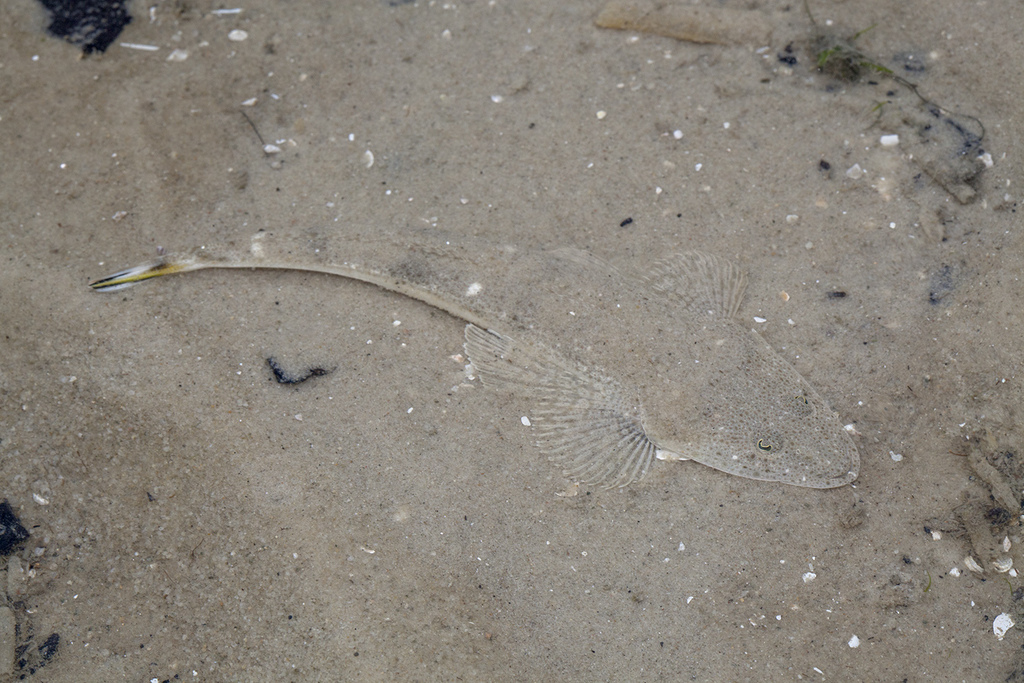
Bartail flathead
- Family
- Platycephalidae
- Depth
- 20–200 m
- Season
- Jan, Feb, Mar, Apr, May, Jul, Aug, Sep, Oct, Nov, Dec

Dusky flathead
- Family
- Platycephalidae
- Depth
- 0–30 m
- Season
- Jan, Feb, Mar, Sep, Oct, Nov, Dec
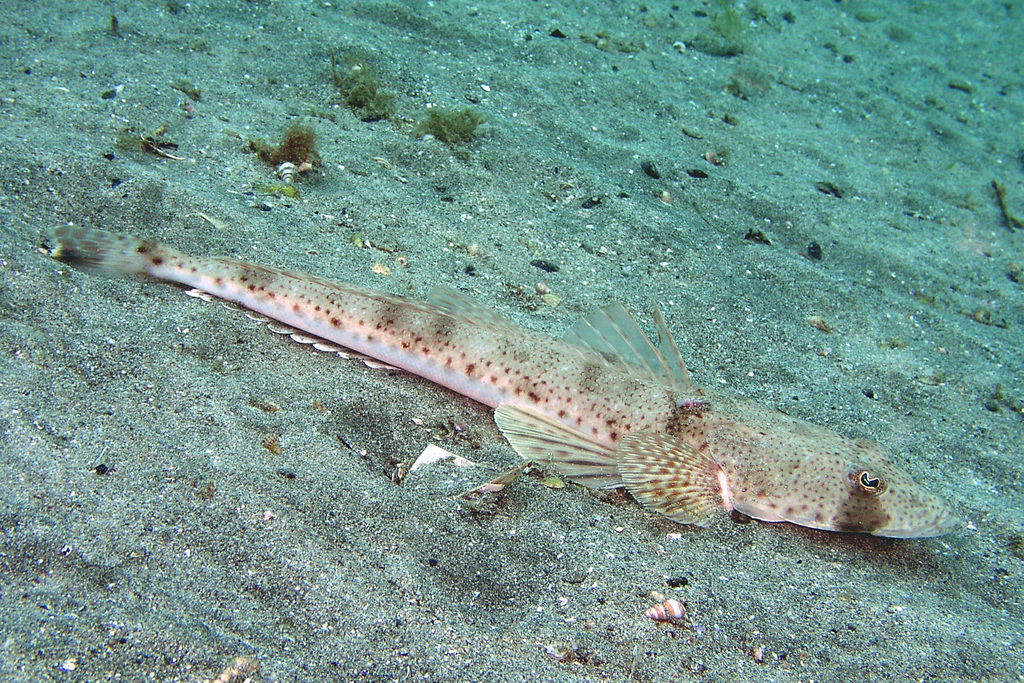
Sand flathead
- Family
- Platycephalidae
- Depth
- 1–100 m
- Season
- Aug, Sep, Oct
Guides for this water
Technique, gear and safety guides that fit Tiger flathead.