
Yellow striped flounder
Three lines here mix two measurements: the maximum is 50 cm SL (standard length), a typical fish measures 28.5 cm TL (total length), and first maturity is 23.5 cm SL. A Japanese stock assessment then adds a third set of numbers — mature females at 16 cm body length, males at 14 cm — and a set of prefectural landing rules written in total length.
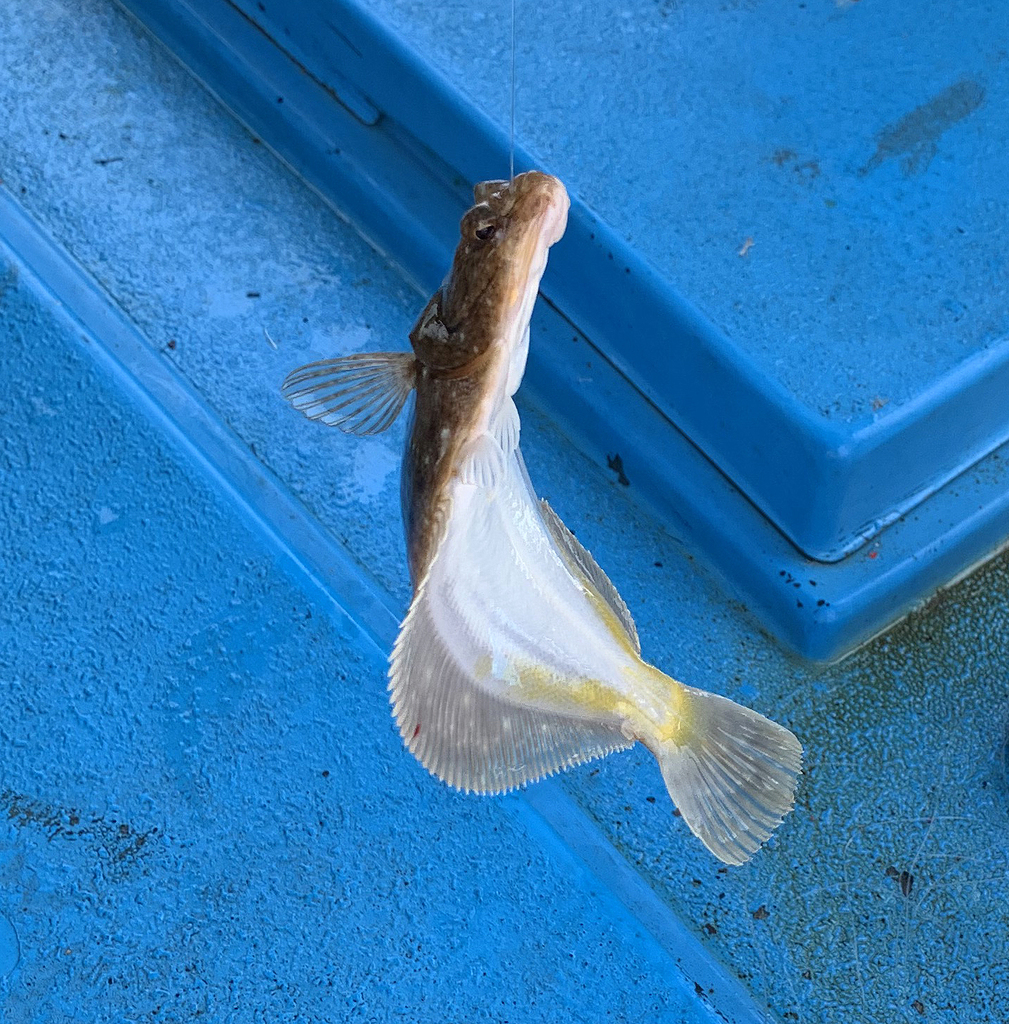
Three lines here mix two measurements: the maximum is 50 cm SL (standard length), a typical fish measures 28.5 cm TL (total length), and first maturity is 23.5 cm SL. A Japanese stock assessment then adds a third set of numbers — mature females at 16 cm body length, males at 14 cm — and a set of prefectural landing rules written in total length. Before any of these can be used as a release line, the unit has to be identified.
Fifty of one kind, twenty-eight of another
The maximum is 50 cm SL; the common figure is 28.5 cm TL; maturity runs from 23 to 24 cm around a midpoint of 23.5 cm SL. The first and third are standard length; the second is total length.
Standard length ends at the caudal peduncle; total length includes the tail. For a flounder, that difference matters: a 28.5 cm TL fish is shorter in standard length, so it is not directly comparable with the 50 cm SL maximum. The page presents the three figures side by side without converting any of them, and no conversion factor is offered by the sources.
What the fifty actually describes
Fifty centimetres SL is a record from the Japanese literature, while the 28.5 cm TL common length comes from a different reference. They may describe different populations, different decades, or simply different measurements of the same fish.
The practical reading is directional, not numerical: 50 cm SL is a larger animal than 50 cm TL, and 28.5 cm TL is a smaller animal than 28.5 cm SL. Anyone who treats the two as a single scale will overestimate the common fish and underestimate the record. The safe rule is to record which length was measured before comparing it with either number.
23.5 cm is SL, the 16 cm is not
FishBase gives first maturity as 23.5 cm SL, with a range of 23 to 24 cm. The Japanese assessment states that mature individuals measure at least 14 cm in males and 16 cm in females, with females reaching full maturity at four years and males at two to three years.
The two maturity statements are not the same measurement and may not be the same definition. Twenty-three and a half centimetres SL is longer than 16 cm in any of the usual bases, so the FishBase line is the more conservative one. The assessment's 14 and 16 cm figures are paired with age structure, which FishBase does not provide. Neither source contradicts the other outright; they answer different questions with different rulers.
The 13 to 17 cm landing rule
The assessment records prefectural landing restrictions of 13 to 17 cm total length, varying by prefecture. Those numbers sit well below the 28.5 cm TL common length and below the FishBase maturity figure.
A 13–17 cm TL rule is a management window, not a biological maturity line. It tells a fisher what may be landed in a particular prefecture; it is silent on whether the fish has matured. Reading it as a release size would be a category error, and comparing it directly with 23.5 cm SL would be a unit error on top of that.
Twenty to forty metres, or shallower than two hundred
The FishBase depth field reads 20–40 metres. The assessment describes the species as living shallower than 200 metres on sand and sandy mud at 5 to 12°C, with seasonal depth movement, spawning grounds at 50 to 90 metres, and one-year-old fish recently found at 160 to 180 metres.
These are not reconcilable by averaging. The FishBase range is a narrow band from one set of records; the assessment range is a habitat statement for the whole stock, and it explicitly includes depths where the FishBase page has no entries. The 160–180 metre note for juveniles is the most specific and the most recent, and it sits outside the FishBase band entirely. A reader should treat 20–40 metres as a starting point, not a boundary.
GBIF files this fish under Pseudopleuronectes herzensteini, accepted key 2409056, not under the Pleuronectes combination used on this page, and the distribution endpoint returns two rows for that key. One is the ITIS Indo-West Pacific statement; the other is the IUCN Red List's Global entry, tagged Least Concern. Both are marked PRESENT and neither carries a country code, so they are realm-level checklist claims, not locality records. iNaturalist holds eight observations for the species. The two sources show how thin the open record is outside the Japanese assessment, and they also record a name that has moved between genera.
Two months in Korea Bay, five in Niigata
FishBase records spawning in April and May for Korea Bay and the Yellow Sea. The assessment gives February to April off Aomori and February to May off Niigata, with a March–April peak and pelagic eggs.
The two calendars overlap but are not identical. The Chinese record is a two-month window in one sea; the Japanese record is a longer window with a stated peak in another. Both can be true for their own region. Neither supports one spawning season for the whole species, and the assessment's peak is the only month-level statement in either source.
Thirty-two tonnes
The assessment reports that the 2024 catch was 32 tonnes, the lowest on record, after a decline from 787 tonnes in 1994 and 300 tonnes through 1998–2008. It classifies the stock level as low and the trend as decreasing, and sets a 2026 ABC of 22 to 27 tonnes.
Those are fishery numbers, not abundance estimates, and the assessment says the evaluation was based on catch trends. That is a weaker basis than a survey index, and the report presents it as such. For an angler, the practical meaning is that the stock is not in a phase where a 50 cm fish is likely; the common length of 28.5 cm TL is the more realistic expectation.
Measure the right length
Write down the measurement basis before comparing a fish with any number on this page. Use 23.5 cm SL as the conservative maturity reference, and treat the 13–17 cm TL landing rule as a legal window rather than a biological line.
Expect a fish near 28.5 cm TL, take 50 cm SL as a record, and never average the FishBase depth band with the assessment's habitat description. The three rulers are the story: the fish has not changed, but the numbers only mean something once you know which end of the fish they were taken from.
Where these facts come from
Check these pages before you rely on a size, range or protection status.
- FishBase — Pleuronectes herzensteini — FishBase · T2
- GBIF — Pleuronectes herzensteini occurrence records — GBIF · T2
- IUCN Red List — Pleuronectes herzensteini — IUCN · T1
- Photo record — iNaturalist — iNaturalist · T3
Fish in the same water
These fish live in the same place.
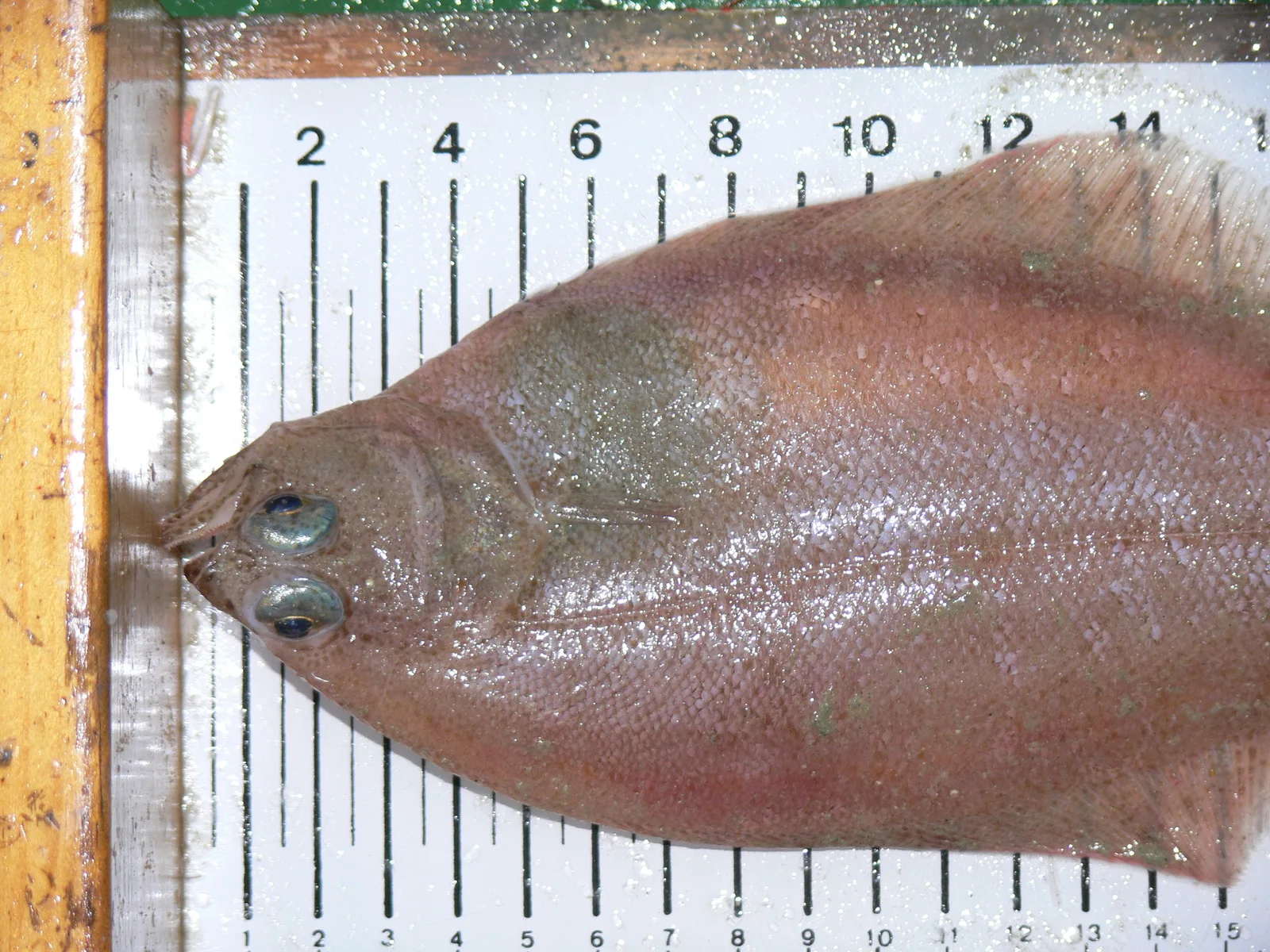
American plaice
- Family
- Pleuronectidae
- Depth
- 10–3000 m
- Season
- Mar, Apr, May
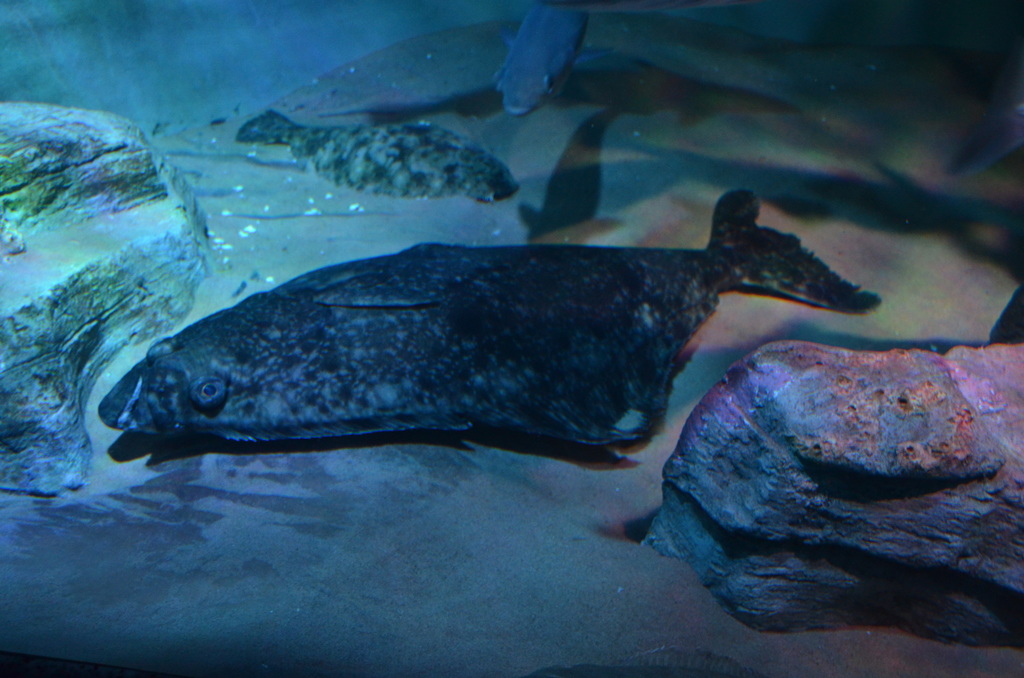
Atlantic halibut
- Family
- Pleuronectidae
- Depth
- 50–2000 m
- Season
- Jan, Feb, Mar, Apr, Dec
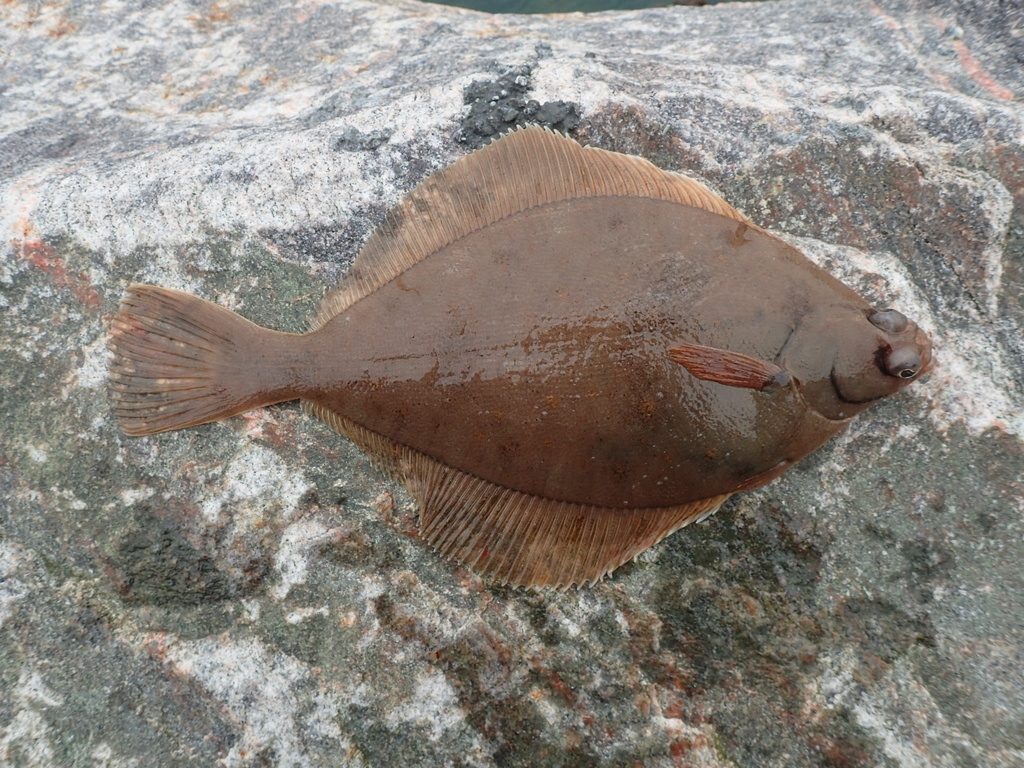
Common dab
- Family
- Pleuronectidae
- Depth
- 20–150 m
- Season
- Jan, Feb, Mar, Apr, May, Jun, Jul, Aug
Guides for this water
Technique, gear and safety guides that fit Yellow striped flounder.