
Hapuku
Hapuku is Polyprion oxygeneios, a southern-hemisphere wreckfish that reaches 160 cm and 100 kg and can live 60 years. It is recorded from 50 to 854 m. It is not the Atlantic wreckfish, Polyprion americanus, which also appears under the alias hapuka and is known elsewhere as bass groper. Keeping the two apart is the first job here. June to September is the season.
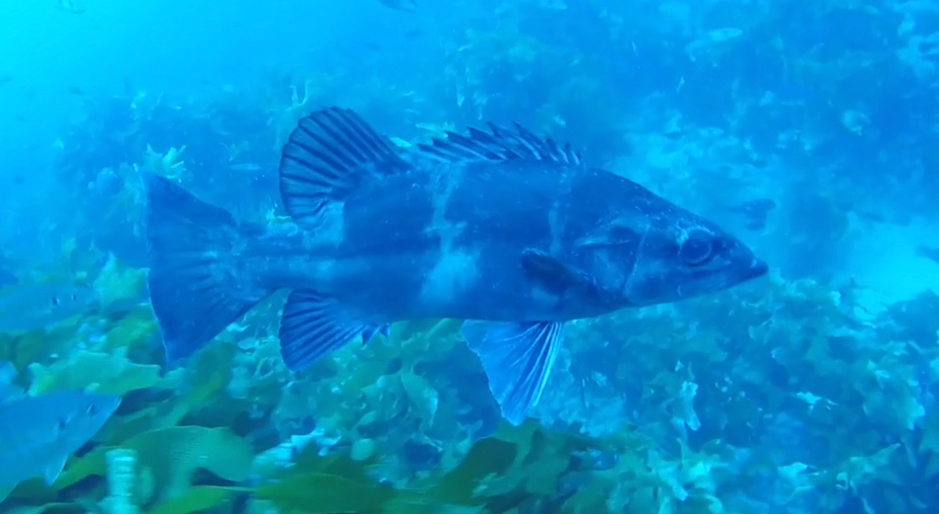
Hapuku is Polyprion oxygeneios, a southern-hemisphere wreckfish that reaches 160 cm and 100 kg. It is not the Atlantic wreckfish, Polyprion americanus, which also appears in FishBase under the alias "hapuka" and is known elsewhere as bass groper or wreckfish. Keeping the two names apart is the first job on this page.
Hapuku is Polyprion oxygeneios, not the Atlantic wreckfish
FishBase lists this species as Polyprion oxygeneios, with English names including hapuku, hapuka, whapuku, groper and New Zealand groper. Polyprion americanus is a separate species with its own page, its own 210 cm maximum and its own Atlantic and Mediterranean range. The two overlap in name lists and in some southern records, not in identity.
The distinction matters when reading regulations. A rule written for "groper" in New Zealand may cover this species, while "wreckfish" in the Atlantic refers to the other one. The page uses hapuku throughout and treats P. americanus as a separate fish.
160 cm, 100 kg, and mature at 88 cm
The maximum length is 160.0 cm TL, the common length 100.0 cm TL, the maximum published weight 100.0 kg, and the maximum reported age 60 years. The maturity estimate is 88.0 cm, with no published range. Wikipedia gives a body length of 60–180 cm, which brackets the FishBase maximum rather than contradicting it.
A 100 cm common length against a 160 cm maximum is a narrow spread by the standards of the other species on this coast. The dorsal fin has 9–12 spines and 12 soft rays; the anal fin has 3 spines and 7–9 soft rays.
5,869 of 6,569 records are New Zealand
GBIF holds 6,569 records: 5,869 from New Zealand, 618 from Australia, 10 from Chile, 10 unassigned, 8 from French southern territories, 3 from Norfolk Island, and one each from Brazil, Peru and South Africa. FishBase gives a circumglobal southern range: South Africa, Australia, New Zealand, the Kermadec Islands, the Desventuradas, Juan Fernández, Chile, southern Brazil and Tristan da Cunha.
New Zealand's share is 89 percent of the GBIF total. The range text is much wider than the record cloud, which is normal for a deep fish that is sampled where the fleet works. iNaturalist carries 46 observations, a small set that reflects how rarely the fish is seen by divers.
Fifty to 854 metres, with the shelf break as the core
The depth range is 50–854 m. The biology note narrows the working ground: adults occur over rough ground from the central shelf at about 100 m to the shelf edge and down to the upper slope. The 854 m figure is the deepest record, not the usual mark.
The climate line reads subtropical, from 28°S to 50°S and 180°W to 180°E. That is a full circumpolar band rather than a single coast. Wikipedia gives 30–800 m, which is close enough to the FishBase envelope to confirm the scale. No temperature preference is published.
Rough ground, seamounts, and drifting juveniles
Adults hold rough ground on the shelf and slope, and the species also occurs on seamounts. Juveniles are found in surface waters and may school in association with drifting weed. That is a rare split in a wreckfish page: the adult is a structural fish, the juvenile is a drifting one.
The diet is barracouta, pilchards and various bottom-dwelling fish. The species is a primary gonochorist, and it is preyed on by sperm whales. The terrain list — deep water, reef, shelf — describes the adult ground, and the shelf break is the part of it a recreational boat can reach.
Spawning runs June to September
The spawning table marks June to September. Two regional rows narrow it: Juan Fernández, around the archipelago, July–September; New Zealand, June–August. The New Zealand window is the shorter of the two and sits at the start of the union.
No temperature is published, so the months are the only seasonal signal. The Juan Fernández row is the only South American spawning record on the page, and it is three months long. A trip planned around spawning should use the regional row, not the four-month union.
Droplining to 400 metres
The methods list gives boat bottom fishing as mainstream and handline as secondary. The biology note is specific about gear: the species is taken by droplining down to 400 m, and it sometimes appears in the trawled catch. That 400 m limit is a fishing figure, well inside the 854 m biological record.
A dropline is a vertical set, so the bait goes down and comes up without covering ground. On rough shelf edge, that is the difference between fishing and losing tackle. The 100 kg maximum means the fish can outlast a light rig; the 60-year lifespan means a big one is old.
Severely overfished, not assessed, and managed under MPI rules
FishBase's biology note states that the species is severely overfished. Its IUCN entry is Not Evaluated, with CITES and CMS also Not Evaluated. It is recorded as both a commercial fishery and a gamefish, and it is utilized fresh and frozen, and can be steamed, fried, broiled, boiled, microwaved or baked.
In New Zealand, MPI sets amateur fishing rules that apply by fishery management area (FMA), covering daily bag limits, minimum sizes, method restrictions and accumulation limits. The Marine Reserves Act 1971 makes marine reserves no-take, and special rules apply in the Hauraki Gulf, Fiordland and the Marlborough Sounds, with temporary closures and rāhui possible at short notice.
No bag number, size limit or closed date is given here. Check the current MPI rule for the FMA and the reserve map before the trip. For a species the source itself calls severely overfished, the size of the fish you keep is a management decision as much as a personal one.
Where these facts come from
Check these pages before you rely on a size, range or protection status.
- FishBase — Polyprion oxygeneios — FishBase · T2
- GBIF — Polyprion oxygeneios occurrence records — GBIF · T2
- IUCN Red List — Polyprion oxygeneios — IUCN · T1
- Photo record — iNaturalist — iNaturalist · T3
Fish in the same water
These fish live in the same place.
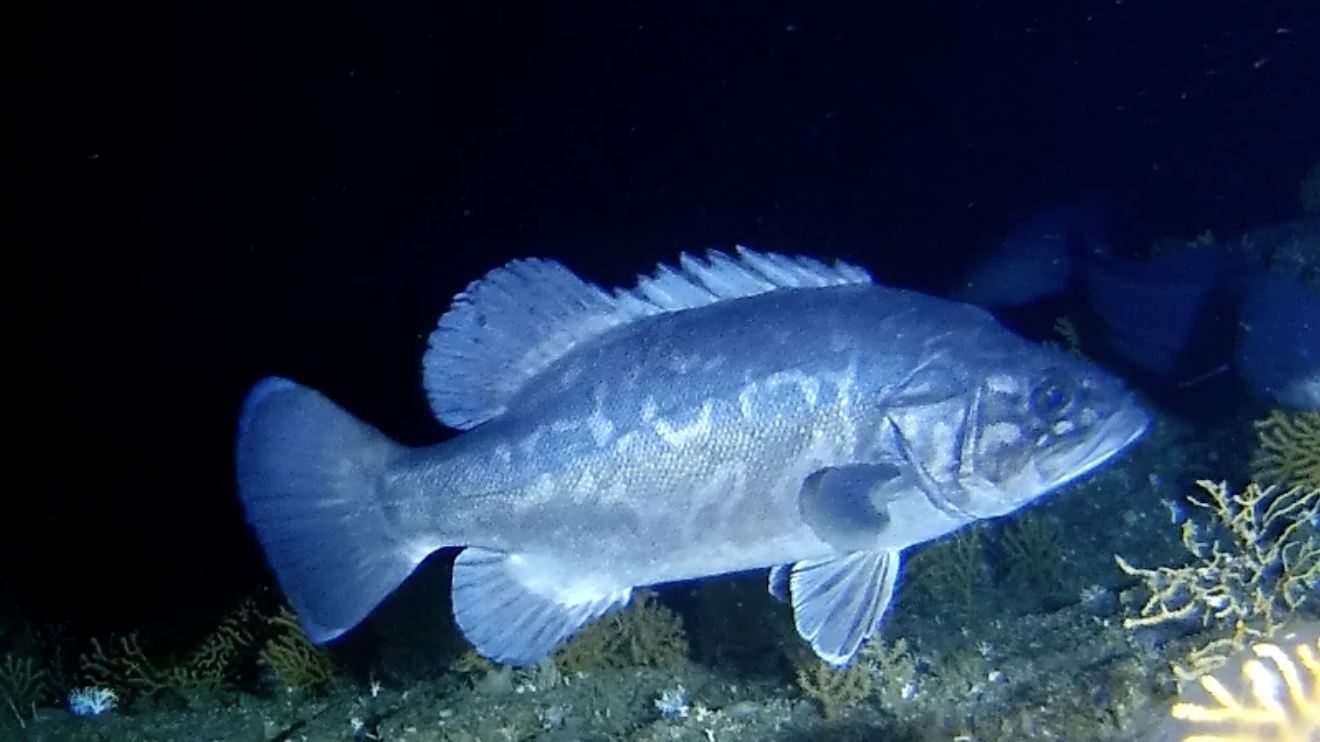
Wreckfish
- Family
- Polyprionidae
- Depth
- 40–600 m
- Season
- Jun, Jul, Aug, Sep, Oct

Acoupa weakfish
- Family
- Sciaenidae
- Depth
- 1–20 m
- Season
- Jan, Feb, Mar, Apr, May, Jun, Jul, Aug, Sep, Oct, Nov, Dec

American angler
- Family
- Lophiidae
- Depth
- 0–800 m
- Season
- Mar, Apr, May, Jun
Guides for this water
Technique, gear and safety guides that fit Hapuku.