
Scotsman
Scotsman is a western Indian Ocean sparid known only from Beira in Mozambique to Algoa Bay in South Africa. It lives between 20 and 100 m, reaches 90 cm TL with a common length of 35 cm and 7.8 kg, and no maturity length is published. South Africa allows one fish a day at 40 cm TL, a minimum sitting above the common length. Boat bottom fishing and jigging are the methods listed.

FishBase gives *Polysteganus praeorbitalis* 90 cm TL maximum, 35 cm TL common and 7.8 kg heaviest published; first maturity is blank. The range is the western Indian Ocean, known only from Beira in Mozambique to Algoa Bay in South Africa. South Africa allows one fish a day at 40 cm TL, a minimum that sits above the common length of 35 cm. The IUCN entry is Vulnerable, assessed 11 July 2024.
Identification
FishBase gives 12 dorsal spines, 10 soft dorsal rays, three anal spines and 8 soft anal rays on a fusiform body. The short description is three features and no colour: a small eye, a deep preorbital and a steep forehead. The specific name refers to the preorbital, and that reading matches the description the page gives; the link between name and feature is inference, since the entry does not gloss the epithet.
No colour is recorded for the species at all. That is worth stating plainly, because every other sparid in this group has at least one colour line on its FishBase entry, and a fish without a recorded colour cannot be matched on colour at a counter.
The size spread is the other identification problem. A common fish is 35 cm and the maximum 90 cm. Most fish met are small; the 90 cm fish is the rare end, and the page gives no weight for anything between 7.8 kg and the common length.
Range and habitat
The distribution text is narrow and specific: known only from Beira, Mozambique to Algoa Bay, South Africa, inside a latitude band of 17°S to 28°S. The occurrence data is thin. GBIF returns 100 present records, 97 of them from South Africa and 3 with no country assigned, and none from Mozambique. iNaturalist holds 3 observations.
So the Mozambican end of the range is textual here, with no occurrence record behind it, and the South African end carries almost all the data. Three iNaturalist observations is the smallest photographic record in this group; it is not evidence that the fish is rare, only that it is rarely photographed, which is what a 20–100 m reef fish would produce.
The habitat line is deep offshore reef from 20 m to 100 m, with the environment field adding reef-associated and subtropical.
Habits and diet
The diet is large crabs, crayfish, reef fish and squid. Crayfish is the South African term for spiny lobster, so the list describes a reef predator taking hard-shelled and mobile prey rather than a grazer.
The biology line also states that the species spawns in winter. That is the only reproduction statement on the page: the maturity field is blank, the spawning table returns no records, and no age or growth figure is given. A winter spawn with no months, no locality and no size at maturity is a direction, not a schedule.
Season and time of day
Winter is the only seasonal statement. In the southern hemisphere that points to the middle of the year, but the page names no months and the spawning table is empty, so a month cannot be quoted from these sources.
No time of day and no tide are recorded. A reef fish recorded from 20 m to 100 m is a boat target for most of its range, and any statement about dawn, dusk or current would be borrowed rather than sourced.
South Africa lists no closed season for Scotsman in the brochure checked. MPA zoning can still close an area.
Tackle and techniques
Depth is the first constraint. The species is recorded from 20 m to 100 m over reef, and a 20 m minimum puts the whole recorded range beyond shore casting. This is a boat fishery, which is inference from the depth range; the page records no shore capture.
Diet is the second. Large crabs, crayfish, reef fish and squid point to large bottom baits and to fishing structure rather than open sand. The page records no bait, no rig and no method, so bait size and presentation are inference from the prey list.
Size is the third, and it cuts against the usual logic. A common fish is 35 cm and the legal minimum is 40 cm. The rule is above the common length, so a high proportion of what is hooked cannot be kept. That makes clean release part of the technique rather than an afterthought, and it is the one place where the regulation changes how the fishing is done.
At 90 cm and 7.8 kg the maximum is a heavy fish but not the heaviest in this group; gear sized for a 40–60 cm fish covers the realistic catch, and the 90 cm end is a minority event.
Kitchen and handling
FishBase records that the species is sold fresh. It gives no flesh description and no culinary note, and none is added here. The species is harmless to humans, with no toxin warning and no parasite record on the page.
A 35 cm common length is a small fish for a sparid that reaches 90 cm. A keeper at 40 cm is therefore larger than most of what the fishery meets, and the fillet yield from a 40 cm fish is modest.
Regulations and conservation
South Africa requires a recreational angling permit; catch is for own use only, no sale; the overall daily bag is 10 fish unless a species rule applies. For Scotsman the species rule is 1 fish per person per day at 40 cm TL.
That minimum cannot be checked against maturity here, because FishBase gives no Lm for the species. The 40 cm figure can be compared with the 35 cm common length, and it is 5 cm above it. A rule set above the common size removes most of the catch and leaves the large fish as the target, which is the opposite of what a minimum size usually does for a small-bodied stock.
No closed season is listed in the brochure checked. MPA zoning and any provincial rule sit on top of the national rule.
Mozambique: the range starts at Beira, but GBIF holds no Mozambican record for the species and no Mozambican recreational size or bag rule was located in the sources used here. The northern part of the range is described and not regulated in this article.
The IUCN entry is Vulnerable, assessed 11 July 2024, with no trend and no stock estimate on the page. One fish a day and a 40 cm minimum on a species with a 35 cm common length is a restrictive combination; it is also consistent with a Vulnerable listing rather than a sign that the stock has recovered.
How to catch it
Boat bottom fishing
Fished with the listed approach, matched to the recorded depth and size.
Jigging
Fished with the listed approach, matched to the recorded depth and size.
Where these facts come from
Check these pages before you rely on a size, range or protection status.
- FishBase — Polysteganus praeorbitalis — FishBase · T2
- GBIF — Polysteganus praeorbitalis occurrence records — GBIF · T2
- IUCN Red List — Polysteganus praeorbitalis — IUCN · T1
- Photo record — iNaturalist — iNaturalist · T3
Fish in the same water
These fish live in the same place.
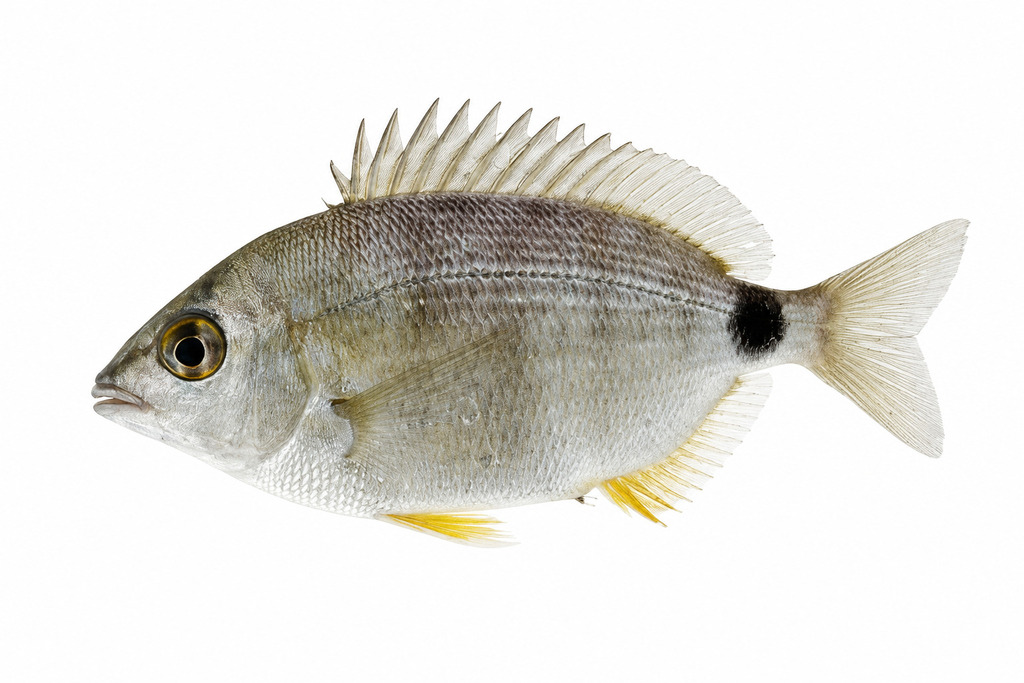
Annular seabream
- Family
- Sparidae
- Depth
- 0–90 m
- Season
- Jan, Feb, Mar, Apr, May, Jun, Jul, Aug, Sep
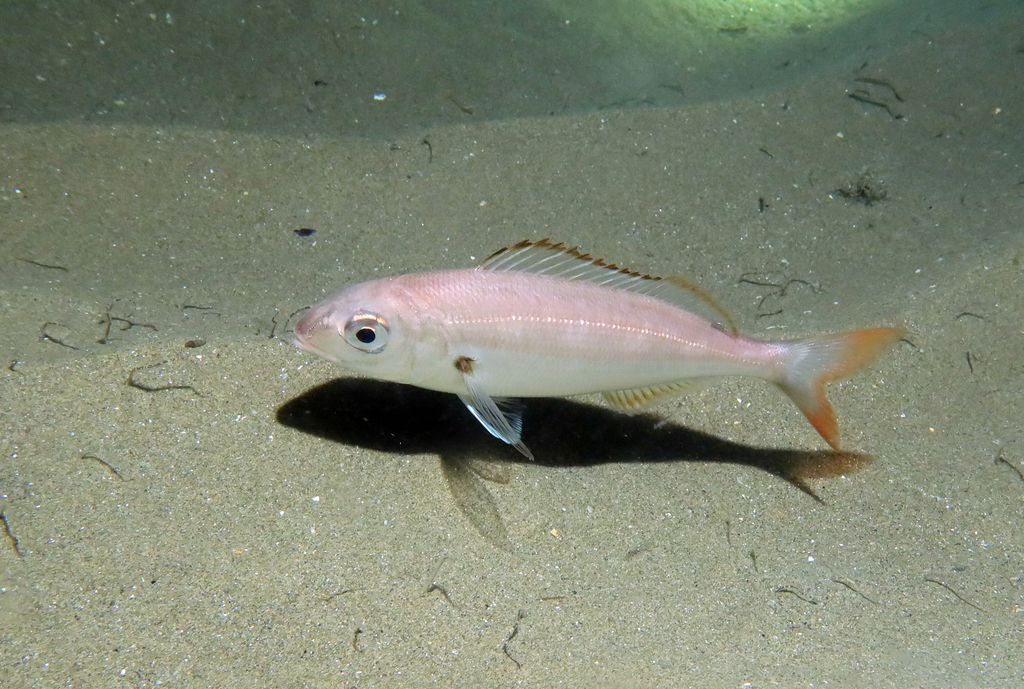
Axillary seabream
- Family
- Sparidae
- Depth
- 0–500 m
- Season
- Jan, Feb, Mar, Apr, May, Jun, Jul, Aug, Sep, Oct, Nov, Dec
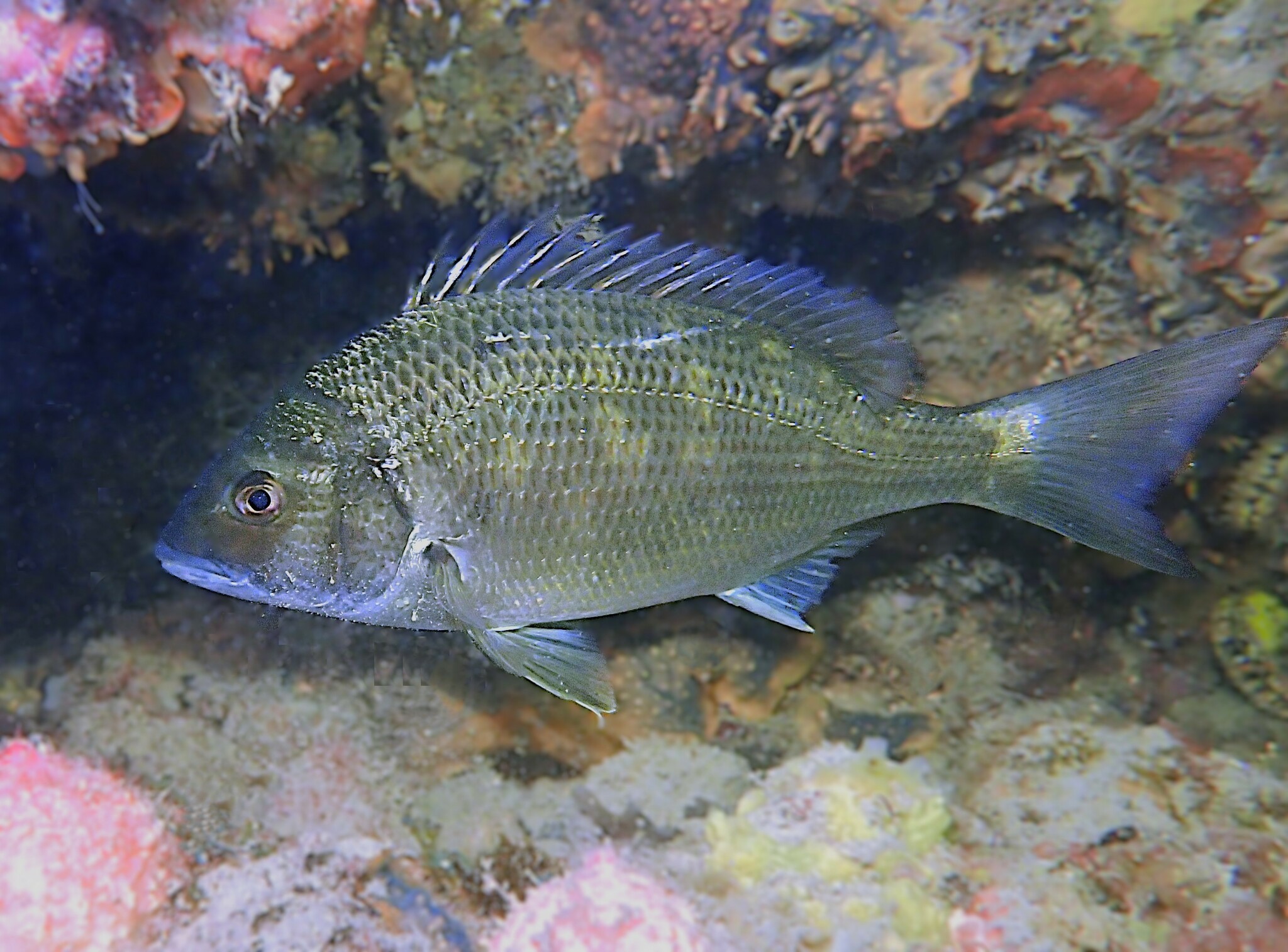
Black bream
- Family
- Sparidae
- Season
- Jan, Feb, Jul, Aug, Sep, Oct, Nov, Dec
Guides for this water
Technique, gear and safety guides that fit Scotsman.