
Northern searobin
The northern searobin is a triglid of the northwest Atlantic, recorded by FishBase from Nova Scotia to central Florida and through the Gulf of Mexico. It reaches 38 cm TL with a common length of 30 cm. It is a bottom fish of sandy ground from 15 to 170 m, marine to brackish, and it is a minor commercial species and an occasional bait fish rather than a mainstream recreational target.

The northern searobin is a triglid of the northwest Atlantic, recorded by FishBase from Nova Scotia to central Florida and through the Gulf of Mexico. It reaches 38 cm TL with a common length of 30 cm. It is a bottom fish of sandy ground from 15 to 170 m, marine to brackish, and it is a minor commercial species and an occasional bait fish rather than a mainstream recreational target.
Identification
FishBase's page for the species carries no fin formula and no body-shape field, so identification rests on family characters and photographs. Sea robins have a large, bony, armoured head, a body that tapers to a slim tail, and broad pectoral fins whose lowest rays are free and used to probe the bottom. The head is the giveaway: a steep, blunt, spiny profile in front of a narrow body. Check any fish against photographs and a regional guide before keeping it, and handle the head and gill cover with a wet cloth, because the ridges there are rough.
Habitat and distribution
The species occurs on sandy bottom and feeds on shrimps, crabs, other crustaceans, squid, bivalves and small fishes. FishBase also records that it produces a loud, drumming sound by vibrating its swim bladder, which is often heard on deck. The recorded depth range is 15 to 170 m; the species is marine and brackish, demersal and temperate.
FishBase gives the range as Nova Scotia to central Florida, with the Gulf of Mexico included. GBIF holds 10,525 occurrence records, almost all from the United States (10,349), with 45 from Canada and 30 from Mexico.
Season and fishing approach
FishBase's spawning table runs May to September in the New York Bight and June to September off Woods Hole. That is a spawning record, not a bite forecast, and it says nothing about how the fish behaves outside the spawning period.
The approved methods are boat bottom fishing and shore casting. The recorded depth range starts at 15 m, so shore casting only works where deep water is reachable from land; most effort is from a boat over sand. Fish a simple bottom rig with a strip of squid or fish, or a small live bait, and keep it on the bottom — the fish is a forager, not a chaser. A 2.1–2.7 m rod, a 3000–4000 reel and 15–20 lb braid are ample; use enough lead to hold in the tide and a leader heavy enough to survive the rough head.
Edibility and regulations
FishBase records the species as used for food and fish meal, as bait for lobster traps and flatfish, and for pet food and fertiliser; it is utilised fresh and frozen, and can be broiled or baked. That is a broad list rather than a recommendation — most recreational anglers treat it as a by-catch.
The IUCN Red List category is LC (Least Concern), assessed on 22 August 2012. There is no CITES or CMS listing, and the species is recorded as harmless to humans. No federal size, season or bag entry covers northern searobin; state rules may apply, so check where you fish.
How to catch it
Boat bottom fishing
Fished with the listed approach, matched to the recorded depth and size.
Shore casting
Fished with the listed approach, matched to the recorded depth and size.
Where these facts come from
Check these pages before you rely on a size, range or protection status.
- FishBase — Prionotus carolinus — FishBase · T2
- GBIF — Prionotus carolinus occurrence records — GBIF · T2
- IUCN Red List — Prionotus carolinus — IUCN · T1
- Photo record — iNaturalist — iNaturalist · T3
Fish in the same water
These fish live in the same place.
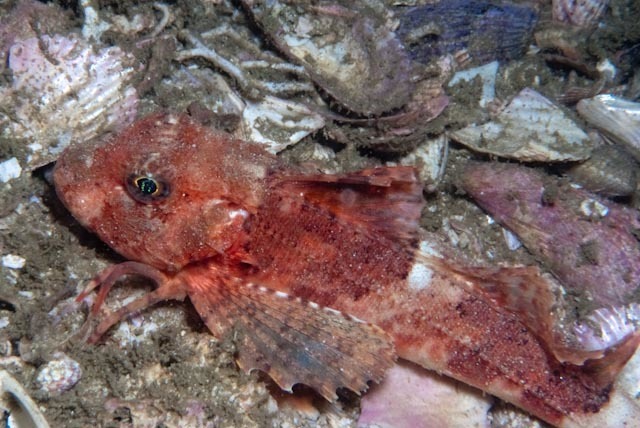
Cape gurnard
- Family
- Triglidae
- Depth
- 10–390 m
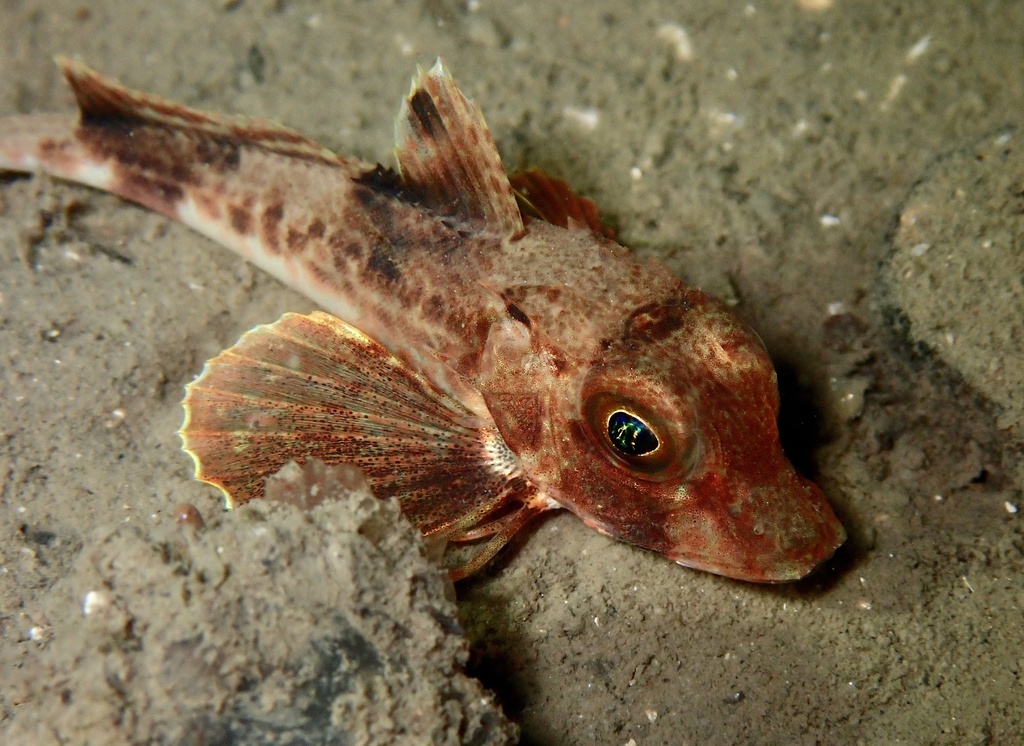
Grey gurnard
- Family
- Triglidae
- Depth
- 10–340 m
- Season
- Feb, Mar, Apr, May, Jun, Jul, Aug
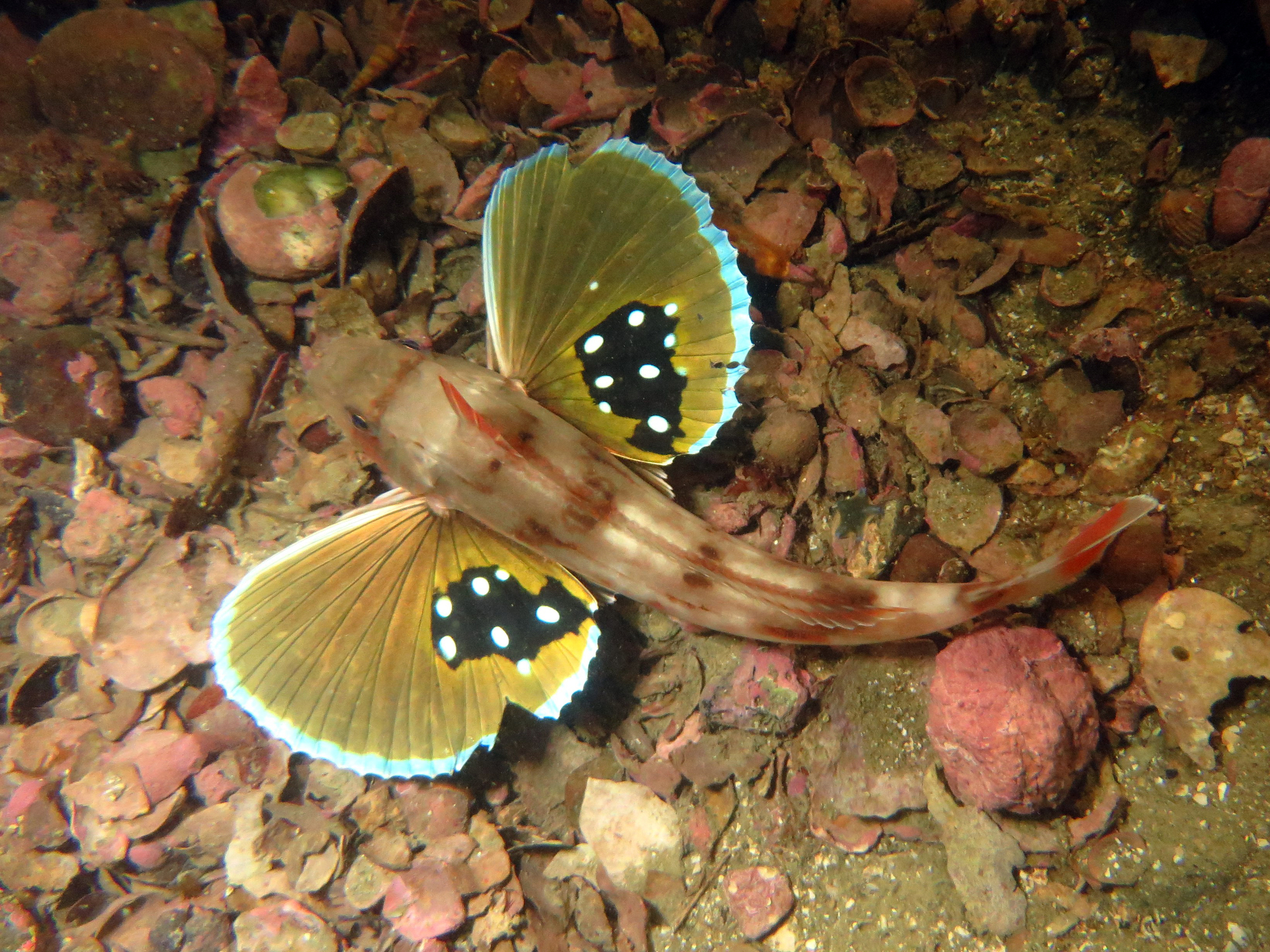
Kumu gurnard
- Family
- Triglidae
- Depth
- 1–200 m
- Season
- Jan, Feb, Mar, Apr, May, Jun, Jul, Aug, Sep, Oct, Nov, Dec
Guides for this water
Technique, gear and safety guides that fit Northern searobin.