
Lavender jobfish
Lavender jobfish is a deep-water lutjanid of the Indo-Pacific, from East Africa across to Hawaii and north to southern Japan. It is a spindle-shaped fish of the 100 to 360 m band, feeding on fish, molluscs and worms. Adults reach 79 cm TL and 8.4 kg. It lives well below normal reef depths.
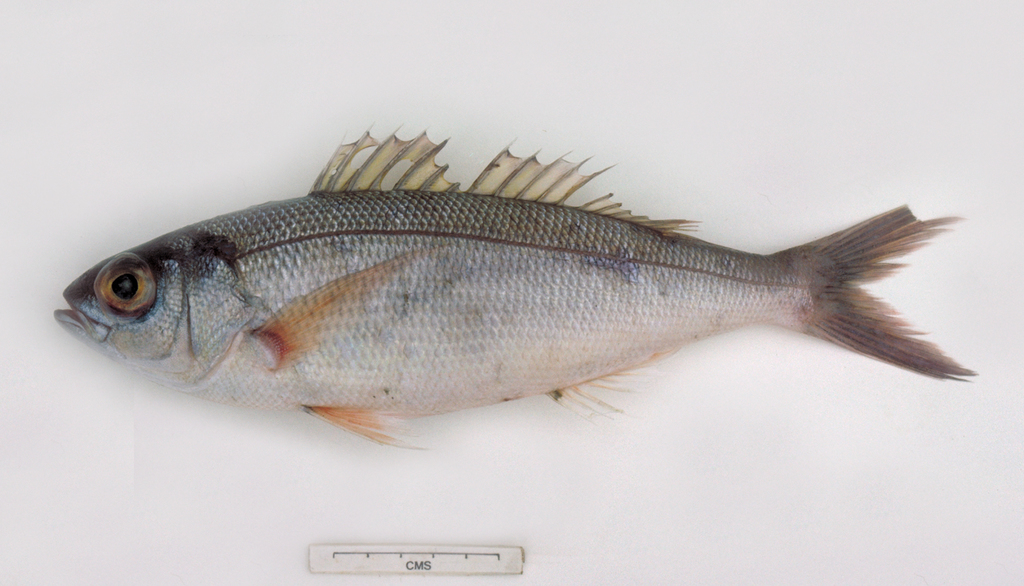
Lavender jobfish (Pristipomoides sieboldii) is a fish of the family Lutjanidae. FishBase gives its range as: Indo-Pacific: East Africa to Hawaii, and northward to southern Japan. A single specimen, apparently of this species, obtained from Vema Seamount in the southeast Atlantic. Body fusiform, oval in section; anal spines 3 and anal soft rays 8. It is recorded from 100 to 360 m, in deep water. The recorded maxima are 79 cm TL, 8.4 kg. Diet includes fishes, molluscs and worms. IUCN status: Least Concern (LC). Chinese name: .
Identification
Every length on this record is a total length. The maximum is 79 cm TL and the common length 40 cm TL, both male/unsexed, and the published weight ceiling is 8.4 kg. Total length runs to the tail tip, so both figures include a fork a market measure may leave out, and FishBase gives no SL or FL equivalent. Neither a maturity length nor a maximum age is recorded. A 40 cm fish is therefore a common catch, not a proven mature fish; maturity needs a sample or another source.
FishBase's global FAO entry reads "Lavender jobfish"; Australia adds "Lavender snapper", "Pink snapper" in the Northern Mariana Islands, "Snapper" in Micronesia and "Von Siebold's snapper fish" in Hawaii. Wikipedia's lead lists lavender jobfish, lavender snapper and von Siebold's snapper. The iNaturalist summary adds kalekale and calls it one of the Deep Seven species in Hawaiʻi. Those labels mark a market group, not a length class.
Body fusiform, oval in section; anal spines 3 and anal soft rays 8.
Habitat and distribution
The depth range is 100–360 m, the milieu is benthopelagic, and the climate band is deep-water. The coordinates run 35°N–32°S and 30°E–143°W. The written range is East Africa to Hawaii and north to southern Japan, with one specimen apparently of this species from Vema Seamount in the southeast Atlantic. The country table carries 65 territories. The habitat keywords are rocky and deep, and the diet keywords are fishes, molluscs and worms.
Benthopelagic is the operative word here: the fish is recorded in the water column just above the bottom, over rocky deep ground. A rig pinned to the bottom and one swimming a metre above it are different presentations; the record supports the second.
OBIS holds 280 records in 34 datasets dated 1854 to 2025. With the name alone as the query and no country facet in the response, the total confirms deep-band sampling but not where it occurred.
Season and fishing approach
The spawning field is empty. Absent a month, no closure can be read off it; the useful information is the depth band and the position in the water column. The band starts at 100 m, which is boat water; the 360 m edge is past the reach of a hand-hauled rig, so the fishable part is the band's shallow half.
A bait drifted a metre off a rocky slope, or a slow-pitch jig worked above it, matches the benthopelagic entry. Because the record measures TL, a tape along the fish reaches the tail tip only if your rule also uses TL; under a fork-length rule the numbers differ. With no maturity length, there is no source-backed release threshold, and the size decision has to come from the local rule rather than from this page.
Edibility and regulations
Its uses are listed as commercial fisheries and gamefish. The 5 March 2015 Red List assessment returned Least Concern. No appendix entry exists under either CITES or CMS; the LC assessment is the only conservation statement the record makes.
All 65 entries in the country table are presence-only: no daily bag, no minimum length and no closed season, with no agency named. The Deep Seven label comes from Hawaiian usage; the recreational rule sits in Hawaiʻi state text, not reproduced here. The only body measurement the record fixes is the 8.4 kg published weight ceiling.
Where these facts come from
Check these pages before you rely on a size, range or protection status.
- FishBase — Pristipomoides sieboldii — FishBase · T2
- GBIF — Pristipomoides sieboldii occurrence records — GBIF · T2
- IUCN Red List — Pristipomoides sieboldii — IUCN · T1
- Photo record — iNaturalist — iNaturalist · T3
Fish in the same water
These fish live in the same place.
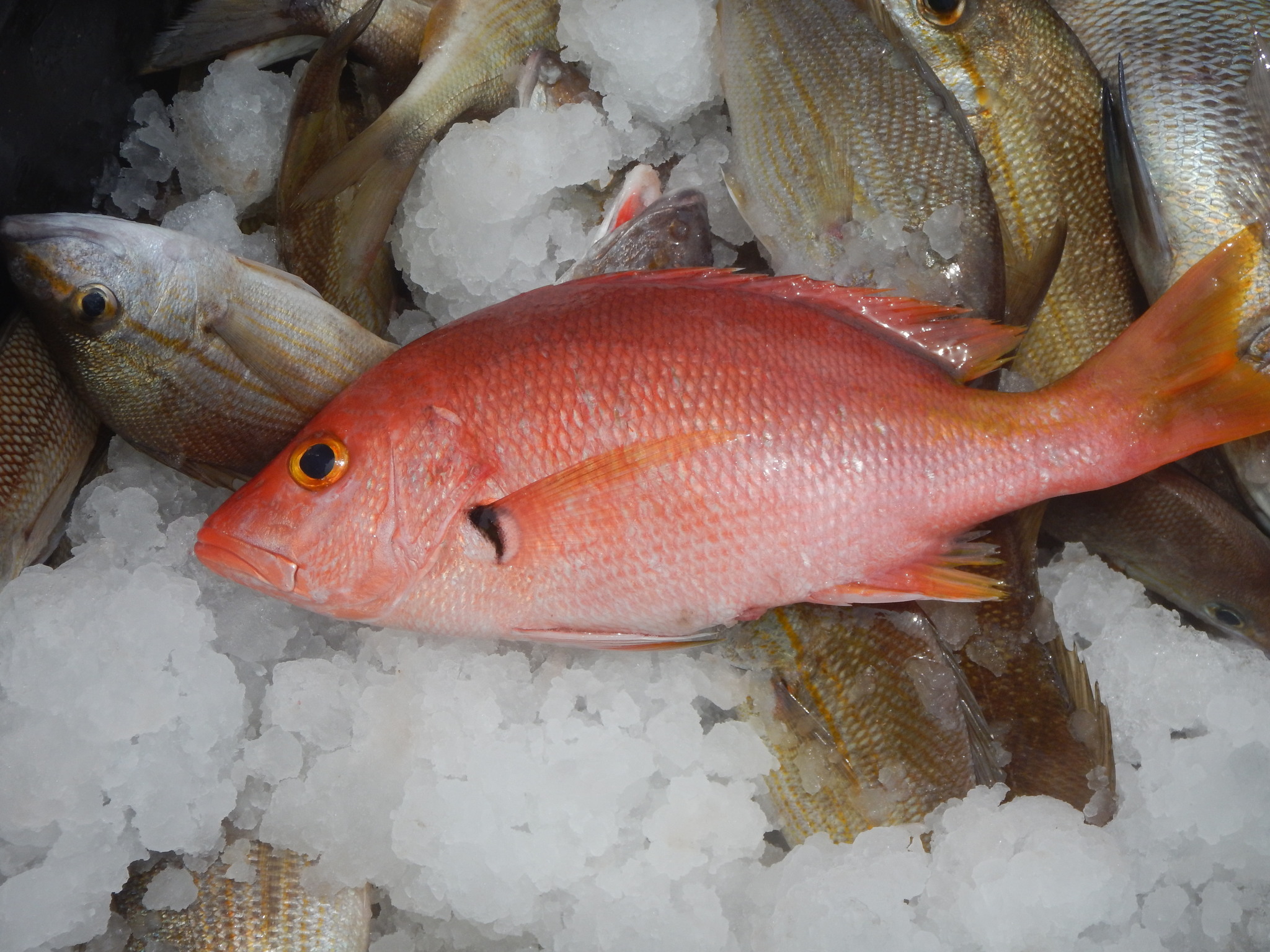
Blackfin snapper
- Family
- Lutjanidae
- Depth
- 20–200 m
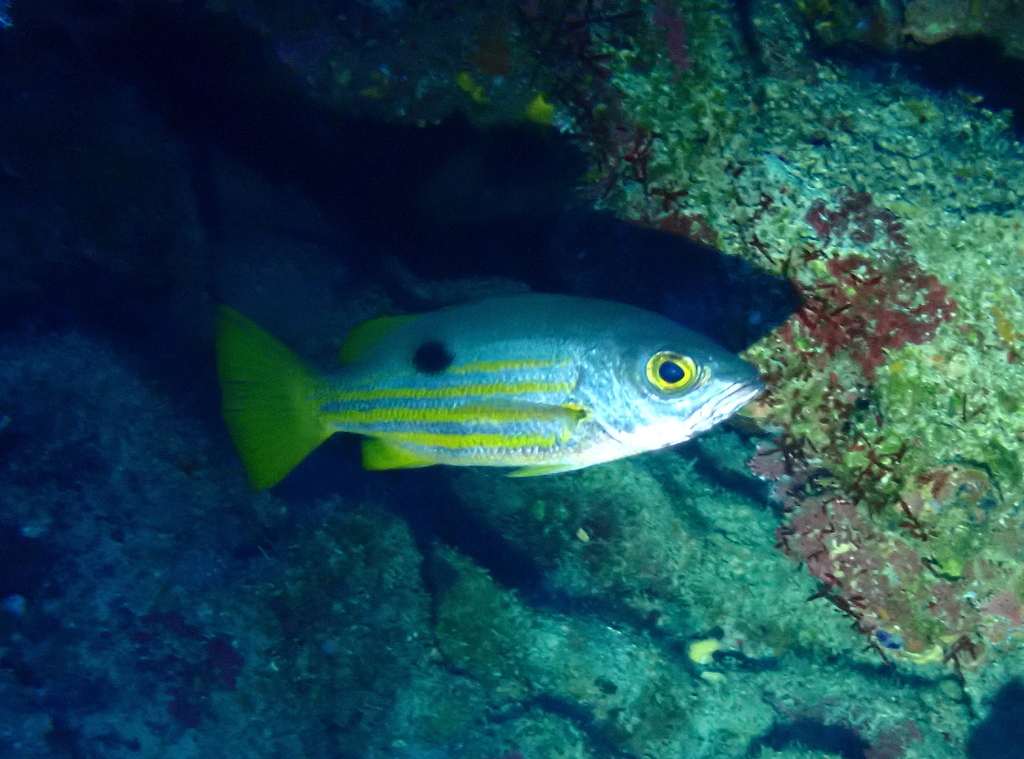
Blackspot snapper
- Family
- Lutjanidae
- Depth
- 5–20 m
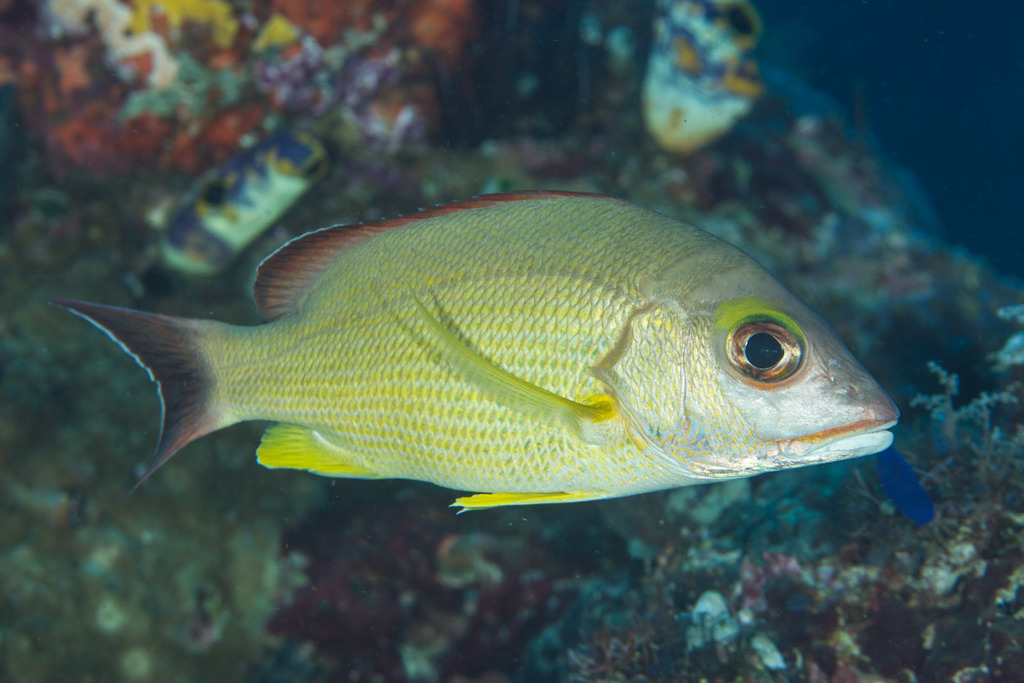
Blacktail snapper
- Family
- Lutjanidae
- Depth
- 1–80 m
- Season
- Jan, Feb, Mar, Apr, May, Jun, Jul, Aug, Sep, Oct, Nov, Dec
Guides for this water
Technique, gear and safety guides that fit Lavender jobfish.