
Gindai
The body is pink or reddish with four oblique orange or yellow bars along the sides, and the dorsal and caudal fins are yellow. The colour is distinctive in the hand, but at depth the bars fade quickly, so identification should not rest on colour alone. The interorbital space is convex, the jaws are about equal or the lower jaw protrudes slightly, and the bases of the dorsal and anal fins carry no scales.
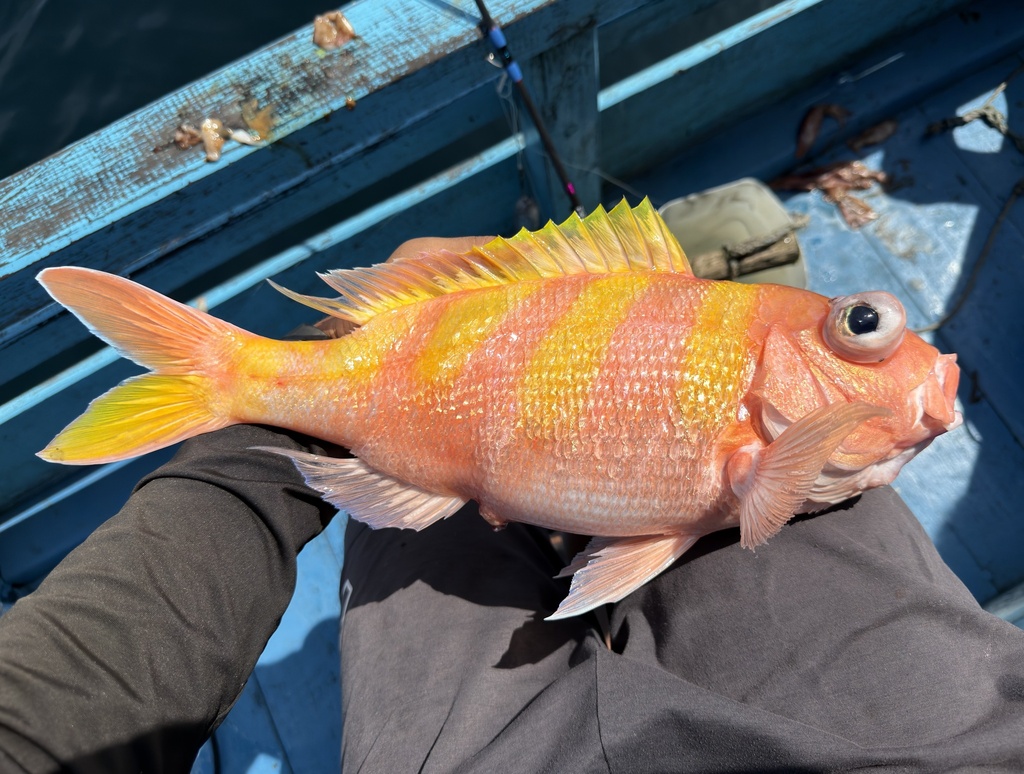
The body is pink or reddish with four oblique orange or yellow bars along the sides, and the dorsal and caudal fins are yellow. The colour is distinctive in the hand, but at depth the bars fade quickly, so identification should not rest on colour alone. The interorbital space is convex, the jaws are about equal or the lower jaw protrudes slightly, and the bases of the dorsal and anal fins carry no scales. The last soft rays of those fins extend into short filaments, the pectoral fins are long enough to reach the level of the anus, and the scale rows on the back run parallel to the lateral line. Fin counts are ten dorsal spines with ten or eleven soft rays, and three anal spines with eight soft rays. The body is fusiform with an oval cross-section, which separates it from the deeper-bodied groupers sharing the same slope.
A wide range, a narrow depth band
FishBase gives an Indo-Pacific range from East Africa to Hawaii and Tahiti, north to southern Japan and south to Australia and Lord Howe Island. The country list runs from the Admiralty Islands and the Andaman and Nicobar Islands through Kenya, Madagascar, the Maldives, Indonesia, Japan, the Philippines and Hawaii to French Polynesia and the Galapagos. The coordinate box, 35°N to 29°S and 34°E to 146°W, is broad, but the depth band is not: 70 to 300 m, with a usual range of 125 to 275 m. Adults occur over rocky bottom on the continental shelf and slope, and the species is described as benthopelagic rather than strictly bottom-dwelling. GBIF holds the taxon under usage key 2385192, but the packet gives no occurrence total, so none is quoted here. iNaturalist holds only 12 observations, which is a thin record for a fish with such a wide range.
Deep water, no month table
No spawning months are recorded, so the season field is left empty. The climate class is deep-water and the latitudinal range runs from 35°N to 29°S, which means the fish lives in cold, stable water across a very wide span. At those depths the annual signal that matters to an angler is not temperature but current, wind and the status of the fishery. Hawaii can declare a closed season for Deep 7 bottomfish, and during a closure fishing, possession and sale all stop. The federal ACL is set for three-year periods, which is a management calendar rather than a biological one. Plan around settled weather and the current notice, not around a spawning month that the record does not provide.
Small baits, slow pace
Gindai is a smaller fish than onaga, and the tackle and bait can be scaled down accordingly. Small whole fish, squid and cut bait are the standard offerings on the 100–250 m slope, and a small hook with a neat bait gets more attention than a large one. The diet includes fishes, shrimps, crabs, cephalopods and other benthic invertebrates, as well as pelagic organisms such as urochordates, so the fish is not purely a bottom scavenger. That is a reason to keep the bait just off the rock rather than buried in it. Slow-pitch jigging with a small heavy jig along the deep edge is the alternative, and it suits days when the current allows the lure to stay near vertical. Control the descent: a free fall from 200 m tangles easily, so lower in stages with a pause between them and let the bait settle naturally.
One step lighter than onaga
The recorded maximum is 57.5 cm and 1.8 kg, with a common length of 35 cm, so a medium deep rig is enough. A rod with a sensitive tip and a reel with enough capacity for 200 m of braid are the core; the drag can be lighter than a dedicated onaga outfit. Small hooks and a short leader keep the presentation compact, and a lighter jig or sinker reduces the belly that current puts in the line. Even so, depth is the dominant factor: the same rod that feels light at 100 m feels inadequate at 250 m with current, so carry a little more weight than the calm-day minimum. A controlled drop, a vertical line and a slow lift are more productive than a fast mechanical retrieve. Keep the fish away from the rock on the way up; a small snapper is easily cut off at the ledge.
Deep 7 accounting
Gindai counts inside the Deep 7 group: non-commercial anglers may keep five fish per person per day across all seven species, not five gindai. The one-pound sale minimum that applies to onaga and ‘ōpakapaka does not apply to this species. During a declared closure, fishing, possession and sale are all prohibited. Traps, trawls, bottom longlines and nets are banned, bottom-fishing vessels must register with DLNR and display a BF number, and commercial catches must be reported within five days. In the EEZ a NOAA bottomfish permit is required, the 2025–2027 MHI Deep 7 ACL is 493,000 lb, and NWHI and Papahānaumokuākea are closed. Non-residents need an NRMFL and commercial sellers a CML. Because the bag is shared, a gindai in the box uses one of the five slots regardless of its size.
A thin record
The entry relies on FishBase for taxonomy, range, size, depth, diet and IUCN status, on GBIF for the taxon record, and on DAR and NOAA for the rules. iNaturalist holds only 12 observations, too few to support any statement about local abundance. Maximum age and length at maturity are not recorded. With no spawning month in the record, the season field and the monthly array remain unfilled. The packet gives no GBIF occurrence total, so no count appears in the text. Colours fade with depth, and the identification section therefore leans on fin counts and body form rather than the bars. Regulations and closure dates change; confirm them with the current DAR and NOAA notices.
How to catch it
Deep bottom fishing
Fished with the listed approach, matched to the recorded depth and size.
Jigging
Fished with the listed approach, matched to the recorded depth and size.
Where these facts come from
Check these pages before you rely on a size, range or protection status.
- FishBase — Pristipomoides zonatus — FishBase · T2
- GBIF — Pristipomoides zonatus occurrence records — GBIF · T2
- IUCN Red List — Pristipomoides zonatus — IUCN · T1
- Photo record — iNaturalist — iNaturalist · T3
Fish in the same water
These fish live in the same place.
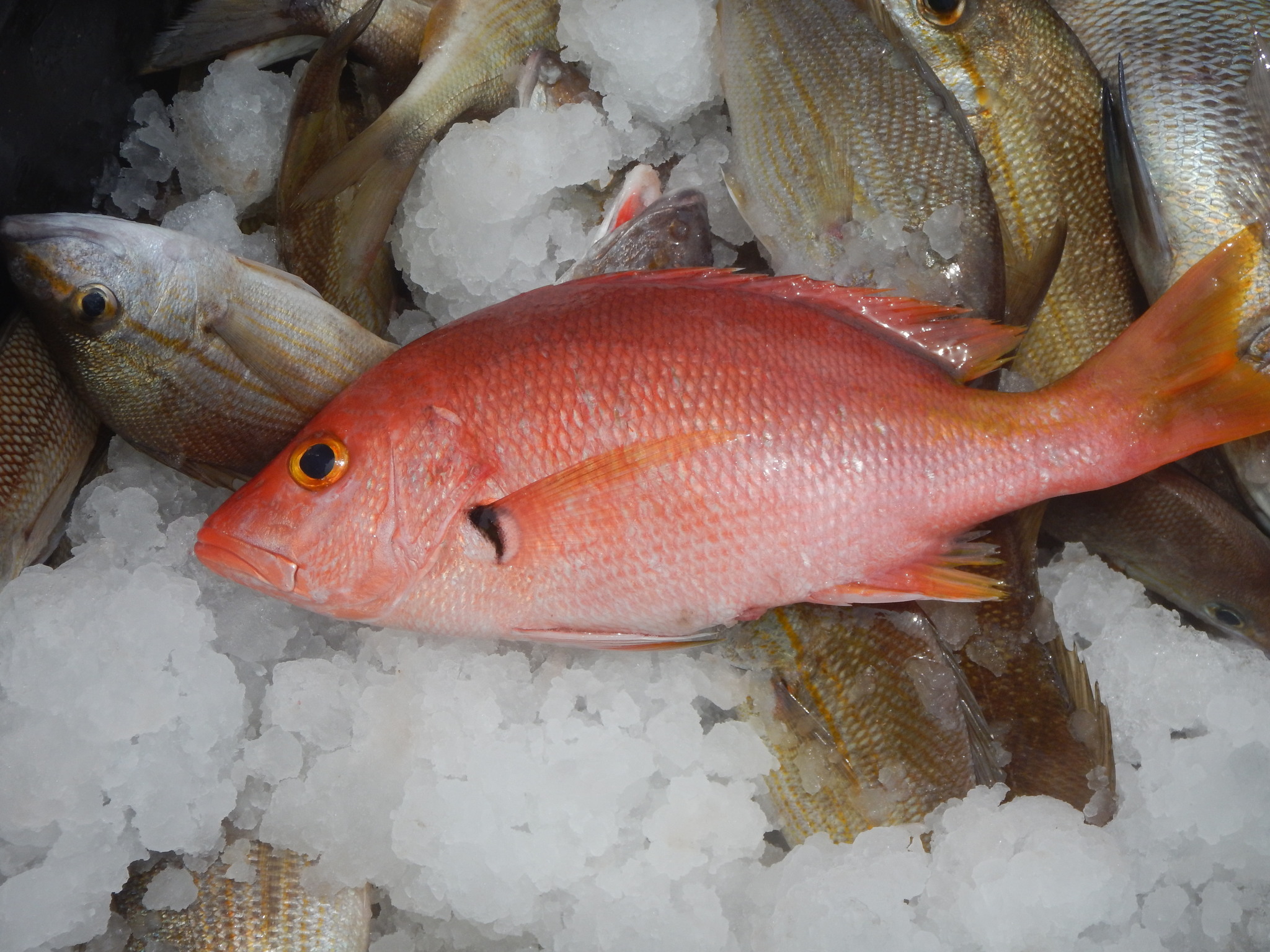
Blackfin snapper
- Family
- Lutjanidae
- Depth
- 20–200 m
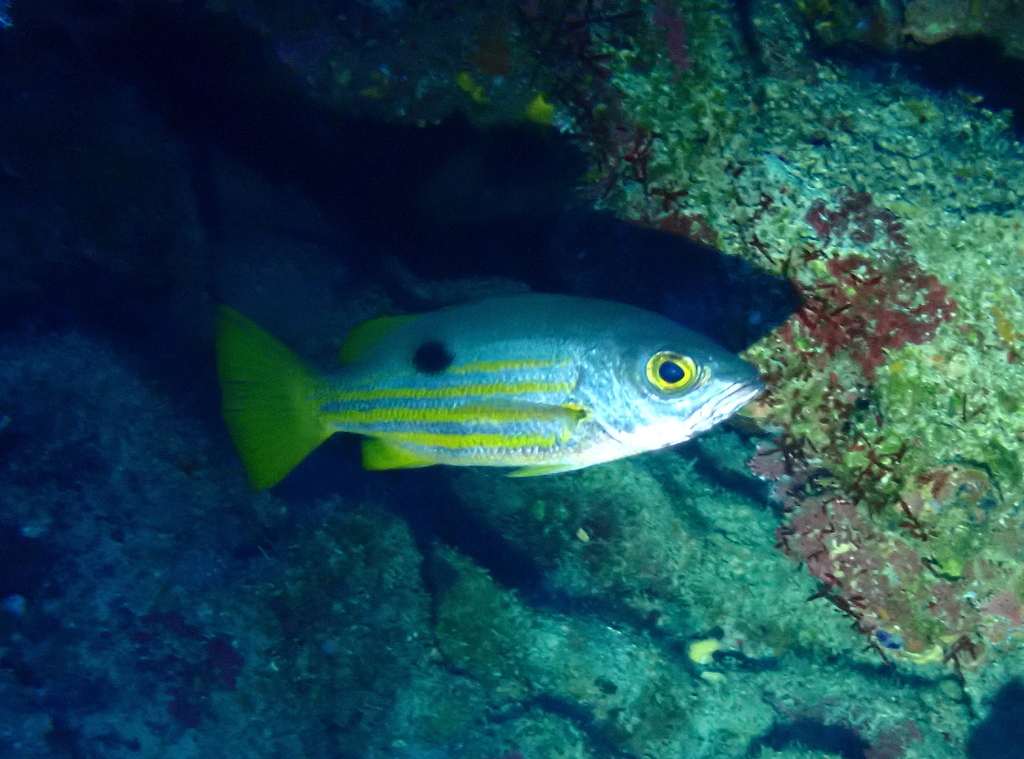
Blackspot snapper
- Family
- Lutjanidae
- Depth
- 5–20 m
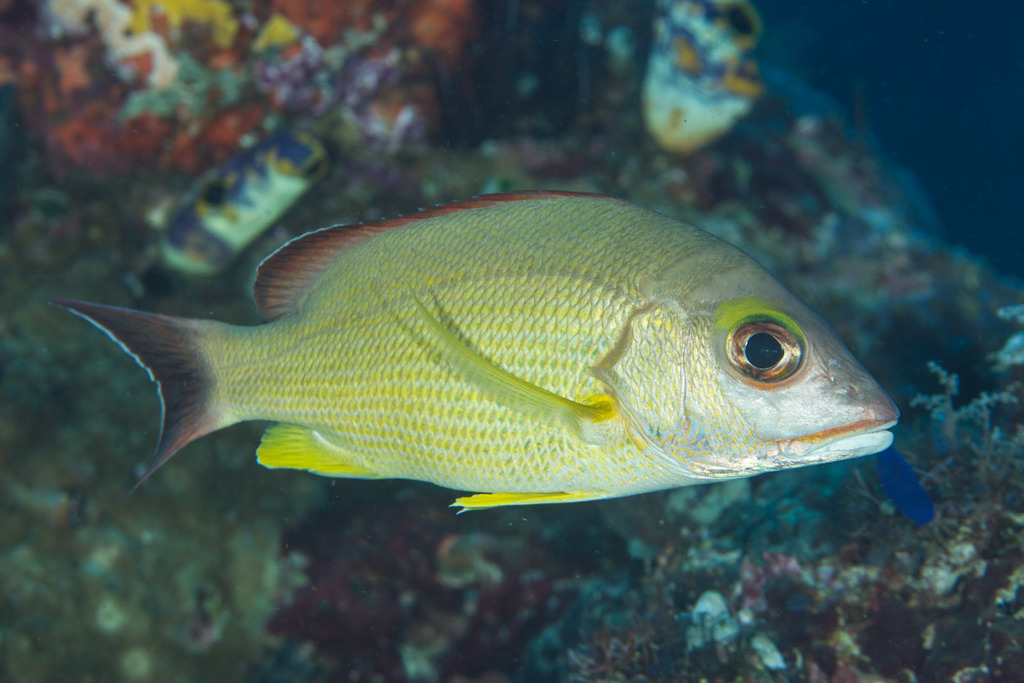
Blacktail snapper
- Family
- Lutjanidae
- Depth
- 1–80 m
- Season
- Jan, Feb, Mar, Apr, May, Jun, Jul, Aug, Sep, Oct, Nov, Dec
Guides for this water
Technique, gear and safety guides that fit Gindai.