
Panga
Panga is a sparid recorded from Namibia to Beira in Mozambique. It lives on soft bottom from 20 to 150 m, often in large schools, and feeds on benthic invertebrates. It reaches 45 cm TL with a common length of 27 cm and maturity at about 20.4 cm, and it supports a major trawl and linefishery. IUCN lists it as Least Concern. Drifting, boat bottom fishing and jigging are the methods listed.
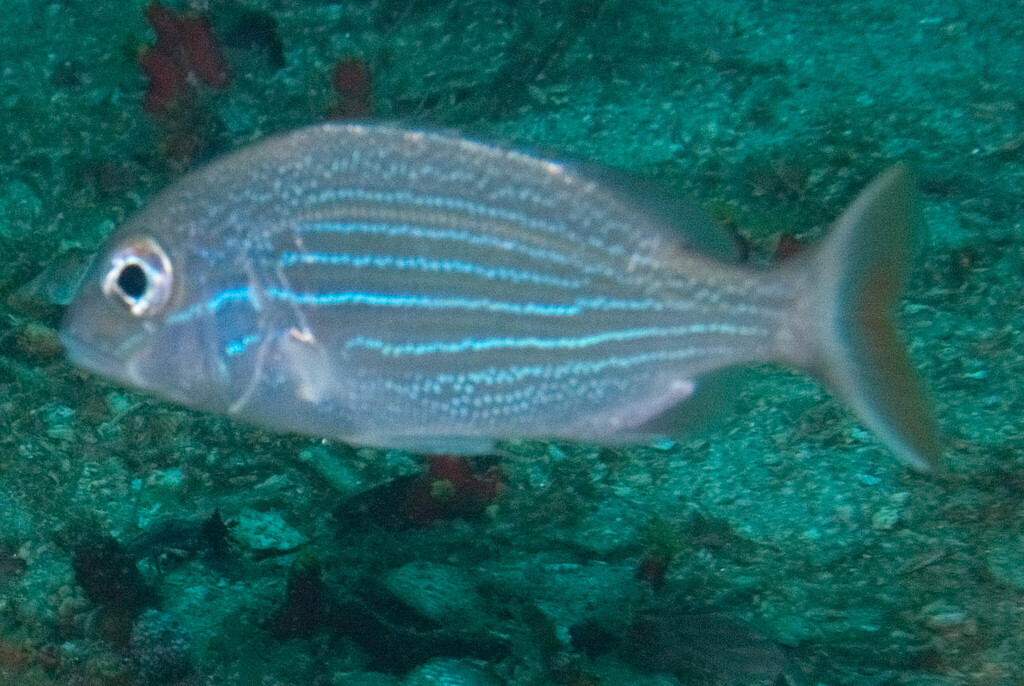
Pterogymnus laniarius is a sparid recorded from Namibia to Beira in Mozambique. FishBase gives a maximum of 45 cm total length, a common length of 27 cm and maturity at about 20.4 cm. It lives on soft bottom from 20 to 150 m, often in large schools, and feeds on benthic invertebrates. Spawning takes place through the year with a peak from September to May on the Agulhas Bank. It supports a major trawl and linefishery and is listed as Least Concern.
Identification
A moderately deep sparid with a pinkish-silver body, a darker back and a pale belly. The pectoral fin has a dark axillary spot, a useful field mark when fish are handled on deck.
The head is moderate with a sloping profile, and the mouth carries small conical teeth rather than the heavy molars of inshore breams. The dorsal fin is continuous, with the spiny section shorter than the soft-rayed part.
FishBase gives 45 cm total length, a common length of 27 cm and maturity at about 20.4 cm. It is a soft-bottom species, so the catch is usually mixed with other deep sand fish rather than reef species.
Distribution and Habitat
Recorded from Namibia south around the Cape and east to Beira in Mozambique, which makes the Agulhas Bank the centre of its range and of its fishery.
It lives on soft bottom from 20 to 150 m, often in large schools. That is deeper than the inshore breams and shallower than the deep-reef species, and it is why the fish is associated with trawl grounds and with boats drifting open sand.
Sandy ground away from reef produces the cleanest catches; reef edges bring by-catch and lost tackle.
Habits and Diet
A bottom feeder on benthic invertebrates, taken in large numbers where sand holds the right prey. It schools, so a boat that finds fish can fill a bag limit quickly.
Spawning runs through the year with a peak from September to May on the Agulhas Bank, which is one reason the stock has supported a long fishery.
Maturity at about 20.4 cm against a common length of 27 cm means most landed fish are mature, but the species is still heavily exploited by trawlers.
Fishing Methods and Gear
Deep sand drift is the classic method: a whole sardine, chokka or squid strip on a 3/0 to 5/0 hook, with enough lead to keep contact in 40 to 120 m.
Anchoring over a school and fishing vertically is more efficient once fish are located, and it wastes less time resetting drifts.
A 7 ft boat rod, a 5000 to 8000 reel, 30 to 50 lb braid and a 40 lb leader are appropriate. Small 100 to 150 g jigs worked just off the bottom also take fish.
Seasonal Window
Present year-round, with spawning from September to May on the Agulhas Bank. The peak months are also when fish are most concentrated and most easily found.
The first hours of a new tide, when the bottom current starts to run, are better than slack water; on slack the bait stops working and the fish scatter.
Calm days that allow controlled drift speed matter more than any particular month for recreational success.
Edibility and Handling
A good food fish with white flesh, sold fresh and widely used for frying and baking. It is one of the mainstays of the South African fish trade.
Bleed and ice promptly, especially when many fish are landed quickly on a hot deck.
Deep-water fish can suffer barotrauma; if fish are to be released, use a release weight rather than returning them at the surface.
Regulations and Conservation
South Africa: panga (Pterogymnus laniarius) is not listed individually in the recreational linefish table, so the unlisted-species default applies — a combined bag limit of 10 fish per person per day with no species-specific minimum size. A recreational permit is required, boat-based fishing needs a vessel licence, and recreational catch may not be sold.
The species is mainly taken commercially by trawl and linefisheries; recreational catches are a small fraction of the total, and the stock is assessed as part of the trawl complex rather than on its own.
IUCN: Least Concern, assessed in 2009. The assessment is dated and should be read alongside current South African stock assessments.
How to catch it
Drift fishing
40–120
Boat bottom fishing
Jigging
100–150 panga
Where these facts come from
Check these pages before you rely on a size, range or protection status.
- GBIF — Pterogymnus laniarius occurrence records — GBIF · T2
- IUCN Red List — Pterogymnus laniarius — IUCN · T1
- Photo record — iNaturalist — iNaturalist · T3
Fish in the same water
These fish live in the same place.
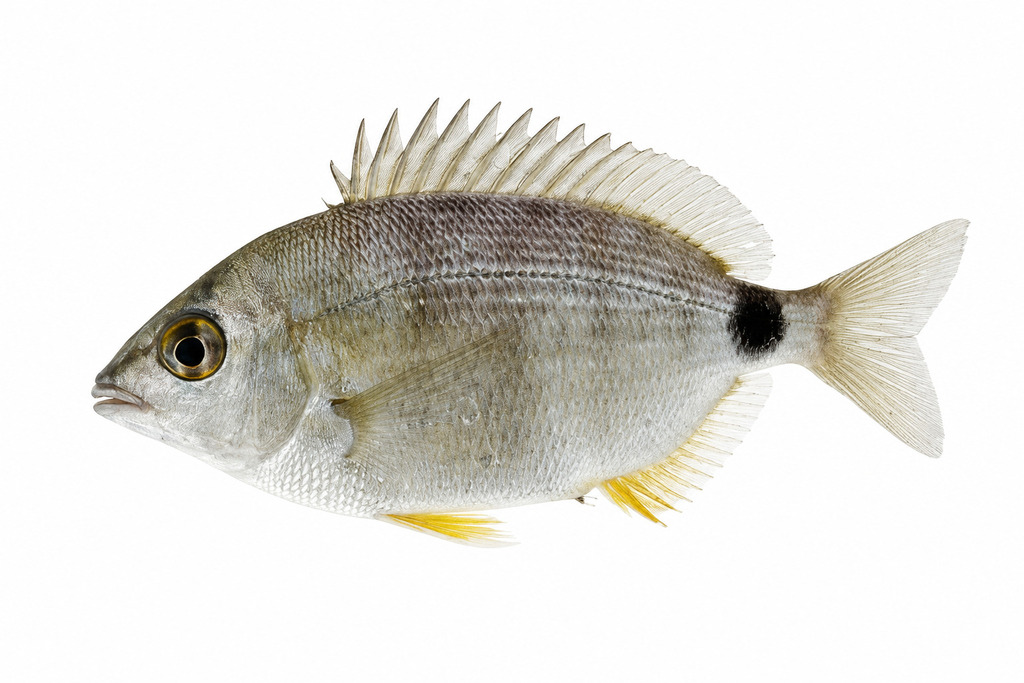
Annular seabream
- Family
- Sparidae
- Depth
- 0–90 m
- Season
- Jan, Feb, Mar, Apr, May, Jun, Jul, Aug, Sep
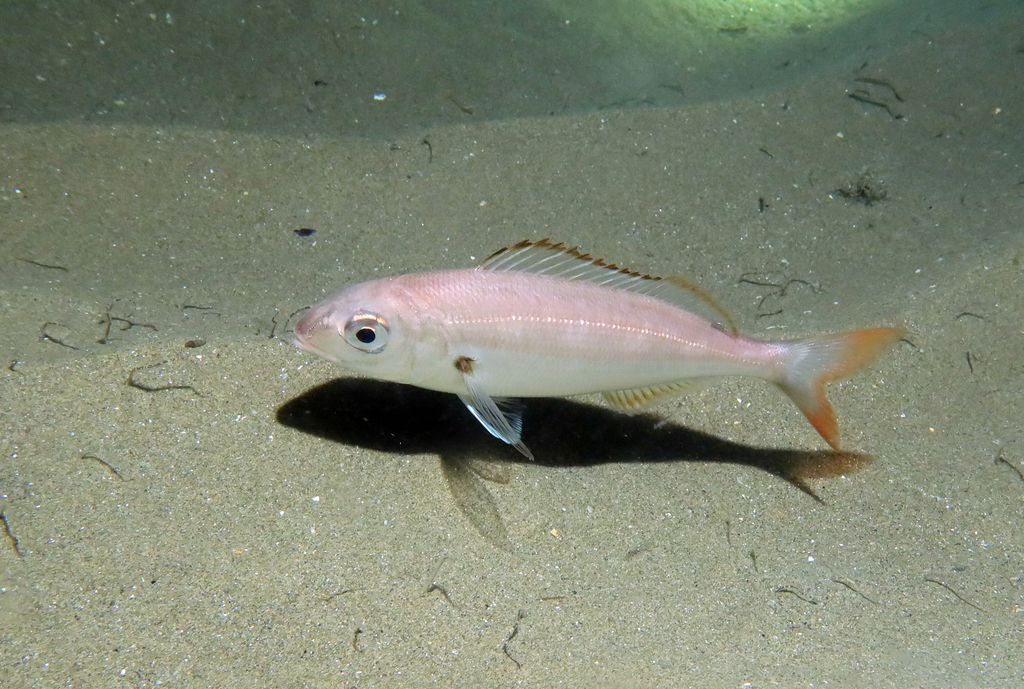
Axillary seabream
- Family
- Sparidae
- Depth
- 0–500 m
- Season
- Jan, Feb, Mar, Apr, May, Jun, Jul, Aug, Sep, Oct, Nov, Dec
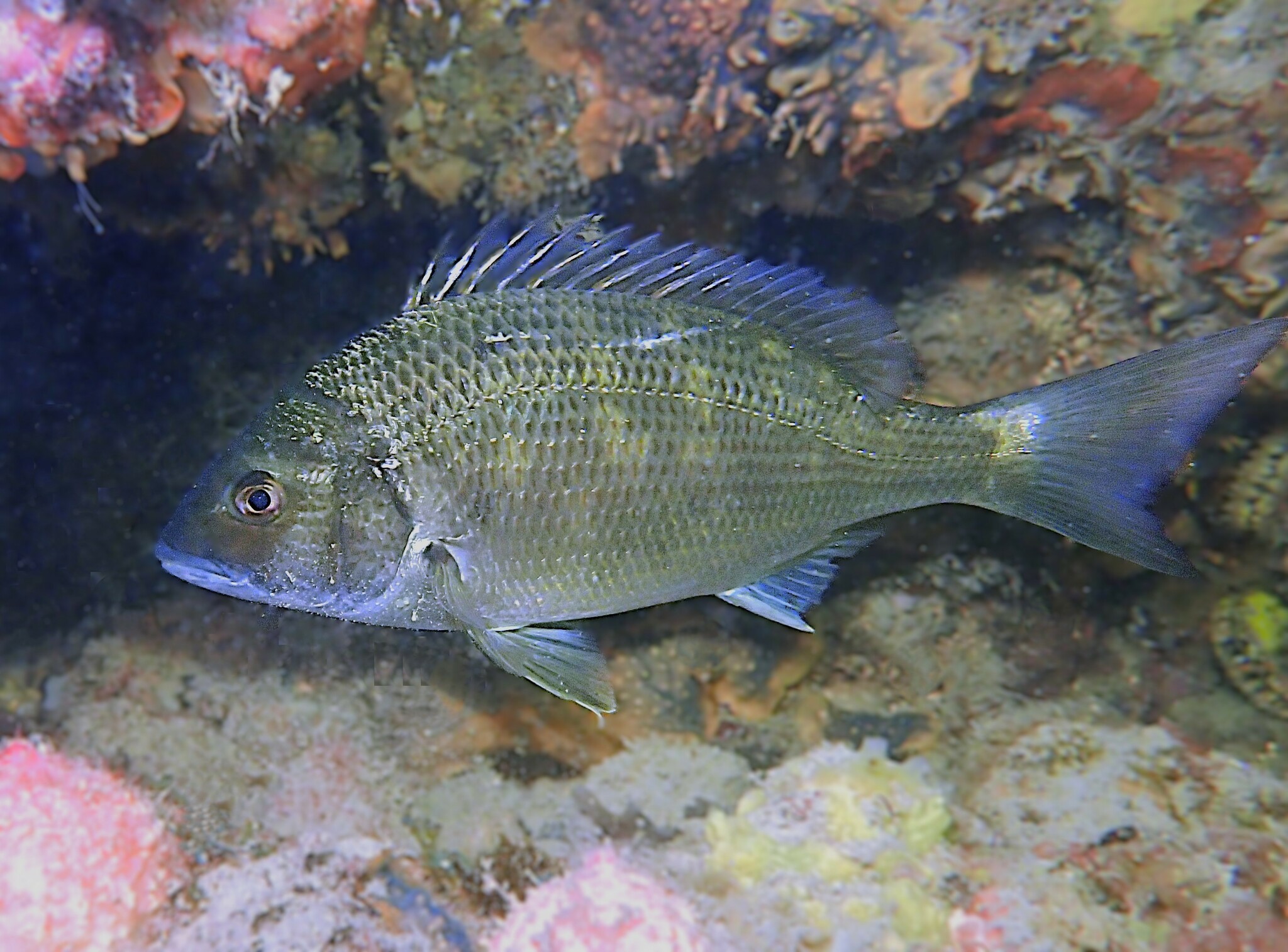
Black bream
- Family
- Sparidae
- Season
- Jan, Feb, Jul, Aug, Sep, Oct, Nov, Dec
Guides for this water
Technique, gear and safety guides that fit Panga.