
Small-eyed ray
Small-eyed ray is recorded across the Northeast Atlantic, from the British Isles southwards to Gibraltar and north-western Africa (Western Sahara and Mauritania), within the family Rajidae. It is caught shallower than 100 m, in temperate water. It tops out at 87 cm TL and 4.5 kg, on a diet of fishes.
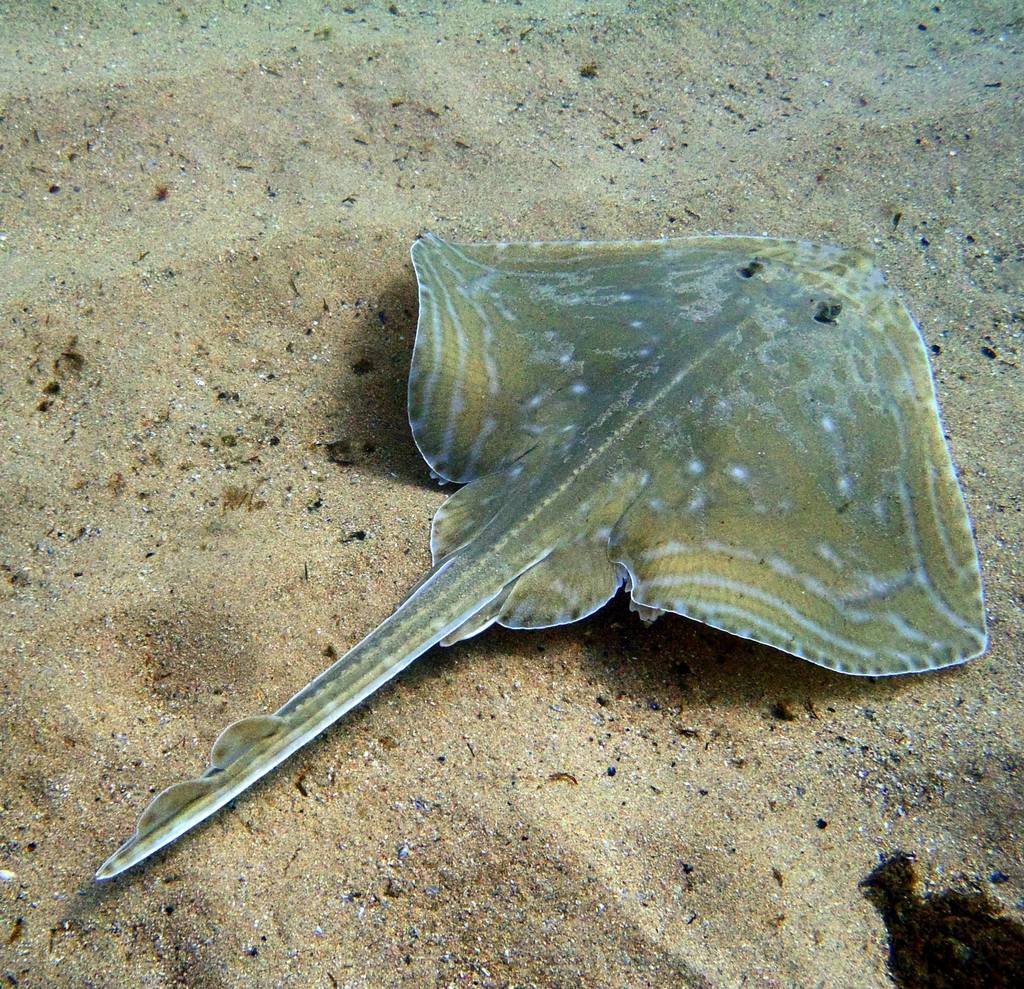
Small-eyed ray (Raja microocellata) is a fish of the family Rajidae. FishBase gives its range as: Northeast Atlantic, from the British Isles southwards to Gibraltar and north-western Africa (Western Sahara and Mauritania). It is recorded shallower than 100 m, in temperate water. The recorded maxima are 87 cm TL, 4.5 kg. Diet includes fishes. IUCN status: Near Threatened (NT). Chinese name: .
Identification
Raja microocellata is recorded at 87 cm total length and 4.5 kg, with first maturity entered as 74 cm and a range that begins at 73 cm. There is no common length in the account, so 87 cm is a ceiling rather than a size to plan around. The structural notes are a flattened cross-section and no anal spines; the disc is the identification, not a fin count that the page never supplies. English names on file are small-eyed ray, smalleyed ray, smalleyed skate, painted ray, painted skate and owl ray. Those labels travel through different markets, and none of them separates this skate from its neighbours on its own. The iNaturalist taxon has 199 observations on record, a small photo base for an animal mostly seen as bycatch.
Habitat and distribution
The range follows the eastern Atlantic from the British Isles to Gibraltar, then down the north-west African coast to Western Sahara and Mauritania. Twelve jurisdictions are listed, including the Channel Islands, Ireland, the Netherlands, Portugal and Spain. The environment line is marine and demersal. Depth is given only as an upper limit of 100 m; the lower bound is left blank, which prevents a band from being stated. Sand and mud are the substrates named, in coastal water rather than on the slope.
GBIF's distribution file returns six records and ends there. The entries come from the IUCN global assessment, the World Register of Marine Species for European marine waters, two Belgian records from Waarnemingen.be that mark the species as native, a Danish national checklist and a Norwegian record. Read beside FishBase, the six statements add Belgium, Denmark and Norway to a range already drawn from Ireland to Mauritania. Neither list is used to correct the other; they are two records of the same coast kept separate.
Season and fishing approach
The account carries no spawning row, so no month is entered for reproduction. That blank changes the planning: a season has to be taken from local landings or observations, and this article will not invent one.
Depth and bottom set the method. With a 100 m ceiling over sand and mud, a boat can fish a bottom rig with modest weight, and the bait should sit on or just above the seabed rather than suspended far off it. Soft ground takes a running ledger or a wishbone with a long snood better than a fixed paternoster that ploughs in. The 4.5 kg maximum is small enough for a medium boat rod; the constraint is lead and line for the tide, not brute lifting power.
The listed uses are minor commercial fishing and gamefishing, an unusual pair for a skate. Sport interest exists, but the record does not describe a specialised ray fishery, so expect bycatch tactics rather than a targeted campaign.
Edibility and regulations
The Red List entry is Near Threatened, assessed on 15 November 2023. Neither CITES nor CMS appears with an assessment; the two absences are distinct fields.
Twelve jurisdictions appear in the range, which means twelve sets of national rules. The page carries no minimum length, no daily cap and no closed season; these are separate instruments. The applicable rule is the one for the coast being fished, and it should be checked before a skate is kept.
Where these facts come from
Check these pages before you rely on a size, range or protection status.
- FishBase — Raja microocellata — FishBase · T2
- GBIF — Raja microocellata occurrence records — GBIF · T2
- IUCN Red List — Raja microocellata — IUCN · T1
- Photo record — iNaturalist — iNaturalist · T3
Fish in the same water
These fish live in the same place.

Blonde ray
- Family
- Rajidae
- Depth
- 10–380 m
- Season
- Feb, Mar, Apr, May, Jun, Jul, Aug
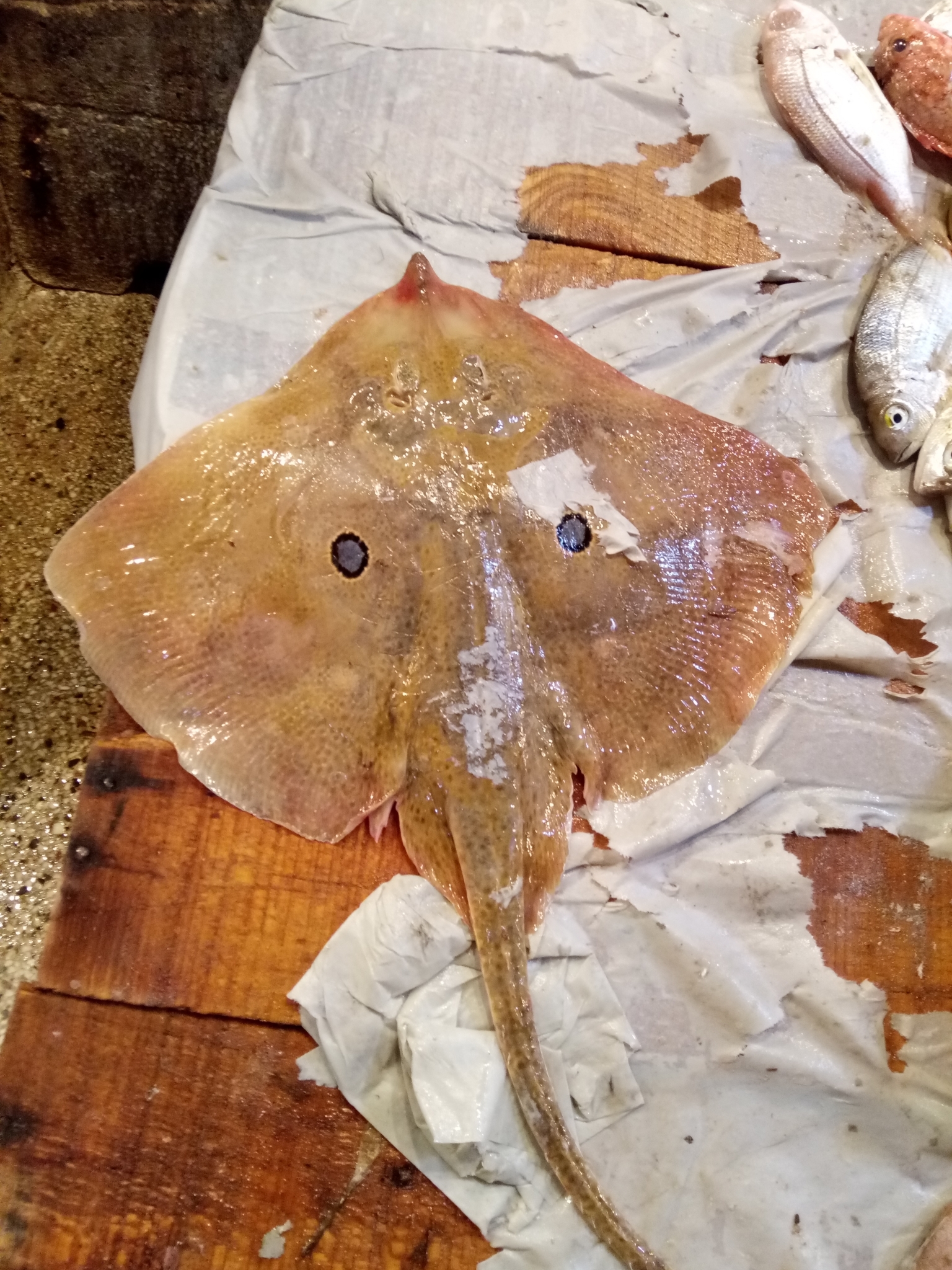
Brown ray
- Family
- Rajidae
- Depth
- 17–462 m
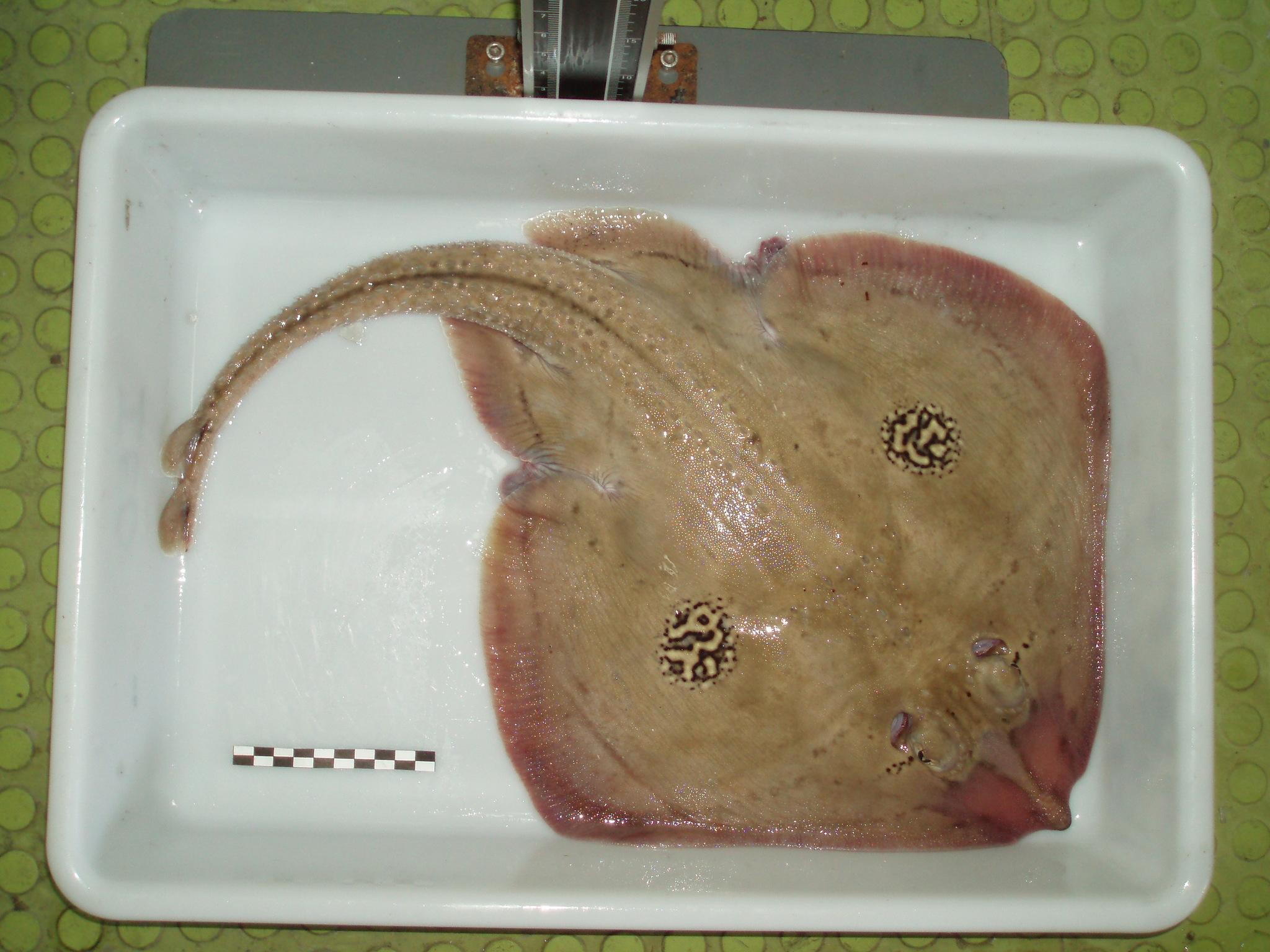
Cuckoo ray
- Family
- Rajidae
- Depth
- 12–900 m
- Season
- Jan, Feb, Mar, Apr, May, Jun, Jul, Aug, Sep, Oct, Nov, Dec
Guides for this water
Technique, gear and safety guides that fit Small-eyed ray.