
Spotted ray
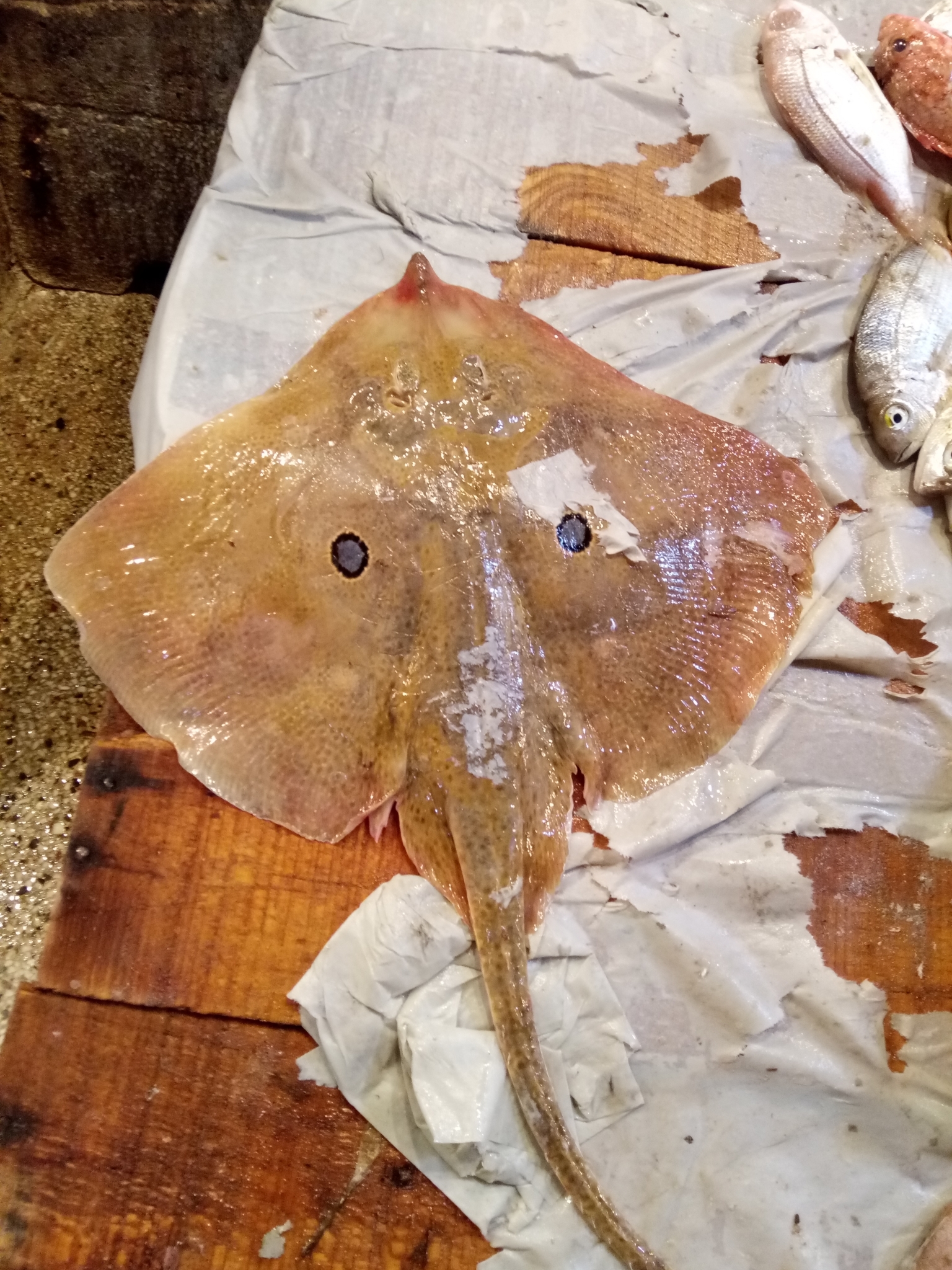
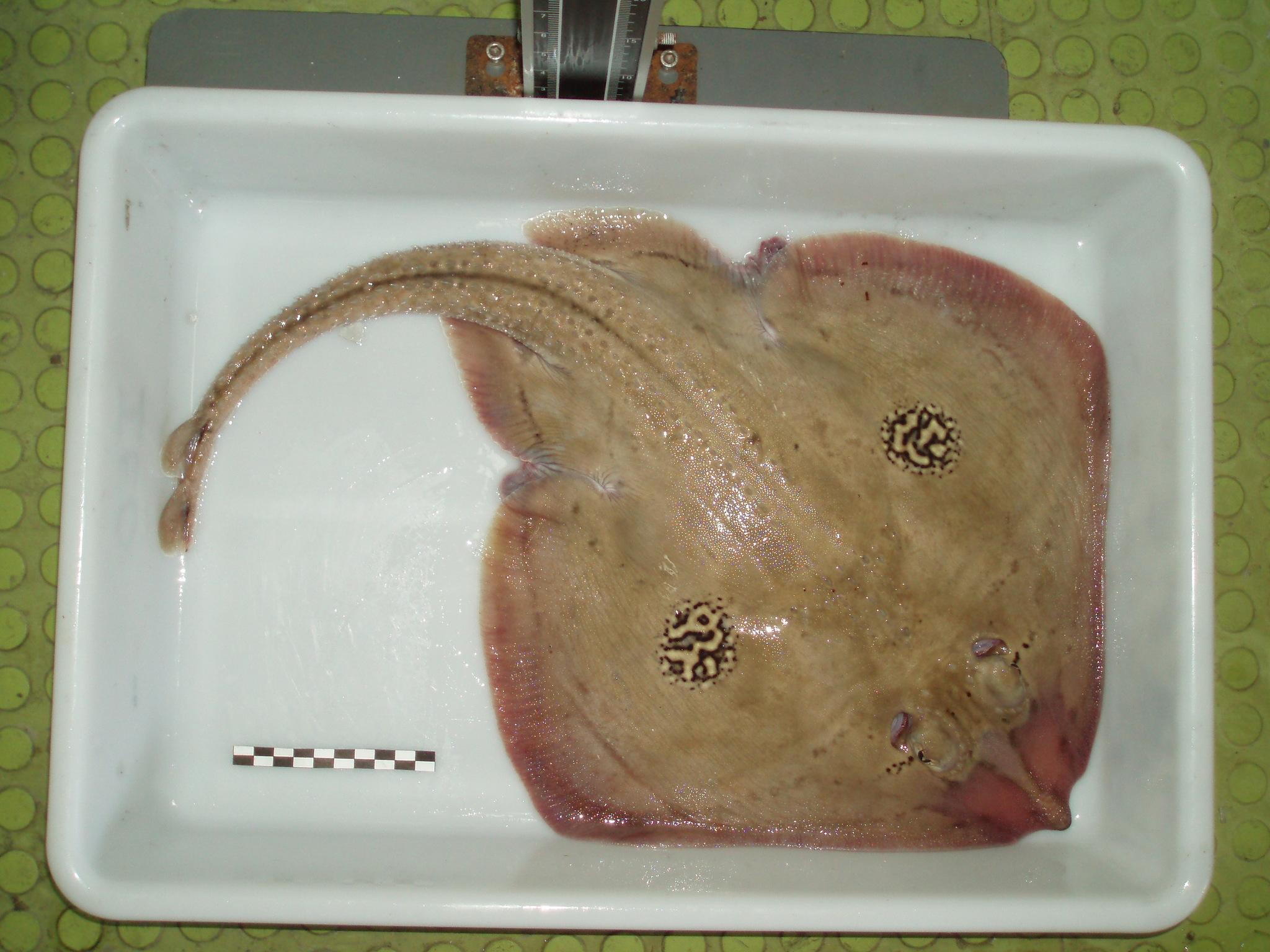
Spotted ray is a medium-sized rajid of the eastern Atlantic, from the Shetlands, southern North Sea and western Baltic down to Mauritania, and into the western Mediterranean as far as Tunisia and western Greece. It is a broad, rounded disc scattered with dark spots, and it works 8 to 530 m of temperate water on crustaceans, fish, molluscs and worms. Fish reach 102 cm TL and can live 18 years.

Spotted ray (Raja montagui) is a fish of the family Rajidae. FishBase gives its range as: Eastern Atlantic: Shetlands, southern North Sea and the western Baltic to Mauritania, including the western part of the Mediterranean (to Tunisia and western Greece). It is recorded from 8 to 530 m, in temperate water. The recorded maxima are 102 cm TL, 18 years. Diet includes crustaceans, fishes, molluscs and worms. IUCN status: Least Concern (LC). Chinese name: .
Identification
Raja montagui reaches 102 cm total length, with a common length of 50 cm, first maturity at 61 cm and a maximum reported age of 18 years. No weight is entered, so the size record is length only. The English names are spotted ray, spotted skate, homelyn ray, spotted homelyn ray and starry ray. The "starry" label is a separate trade word rather than a description of the markings, and the account supplies no meristic counts to settle identification. iNaturalist holds 918 observations.
A 50 cm common fish against a 61 cm maturity figure means the typical landed size is below the recorded length at first maturity, while a 102 cm specimen is nearly twice that.
Habitat and distribution
The range runs from the Shetlands, the southern North Sea and the western Baltic to Mauritania, taking in the western Mediterranean as far as Tunisia and western Greece. Thirty-one jurisdictions are listed, from the Channel Islands and Ireland to Madeira and Western Sahara. The environment is marine and demersal in temperate water. Depth runs from 8 to 530 m. The 8 m end is shore-reachable, and the 530 m end is not; the useful band for an angler sits at the shallow end of that span.
GBIF's distribution file holds 21 records and ends there. Most are area records: four OSPAR regions, European marine waters, the Belgian coast at De Haan, Heist and Zeebrugge, two Wimereux records, the British Isles, the Greek exclusive economic zone, the Israeli Mediterranean and the Swedish zone. Four countries supply checklist entries: Belgium through Waarnemingen.be, Denmark's national checklist, the 2025 Doñana reserve list in Spain, and Sweden's Dyntaxa, which marks the species native while giving it an irregular status. The 21 statements add no jurisdiction beyond FishBase, but they place the ray in named sea areas and in four national inventories.
Season and fishing approach
No spawning row is entered, so the account gives no month for reproduction. The season has to be read from local landings or observation; this article will not invent a window.
At the 8 m end of the depth range, a shore rod can reach the fish, and the recorded bottom calls for a bait on the seabed rather than suspended. A running ledger or a long-snood rig keeps the hook above soft ground and lets a ray take without the weight. The 102 cm ceiling is a big disc, so the rod needs lifting power and the leader needs abrasion resistance; the lead is set by tide and depth. The page records minor commercial use and no gamefish entry.
Edibility and regulations
The Red List category is Least Concern, assessed on 14 April 2023. The page gives no CITES listing and no CMS listing; they are two empty fields rather than one combined result.
Thirty-one jurisdictions carry the range, so the applicable rule is the national or local one. The page carries no size threshold, no bag cap and no closed dates, which are three distinct instruments.
Where these facts come from
Check these pages before you rely on a size, range or protection status.
- FishBase — Raja montagui — FishBase · T2
- GBIF — Raja montagui occurrence records — GBIF · T2
- IUCN Red List — Raja montagui — IUCN · T1
- Photo record — iNaturalist — iNaturalist · T3
Fish in the same water
These fish live in the same place.

Blonde ray
- Family
- Rajidae
- Depth
- 10–380 m
- Season
- Feb, Mar, Apr, May, Jun, Jul, Aug
Brown ray
- Family
- Rajidae
- Depth
- 17–462 m
Cuckoo ray
- Family
- Rajidae
- Depth
- 12–900 m
- Season
- Jan, Feb, Mar, Apr, May, Jun, Jul, Aug, Sep, Oct, Nov, Dec
Guides for this water
Technique, gear and safety guides that fit Spotted ray.