
Greenland halibut
The Greenland halibut is a large flatfish of the family Pleuronectidae, a cold-water species of the northern Atlantic and Pacific. Its range is circumglobal in the northern hemisphere, from the Sea of Japan and the Aleutians to Baja California, and from New Jersey across to Spitsbergen and the Barents Sea. It lives benthopelagically, usually at 500–1000 m, and females grow to 130 cm against 110 cm for males.
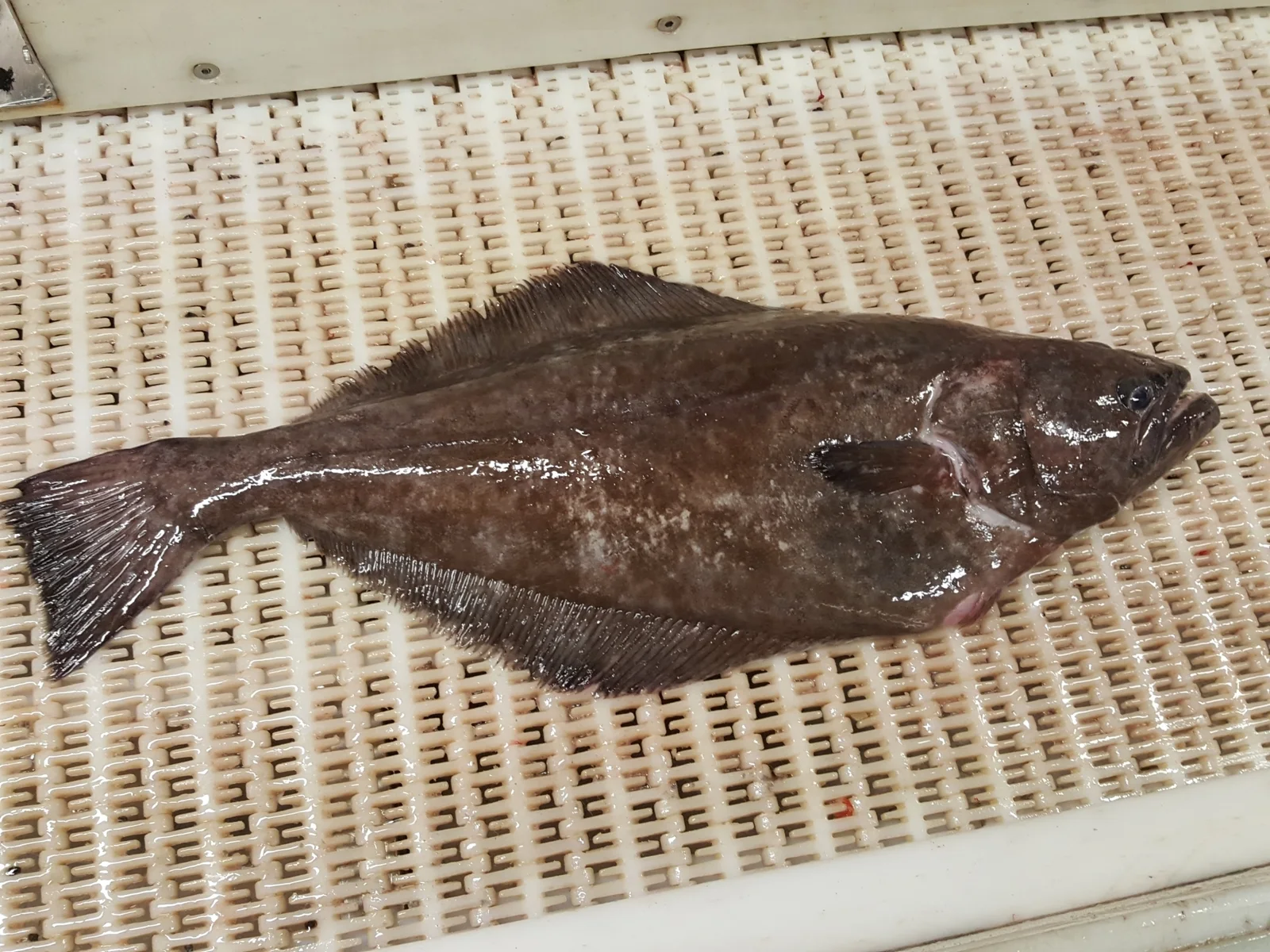
The Greenland halibut is a large flatfish of the family Pleuronectidae, a cold-water species of the northern Atlantic and Pacific. Its range is circumglobal in the northern hemisphere, from the Sea of Japan and the Aleutians to Baja California, and from New Jersey across to Spitsbergen and the Barents Sea. It lives benthopelagically, usually at 500–1000 m, and females grow to 130 cm against 110 cm for males. Landed at high commercial volume and assessed Near Threatened, it is not a realistic rod-and-line target for most anglers because of that depth.
One genus, one species
The lineage note in the capture supplies the etymology: Reinhardtius honours Johannes Christopher H. Reinhardt, a Danish zoologist who studied under Vahl and Cuvier and became professor in Copenhagen in 1813. The genus holds one species, and Wikipedia says so in its opening sentence. The English names are a trade list rather than a description: Greenland halibut is the FishBase principal, the FAO form and the AFS form, while Greenland turbot, black halibut, blue halibut, lesser halibut, mock halibut, Newfoundland turbot and flatty come from Canada, the United Kingdom, the United States and Alaska. The list mixes halibut names with turbot names, so a buyer meets the same fish under two market families.
Chinese is , with the simplified as a variant. Japanese is Karasugarei. iNaturalist prefers Greenland Halibut. The page uses the FishBase principal, because it is the name most likely to be searched by an English reader.
Fin counts, no body plan
The morphology block gives dorsal soft rays 83–108, anal spines zero, anal soft rays 62–79 and vertebrae 60–64. Body shape and cross-section are blank. The fin counts point to a flatfish with dorsal and anal fins that cover most of the body length: no spiny section, and a vertebral count in the low sixties. That is a workable fin formula, and it is more than many flatfish pages in this dataset carry.
What is missing is the part that would settle an identification in the hand. There is no eye-side note, no body outline and no photograph description. Family Pleuronectidae, order Pleuronectiformes, and the fin counts are the only key. A reader can use the numbers; a reader cannot use the page to describe the fish to someone else.
Minus one to four degrees
The environment line is marine, benthopelagic, oceanodromous, depth 1–2200 m with a usual band of 500–1000 m, boreal, −1 to 4 °C, 79°N–33°N and 180°W–180°E. Two words carry most of the meaning. Benthopelagic says the fish lives near the bottom but is not fixed to it, which is a different claim from the demersal label used for most flatfishes on this site. The temperature band says the water is cold enough to exclude most temperate species.
The depth figures need separating. One metre is a stray shallow record; 2200 m is far beyond any fishing gear discussed here. The usual band, 500–1000 m, is the operative one, and its shallow end is already deep. A fish with a 5 °C ceiling cannot be expected on a warm shelf, and the latitude range is consistent with that.
Circumglobal above the 33rd parallel
FishBase's distribution text is the longest part of the record: in the northern hemisphere it runs from the Sea of Japan off Honshu north to Shishmaref in the Chukchi Sea, through the Aleutians and south-east to northern Baja California; in the North Atlantic from New Jersey to Spitsbergen and the Barents Sea, south to Ireland, with Canada in the north-west Atlantic. Fourteen country rows are all native. None is introduced.
Wikipedia gives a different depth window: about 200 to 1600 m, not the 1–2200 m of the database line. The two ranges overlap but are not the same, and the page should show both rather than pick one. GBIF returns 32 distribution rows: 22 without a country code, Canada 7, Mexico 1, Norway 1 and Sweden 1, with one row marked native and 31 carrying no means. iNaturalist holds 159 observations.
Autumn, winter, spring, but not summer
Six spawning rows are carried. The Arctic row runs May to July; Bear Island in the Barents Sea runs January, November and December; the Bering Sea and Aleutians run October to December; Davis Strait at 600–1000 m runs February and March; the area south of 64°N below 1200 m runs January to April and December; and the southern Davis Strait, eastern Denmark Strait and north-western Norway run April to June. The months combine to January–July and October–December, with August and September absent.
The rows are not one season but a set of regional windows, and the localities make the pattern legible: spawning happens deep, from 600 m to beyond 1200 m, and the timing differs between the north-east Atlantic, the north-west Atlantic and the Bering Sea. No temperature trigger is captured, so the −1 to 4 °C band cannot be tied to the timing.
One hundred and ten, or one hundred and thirty
The size line gives a maximum of 110 cm TL for a male or unsexed fish, 130 cm TL for a female, a common length of 56 cm FL, a maximum published weight of 7 kg, a maximum reported age of 36 years and a length at first maturity of 63.5 cm with a range of 65–80 cm. The length bases are mixed: the maxima are total length and the common length is fork length, so the figures are not directly comparable. The maturity entry is internally odd as well, because the stated value sits below the stated range. Both are reproduced rather than smoothed.
Even with those inconsistencies, two facts stand out. Females reach a larger maximum than males, and 36 years is a long life for a flatfish. A fish that lives that long and matures around 64 cm is slow to replace itself, which is the kind of inference a reader can draw from the table without a stock assessment.
Near Threatened, highly commercial
IUCN lists the species as Near Threatened, assessed 24 February 2021. The human-use line is highly commercial with gamefish yes, and it also points to FIRMS stock assessments. That is unusual: the record names a stock-assessment route, which most pages in this dataset do not. The capture still carries no landing figures and no assessment result.
Wikipedia's extract says nothing about conservation or fisheries. So the page holds a Near Threatened listing, a highly commercial flag and a pointer to assessment data, without the numbers that would connect them. A reader should not read the gamefish flag as evidence of a recreational fishery; it is a database flag.
A deep-water flatfish, not a default target
The usable picture is compact: the only species in its genus, a cold-water flatfish of the northern Atlantic and Pacific, benthopelagic, usually 500–1000 m at −1 to 4 °C, reaching 110 cm as a male and 130 cm as a female, spawning in regional windows from autumn to spring, assessed Near Threatened and landed at high commercial volume.
For an angler, the usual depth is the decisive fact. A fish that lives half a kilometre down is not a shore or small-boat target, whatever the gamefish flag says. The capture contains no method, bait or regulation, and the flag does not replace one. Anyone who does encounter one should check the local rule before keeping it.
Where these facts come from
Check these pages before you rely on a size, range or protection status.
- FishBase — Reinhardtius hippoglossoides — FishBase · T2
- GBIF — Reinhardtius hippoglossoides occurrence records — GBIF · T2
- IUCN Red List — Reinhardtius hippoglossoides — IUCN · T1
- Photo record — iNaturalist — iNaturalist · T3
Fish in the same water
These fish live in the same place.
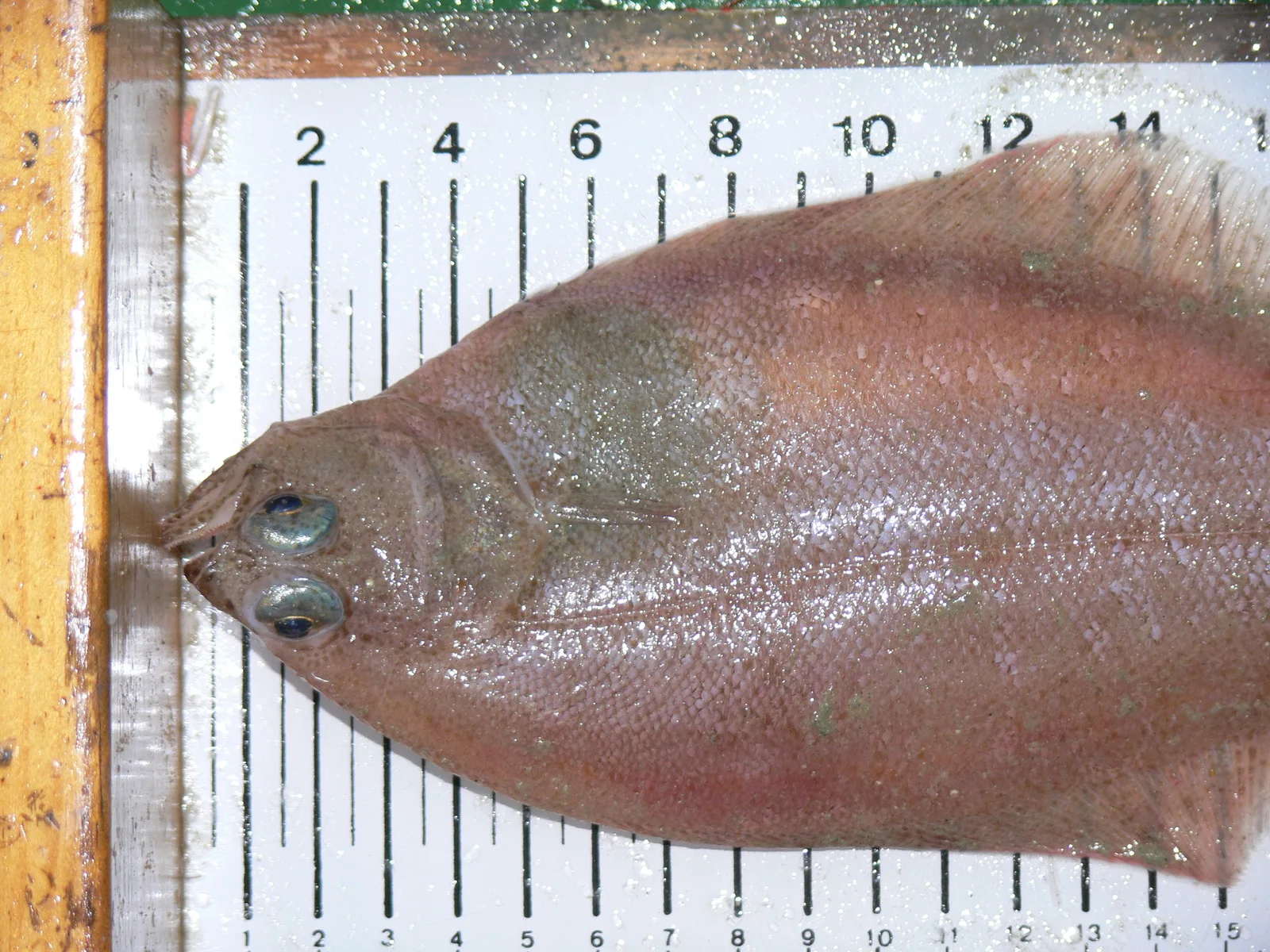
American plaice
- Family
- Pleuronectidae
- Depth
- 10–3000 m
- Season
- Mar, Apr, May
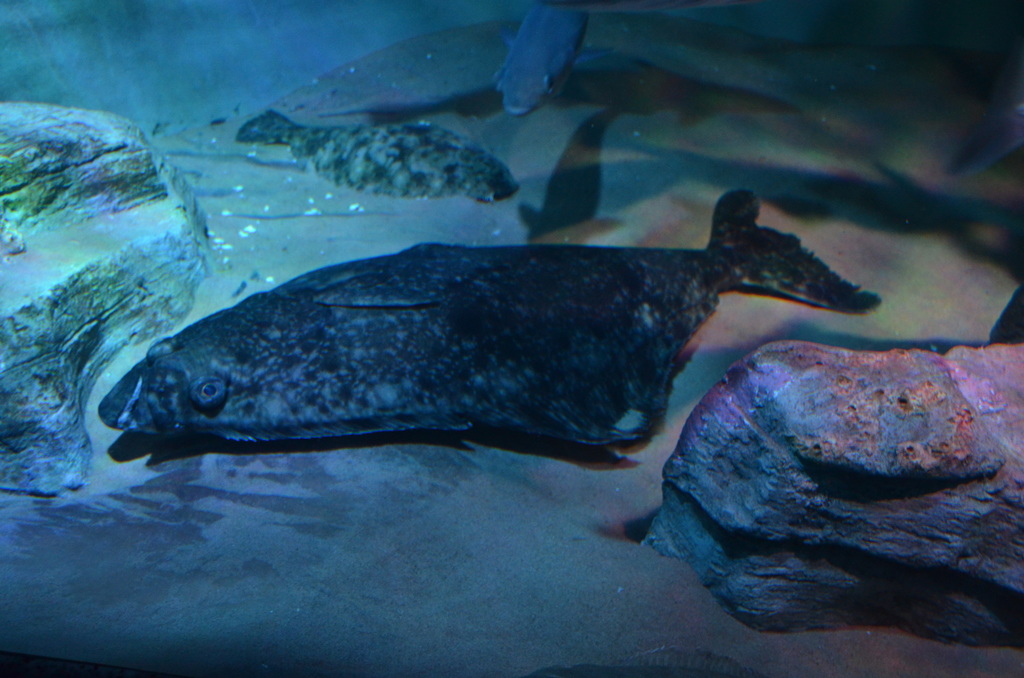
Atlantic halibut
- Family
- Pleuronectidae
- Depth
- 50–2000 m
- Season
- Jan, Feb, Mar, Apr, Dec
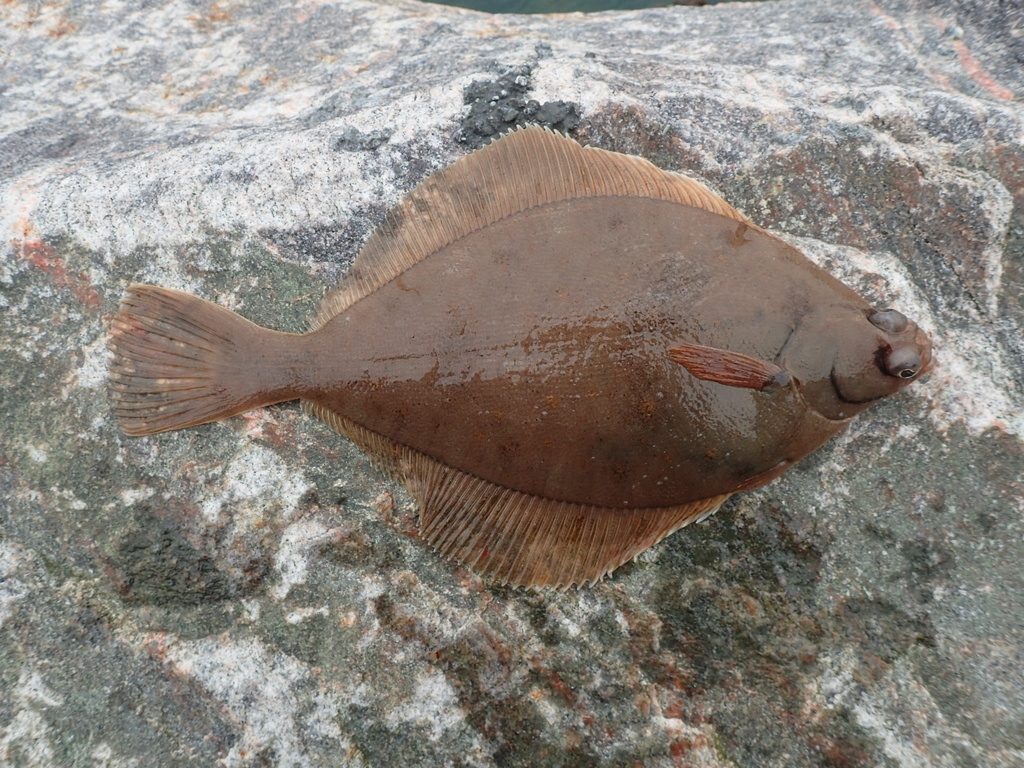
Common dab
- Family
- Pleuronectidae
- Depth
- 20–150 m
- Season
- Jan, Feb, Mar, Apr, May, Jun, Jul, Aug
Guides for this water
Technique, gear and safety guides that fit Greenland halibut.