
White stumpnose
Rhabdosargus globiceps is the white stumpnose, a sparid recorded to 65 cm TL, with 40 cm as the common length and maturity from 23 cm. It is a southern African fish, recorded from Angola around the coast to Natal. South Africa allows 10 per person per day at 25 cm TL, and IUCN assessed the species as Vulnerable on 11 July 2024.

Rhabdosargus globiceps is the white stumpnose, a sparid recorded to 65 cm TL, with 40 cm as the common length and maturity from 23 cm. It is a southern African fish, recorded from Angola around the coast to Natal. South Africa allows 10 per person per day at 25 cm TL, and IUCN assessed the species as Vulnerable on 11 July 2024. A 25 cm minimum on a fish that matures at 23 cm, ten a day, on a Vulnerable assessment: that gap is what this page is about.
Identification
FishBase gives 11 dorsal spines, 11–13 dorsal soft rays, 3 anal spines and 10–11 anal soft rays, and describes the fish as silvery with distinct crossbars. The crossbars are the field mark that survives a wet hand and a bucket; a silver sparid without them is a different species. The page records no weight and no age.
The common-name list is where the confusion starts. “White stumpnose” is the South African name, “Stumpnose” is recorded for Namibia without the colour, and “Go-home-fish” is a second English label. Stumpnose is used for several southern African sparids, so the word on its own is a shape description rather than an identification; the crossbars and the 11 dorsal spines are what a buyer can check.
Range and habitat
The distribution text runs from Angola southward around the coast of South Africa to Natal, with Mozambique reported. Latitude runs 13°S–36°S. GBIF returns 1,470 present records: 1,384 from South Africa, 74 from Namibia, 2 from Mozambique and 2 without a country. That is 94 per cent South African. The 1,384-to-74 ratio is a sampling pattern, not a stock estimate. iNaturalist holds 63 observations.
The habitat line reads marine, brackish, benthopelagic, oceanodromous, depth unknown to 100 m. The depth field begins with a question mark, so the shallow limit is not recorded; only the 100 m floor is. The biology text puts the fish over sandy substrate and uses estuaries as a juvenile nursery. Sand, not reef, is the working bottom, and the estuary is part of the life cycle rather than an accident.
Habits and diet
The recorded diet is worms, crustaceans and molluscs, especially mussels. Mussels are a sessile prey that has to be prised off hard substrate, so a fish listed over sand and feeding on mussels is working the edges where sand meets rock or mussel bed. The source states the two facts separately and does not draw that line; the inference is mine and is labelled as such.
The species is listed as oceanodromous, which records movement without giving a route or a distance. Where juveniles go after the estuary, and how large an adult's range is, are not on the page. No predator, growth rate or natural mortality figure appears either.
Season and time of day
FishBase's spawning table has two entries, both South African: one for South Africa and one for South East Africa, with the same months, January–February and August–December. The biology text adds that the fish spawns in spring and summer close inshore. Read together, the recorded window is August to February with a March–July gap, and “close inshore” is the only spatial detail the source gives for the spawn.
That window runs from late winter to late summer in the southern hemisphere. The March–July gap is a gap in the record, not evidence that no fish spawns then.
No time-of-day record exists on the page. The inference from a benthopelagic fish over sand, feeding on mussels and crustaceans, is that low light and moving water are the productive hours, and that a spring tide over a mussel bed is a better bet than midday slack. The source supports the habitat and the diet, not the clock.
Tackle and techniques
The source gives no rig, bait or hook size. It gives a 23 cm maturity point with a 22–24 cm range, a 40 cm common length, a 65 cm maximum, a sandy benthopelagic habit, a depth band running to 100 m, estuary nursery use and a diet built on mussels.
That combination points to bottom fishing over sand near hard structure. A 40 cm fish is the common adult and the realistic target; 65 cm is the recorded maximum and not the size to build tackle around. The 100 m depth ceiling is deeper than a shore rod reaches, but the estuary and sandy shore statements put the fish inside casting range for most of its recorded habitat. Whether the deep end holds bigger fish is not stated, so depth is not a size guarantee here.
Bait is inference from the prey list: mussel, crustacean and worm presentations on the bottom, not a lure worked through the column. Gear weight follows the 40 cm target rather than the 65 cm record.
Kitchen and handling
FishBase classes the species as minor commercial and as a gamefish. There is no flesh description, no weight, no yield figure and no price. The page does not say whether it reaches market fresh or iced, and it gives no preparation note.
What is left is arithmetic the page cannot do: with no weight and no length–weight relationship, a 40 cm fish cannot be converted to a fillet weight here. The “minor commercial” label is the only market statement, and it says the species is landed, not that it is landed in volume.
Regulations and conservation
South Africa requires a recreational fishing permit, restricts the catch to own use and forbids sale. The species rule is 10 per person per day at 25 cm TL, which happens to match the general daily bag of 10 rather than replacing it with a tighter number.
Against the biology, the 25 cm line sits 2 cm above the 23 cm maturity point. The rule therefore protects most fish at first maturity, not at a size where they have spawned once, and 25 cm is well below the 40 cm common length, so most of what the rule allows is a fish short of the recorded common size. The IUCN assessment is Vulnerable, dated 11 July 2024, the heaviest label this page carries; the page gives no trend, no stock estimate and no regional breakdown.
Namibia holds 74 GBIF records, but the Namibian regulation checked sets limits for blacktail, galjoen, kob and West Coast steenbras only, and no stumpnose rule was located in it. Mozambique holds 2 records and no rule was located either. Neither gap is filled here.
MPAs, estuaries and provincial rules sit on top of the national bag, and the DFFE brochure directs the reader to current permit conditions and MPA zoning rather than listing each closure.
How to catch it
Shore fishing
Fished with the listed approach, matched to the recorded depth and size.
Boat bottom fishing
Fished with the listed approach, matched to the recorded depth and size.
Rock fishing
Fished with the listed approach, matched to the recorded depth and size.
Where these facts come from
Check these pages before you rely on a size, range or protection status.
- FishBase — Rhabdosargus globiceps — FishBase · T2
- GBIF — Rhabdosargus globiceps occurrence records — GBIF · T2
- IUCN Red List — Rhabdosargus globiceps — IUCN · T1
- Photo record — iNaturalist — iNaturalist · T3
Fish in the same water
These fish live in the same place.
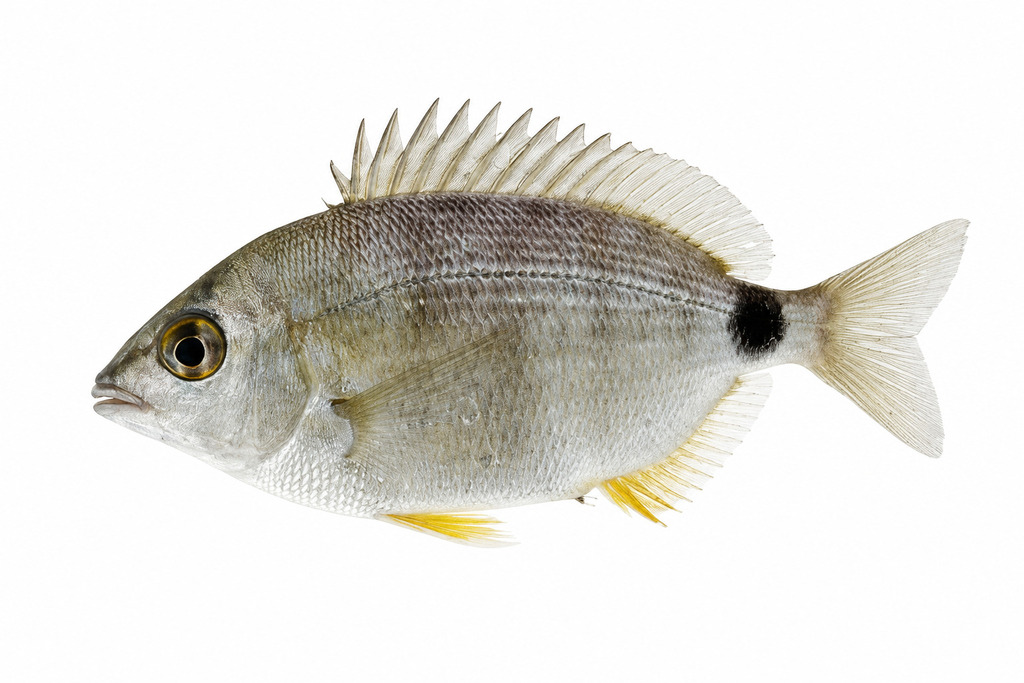
Annular seabream
- Family
- Sparidae
- Depth
- 0–90 m
- Season
- Jan, Feb, Mar, Apr, May, Jun, Jul, Aug, Sep
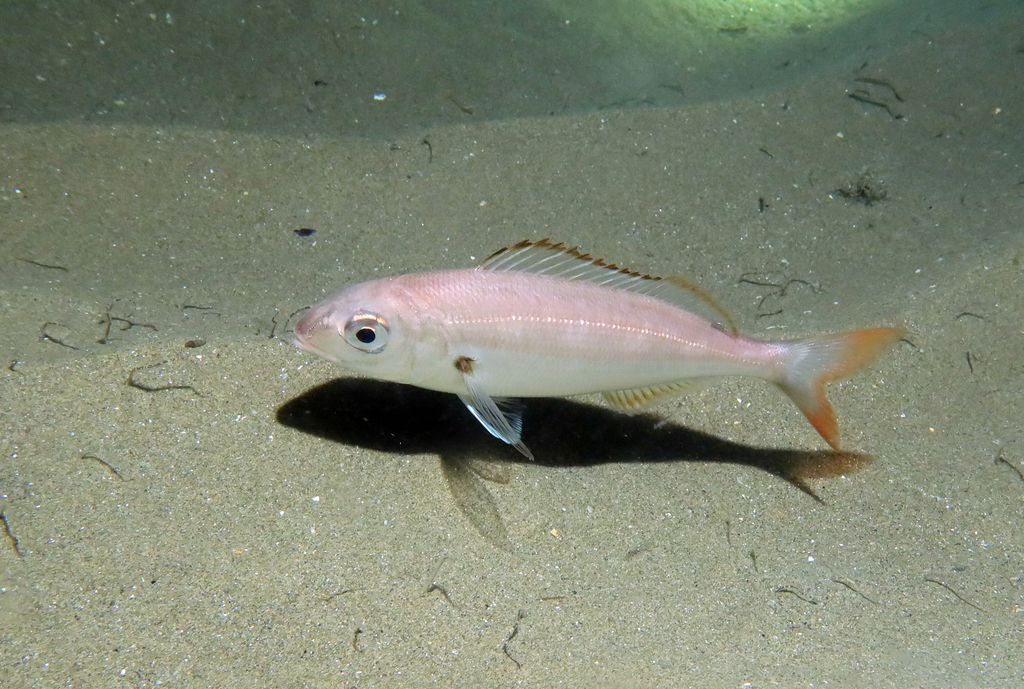
Axillary seabream
- Family
- Sparidae
- Depth
- 0–500 m
- Season
- Jan, Feb, Mar, Apr, May, Jun, Jul, Aug, Sep, Oct, Nov, Dec
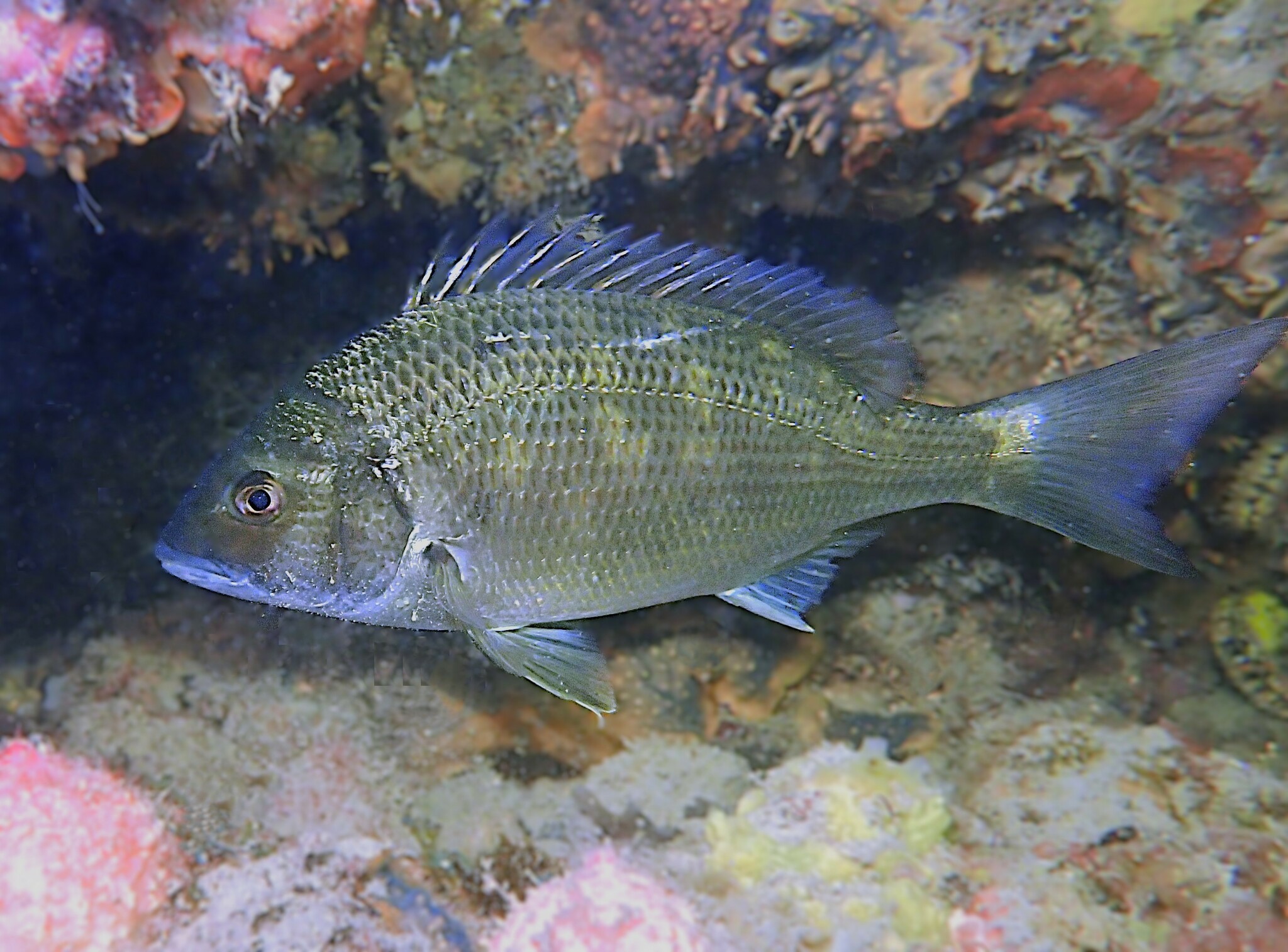
Black bream
- Family
- Sparidae
- Season
- Jan, Feb, Jul, Aug, Sep, Oct, Nov, Dec
Guides for this water
Technique, gear and safety guides that fit White stumpnose.