
Sobaity
Sobaity is a Sparidae seabream of the Persian Gulf and the coasts of India, recorded from 1 to 50 m over demersal ground. It reaches 83 cm TL with a common length of 20 cm, and spawning has been recorded from February to March at a sea-cage site off Kuwait and Doha. It is carnivorous, marketed fresh and produced in aquaculture. Boat bottom fishing, drifting and jigging are the methods listed.
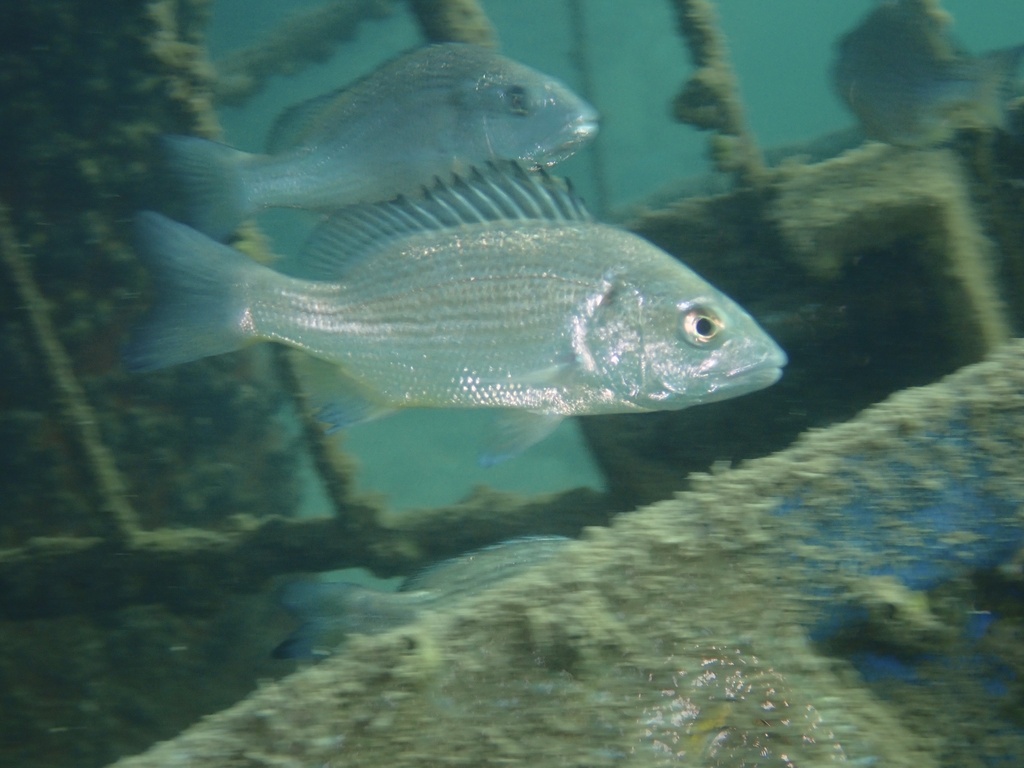
Sparidentex hasta is a Sparidae seabream of the Persian Gulf and the coasts of India, recorded from 1 to 50 m over demersal ground. FishBase gives a maximum of 83 cm total length and a common length of 20 cm, with spawning recorded from February to March at a Kuwait and Doha sea-cage site. It is carnivorous, marketed fresh and produced in aquaculture. Gulf anglers know it as sobaity or subaiti; unlike hammour, the name refers to this species rather than to a group.
Identification
FishBase does not publish a species-level diagnostic description or fin formula for Sparidentex hasta, so this entry avoids inventing counts. The genus contains this one accepted species, and the fish is a deep-bodied, compressed sparid with a silver-grey to grey-brown body and a pointed head profile.
On the Gulf grounds the practical separation is from faskar, Acanthopagrus bifasciatus: sobaity lacks the two black vertical bars across the head and does not show the yellow dorsal and caudal fins. FishBase gives a maximum of 83 cm total length and a common length of only 20 cm, which suggests that most of the recreational catch is made up of young fish.
No maximum weight, maximum age or maturity length is listed on the summary page. Treat any figure quoted for those values as unsourced unless it comes from a local study.
Distribution and Habitat
Western Indian Ocean: the Persian Gulf and the coasts of India. FishBase lists 11 territories, with Saudi Arabia, Iran, India, Pakistan, Iraq, Oman, Bahrain, Kuwait, the United Arab Emirates and Qatar among them.
The recorded depth is 1 to 50 m on demersal ground, in marine to brackish water, with a tropical envelope of 30°N to 6°N and 49°E to 80°E.
The shallow end of that range is within casting distance of beaches and breakwaters, but most of the biomass sits on open, soft to mixed bottom rather than on reef. That makes it a boat and shore-bottom target, not a reef-hugging one.
Habits and Diet
FishBase describes adults as occurring in shallow coastal waters to moderate depths and calls the species carnivorous, without listing prey items. It is sold fresh in markets and is also produced in aquaculture.
The absence of a diet list matters for bait choice: use the standard sparid bottom baits, shrimp, crab, squid and fish strip, and let the ground and current decide the presentation rather than assuming a specialised diet.
There is no recorded schooling behaviour on the summary page. Fishing a known patch of mixed bottom and waiting is more consistent with the record than chasing surface signs.
Fishing Methods
Bottom bait fishing is the core method. A single hook with shrimp, crab or a strip of fish, a lead heavy enough to hold, and a bait that stays on the hook through picking is the standard rig.
Drifting over shallow banks covers water quickly and keeps the bait moving just above the bottom. Slow-pitch or light jigging in the 40 to 80 g class works on open ground from 10 to 30 m.
Because the common length is only 20 cm while the maximum is 83 cm, expect a mixed catch. Use a hook size that can land a large fish without destroying the jaw of a small one, and release undersized fish without lifting them by the lure.
Gear and Approach
A 7 ft medium rod, a 4000 size reel, 1.5 to 2.0 PE braid and a 25 to 30 lb leader cover both shore and boat work. Larger fish are possible, so the drag should be set for a fish well above the common size.
On open bottom a running sinker rig keeps contact and lets a hooked fish run. On mixed ground, shorten the leader and lift the rod tip to keep the bait out of the rubble.
The mouth is not armoured like a grouper's, so a steady lift rather than a hard strike sets the hook. Check the point after every bottom contact.
Seasonal Window
The only spawning record on FishBase is February to March at a Kuwait and Doha sea-cage site. That is a cage observation, not a coast-wide season, and it should not be read as a closed season or as the only productive window.
The species is caught through the year on shallow coastal ground. In practice the stable windows are the cooler months and the periods of good water clarity; the hottest, calmest weeks push fish off the shallow flats.
Tide matters more than the calendar on soft bottom: a moving current spreads scent and lets the fish work the scent line. Slack water is the time to reposition.
Edibility and Handling
FishBase notes it is sold fresh and produced in aquaculture, which normally indicates a firm, acceptable table fish. The flesh is white and the frame is heavy for its length.
Bleed and ice promptly, and keep small fish in slurry rather than a dry box. The large maximum size means a big specimen should be bled, gutted and cooled before transport, not left whole in the sun.
There is no species-specific ciguatera note in FishBase. Standard reef-fish caution still applies to fish taken near structure.
Regulations and Conservation
United Arab Emirates: the 21-species minimum-length table in Ministerial Decree No. 580 of 2015 does not list sobaity, so no species-specific size is published. Recreational fishing still requires a licence, and Abu Dhabi issues an annual permit for AED 120 or a weekly permit for AED 30.
Oman: a recreational licence costs OMR 2 per day or OMR 30 per year, and the five-species table in Ministerial Decision 67/2020 does not include this species.
Saudi Arabia: the Agriculture Law Implementing Regulation defines a recreational fisher and requires ministerial licensing, but no species-specific size or bag limit was located. IUCN global status is Least Concern, assessed in 2009.
How to catch it
Boat bottom fishing
Drift fishing
slack
Jigging
40–80 10–30
Where these facts come from
Check these pages before you rely on a size, range or protection status.
- FishBase — Sparidentex hasta — FishBase · T2
- GBIF — Sparidentex hasta occurrence records — GBIF · T2
- IUCN Red List — Sparidentex hasta — IUCN · T1
- Photo record — iNaturalist — iNaturalist · T3
Fish in the same water
These fish live in the same place.
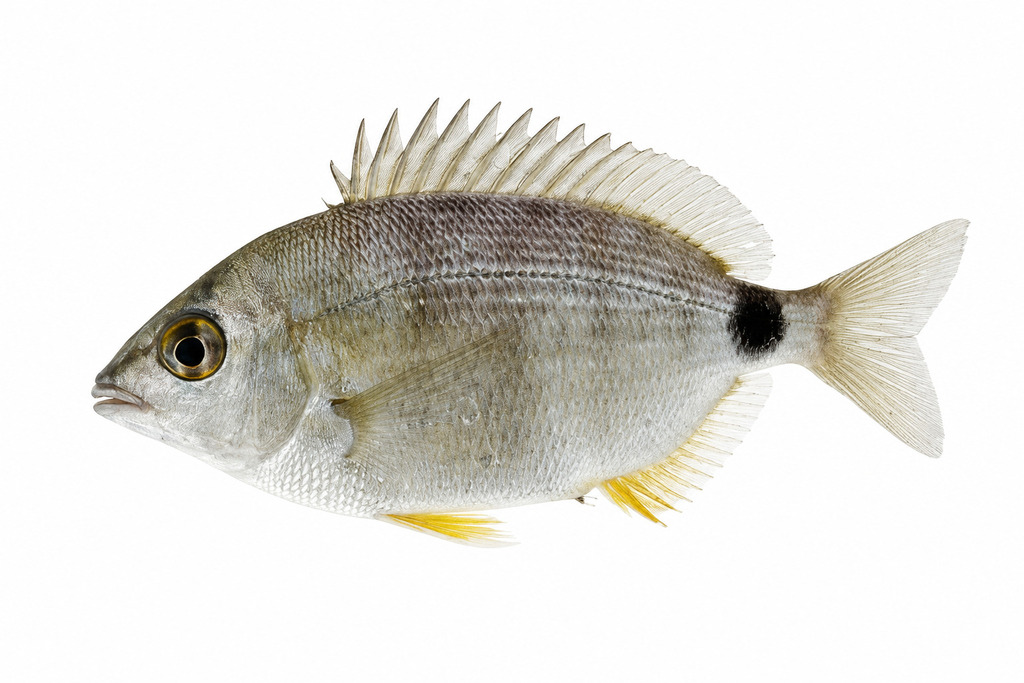
Annular seabream
- Family
- Sparidae
- Depth
- 0–90 m
- Season
- Jan, Feb, Mar, Apr, May, Jun, Jul, Aug, Sep
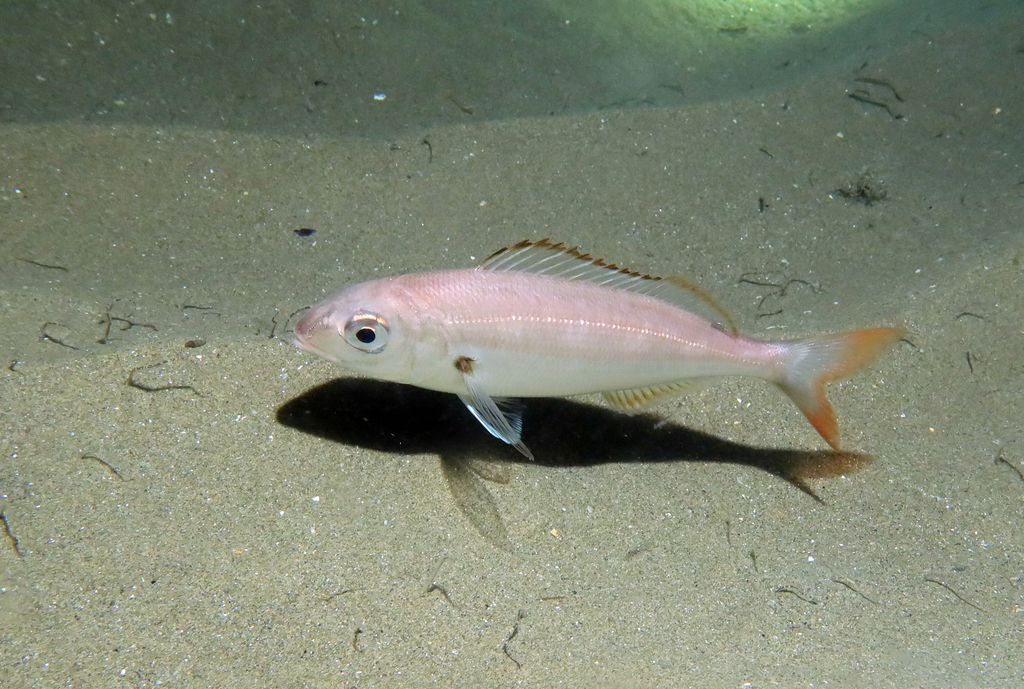
Axillary seabream
- Family
- Sparidae
- Depth
- 0–500 m
- Season
- Jan, Feb, Mar, Apr, May, Jun, Jul, Aug, Sep, Oct, Nov, Dec
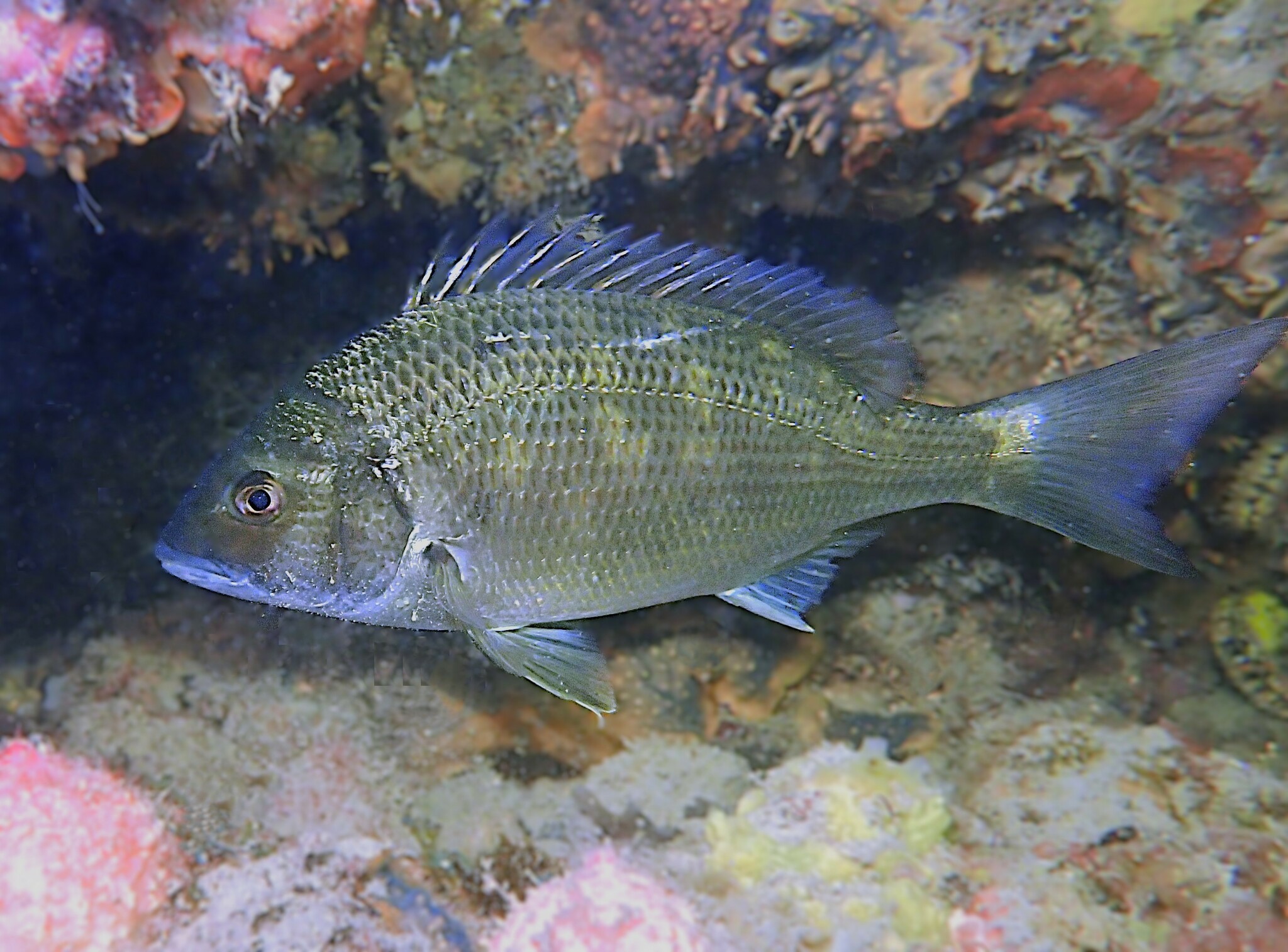
Black bream
- Family
- Sparidae
- Season
- Jan, Feb, Jul, Aug, Sep, Oct, Nov, Dec
Guides for this water
Technique, gear and safety guides that fit Sobaity.