
Blotched picarel
The blotched picarel earns its own entry for its sex life rather than its table value: it matures as a female and later turns male, so the biggest fish in a school has usually already changed. At the boat it is separated from the picarel by body depth, blotch size and lateral-line scale counts, none of which depends on colour.
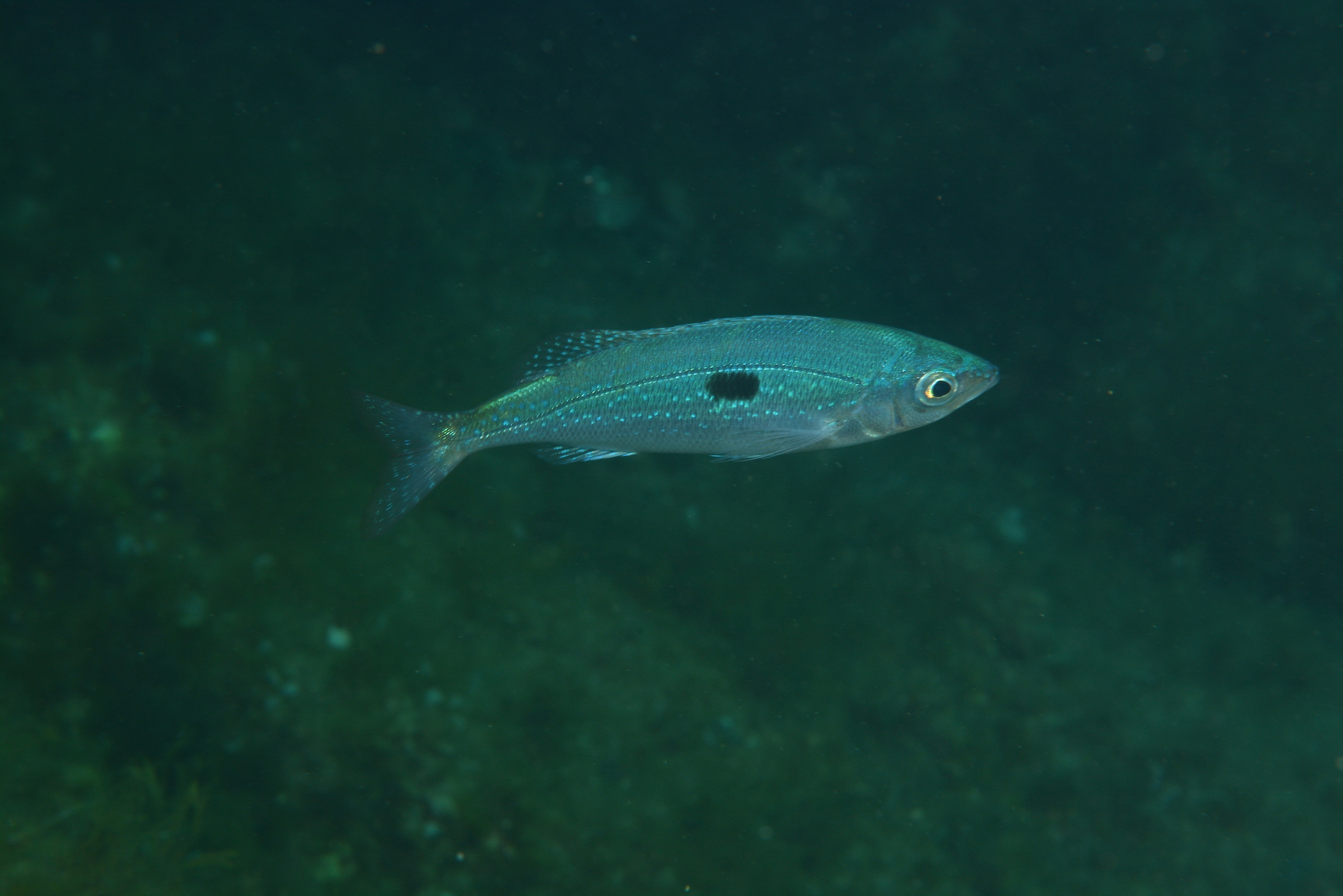
The blotched picarel earns its own entry for its sex life rather than its table value: it matures as a female and later turns male, so the biggest fish in a school has usually already changed. At the boat it is separated from the picarel by body depth, blotch size and lateral-line scale counts, none of which depends on colour.
Deep body, one large blotch, and a change of sex
Lay the fish flat and look at body depth first. The blotched picarel is clearly deeper than its head is long, close to a rhomboid outline, with a single large dark blotch on the upper flank above the tip of the pectoral fin, sharply edged and usually wider than the eye. The tail fork is shallow. The picarel beside it is slender, with head length equal to or greater than body depth, a small blotch and a deeper fork. Lateral-line scales settle it: FishBase describes the picarel as having 75 or more, while this species reads visibly coarser. Colour shifts with age, sex and season, so colour alone misleads, which is why the two are so often mixed up in catch records.
Posidonia, sand and mud between 30 and 130 metres
FishBase runs the range from Portugal, Morocco and the Canary Islands through the Mediterranean to the Black Sea. It is a neritic, mid-water fish recorded from 30 to 130 m, with the biology text putting the usual band at 30 to 90 m, over Posidonia meadows, sand, mud and rock. That depth band rules out most shore fishing; boat and raft work carry the load. The fish feeds on zooplankton and rises off the bottom at dusk and dawn while hugging it during the day, so the rig has to follow that vertical movement. Leave the bait on the bottom while the fish are up in the water and the float will not move all day. Weed edge and the sand-mud transition are where a school starts; open sand usually holds only scattered fish.
Warm water brings the schools inshore
The species is a protogynous hermaphrodite and a demersal spawner, and FishBase gives no month-by-month spawning table. The usable pattern: after spring warming the schools move into the shallower end of the band, around 30 to 50 m, and early to high summer is the most consistent period; through autumn the schools disperse and shift up and down with temperature and food; in winter they withdraw to deeper water and bites slow. Pre-spawning aggregations appear in catch reports but no verified month exists, so no dates are given here. Because the change of sex tracks size rather than season, one school can hold fish of very different ages, with the largest individuals male.
Small hooks for a zooplankton feeder
It eats zooplankton, so lighter is better. The standard boat approach is a string of three to five small hooks with a small lead at the end, lowered to the target layer and lifted and settled so the rig behaves like a patch of plankton. A second method is a light lead and single hook on the bottom, dragged slowly to find the school when fish are down. The third is vertical micro-jigging from a raft, holding a small bait in midwater where a school produces fish after fish. All three depend on finding the layer first: stop every two metres on the way up and stay where the first fish comes.
Light boat gear, and a problem with depth
A 1.8 to 2.4 m light boat rod with a 2000 or 3000 reel, 0.6 to 0.8 braid, a 6 to 10 lb fluorocarbon leader and size 8 to 12 fine-wire hooks covers it. Space the snood hooks further apart than the hook length to cut tangles, and keep the lead just heavy enough to hold bottom; extra weight kills the feel for a light bite. Fish hauled from deep water often arrive with a swollen swim bladder and bulging eyes, and no release-survival data exists for this species; if the fish is not for the table, avoid deep water or cut the number of lifts rather than treating a deep-water fish as a casual release.
No minimum size anywhere in the pack
The flesh is fine but falls apart, best fried whole, salted and pan-fried, or in soup; small fish are often fried until the bones soften. Bleed and ice them, and there is no need to skin. The species is also a Mediterranean bait fish, sold live or dead, which makes people forget it is covered by the same rules. EU: Regulation (EU) 2019/1241 Annex IX Part A sets no size for Spicara, Article 2(2) does not extend Annex IX sizes to recreational fishing, and Article 17 of Regulation (EC) 1967/2006 bans selling recreational catch. Spain: autonomous-community licence from shore and boat (RD 347/2011), no Mediterranean entry in RD 560/1995. France: no licence, RecFishing registration from 16, no entry in the 2012 order. Italy: annual MASAF declaration, electronic registration from 2026. Greece: no licence, 5 kg per person per day, 10 kg with longlines, May spearfishing ban. Croatia: licence required, 5 kg bag plus one fish over 5 kg. Bait fish count too, because the Greek, Croatian and Turkish limits are by weight. No size rule does not mean no rules, since the sale ban and gear restrictions still apply.
What the sources do and do not say
The 25 cm male and 21 cm female maxima, the 160 g maximum weight, the 30 to 130 m band, the Posidonia and soft-bottom habitat, the zooplankton diet, the protogynous habit, demersal spawning and the IUCN Least Concern assessment of 2009 come from FishBase. The 75-plus lateral-line count is FishBase's description of the picarel, used here for contrast. The seasonal up-and-down movement is generalised from regional catch reports with no survey behind it. Spawning months and the body length at sex change are unverified.
How to catch it
Boat bottom fishing
Fished with the listed approach, matched to the recorded depth and size.
Bottom fishing
Fished with the listed approach, matched to the recorded depth and size.
Jigging
Fished with the listed approach, matched to the recorded depth and size.
Where these facts come from
Check these pages before you rely on a size, range or protection status.
- FishBase — Spicara maena — FishBase · T2
- GBIF — Spicara maena occurrence records — GBIF · T2
- IUCN Red List — Spicara maena — IUCN · T1
- Photo record — iNaturalist — iNaturalist · T3
Fish in the same water
These fish live in the same place.
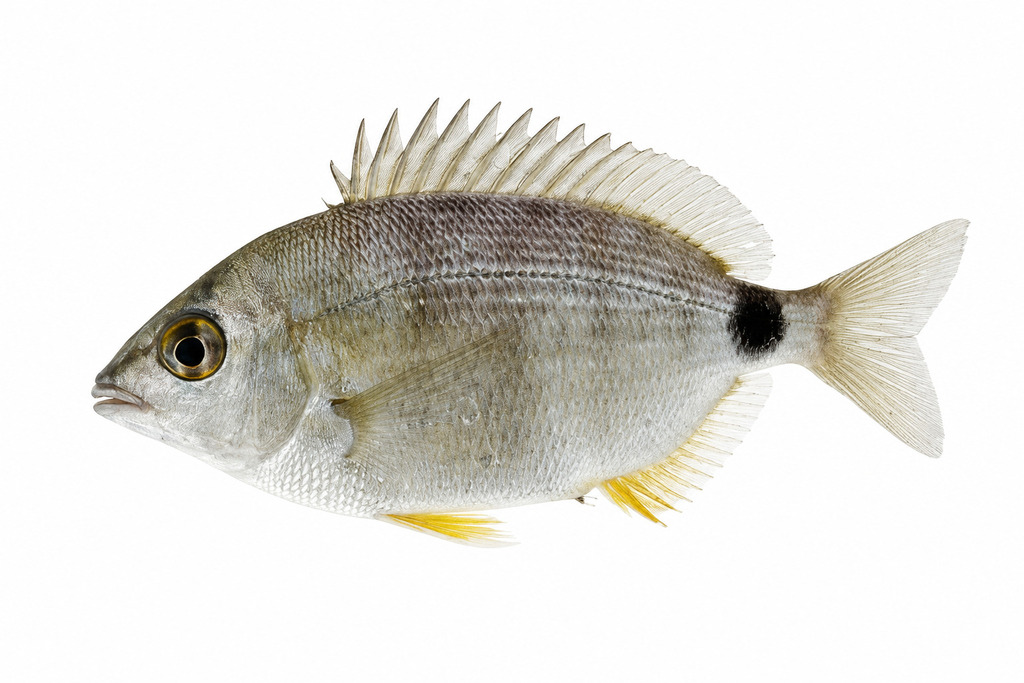
Annular seabream
- Family
- Sparidae
- Depth
- 0–90 m
- Season
- Jan, Feb, Mar, Apr, May, Jun, Jul, Aug, Sep
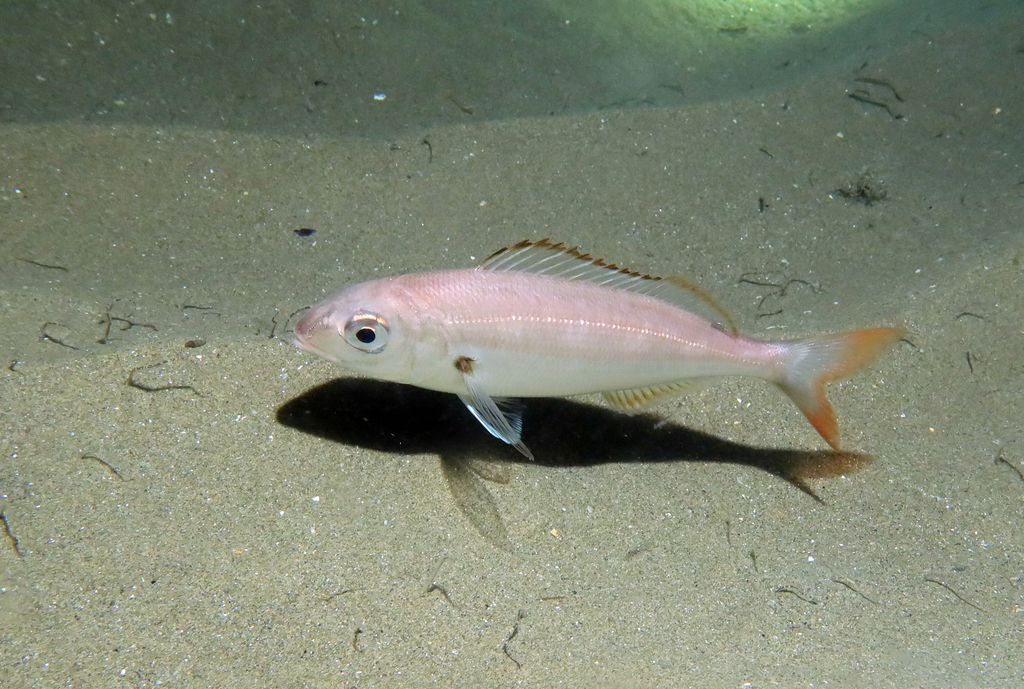
Axillary seabream
- Family
- Sparidae
- Depth
- 0–500 m
- Season
- Jan, Feb, Mar, Apr, May, Jun, Jul, Aug, Sep, Oct, Nov, Dec
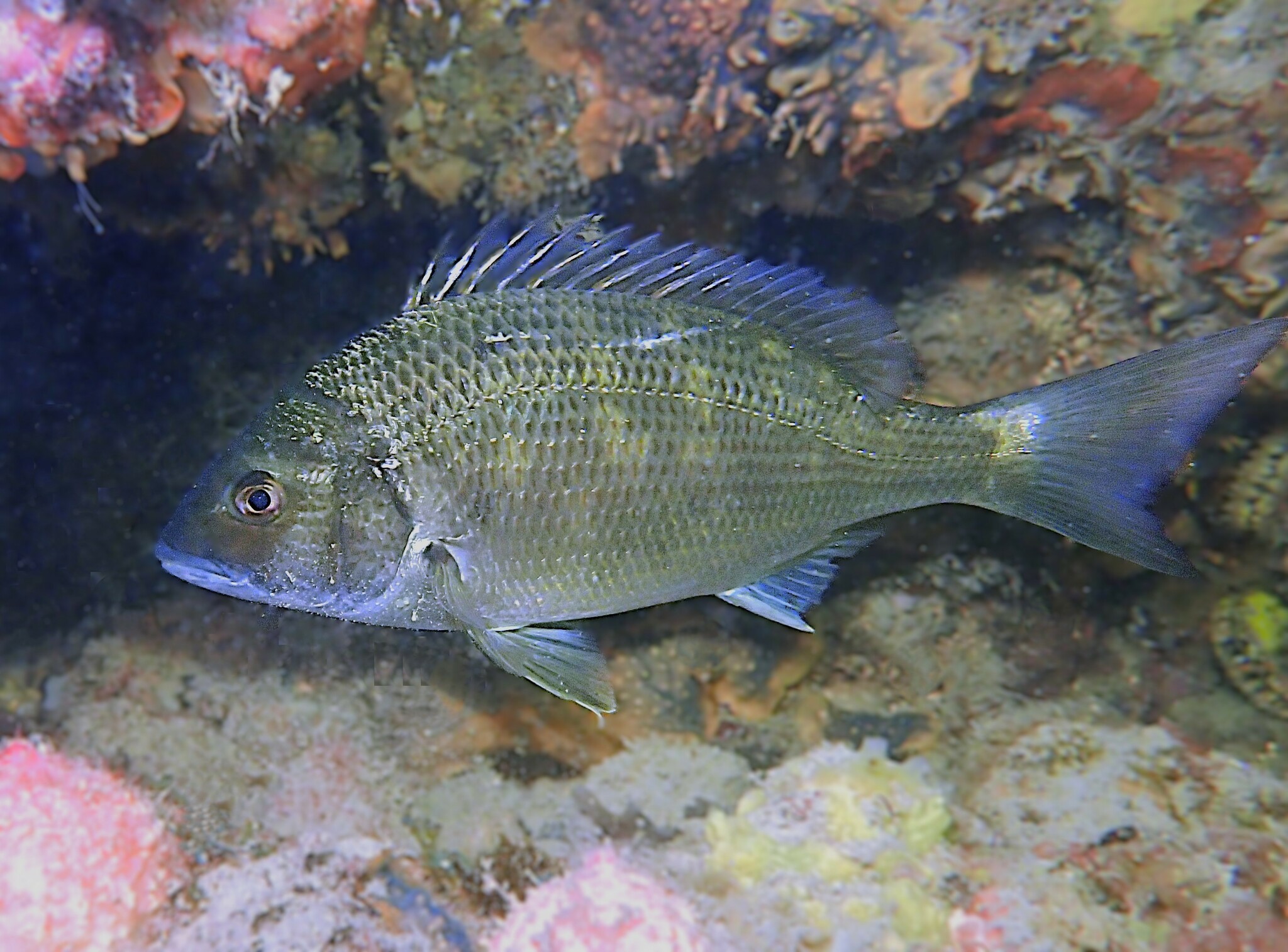
Black bream
- Family
- Sparidae
- Season
- Jan, Feb, Jul, Aug, Sep, Oct, Nov, Dec
Guides for this water
Technique, gear and safety guides that fit Blotched picarel.