
Picarel
The picarel is small enough to end up in the bait bucket, yet it is one of the most heavily eaten links in the inshore Mediterranean food web: it schools, changes sex and feeds on almost anything small. Because it is treated as bait, decisions get sloppy, and the Greek and Croatian daily limits are counted by weight, bait included.
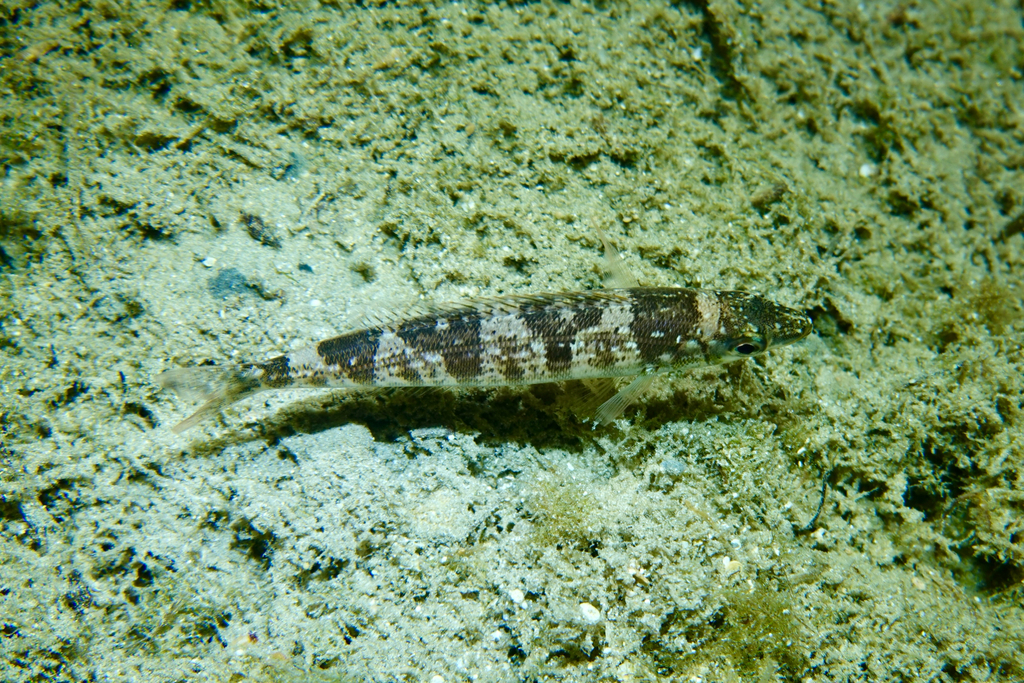
The picarel is small enough to end up in the bait bucket, yet it is one of the most heavily eaten links in the inshore Mediterranean food web: it schools, changes sex and feeds on almost anything small. Because it is treated as bait, decisions get sloppy, and the Greek and Croatian daily limits are counted by weight, bait included.
Slender, fine-scaled, and usually bait-sized
Start with proportions. The picarel has a head as long as, or longer than, its body is deep, which makes the fish look slender; the blotched picarel is the reverse, deeper than its head is long. A dark spot sits above the tip of the pectoral fin, smaller here than on its relative and with a less defined edge, and the tail fork is deeper. Lateral-line scales are the character FishBase states outright: 75 or more, fine and dense, obvious after counting a short section. The back is grey and the flank silver, shifting with age, sex and season, with small blue spots scattered over the dorsal and anal fins of males. At the boat, compare depth with head length, then the blotch, and count scales last.
From the Posidonia edge down to 328 metres
FishBase gives the whole Mediterranean, the Black Sea and the southern Sea of Azov, plus the Atlantic coast from Portugal to Morocco with the Canary Islands and Madeira. The depth range is 15 to 328 m, the deep figure coming from the eastern Ionian, with 15 to 170 m as the working band. The fish sits over Posidonia meadows and muddy bottom, in schools except when breeding, and the schools an angler meets are usually moving midwater groups. That band is wider than the blotched picarel's, reaching water shallow enough for shore fishing, so shore, boat and raft all have a chance, though the boat still does most of the work.
Schools break up to breed
The species is a protogynous hermaphrodite, and breeding breaks up the schools, which is the opposite of its normal behaviour and one reason catches can collapse without warning. FishBase gives no monthly spawning table. The usable pattern: schools move shallow after spring warming, with early to high summer the most consistent period between 15 and 50 m; in autumn they re-form and move deeper; in winter they withdraw further and only scattered fish remain in the shallows. It comes closer inshore than the blotched picarel, so a shore angler meets a school occasionally in early summer, though never reliably.
Strings of small hooks and tiny baits
The fish eats zooplankton, so smaller hooks and lighter bait win. From a boat, a string of three to five small hooks with a small end lead is lowered and searched layer by layer, then held where the first fish comes. A second method is vertical micro-jigging, holding the bait in midwater and lifting with the wrist so the rig behaves like a patch of plankton. The third is a small float from shore, used when a shallow school passes in early summer, with a fast dip as the usual bite. All three share a premise: the school is moving, so follow it instead of waiting for it to come back.
Ultralight gear and a barotrauma question
A 1.8 to 2.1 m light boat rod with a 2000 reel, 0.4 to 0.6 braid, a 4 to 8 lb fluorocarbon leader and size 10 to 14 fine-wire hooks; from shore, a 3 m light rod and a small float. Fine line lets the rig sink naturally, while heavy line drags it into an angle in any current and the layer is lost. Fish pulled from deep water often arrive with a swollen swim bladder, and no release-survival data exists for the species. Because it is also bait, there is a temptation to haul extra and tip the surplus back; decide the number before the first drop.
A bait fish that still counts toward the bag
The flesh is fine and falls apart, best fried whole or used in soup, with small fish fried until the bones soften; bleed and ice them, and skinning is unnecessary. In Greece, Italy and Spain it is served fried by the plate and sold as live or dead bait. EU: Regulation (EU) 2019/1241 Annex IX Part A sets no size for Spicara, Article 2(2) does not extend Annex IX sizes to recreational fishing, and Article 17 of Regulation (EC) 1967/2006 bans selling recreational catch. Spain: autonomous-community licence from shore and boat (RD 347/2011), no Mediterranean entry in RD 560/1995. France: no licence, RecFishing registration from 16, no entry in the 2012 order. Italy: annual MASAF declaration, electronic registration from 2026. Greece: no licence, 5 kg per day, 10 kg with longlines, May spearfishing ban. Croatia: licence required, 5 kg bag plus one fish over 5 kg. A 14 cm picarel weighs tens of grams, so 5 kg is a large number of fish, and a limit counted by weight is easiest to break here. No size rule does not mean no rules.
Evidence and gaps
The 24.2 cm maximum, the 14 cm common length, the 55 g maximum weight, the 15 to 328 m band, the Posidonia and mud habitat, the schooling habit outside the breeding season and the IUCN Least Concern assessment of 2009 come from FishBase, as do the 75-plus lateral-line count and the spot above the pectoral fin. The protogynous habit comes from the Wikipedia entry and was not checked word for word against FishBase. The seasonal movement is generalised from regional catch reports, not a survey. Spawning months and the length at sex change are missing.
How to catch it
Jigging
Fished with the listed approach, matched to the recorded depth and size.
Shore casting
Fished with the listed approach, matched to the recorded depth and size.
Where these facts come from
Check these pages before you rely on a size, range or protection status.
- FishBase — Spicara smaris — FishBase · T2
- GBIF — Spicara smaris occurrence records — GBIF · T2
- IUCN Red List — Spicara smaris — IUCN · T1
- Photo record — iNaturalist — iNaturalist · T3
Fish in the same water
These fish live in the same place.
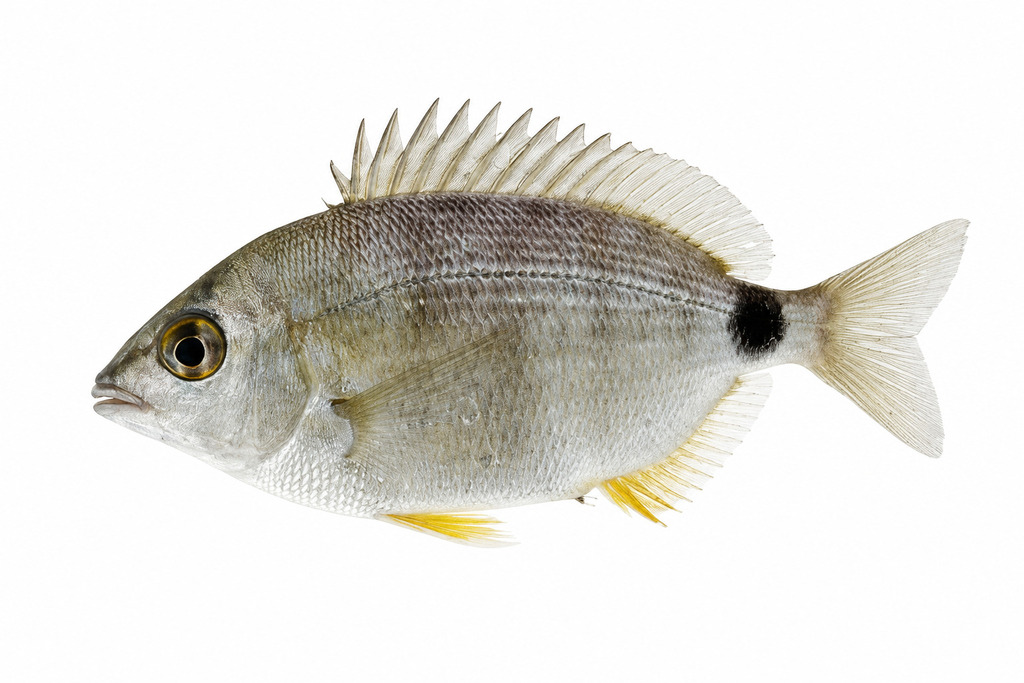
Annular seabream
- Family
- Sparidae
- Depth
- 0–90 m
- Season
- Jan, Feb, Mar, Apr, May, Jun, Jul, Aug, Sep
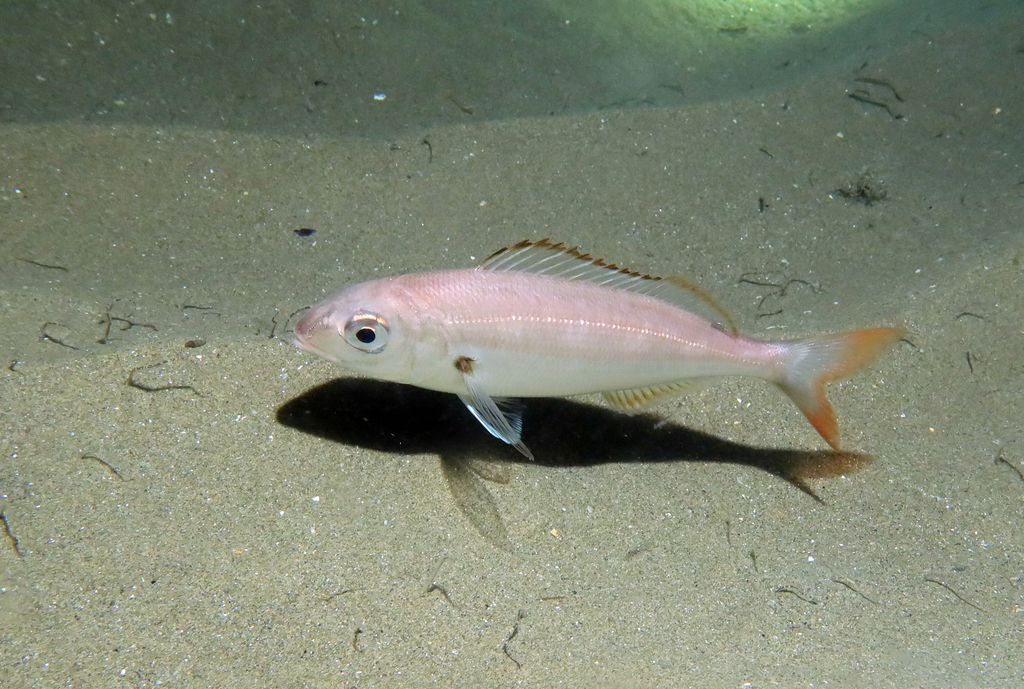
Axillary seabream
- Family
- Sparidae
- Depth
- 0–500 m
- Season
- Jan, Feb, Mar, Apr, May, Jun, Jul, Aug, Sep, Oct, Nov, Dec
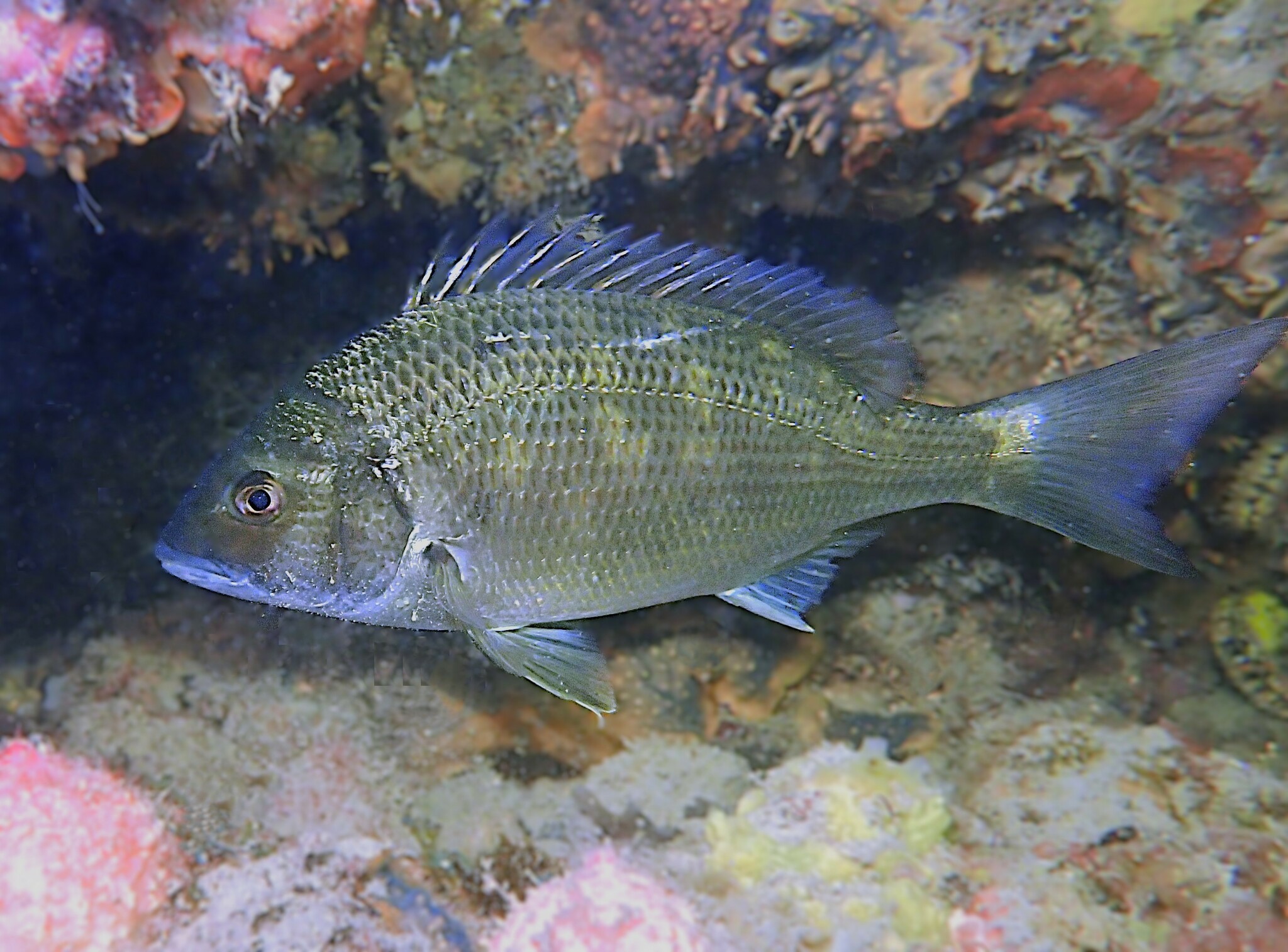
Black bream
- Family
- Sparidae
- Season
- Jan, Feb, Jul, Aug, Sep, Oct, Nov, Dec
Guides for this water
Technique, gear and safety guides that fit Picarel.