
Piked dogfish
Piked dogfish is a small, slender squaloid shark found around the boreal and temperate North Atlantic and elsewhere in cool water. It is blue-grey above with white spots and a white belly, recorded from the surface down to 1,978 m. It feeds on fish and prefers water of 7 to 15 degrees C. Adults reach 200 cm TL and 9.1 kg, and fish are recorded to 75 years old.
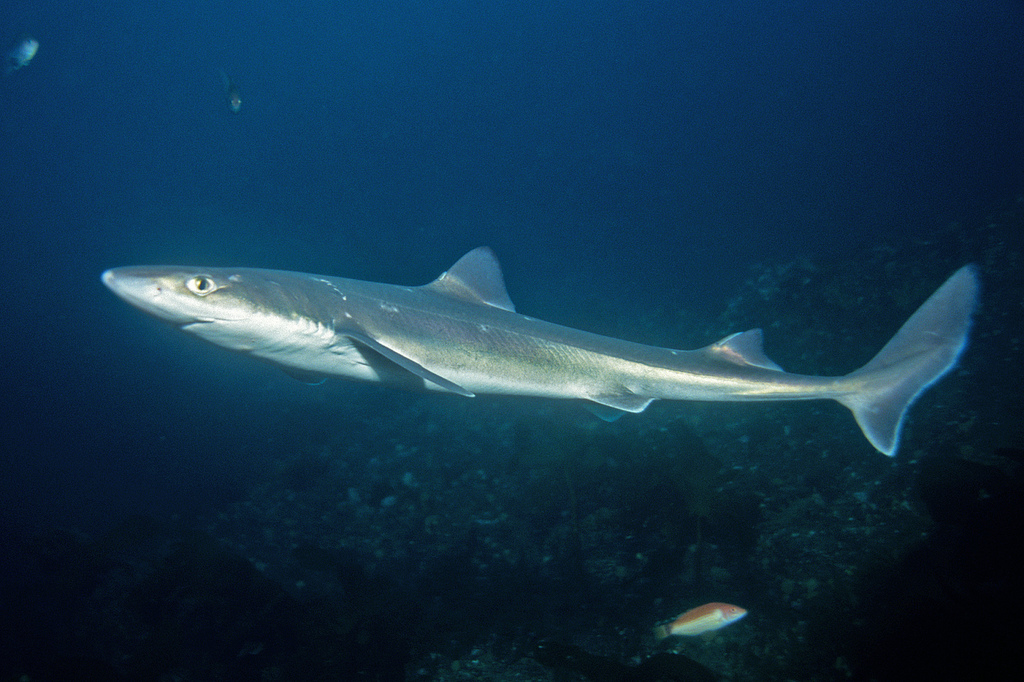
Piked dogfish (Squalus acanthias) is a fish of the family Squalidae. FishBase gives its range as: Circumglobal (boreal and temperate); except in the North Pacific , where all records refer to Squalus suckleyi (Girard, 1855). It is recorded from 0 to 1978 m, in temperate water at 7–15 °C. The recorded maxima are 200 cm TL, 9.1 kg, 75 years. Diet includes fishes. IUCN status: Vulnerable (VU). Chinese name: .
The 1,978-metre line and the 10–200-metre fish
The environment line gives the spiny dogfish a depth range of 0–1,978 m with a usual band of 50–300 m. The biology text then cuts the envelope down again: adults occur mainly between 10 and 200 m. Three depth numbers, three different jobs. The 1,978 m figure is the deepest record; the 50–300 m band is the catch range; the 10–200 m sentence is where adults live.
A fisherman who rigs for the maximum will fish empty water. The 10–200 m adult band is the one that matches the shelf and upper-slope description, and the 50–300 m band is the wider envelope around it. The fish is a demersal dogfish of the continental and insular shelf and upper slopes, usually near the bottom but also recorded in midwater and at the surface. That last clause is the one that breaks a simple "bottom fish" plan.
Demersal is not a fixed address
The page calls the species bathydemersal and oceanodromous at the same time. Demersal describes where it feeds; oceanodromous describes how far it travels. Both are true, and together they mean the fish can be on the bottom in the morning and off it in the afternoon.
Tagging work gives the movement a shape. Populations in the northern North Sea and northwest Scotland made winter migrations to off Norway and summer migrations to Scotland. Transoceanic migrations are recorded but rare. The depth range is therefore not a property of the species so much as a property of the season and the population being followed.
Depth by sex, temperature by season
Males and gravid females are usually found shallower than non-gravid females. That single sentence changes how a catch is read: a deep set that lands nothing but big females is a biased slice, and a shallow set full of males does not mean the school is small.
The temperature line is 7–15°C. The page says the latitudinal and depth-related movements correlate with preferred temperature. That gives a way to translate the depth band into a season: follow the 7–15°C water, and the fish's depth will follow the temperature rather than a fixed contour. Nothing beyond that range is offered, so 7–15°C is the only figure to plan with.
OBIS holds 362,473 records under AphiaID 105923, drawn from 185 datasets. The count is a filing total, not a density estimate. The biology text separately says the fish tolerates brackish water, often enters enclosed bays and estuaries, and can enter freshwater but cannot survive there for more than a few hours.
The North Pacific hole
The distribution sentence is circumglobal in boreal and temperate waters, except the North Pacific, where all records refer to Squalus suckleyi. The remark repeats the point: S. suckleyi was resurrected in 2010 and replaces S. acanthias in the North Pacific. This is not a minor synonymy note. It removes an entire ocean from the species' range.
GBIF held 399,310 present records on 2026-11-08, with the United States at 136,068, Canada at 104,925, Great Britain at 92,257, Ireland at 19,666, New Zealand at 14,191, Australia at 7,961, Chile at 6,688 and Norway at 3,414. The US and Canadian totals are large, and part of that geography is the North Pacific that the FishBase sentence excludes. The GBIF query cannot split those national totals by ocean. The consistent reading is that the database count and the distribution sentence are counting different things: one counts records filed under the key, the other defines the biological range.
The scale of the database is also a sampling statement. A 399,310-record total reflects decades of trawl surveys, fisheries observer programmes and museum lots, not 399,310 encounters by an angler. iNaturalist holds 754 observations. Neither number should be read as a density.
Two dorsal spines and a venomous tail
The morphology block gives two dorsal spines, no anal spines, and 101–109 vertebrae. The body is very slender, the abdomen width 7.2–9.2% of total length, the head narrow. The colour notes are distinctive: bluish grey above with an irregular array of moderately large white spots, whitish below, a blackish blotch at the apex of the upper caudal lobe, and no dark caudal bar.
The page adds that this is the only horned shark able to inflict toxins with its tail. That is a handling instruction as much as a description. A dogfish brought over the rail is not a smooth fish; the dorsal spines and the caudal spine are the parts that hurt. The page does not describe an antivenom protocol, and it does not need to: the practical point is to avoid the tail and the back.
Two years of gestation, 20–24 years of life
FishBase records 200 cm TL as the longest specimen, 100 cm TL as the ordinary one, 9.1 kg as the top weight and 75 years as the oldest age. The maturity figure is Lm 80.9 cm with a range of 69–100 cm. The biology text narrows maturity by sex: males 60–70 cm, females 75–90 cm.
Those numbers describe a slow animal. Gestation lasts two years, the species is ovoviviparous, and longevity in the northern Atlantic is about 35–50 years, though most live only 20–24 years. Growth is slow. A 100 cm common-length fish is therefore not a young fish, and a 200 cm record is an old one. The 75-year maximum in the table and the 35–50 year figure in the text are not the same measure; the page leaves the conflict open.
Fishing the 50–300 band
The fishing consequence of the page is a depth-first approach. Start in the 50–300 m band, and use the 10–200 m adult note to narrow the first drops. The 7–15°C range is the second filter. The fish is usually near the bottom but also rises into midwater and to the surface, so a bait hard on the bottom is a starting position, not a rule.
The page does not give baits, hook sizes, rigs or tide preferences. It does give the diet, which is broad: comb jellyfish, squid, mackerel, herring, benthic fishes, shrimps, crabs and sea cucumbers. That list supports a fish or squid bait and argues against a single-species lure. The depth and temperature numbers are the part that can be planned before the boat leaves.
VU, Appendix II, and the market
FishBase calls the spiny dogfish "possibly the most abundant living shark". The same page records an IUCN assessment of Vulnerable, dated 21 November 2019, and CMS Appendix II. CITES is Not Evaluated. The species is commercially fished and is also a gamefish.
The abundance sentence and the VU category are not a contradiction in the source; they are two statements made at different times and different scales. The text's abundance claim is a general description, and the assessment is a 2019 status. A reader who takes either one alone gets a distorted picture. For a boat landing dogfish in the North Sea, the size and retention rules come from the national or EU text, not from this page; the CMS Appendix II listing is a conservation instrument aimed at the species, not a recreational creel rule.
Where these facts come from
Check these pages before you rely on a size, range or protection status.
- FishBase — Squalus acanthias — FishBase · T2
- GBIF — Squalus acanthias occurrence records — GBIF · T2
- IUCN Red List — Squalus acanthias — IUCN · T1
- Photo record — iNaturalist — iNaturalist · T3
Fish in the same water
These fish live in the same place.
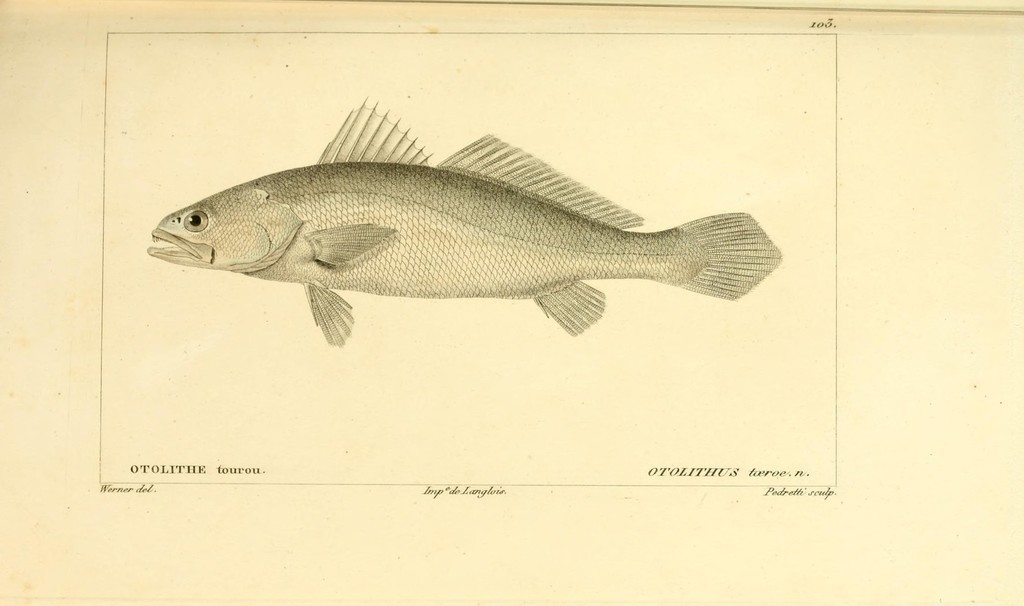
Acoupa weakfish
- Family
- Sciaenidae
- Depth
- 1–20 m
- Season
- Jan, Feb, Mar, Apr, May, Jun, Jul, Aug, Sep, Oct, Nov, Dec
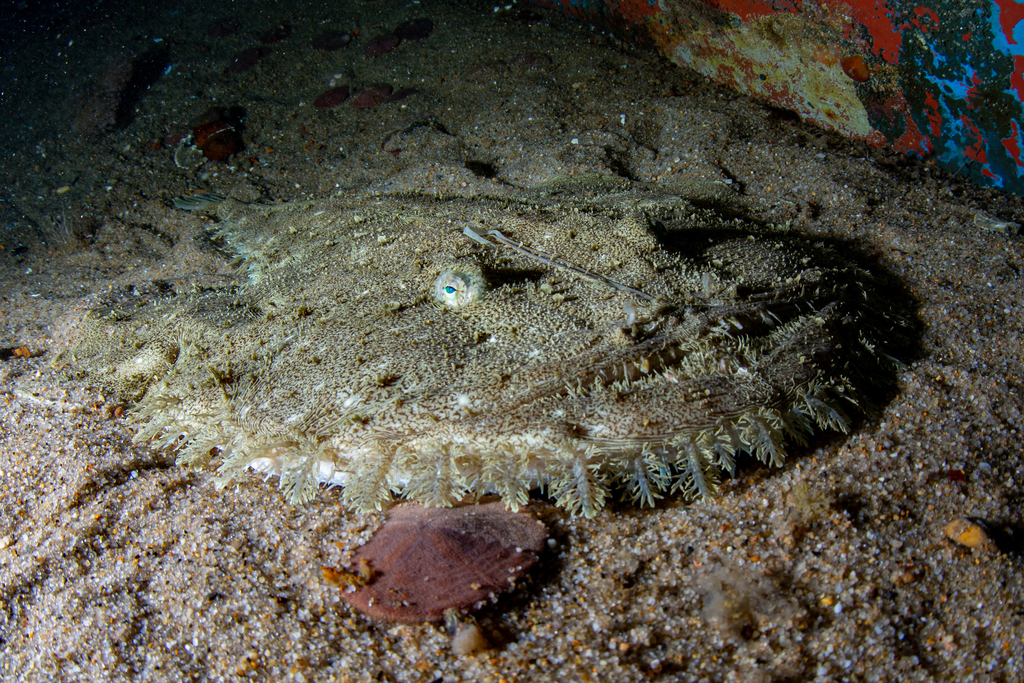
American angler
- Family
- Lophiidae
- Depth
- 0–800 m
- Season
- Mar, Apr, May, Jun

American eel
- Family
- Anguillidae
- Depth
- 0–464 m
- Season
- Jan, Feb, Mar, May, Jun, Jul
Guides for this water
Technique, gear and safety guides that fit Piked dogfish.