
Pacific angelshark
The body is flattened, with broad pectoral fins spreading to either side so that the fish looks much like a ray. The eyes sit on top of the head and the mouth is at the front of the head, which separates it from rays with a ventral mouth. Neither the dorsal nor the anal fin carries a spine.
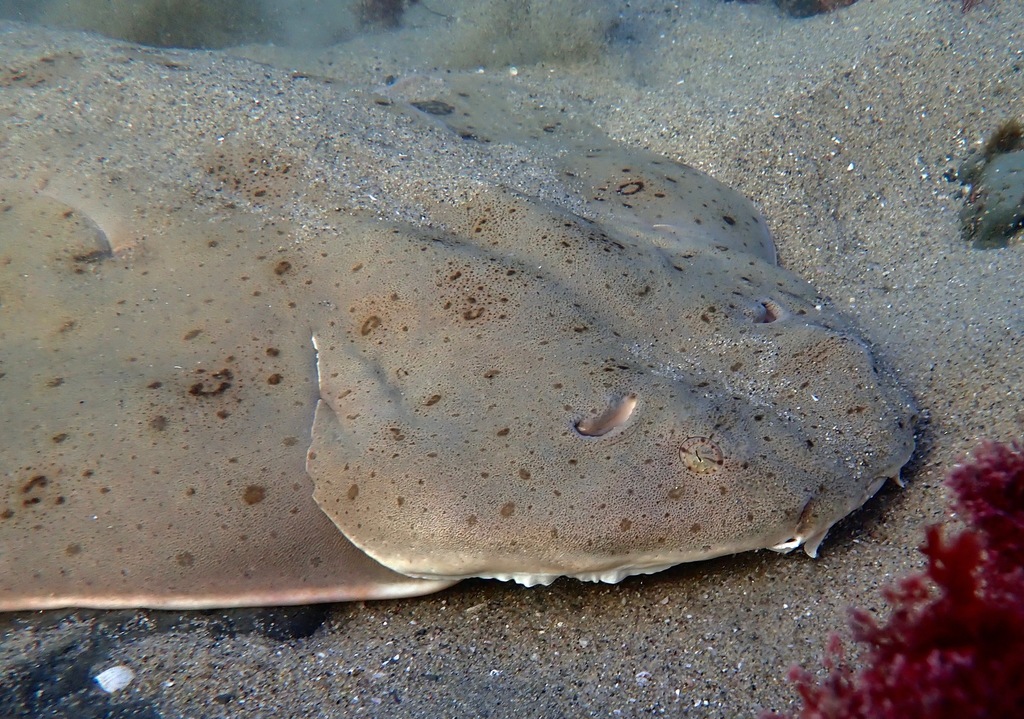
The body is flattened, with broad pectoral fins spreading to either side so that the fish looks much like a ray. The eyes sit on top of the head and the mouth is at the front of the head, which separates it from rays with a ventral mouth. Neither the dorsal nor the anal fin carries a spine. Colour is grey-brown to sand-brown, often with darker spots above and a white belly; buried fish show only the eyes and the breathing openings. The gill slits sit on the sides of the body in angelsharks and on the underside in rays. Photograph uncertain fish rather than grabbing them. Colour varies enough that shape and mouth position are more reliable than tone.
Habitat and behaviour
FishBase records the range from Canada to the Gulf of California and south to northern Peru. It is demersal and subtropical, recorded from 3 to 205 m and usually from 3 to 46 m. Sand and sand-mud bottoms are the main habitat; the fish buries itself by day and is more active at night. GBIF holds 72574 occurrences, 72077 from the United States and 378 from Mexico, with a few records from Chile, Ecuador and Peru. Records from the US west coast far outnumber those from other regions. The flat body leaves little profile, and a fish that has just buried can be missed even in ankle-deep water.
Seasonal window
FishBase records no spawning months. The California recreational limit was not confirmed in the public summary, so the current notice governs. An ambush predator does not chase bait, so the window depends more on water clarity and tide than on the calendar. Night and the twilight hours are better over shallow sand; daytime fish are usually a by-catch of slow bottom dragging. A slow tide with little weed is easier to fish than a big tide carrying debris.
Gear and approach
Use a medium-heavy long rod from shore, medium braid, an abrasion-resistant fluorocarbon leader, a circle hook, and a sinker matched to the current. From a boat, a boat rod and a simple rig reduce snagging. The teeth are sharp, so remove the hook with long pliers and keep hands away from the mouth. The disc is broad, so use a large net and support the body on release, letting the fish settle back into the sand. A sand spike and a long leader keep the bait in the wash without the rod being pulled over.
Edibility and regulations
Flesh is white and mild, good fried or grilled; the species was once part of the commercial catch, and most anglers now release it. IUCN status is VU, assessed in 2024, and CITES has not evaluated the species. Bottom-trawl bycatch is the main pressure, and low reproductive output slows recovery.
British Columbia: grouped with other sharks, zero retention.
California: the recreational limit was not confirmed in the public summary; check the current notice.
Washington: the current text was not obtained; check the current notice.
Where to look
Morphology, distribution and depth come from FishBase, occurrences from GBIF and images from iNaturalist. The FishBase morphology table gives only spine counts, so the shape description here is an editorial synthesis that should be checked against photographs. The IUCN status and trawl pressure come from the assessment; the California and Washington recreational texts remain unverified. A photograph of the whole fish helps later identification and costs the fish little time out of the water. Keep the fish wet while you do it.
How to catch it
Shore casting
Fished with the listed approach, matched to the recorded depth and size.
Boat bottom fishing
Fished with the listed approach, matched to the recorded depth and size.
Where these facts come from
Check these pages before you rely on a size, range or protection status.
- FishBase — Squatina californica — FishBase · T2
- GBIF — Squatina californica occurrence records — GBIF · T2
- IUCN Red List — Squatina californica — IUCN · T1
- Photo record — iNaturalist — iNaturalist · T3
Fish in the same water
These fish live in the same place.
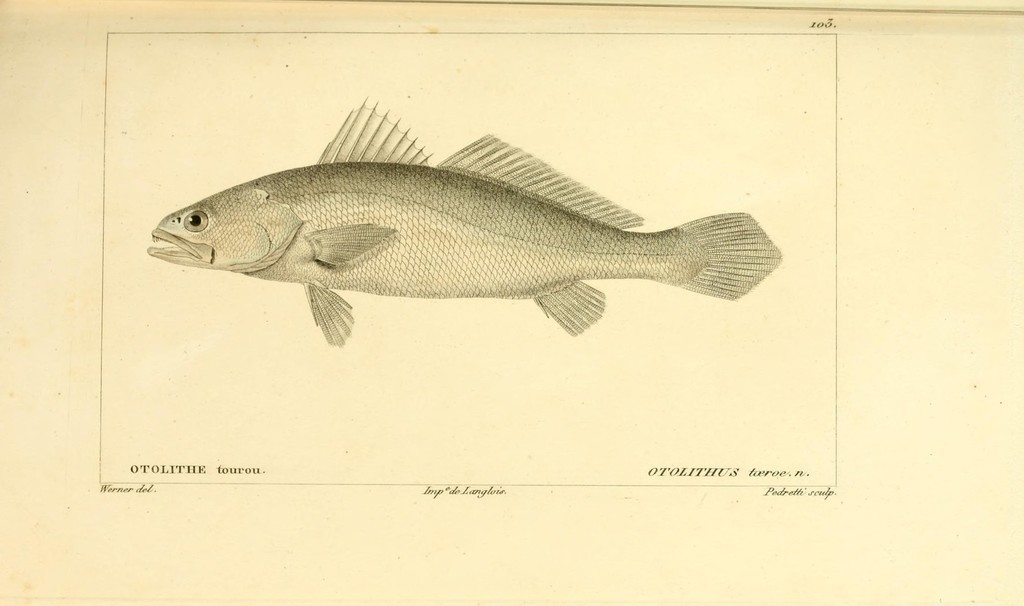
Acoupa weakfish
- Family
- Sciaenidae
- Depth
- 1–20 m
- Season
- Jan, Feb, Mar, Apr, May, Jun, Jul, Aug, Sep, Oct, Nov, Dec
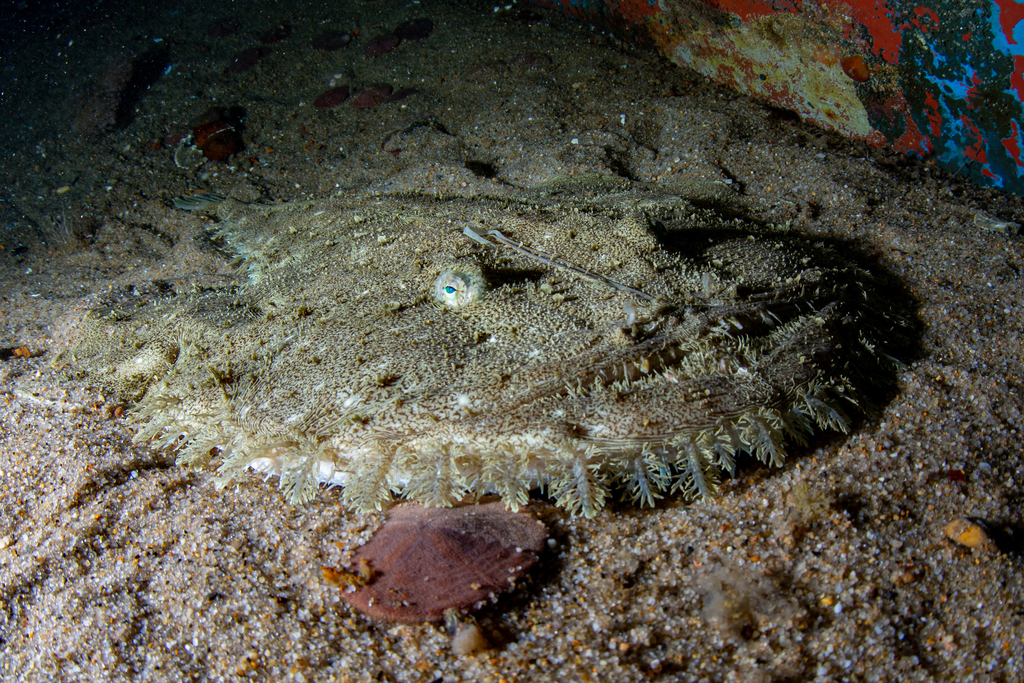
American angler
- Family
- Lophiidae
- Depth
- 0–800 m
- Season
- Mar, Apr, May, Jun

American eel
- Family
- Anguillidae
- Depth
- 0–464 m
- Season
- Jan, Feb, Mar, May, Jun, Jul
Guides for this water
Technique, gear and safety guides that fit Pacific angelshark.