
Corkwing wrasse
Corkwing wrasse is a small labrid of the eastern Atlantic and Mediterranean, from Norway and the Azores down to Morocco. It is a laterally compressed fish whose colour shifts with its surroundings, and it lives in just 1 to 12 m of temperate water. It feeds on crustaceans, fish, algae and worms, reaches 28 cm SL and can live nine years. March to July is the season.

Corkwing wrasse (Symphodus melops) is a fish of the family Labridae. FishBase gives its range as: Eastern Atlantic: Norway to Morocco and the Azores. Also known from the western Mediterranean and Adriatic seas. Fourteen to seventeen dorsal spines, eight to ten dorsal-fin soft rays, an anal fin carrying three spines and eight to eleven rays define Symphodus melops. It is recorded from 1 to 12 m, in temperate water. The recorded maxima are 28 cm SL, 9 years. Diet includes crustaceans, fishes, algae and worms. IUCN status: Least Concern (LC). Chinese name: .
Identification
Fourteen to seventeen dorsal spines, eight to ten dorsal-fin soft rays, an anal fin carrying three spines and eight to eleven rays define Symphodus melops. The length ceiling is 28 cm standard, the common figure 20 cm, maturity 8.5 cm (7–10 cm), and the oldest recorded fish 9 years. Fin counts matter more than size here: at 20 cm the fish is already adult, and neighbouring wrasses overlap that length. Wikipedia gives 28 cm as the upper limit, usually less. iNaturalist's taxon 113533 holds 1909 observations.
Habitat and distribution
Norway to Morocco, the Azores, the western Mediterranean and the Adriatic make up the eastern Atlantic range. Thirty-seven entries sit in the country list, from Scandinavia and the British Isles to North Africa. Rock and cave are the two habitat labels. Depth is where the entry contradicts itself: one clause gives 1–12 m, a second gives a usual range of 1–30 m, in the same line. Since a usual maximum cannot outrun an absolute maximum, both numbers are reported without averaging or pruning. Wikipedia offers 1–30 m over rock or eelgrass.
Season and fishing approach
March to July covers spawning. Region by region, the English Channel and North Sea run May–July, while the north-western Mediterranean runs March–May. Northern waters therefore peak later than Mediterranean ones. The depth conflict can be used operationally: fish the 1–12 m figure first, because it is the only range stated as a range, and regard 12–30 m as unconfirmed until local observation supports it. Short casts into rock and cave suit the habitat, and a diet of crustaceans, fish, algae and worms supports small crab, worm and fish baits on light tackle. Gamefish status is recorded; the 28 cm ceiling still sets expectations.
Edibility and regulations
Subsistence fishing, gamefish use and public aquariums are the recorded human uses. IUCN placed it in Least Concern on 15 October 2008, and CITES and CMS have both left it unassessed. A size limit controls what you take home; a closed season controls whether the boat goes out. Neither is a species-page field. Thirty-seven jurisdictions in the country list mean many coastal regimes apply to one small wrasse, so the only rule worth carrying is the one printed for the coast on your itinerary. At a 20 cm common length and 8.5 cm maturity, most fish caught are adults. The 9-year maximum age extends well past the 8.5 cm maturity point, so a fish can spawn across several seasons. That is a life-history observation, not a harvest regulation.
Where these facts come from
Check these pages before you rely on a size, range or protection status.
- FishBase — Symphodus melops — FishBase · T2
- GBIF — Symphodus melops occurrence records — GBIF · T2
- IUCN Red List — Symphodus melops — IUCN · T1
- Photo record — iNaturalist — iNaturalist · T3
Fish in the same water
These fish live in the same place.
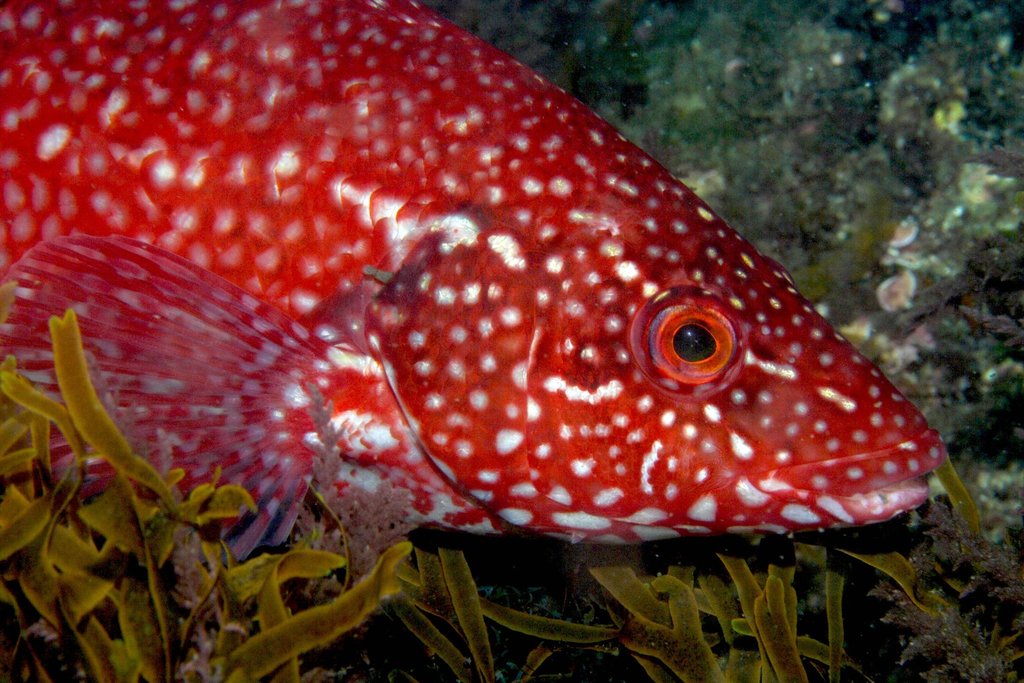
Ballan wrasse
- Family
- Labridae
- Depth
- 1–50 m
- Season
- Apr, May, Jun, Jul, Aug
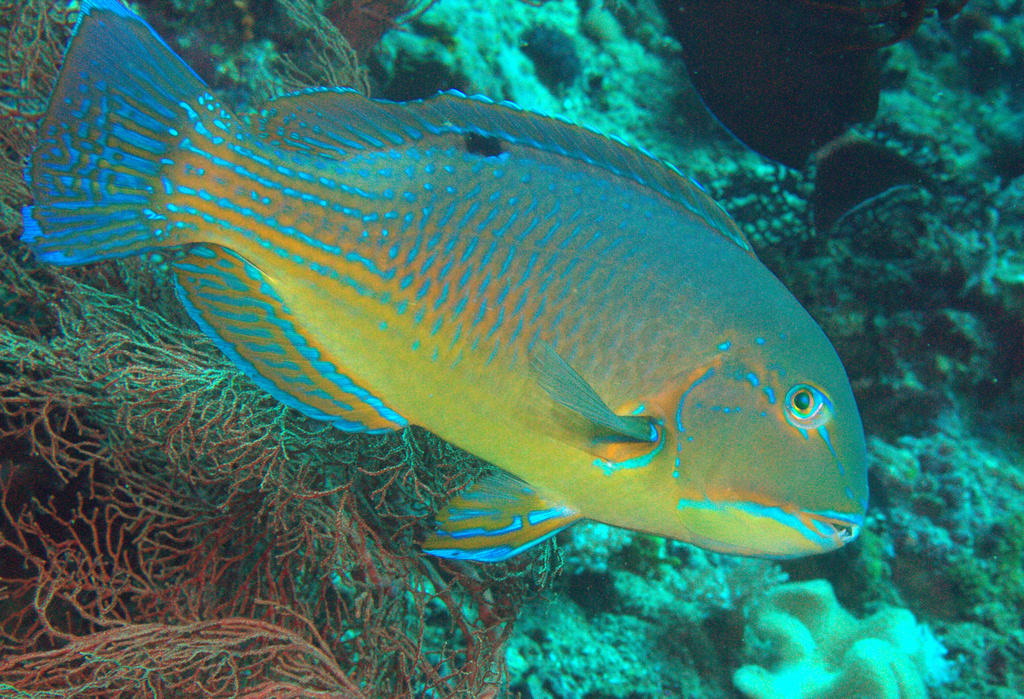
Blackspot tuskfish
- Family
- Labridae
- Depth
- 10–60 m
- Season
- Jan, Feb, Mar, Apr, May, Jun, Jul, Aug, Sep, Oct, Nov, Dec

Blue tuskfish
- Family
- Labridae
Guides for this water
Technique, gear and safety guides that fit Corkwing wrasse.