No minimum size · no bag limit
United States — Maine · US-ME
Maine sets no size or bag limit for cunner.
CUNNER (Tautoglabrus adspersus) Size: No minimum size Bag limit: none

Cunner is a small wrasse of the northwestern Atlantic, from Newfoundland and the Gulf of St Lawrence south to Chesapeake Bay. It is a temperate fish of 10 to 128 m, reaches 44 cm TL and 1 kg and lives about six years. May to August is the season. Shore fishing, boat bottom fishing and small hook rigs are the methods listed.
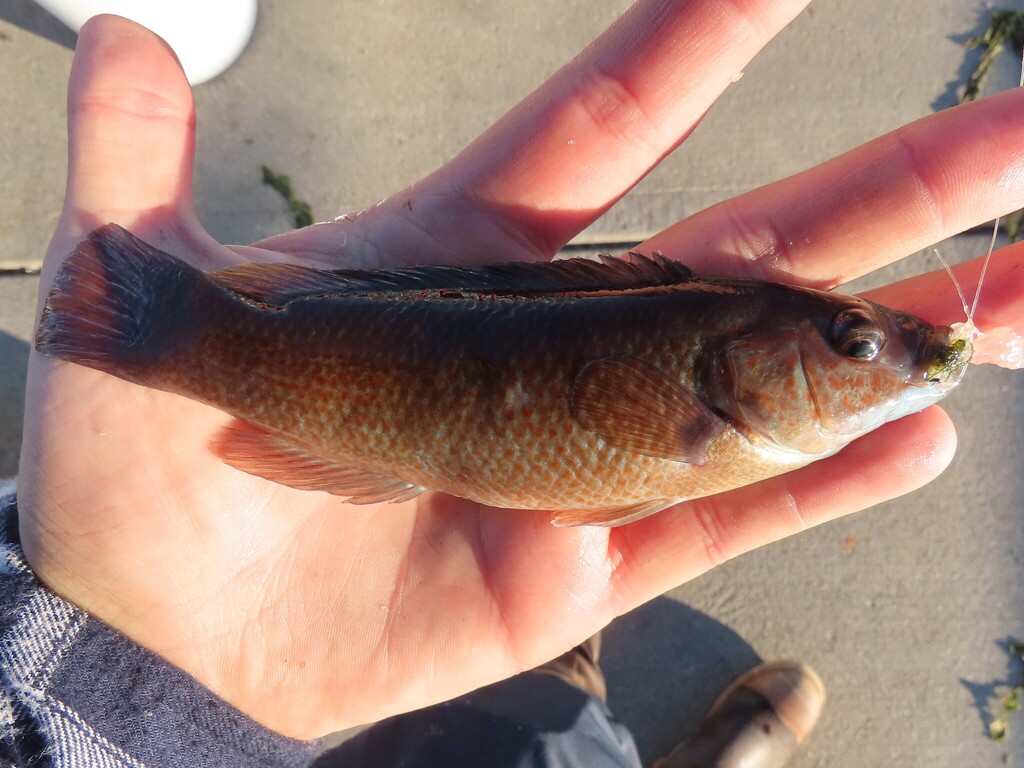
The cunner is a small wrasse of the northwestern Atlantic, recorded from Newfoundland and the Gulf of St. Lawrence in Canada south to Chesapeake Bay. FishBase gives a maximum length of 44 cm TL, a maximum published weight of 1.0 kg and a maximum reported age of six years, with a depth range of 10–128 m. It lives in shallow inshore water on or near the bottom, often in numbers around wharves, wrecks and beds of seaweed, and it is one of the most common fish an angler meets while fishing structure in the Northeast.
The body is fusiform and normally built, with a pointed head, a small mouth and thick lips — the general wrasse shape. Colour is the difficult part: cunner run from greenish to brownish to bluish, with mottling that varies with age, bottom and light, and large adults can look quite different from the small fish around a piling. FishBase records only the body shape for this species and publishes no fin formula, so identification rests on the wrasse build, the head and lips, and a photograph checked against a regional guide.
Tautog is the species most often confused with it. Tautog grows much larger, is deeper-bodied and has a blunter head with heavier teeth; cunner stay small, and a 44 cm fish is already exceptional. Other small labrids and young sea bass add to the confusion around structure, so check the mouth and the body depth rather than colour alone.
FishBase describes an inshore, bottom-living fish that congregates in numbers around wharves, wrecks and submerged seaweed. In winter they become torpid and stay inshore under rocks in shallow water. The species is recorded as reef-associated, with a depth range of 10–128 m, and the habitat keywords are rocky and coastal.
The diet tag is algae, and cunner are grazers and pickers that work the fouling on structure rather than chasing baitfish in open water. That is why a bait fished tight to a piling out-fishes one cast into the middle of a channel.
FishBase's spawning records run from May to August from Cape Sable to Block Island, June to August in Chesapeake Bay, July in Delaware Bay and June to August in the Gulf of Maine. The overall table is May to August. That is a spawning signal, not a promise of a bite.
The more useful seasonal fact is the winter torpor. Cunner are catchable from spring through autumn, with the warm months the most consistent, and they become very hard to find once the water cools and they hole up under rocks. In the northern part of the range the season is shorter; in the south the fish are available for longer.
Light tackle is right: a 1.8–2.4 m spinning rod, a 2500 size reel, 8–15 lb braid and a 20 lb fluorocarbon leader. Use size 4 to 1/0 hooks, a split shot or a 1/2–1 oz sinker, and keep the bait small — a piece of worm, clam, crab or shrimp, or a thin strip of fish.
Fish tight to structure and be ready to lose rigs. A lift-and-drop presentation works better than a static bait, because cunner pick at food on the surface of the structure. Strike lightly; the mouth is small and a hard swing pulls the bait away. Keep the rod tip high and steer fish away from the rocks once hooked. Carry spare rigs, and expect to donate a few to the bottom.
FishBase records the species as a commercial catch, a gamefish and an aquarium fish. The flesh is white and soft, and cunner are commonly used as bait and in lobster traps; pan-fried, they are decent but bony, and most anglers treat them as a fun small fish rather than a table target. Bleed and ice them if you plan to eat them.
The IUCN Red List category is LC (Least Concern), assessed on 12 July 2008. FishBase records no CITES or CMS listing, and the species is harmless to humans.
Federal waters carry no species-specific size, season or bag rule for cunner; state limits may apply, so check where you land the fish. North of the border, DFO Maritimes rules govern, with no species-specific limit verified; carry a licence and check current notices and variation orders before keeping fish.
GBIF holds 18,739 occurrence records for the matched taxon, with the largest country counts in Canada (14,604), the United States (3,758) and Saint Pierre and Miquelon (19). FishBase's distribution runs from Newfoundland and the Gulf of St. Lawrence to Chesapeake Bay. The habitat keywords are rocky and coastal. These are distribution signals, not spot coordinates: fish pilings, bulkheads, wrecks and rockweed edges, and check local access and the tide before you go.
Fished with the listed approach, matched to the recorded depth and size.
Fished with the listed approach, matched to the recorded depth and size.
Fished with the listed approach, matched to the recorded depth and size.
These are the published regulations for this fish. Read the number first. The notice below it is the actual regulation.
Maine sets no size or bag limit for cunner.
CUNNER (Tautoglabrus adspersus) Size: No minimum size Bag limit: none
Every record above names its source and the date it was retrieved. See the regulation register for the full list, or how to read these regulations.
Check these pages before you rely on a size, range or protection status.
These fish live in the same place.

Technique, gear and safety guides that fit Cunner.