
Ornate wrasse
The ornate wrasse is the most conspicuous fish on the reef and one of the easiest to misidentify: females are green-brown with blue stripes, males carry red heads and blue markings, and the same fish changes appearance as it changes sex. It is a protogynous hermaphrodite, so seeing a group and seeing one large fish mean very different things.
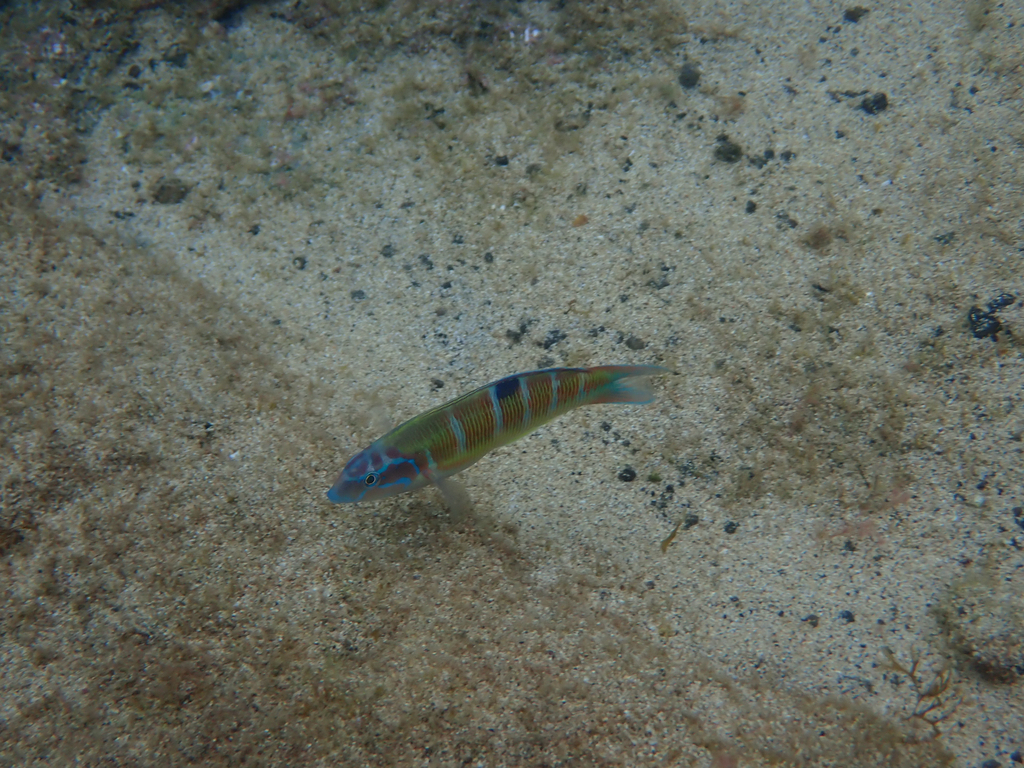
The ornate wrasse is the most conspicuous fish on the reef and one of the easiest to misidentify: females are green-brown with blue stripes, males carry red heads and blue markings, and the same fish changes appearance as it changes sex. It is a protogynous hermaphrodite, so seeing a group and seeing one large fish mean very different things.
A slender wrasse that never stops moving
Start with the body: slender, laterally compressed, with a fairly pointed snout, and it swims with continuous tail movement instead of the frequent pauses typical of Symphodus. Females are green-brown with a dark bar on each scale and five bluish vertical stripes along the flank. Males carry a reddish head with blue markings, a vertical blue stripe with red margins behind the pectoral fin, and a blue-green caudal fin. Both sexes have a nearly straight rear tail edge. Against S. tinca, this fish is more slender, bluer and more finely marked, while tinca is deeper-bodied, thicker-lipped and carries dark blotches rather than regular stripes. Females and juveniles cause most confusion, so judge body shape and swimming first, stripe count second; colour fails in poor light, and a flank photograph settles more arguments than a memory.
Warm rock, eelgrass and a westward-looking range
FishBase records the range from Portugal to Gabon in the eastern Atlantic, including the Azores, Madeira, the Canaries, São Tomé and Annobon, and it also occurs in the Mediterranean. It is a warm-water reef fish living near coastal rock and eelgrass, usually solitary and sometimes in small groups. The recorded depth is 1 to 150 m, usually inside 50 m. Productive areas are reef edges, rubble and the meadow seam; it is not a deep specialist, and shallow structure holds fish reliably. Records from the cooler northern Mediterranean fit its warm-water preference, and those sightings are worth logging with place and date, because they track how far the species is shifting.
Eighteen to twenty-five degrees, and a sex change
FishBase gives a temperature record of 18 to 25°C, describes the species as a protogynous hermaphrodite with strong sexual dichromatism, and notes pelagic eggs. No monthly spawning table is given, so work with the general warm-water pattern: activity and shallow-water numbers peak in summer, and some fish move deeper or to more stable structure as water cools. Age and growth are not published, so the replenishment rate of a local population cannot be judged. Because the species changes from female to male, the largest fish are mostly males, and removing the biggest few affects the breeding group beyond simple numbers. That is the case for releasing large individuals.
Small baits, moving water, and no expectation of a bag
It feeds on small molluscs and crustaceans, so the bait should be small and close to structure. From shore, a float rig with small shrimp sinks along the reef edge, and this fish often takes it in mid-water, making the float dip sharply. From a boat, crawl a small soft plastic along the rock, or hop shrimp meat on a light jig head over rubble. The third option is a micro jig under 20 g, worked with short sharp lifts and pauses for active fish. It is mostly solitary, so do not expect a run of fish from one spot the way a Symphodus group delivers; moving to new structure beats guarding a mark. The retrieve can be quicker than for other wrasses, because this fish chases more readily.
Light rods, small hooks, and a fish that should not hit the deck
A 2.1 to 2.7 m medium spinning rod and a 2500 reel are enough, with 15 lb braid, a 20 lb fluorocarbon leader, and a size 2 to 1/0 wide-gap hook or a small jig head. The mouth is small, so keep hooks modest, but the bite is sharp and the strike can be firmer than for S. tinca. Leave an arm's length of leader against rock, and do not lock the drag, because a hooked fish circles structure. Use long-nose pliers and unhook in the water where possible; if you photograph it, support the belly and let it swim off. Tolerance of air exposure is ordinary at best, so do not leave it lying on a dry deck in summer.
Minor commercial value, no size limit, and warm-water rules
Flesh: sources note only minor commercial importance and give no dedicated eating assessment. The fish is small with little meat, and as a sex-changing species the large individuals are the ones most worth releasing. Rules by jurisdiction. EU: Thalassoma pavo is not listed in Annex IX Part A of Regulation (EU) 2019/1241, so there is no EU minimum conservation reference size. Article 2(2) applies only Articles 7, 10, 11 and 12 to recreational fishing, so Annex IX sizes do not automatically bind anglers unless a member state extends them. Article 17 of Regulation (EC) 1967/2006 bans sale of recreational catch. Spain (ES): shore and boat fishing both need an autonomous-community licence under RD 347/2011; the Mediterranean table in RD 560/1995 Annex II does not list the species, and communities may be stricter. France (FR): no sea-fishing permit, but RecFishing registration is required from age 16, and the Mediterranean section of the 26 October 2012 arrêté does not list it. Italy (IT): no paid licence, annual MASAF declaration required, electronic catch registration from 2026. Greece (GR): licence abolished by Law 4256/2014, 5 kg per person per day, spearfishing banned in May. Croatia (HR): licence from shore and boat, 5 kg per person per day, and the national table does not list it. Turkey (TR): foreign visitors may shore-fish without a document; boat fishing needs a tourism permit or avlanma fişi, and the 2024/21 size table was not retrieved, so no Turkish size is stated. A missing size is not a free pass: gear limits, protected areas and the sale ban still apply. Warm-water expansions into the northern Mediterranean may also trigger local monitoring or protection measures, so check the current year's official notices before you go.
Field marks, naming, and what the sources leave open
Length, depth, distribution, habitat, diet, the 18 to 25°C record, protogynous sex change, sexual dichromatism, pelagic eggs and IUCN status (LC, assessed 2008) come from FishBase; the female stripe pattern and male head colour follow the morphological descriptions in FishBase and Chinese Wikipedia. Regulation text comes from the EU regulation and national official sources retrieved in November 2026. Separation from S. tinca rests on body shape, swimming style and stripe type, which are field characters. Monthly spawning, lifespan and growth are not published here and are listed as pending.
How to catch it
Shore casting
Fished with the listed approach, matched to the recorded depth and size.
Jigging
Fished with the listed approach, matched to the recorded depth and size.
Where these facts come from
Check these pages before you rely on a size, range or protection status.
- FishBase — Thalassoma pavo — FishBase · T2
- GBIF — Thalassoma pavo occurrence records — GBIF · T2
- IUCN Red List — Thalassoma pavo — IUCN · T1
- Photo record — iNaturalist — iNaturalist · T3
Fish in the same water
These fish live in the same place.
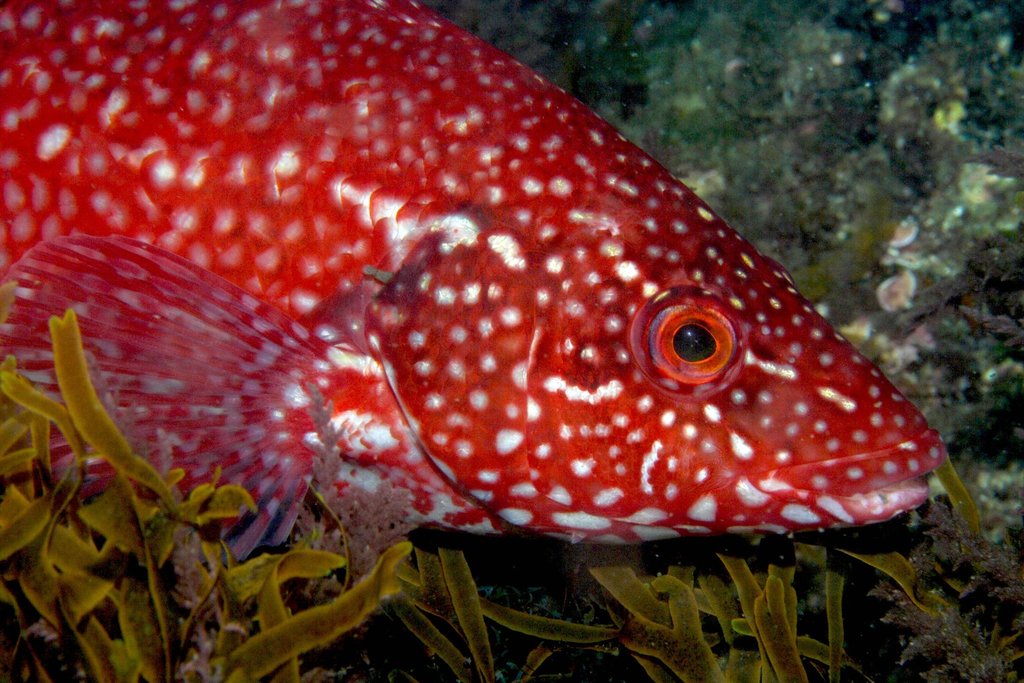
Ballan wrasse
- Family
- Labridae
- Depth
- 1–50 m
- Season
- Apr, May, Jun, Jul, Aug
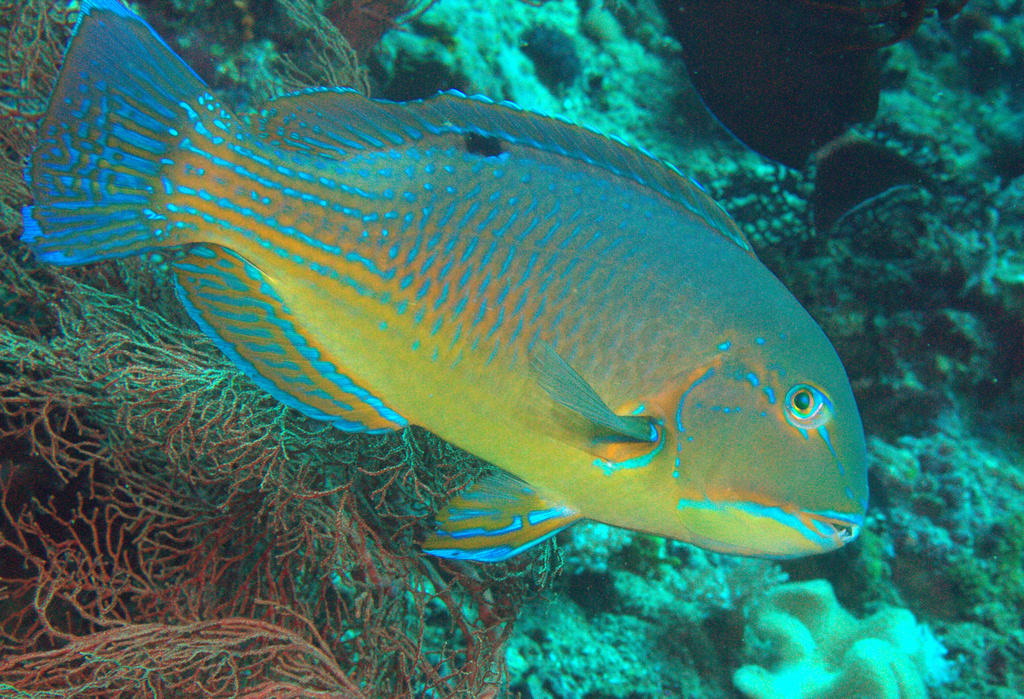
Blackspot tuskfish
- Family
- Labridae
- Depth
- 10–60 m
- Season
- Jan, Feb, Mar, Apr, May, Jun, Jul, Aug, Sep, Oct, Nov, Dec

Blue tuskfish
- Family
- Labridae
Guides for this water
Technique, gear and safety guides that fit Ornate wrasse.