
Greater weever
Greater weever is a slim, sand-dwelling trachinid of the eastern Atlantic and Mediterranean, from Norway down to Morocco, Madeira and the Canary Islands, and into the Black Sea. It spends much of the day buried in sand, recorded from 1 to 150 m in temperate water. It feeds on fish, reaches 53 cm TL and 1.9 kg.
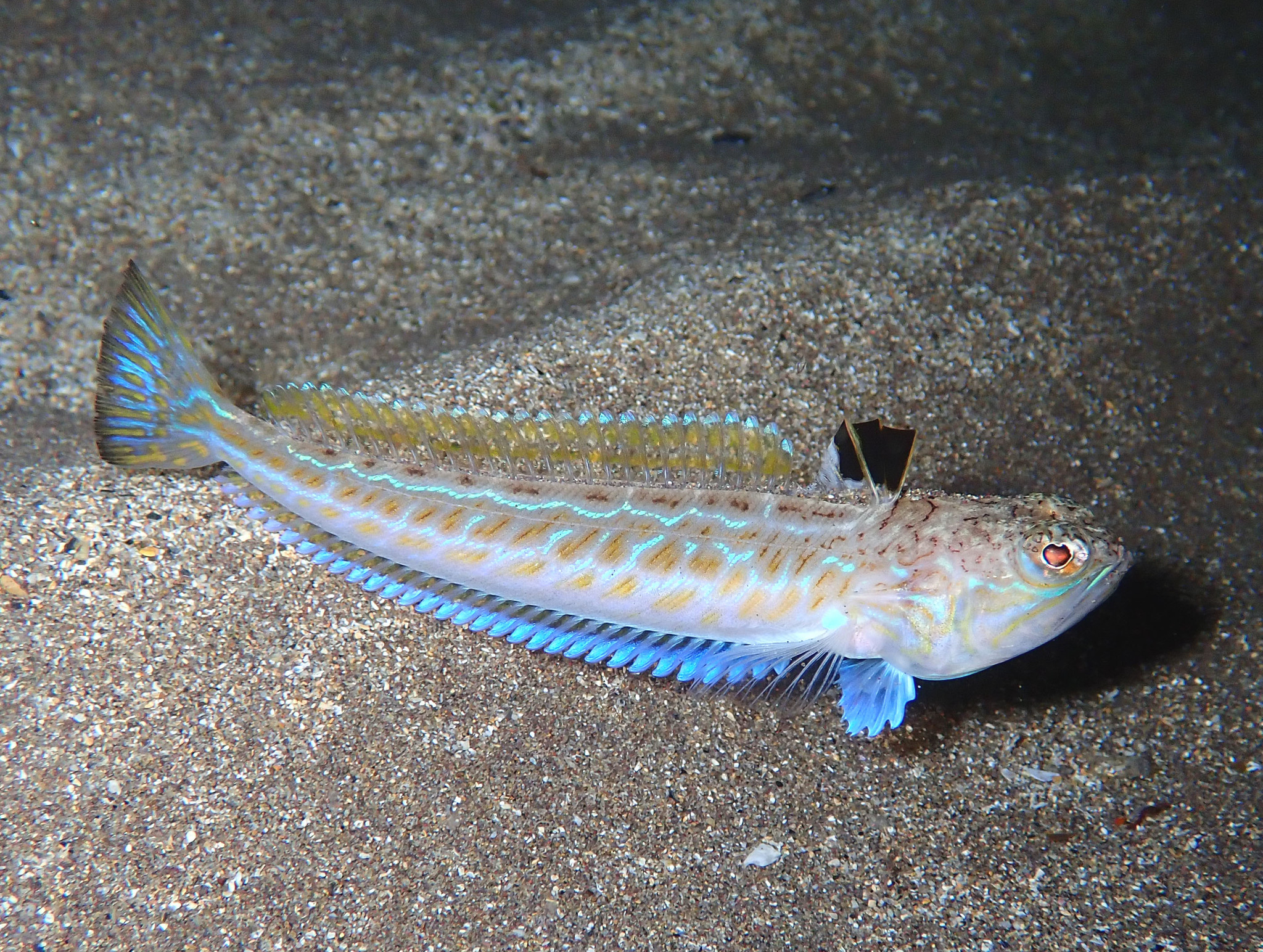
Greater weever (Trachinus draco) is a fish of the family Trachinidae. FishBase gives its range as: Eastern Atlantic: Norway to Morocco, Madeira and Canary Islands, including the Mediterranean and the Black Sea. Reported from Mauritania. It is recorded from 1 to 150 m, in temperate water. The recorded maxima are 53 cm TL, 1.9 kg. Diet includes fishes. IUCN status: Least Concern (LC). Chinese name: .
53 centimetres of what?
The greater weever's size line contains two numbers that are not on the same ruler: a maximum of 53 cm TL and a common length of 25 cm SL. The maturity figure is Lm 12.0 cm, with no range. The maximum weight is 1.9 kg. Read quickly, the page seems to say the fish is 25–53 cm. Read carefully, it says the largest recorded fish is 53 cm measured to the tail tip, and the everyday fish is 25 cm measured to the end of the vertebral column.
That is a bigger gap than the numbers alone suggest. Total length includes the caudal fin; standard length stops at the caudal peduncle. On a slim, long-bodied weever the tail is a meaningful fraction of the fish. A 25 cm SL weever is a longer animal than a 25 cm TL weever, and the page gives no conversion between the two.
The fork is not the tip
The mismatch matters at the measuring board. A recreational rule written in total length and a tape run to the fork are not the same measurement, and the page does not supply a TL–SL equation. Stick to what the page prints: 53 cm TL maximum, 25 cm SL common, 12 cm maturity with no range.
There is a second gap in the same line: no maximum age. A fish with a 53 cm maximum, a 25 cm common length and a 12 cm maturity point is a small species with a wide size spread, and nothing in the source measures how long that crossing takes.
A fish that is mostly buried
The identification notes are short but decisive. The body is elongate, more than six times its height; the upper parts are greenish with yellowish-white oblique stripes; there are two or three small spines in front of each eye. The first dorsal fin is black and carries venomous spines; dark markings run along the scales.
The behaviour explains why the fish is hard to see: it rests on the bottom, often buried with only the eyes and the tip of the first dorsal fin exposed. A diver or a wader is looking at a patch of sand with two eyes in it, not at a fish. The black first dorsal is the part that shows, and it is also the part that should not be touched.
The 1–30 metre band
The depth range is 1–150 m, usually 1–30 m. The bottom description is specific: sandy, muddy or gravelly. The 1 m lower bound means the fish can be within wading depth; the 30 m usual band means most encounters are close to shore.
The habitat keywords add "open-water" alongside sand and mud. That tag is easy to misread. The fish is demersal by day and swims freely at night, even pelagically. The open-water keyword describes the night behaviour, not a midwater daytime habitat. The daytime address is the bottom, and the bottom type is the part to search.
A night shift with no spawning month
The biology text gives the daily schedule: rest on the bottom by day, swim freely at night, feed chiefly at night on small invertebrates and fishes. Reproduction is oviparous, with pelagic eggs and larval stages. The spawning-month field is empty.
That empty field is not a small omission. The page can say the eggs are pelagic and the larvae are pelagic, but it cannot say when the spawn happens or where. A plan built around a spring spawn would be an assumption, not a reading of the source. What the source does support is a night fishery: the fish is on the bottom and buried by day, and free-swimming after dark.
The first dorsal is the one to watch
FishBase records the species as venomous. The venom is in the anterior dorsal fin, which is black and carries spines; the two or three small spines in front of each eye are also part of the identification. The page does not describe the venom's mechanism, the symptoms or a treatment protocol.
For handling, the anatomy is enough. A buried fish is touched by the foot before it is seen by the eye, and the black dorsal fin is the highest part of the buried fish. The handling rule the anatomy suggests is to shuffle rather than stride in the 1–30 m sand, and to hold a landed fish behind the head rather than across the back. The page supports the hazard; the handling rule is the reader's inference, and it should be treated as such.
31,355 records, mostly northern
The present-record total returned by GBIF for 2026-11-08 is 31,355: Denmark at 12,406, France at 6,431, Spain at 4,544, Sweden at 4,168, Great Britain at 1,246, Portugal at 446, Belgium at 439, Croatia at 230, Norway at 188 and the Netherlands at 155. The FishBase country table contains 39 entries. iNaturalist holds 1,294 observations. OBIS files 16,334 records under AphiaID 127082, drawn from 76 datasets.
The record centre is the North Sea and the northeast Atlantic, which is also where most of the survey and observer effort sits. The species is listed from Norway to Morocco and through the Mediterranean and Black Sea, but the GBIF facet is dominated by Danish and Swedish records. That is a sampling pattern, not a statement that the fish is scarce in the Mediterranean. The GBIF and OBIS totals are counts of records filed under the key, not counts of fish.
Minor commercial, major caution
The IUCN assessment is Least Concern, dated 14 July 2014; the CITES and CMS fields both carry Not Evaluated. FishBase records the fishery as minor commercial, the species as a gamefish, and the aquarium use as public aquariums.
Least Concern is a 2014 assessment, not a promise about a 2026 stock. The commercial flag is "minor", which is a description of landings, not of the fish's abundance. For a French or Spanish landing, the minimum size and bag limit live in that country's rulebook; FishBase carries the assessment status but no landing figure. The venom is the part of the page that affects every angler, whether or not the fish is kept.
Where these facts come from
Check these pages before you rely on a size, range or protection status.
- FishBase — Trachinus draco — FishBase · T2
- GBIF — Trachinus draco occurrence records — GBIF · T2
- IUCN Red List — Trachinus draco — IUCN · T1
- Photo record — iNaturalist — iNaturalist · T3
Fish in the same water
These fish live in the same place.
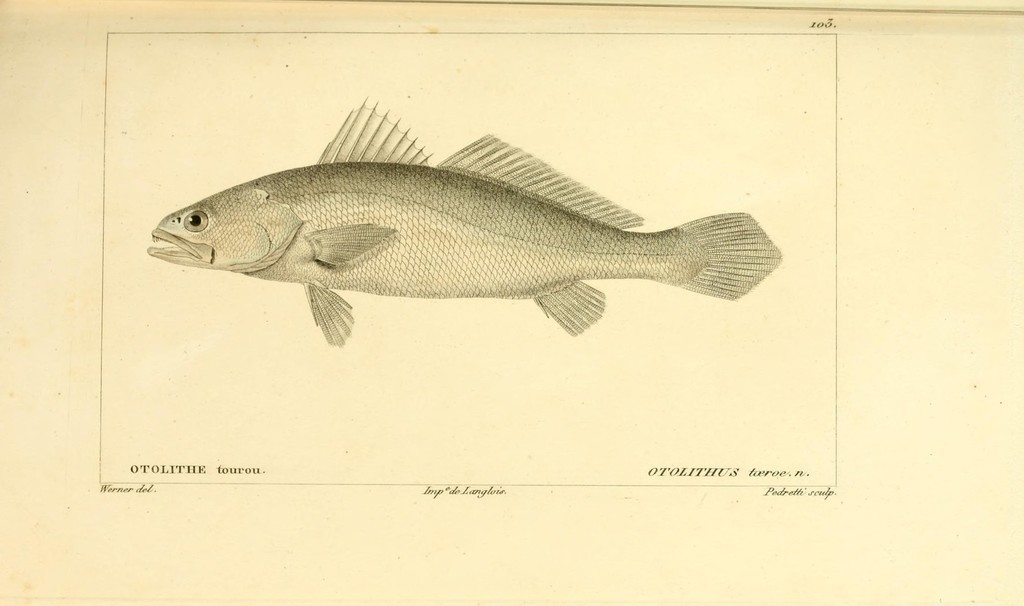
Acoupa weakfish
- Family
- Sciaenidae
- Depth
- 1–20 m
- Season
- Jan, Feb, Mar, Apr, May, Jun, Jul, Aug, Sep, Oct, Nov, Dec
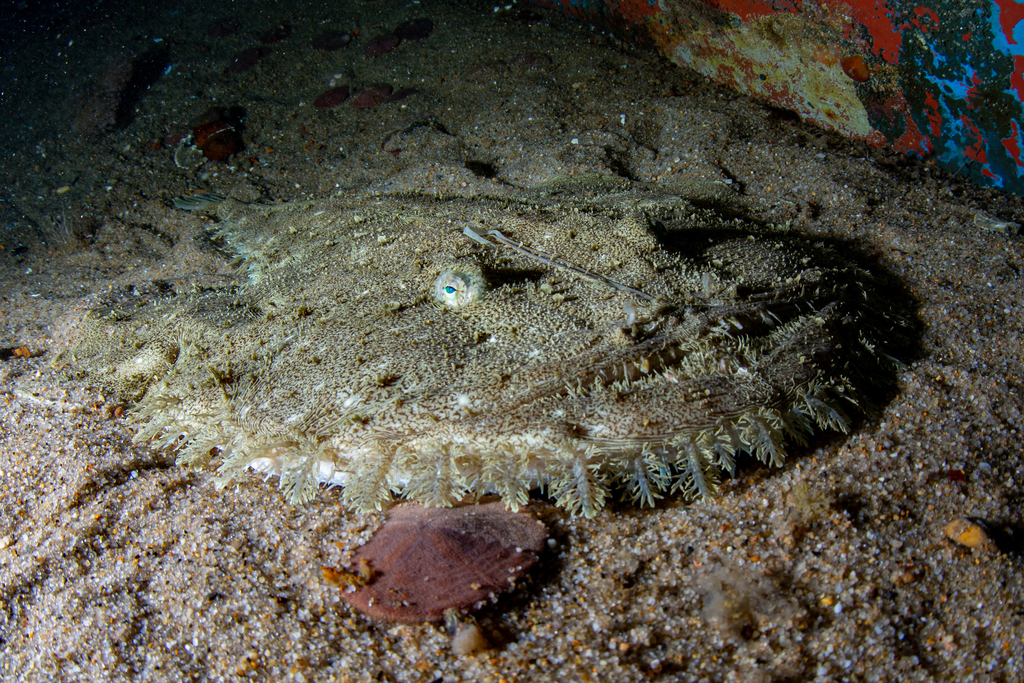
American angler
- Family
- Lophiidae
- Depth
- 0–800 m
- Season
- Mar, Apr, May, Jun

American eel
- Family
- Anguillidae
- Depth
- 0–464 m
- Season
- Jan, Feb, Mar, May, Jun, Jul
Guides for this water
Technique, gear and safety guides that fit Greater weever.