
Pearly razorfish
This fish turns escape into a single move: alarmed, it drives head-first into the sand, is gone inside two seconds, and leaves a small puff of silt hanging in the water. On open sand that reaction gives you no second attempt, so catching one is about the accuracy of the first cast rather than patience.
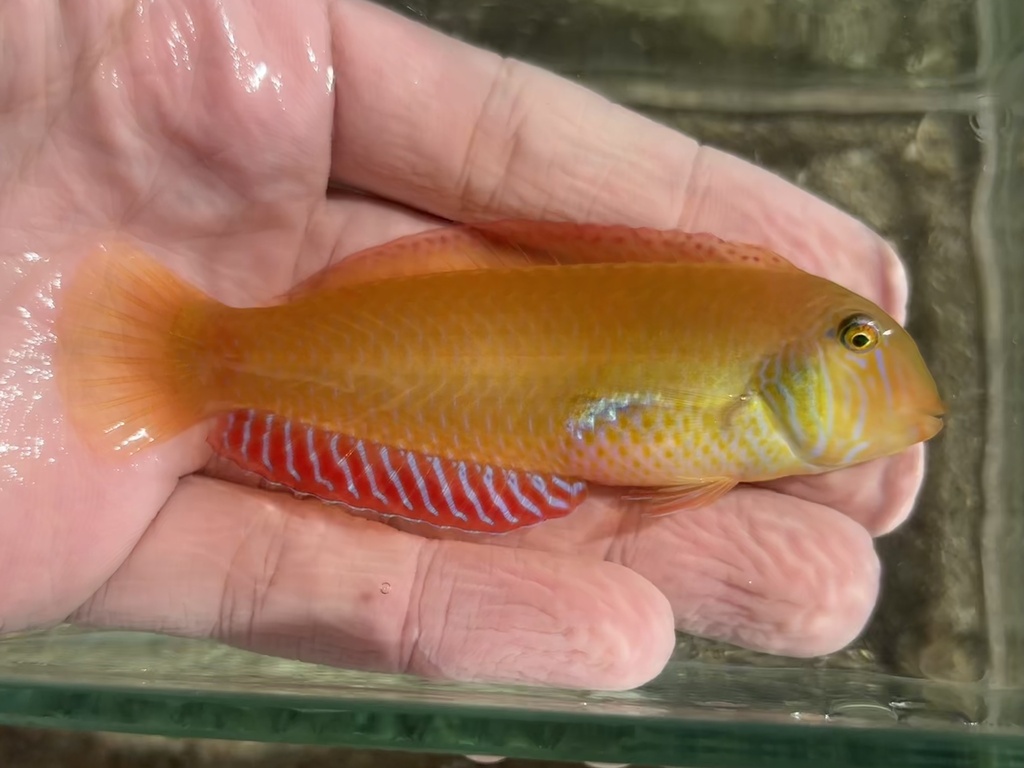
This fish turns escape into a single move: alarmed, it drives head-first into the sand, is gone inside two seconds, and leaves a small puff of silt hanging in the water. On open sand that reaction gives you no second attempt, so catching one is about the accuracy of the first cast rather than patience.
A knife-edged head on a very flat body
Start with the outline. The body is extremely compressed, the front of the head narrows to a nearly sharp edge, the snout is blunt and the profile drops almost vertically from the crown to the tip. The body is pale green and usually carries no conspicuous markings, while the head shows alternating vertical lines of light blue and light yellow-orange, which is the best mark on a live fish. Against other sand-loving wrasses the head shape settles it: most have a rounded profile, this one has a blade. It stays small, with a 38 cm maximum and a common length of 20 cm. The Chinese name refers to tail bands from an older translation, so do not lean on tail pattern in the field.
Clear sand in two oceans that never meet
FishBase gives two disconnected ranges: the western Atlantic from North Carolina and the northern Gulf of Mexico through the Caribbean to Brazil, and the eastern Atlantic from France to Angola including the Mediterranean, the Azores, Madeira, the Canaries, Cape Verde and Sao Tome. It is a reef-associated fish of clear shallow sand, usually near seagrass and coral, recorded from 1 to 90 m. For a Mediterranean angler that means open clear sand and the outer edge of a seagrass bed rather than a rock crevice. Fish are spread out on that sand, one here and one a long way on, so covering ground beats hunting a single mark.
A summer fish that reads light, not the calendar
FishBase gives no month-by-month spawning table and no spawning temperature; the maximum recorded age is 8 years. It is a protogynous hermaphrodite, with head shape and pelvic fin length differing between the sexes. English Wikipedia notes a winter move into deeper water, consistent with a fish that enters and leaves the shallows with the season. The usable pattern: once water warms in spring and summer it occupies the shallowest sand, which is also when catches concentrate; by late autumn it drops away. It is a daytime visual hunter, so good light helps you see it, and helps it see you first.
Find the fish, then put the bait in front of it
You have to see this one before you cast. On clear sand, walking slowly and looking for a thin shadow moving just above the bottom beats blind casting. Once located, drop the bait a metre or two ahead of the fish and let it come, rather than landing on its head. The second method is a slow shore retrieve: a small jighead with a soft plastic or a small shrimp, hopped in short touches along the bottom, which works by covering water. The third is a light iron or a slim soft bait twitched to imitate a startled fish. Molluscs dominate the diet, with crabs and shrimps alongside, so the bait needs substance. Miss the first cast and the fish is in the sand.
Fine leaders and a soft landing on sand
From shore, a 7 foot medium or medium-light rod with a 2000 to 2500 reel, 0.6 to 0.8 braid and an 8 to 12 lb fluorocarbon leader; sand is kind to line, so the leader can be light. Use a size 1 to 1/0 fine-wire single with a sharp point. Keep the cast gentle, because a loud splash spooks fish, and roll-cast rather than overhead where the bank allows. The mouth opens wide and the teeth are sharp, so keep fingers clear when unhooking. Release quickly: the fish thrashes hard in air and prolonged handling does damage.
No size, and a sex-changing fish worth returning
The flesh is fine and white, good steamed whole or pan-fried; most fish are a single meal, and the scales need thorough removal because there is little fat under the skin and it dries out when overcooked. EU: Regulation (EU) 2019/1241 Annex IX Part A does not list the Labridae, so there is no EU minimum conservation reference size. Recreational catch may not be sold and the gear restrictions still apply. Spain: RD 560/1995 Annex II has no entry; a regional licence is required from shore and boat (RD 347/2011). France: no entry in the Mediterranean section of the 26 October 2012 arrêté; no permit, registration under RecFishing from age 16, no sale of catch. Croatia: no national entry; licence required, 5 kg per day plus one fish over 5 kg. Italy: no separate national recreational table, the EU MCRS applies and this species is not on it; annual MASAF declaration required. Greece: no recreational licence, 5 kg daily. Being protogynous, the largest fish are males, so removing a big one costs the population more than removing a small one. No size does not mean no limits. Check the current year's official notice.
What the record covers and what it leaves out
The two disconnected ranges, the 1 to 90 m depth, the 38 cm maximum total length, the 20 cm common length, the 8 year maximum age, a diet based on molluscs with crabs and shrimps, protogyny and the head-first dive into sand all come from FishBase. The blue and yellow head lines and the sharp leading edge come from the same page's morphological description. The winter move to deeper water is from English Wikipedia, and FishBase's depth ceiling also reaches 90 m. The Chinese name maps only loosely onto the FishBase description, so the English description governs the identification section. Month-by-month strength is arranged from clear-sand experience with no survey behind it.
How to catch it
Shore casting
Fished with the listed approach, matched to the recorded depth and size.
Jigging
Fished with the listed approach, matched to the recorded depth and size.
Where these facts come from
Check these pages before you rely on a size, range or protection status.
- FishBase — Xyrichtys novacula — FishBase · T2
- GBIF — Xyrichtys novacula occurrence records — GBIF · T2
- IUCN Red List — Xyrichtys novacula — IUCN · T1
- Photo record — iNaturalist — iNaturalist · T3
Fish in the same water
These fish live in the same place.
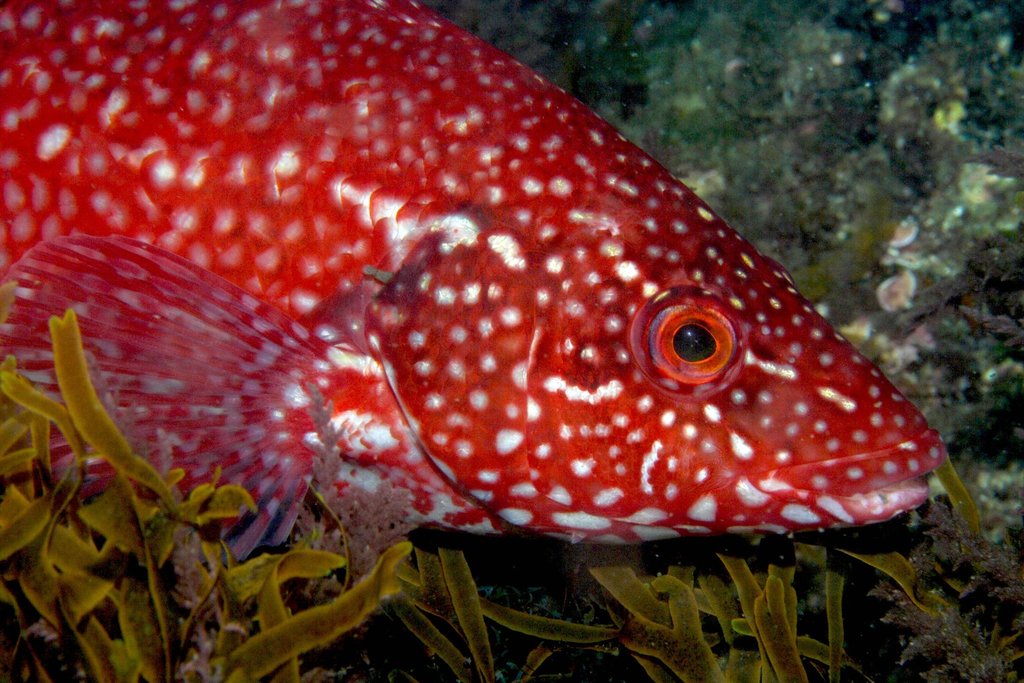
Ballan wrasse
- Family
- Labridae
- Depth
- 1–50 m
- Season
- Apr, May, Jun, Jul, Aug
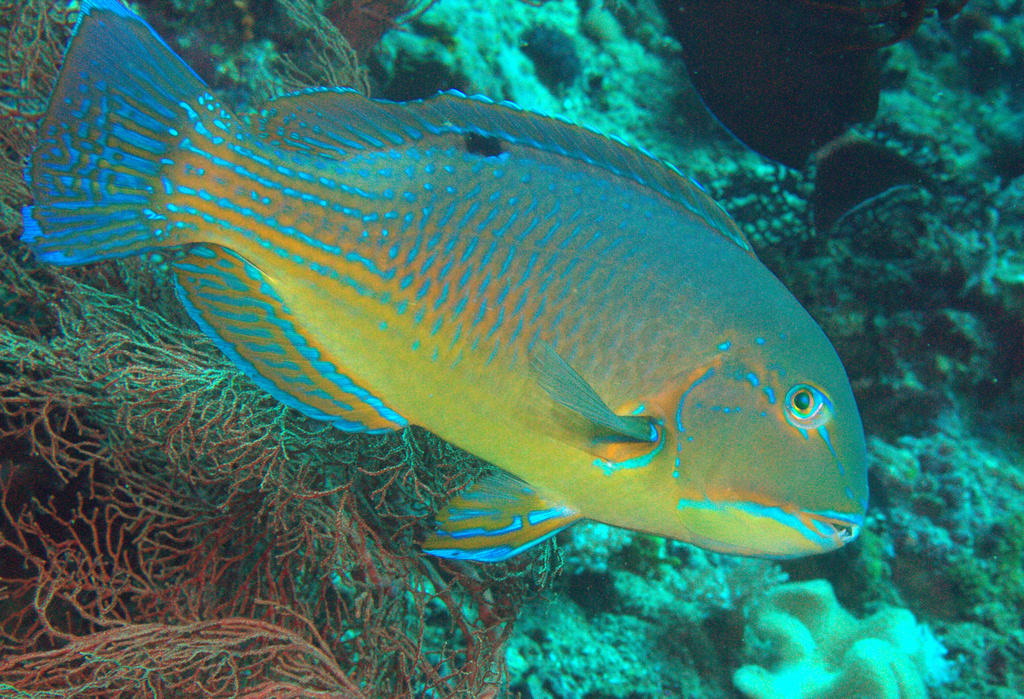
Blackspot tuskfish
- Family
- Labridae
- Depth
- 10–60 m
- Season
- Jan, Feb, Mar, Apr, May, Jun, Jul, Aug, Sep, Oct, Nov, Dec

Blue tuskfish
- Family
- Labridae
Guides for this water
Technique, gear and safety guides that fit Pearly razorfish.