
Elephant fish in Australia — Tasmania: 2 fish per day · 4 in possession — Tasmania state waters.
Elephantfish | 2 | 4 | - | -
Quoted from NRE Tasmania — Recreational Sea Fishing Guide 2025-26, Quick Reference Rules
Regulation guide
Official sourcesTwo separate fisheries
Elephant fish (Callorhinchus milii) is grouped with shark-like species in both rule books. Tasmania lists it as Shark - Elephantfish with the other names elephant shark and ghost shark, and New Zealand lists it as elephant fish in its South-East area finfish table.
The two sets of rules are independent. Tasmania's limits apply in Tasmanian state waters, and New Zealand's apply in the South-East fishing area off the South Island. Neither instrument has any effect in the other country, and neither defers to the other's numbers.
The biology is similar on both sides of the Tasman. Tasmania describes the species as slow growing and slow to mature, and therefore vulnerable to overfishing, and recommends taking only enough for immediate needs.
Source: Fishing Tasmania: Elephantfish species page · MPI: South-East area fishing rules
Tasmania: 2 per day and 4 in possession
Tasmania sets a daily bag limit of 2 elephantfish and a possession limit of 4. The same figures appear on the state's size and bag limits table and on the species page.
The table shows no boat limit for the species, and no minimum size. The season is open all year.
Tasmania's possession limit is defined as the maximum number of a particular type of fish that an individual fisher can have at any one time in Tasmania. If no area is specified, the limit applies anywhere in the state, including at home.
Source: Fishing Tasmania: Size and bag limits · Fishing Tasmania: Elephantfish species page
Tasmania: fins, highgrading and licensing
The dorsal and pectoral fins must remain attached to all elephantfish until they are landed. The species page states the rule directly, and the state's shark rules repeat that dorsal and pectoral fins must stay attached until landing for all shark species.
Highgrading is prohibited in Tasmania. A fisher cannot bring more than the daily bag limit back to the boat or shore and then sort the catch, because fish are regarded as taken and in possession as soon as they are caught.
No licence is required for rod and line fishing in Tasmanian marine waters. Licences are required for other activities, including abalone, rock lobster, scallop, set line, graball net, mullet net and beach seine net fishing, but not for a rod and line trip targeting elephantfish.
Source: Fishing Tasmania: Elephantfish species page · Fishing Tasmania: Size and bag limits · Fishing Tasmania: Recreational sea fishing licences
New Zealand South-East: 5 per fisher per day
In the New Zealand South-East area the daily limit for elephant fish is 5 per active fisher. The table sets no minimum fish length for the species and gives a minimum set net mesh size of 150 mm.
The 5 is an individual species limit sitting inside the area's combined daily bag limit of 30 finfish per fisher. A fisher can hold up to 5 elephant fish, but every one of them counts towards the 30.
The South-East finfish definition covers all species in the classes Agnatha, Chondrichthyes and Osteichthyes at any stage of their life history, living or dead, which is why the species is counted within the combined finfish limit.
New Zealand: where the South-East area runs
The South-East area covers the east coast of the South Island between Clarence Point near Kaikoura and Slope Point in Southland. MPI notes that a small area around Kaikoura has different rules and publishes a separate Kaikoura page.
The combined bag limit has a sub-limit inside three reserves. In the Lyttelton Harbour/Whakaraupō mātaitai reserves and the Akaroa taiāpure, the combined daily bag limit is 10 finfish, and fish taken there still count towards the overall 30.
No licence is required to fish in the sea in New Zealand. A licence is required for freshwater fishing in lakes and rivers, which is a separate regime.
Source: MPI: South-East area fishing rules · MPI: Fishing rules
Where both rule books are silent
Neither jurisdiction sets a minimum size for elephant fish. Tasmania's table shows no minimum size for the species, and the New Zealand South-East table leaves the minimum length column blank. Both rely on bag limits rather than a size floor.
Tasmania also sets no boat limit for elephantfish; the species row carries a dash in the boat limit column. A combined shark boat limit of 5 applies to shark species generally, but the state's other-shark row points to it and the elephantfish row does not.
New Zealand does publish one gear parameter for the species: a minimum set net mesh size of 150 mm in the South-East area. No equivalent mesh figure appears in the Tasmanian material for elephantfish, and the Tasmanian season is listed as open all year.
Source: Fishing Tasmania: Size and bag limits · Fishing Tasmania: Elephantfish species page · MPI: South-East area fishing rules
What to check before keeping an elephant fish
Establish the country first, because there is no shared number. Tasmania allows 2 per day with 4 in possession; New Zealand's South-East area allows 5 per day with a 30-fish combined finfish ceiling.
In Tasmania, leave the dorsal and pectoral fins attached until the fish is landed and do not sort the catch after the bag limit has been reached. There is no minimum size to measure against.
In New Zealand, count the fish against both the 5-fish species limit and the 30-fish combined limit, and check whether the boat is inside the Kaikoura area or one of the reserves with a lower combined limit.
Source: Fishing Tasmania: Size and bag limits · Fishing Tasmania: Elephantfish species page · MPI: South-East area fishing rules
Official pages: Fishing Tasmania: Elephantfish species page · Fishing Tasmania: Size and bag limits · Fishing Tasmania: Recreational sea fishing licences · MPI: South-East area fishing rules · MPI: Fishing rules
Elephant fish regulations at a glance
2 jurisdictions| Jurisdiction | Area | Size | Bag | Season / closure | Closed area | Other |
|---|---|---|---|---|---|---|
| Australia — Tasmania | Tasmania state waters | — | 2 fish per day · 4 in possession | — | — | — |
| New Zealand — South East | New Zealand — South-East fishing area | — | 5 fish per fisher per day | — | — | — |
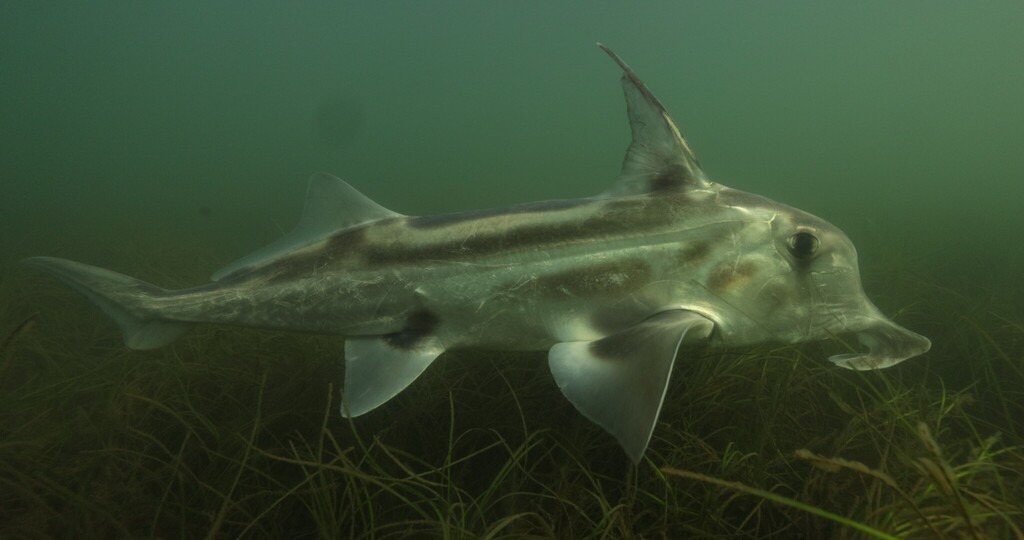
Elephant fish
Callorhinchus milii · Callorhinchidae
Elephant fish is a chimaera, and the names are the first thing to sort out. FishBase gives Elephant fish as the English name, with ghost shark, plownose chimaera, whitefish and silver trumpeter among the alternatives. It is a demersal fish recorded from the surface to 227 m. Wikipedia classifies it as a chimaera in the subclass Holocephali, with sharks, rays and skates in the other subclass, Elasmobranchii.
- Family
- Callorhinchidae
- Max length
- 125 cm TL
- Depth
- 0–227 m
- IUCN
- LC
- Climate
- Subtropical
Elephant fish is a chimaera, and the names are the first thing to sort out. FishBase gives Elephant fish as the English name, with ghost shark, plownose chimaera, whitefish and silver trumpeter among the alternatives. It is a demersal fish recorded from the surface to 227 m. Wikipedia classifies it as a chimaera in the subclass Holocephali, with sharks, rays and skates in the other subclass, Elasmobranchii.
Seasonality
Other AU-TAS regulations
Same jurisdictionBefore you keep a fish
- Read the recorded value. It is copied from the notice; if the number and the notice disagree, the notice wins.
- Check the area. Federal, state and local waters can set different limits for the same fish.
- Check the date. Seasons, quotas and closures change; confirm the current notice before you go.
Common questions
- What is the bag limit for Elephant fish in Australia — Tasmania?
- 2 fish per day · 4 in possession
- Where does this regulation apply?
- Tasmania state waters
- When was it checked?
- 2026-11-18, against NRE Tasmania — Recreational Sea Fishing Guide 2025-26, Quick Reference Rules.
- Do other jurisdictions set different limits?
- Yes. This register lists 2 jurisdictions for Elephant fish; compare them in the table above.