
Japanese halfbeak in Japan — Hiroshima: ≤7 cm body length may not be taken — Hiroshima Prefecture sea area.
Hiroshima couples this size limit with the closed season: the 7 cm prohibition applies during 1 March–30 September.
Regulation guide
Official sourcesWho sets the sayori rule
Hiroshima Prefecture publishes the size limits and closed periods for its sea area, drawing on the Seto Inland Sea Fisheries Regulation and the Hiroshima Prefectural Fisheries Adjustment Regulation.
The table is issued under Articles 35, 36 and 40 of the prefectural regulation, and the page states that the rules apply to everyone, not only to commercial fishers.
Sayori appears in the table with a body-length figure and a closed period, in the same list as mullet, sea bass, rockfish and konoshiro.
The page is organised as one table for the sea area rather than as a separate page per species, so the sayori entry is read next to the other limits that apply on the same trip.
Source: Hiroshima Prefecture: Sea area size limits and closed periods (海(海面)体長等の制限・禁止期間)
The 7 cm body-length floor
The entry reads さより 体長7cm以下のものに限る, with a closed period of 1 March to 30 September. Fish of 7 cm body length or less may not be taken during that period.
The measurement is body length (体長), not total length. The table uses the same expression for mullet, sea bass and rockfish, and uses 全長 for eel, so the distinction is deliberate.
The prohibition is on taking the animal, not on a particular gear type, so the size and the period apply however the fish is caught.
The introductory sentence ties the size and the period together: aquatic animals at or below the stated size are prohibited from being taken during the period shown in brackets.
Source: Hiroshima Prefecture: Sea area size limits and closed periods (海(海面)体長等の制限・禁止期間)
The closed period, 1 March to 30 September
The closed period runs from 1 March to 30 September, seven months of the year. During that period a sayori at or below 7 cm may not be taken.
Two other entries end on the same date: めばる also starts on 1 March, while このしろ starts on 1 May. The dates are set species by species, not as a single season.
A separate entry, すずき, runs from 1 March to 31 July, which shows that the prefecture does not use one uniform calendar for its sea area.
Source: Hiroshima Prefecture: Sea area size limits and closed periods (海(海面)体長等の制限・禁止期間)
Species with no size in the table
Some entries in the table have no size at all: まてがい, なまこ, あゆ, あじも and ほんだわら. The page explains that where no size is shown, the species may not be taken during the period regardless of its size.
That convention matters when reading the sayori entry. Because a size is shown for sayori, the size test and the period work together rather than the period applying to every fish of the species.
The table also lists はまぐり and うなぎ with year-round prohibitions, marked 通年 rather than with a period.
Source: Hiroshima Prefecture: Sea area size limits and closed periods (海(海面)体長等の制限・禁止期間)
Protected waters and fishing-rights areas
Hiroshima has two protected water areas where all taking of aquatic animals and plants is prohibited: the sea off the south-west side of Ikuno Island in Osaki-Kamijima, and the sea off the east side of Kuroshima in Kure.
Large parts of the prefecture's sea are also covered by third- and fourth-class common fishing rights. The prefecture states that even handline and rod fishing may not be done freely in those areas, because doing so can infringe the rights.
The prefecture adds that shore-based berley fishing is prohibited in certain areas by instruction of the Hiroshima Sea Area Fisheries Adjustment Commission, even though it was generally permitted from October 2007.
The maps of the rights areas and the protected waters are published on the prefecture's fishing-area page, with a separate detailed map of the common fishing rights areas.
Source: Hiroshima Prefecture: Sea area size limits and closed periods (海(海面)体長等の制限・禁止期間) · Hiroshima Prefecture: Areas where fishing is restricted (海(海面)釣りをするのに制限される区域)
Other limits that travel with the sayori rule
The same table sets 15 cm body length for ぼら from 1 February to 31 July, 15 cm for めなだ from 1 April to 31 October, 10 cm for すずき from 1 March to 31 July, and 3 cm for めばる from 1 March to 30 September.
The dates and sizes are specific to each species, so a trip that targets sayori may still be governed by another entry for bycatch.
Each entry pairs a size with a period, which means the table cannot be read as a single closed season for the whole sea area.
The page is a summary of the regulation, and it points readers to the prefecture's fishing-area page for maps and local restrictions.
Source: Hiroshima Prefecture: Sea area size limits and closed periods (海(海面)体長等の制限・禁止期間) · Hiroshima Prefecture: Areas where fishing is restricted (海(海面)釣りをするのに制限される区域)
What to check before keeping a sayori
Check 7 cm body length during the 1 March to 30 September period. Because 以下 includes the figure itself, a fish at exactly 7 cm is still prohibited during that period.
Check whether the ground is inside a protected water area or a common fishing rights area, where even line fishing may be restricted.
Check the commission's local instructions, including any shore-berley ban, before fishing.
Source: Hiroshima Prefecture: Sea area size limits and closed periods (海(海面)体長等の制限・禁止期間) · Hiroshima Prefecture: Areas where fishing is restricted (海(海面)釣りをするのに制限される区域)
Official pages: Hiroshima Prefecture: Sea area size limits and closed periods (海(海面)体長等の制限・禁止期間) · Hiroshima Prefecture: Areas where fishing is restricted (海(海面)釣りをするのに制限される区域)
Japanese halfbeak regulations at a glance
1 jurisdictions| Jurisdiction | Area | Size | Bag | Season / closure | Closed area | Other |
|---|---|---|---|---|---|---|
| Japan — Hiroshima | Hiroshima Prefecture sea area | ≤7 cm body length may not be taken | — | Closed 1 March – 30 September | — | — |
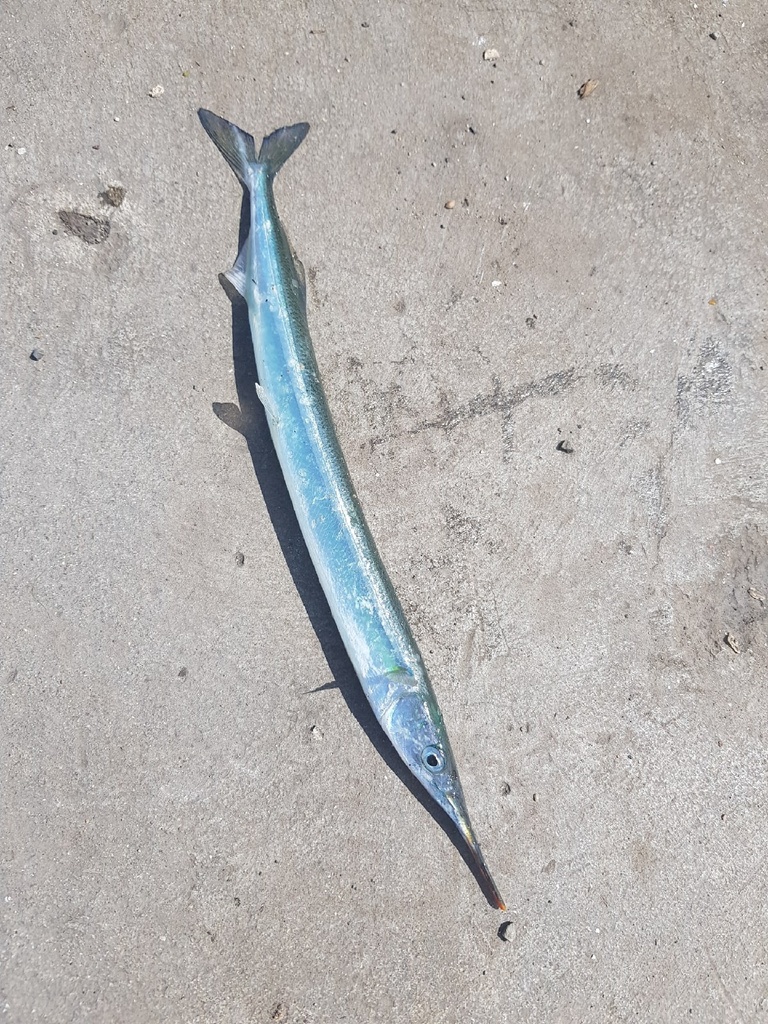
Japanese halfbeak
Hyporhamphus sajori · Hemiramphidae
Across the Northwest Pacific, from Yellow Sea, Pohai Sea, Japan Sea, and the Pacific coast of Japan, extending north to Sakhalin and to Preobrazheniye Bight and Vladivostok in the Gulf of Peter the Great, Japanese halfbeak represents the family Hemiramphidae. This is a temperate-water fish, recorded deeper than 30 m. Adults run to 40 cm TL and prey on zooplankton.
- Family
- Hemiramphidae
- Max length
- 40 cm TL
- Depth
- ≥ 30 m
- IUCN
- LC
- Climate
- Temperate
- Diet
- zooplankton
Japanese halfbeak (Hyporhamphus sajori) is a fish of the family Hemiramphidae. FishBase gives its range as: Northwest Pacific: Yellow Sea, Pohai Sea, Japan Sea, and the Pacific coast of Japan, extending north to Sakhalin and to Preobrazheniye Bight and Vladivostok in the Gulf of Peter the Great. Recorded from the lower part of the Yangtze River in China. of this species south to the Ryukyu Islands and Taiwan needs verification. It is recorded deeper than 30 m, in temperate water. The recorded maximum is 40 cm TL. Diet includes zooplankton. IUCN status: Least Concern (LC). Chinese name: .
Seasonality
Other JP-34 regulations
Same jurisdictionBefore you keep a fish
- Read the recorded value. It is copied from the notice; if the number and the notice disagree, the notice wins.
- Check the area. Federal, state and local waters can set different limits for the same fish.
- Check the date. Seasons, quotas and closures change; confirm the current notice before you go.
Common questions
- What is the minimum size for Japanese halfbeak in Japan — Hiroshima?
- ≤7 cm body length may not be taken
- Where does this regulation apply?
- Hiroshima Prefecture sea area
- When was it checked?
- 2026-11-18, against www.pref.hiroshima.lg.jp.