
Indo-Pacific sailfish in Mexico: 1 fish per angler per day · counts as 5 fish against the 10-fish daily limit — Mexican federal waters.
Cuando se trate de marlin, pez vela, pez espada y tiburón, el límite máximo por pescador y día será de un solo ejemplar de cualquiera de estas especies, el cual será equivalente a cinco ejemplares de otras especies.
Quoted from NORMA Oficial Mexicana NOM-017-PESC-1994 (FONMAR reproduction)
Clause 4.7.1.
Regulation guide
Official sourcesHow Mexico manages sailfish
Sailfish (pez vela, Istiophorus platypterus) is managed in Mexican federal waters under NOM-017-PESC-1994, the official standard for sport and recreational fishing published in the Diario Oficial de la Federacion on 9 May 1995. CONAPESCA administers the permit system that the standard relies on.
The standard states that marlin, sailfish, swordfish, dorado, roosterfish and tarpon are reserved exclusively for sport and recreational fishing within a 50-nautical-mile band measured from the baseline of the territorial sea. Within that band, commercial capture is outside the activity the standard regulates.
NOM-017 applies in waters of federal jurisdiction, and the permits it requires are federal permits rather than state or municipal ones.
One sailfish per angler per day
Clause 4.7.1 of the standard sets a daily maximum of ten specimens per angler, with no more than five of the same species. For marlin, sailfish, swordfish and shark, the limit is a single specimen per angler per day, and that specimen is treated as equivalent to five fish of other species.
The one-fish allowance covers the billfish group rather than sailfish alone. An angler who has kept a marlin cannot also keep a sailfish on the same day, because both fall inside the same one-specimen rule.
The clause puts shark in the same one-specimen category, so the allowance is shared across the listed groups rather than multiplied by species.
How the count works against the ten-fish limit
Because a sailfish counts as five fish, it uses half of the ten-fish daily allowance. The remaining allowance is five fish of other species, which is also the separate cap on any one species.
Clause 4.10 makes clear that the quotas govern what may be retained, not what may be caught. An angler may catch more than the quota provided the excess fish are returned to the water in good condition, which is the standard's catch-and-release provision.
Permits for boat-based fishing
Fishing from a boat requires the permits contemplated in the Ley Federal de Derechos, and clause 4.17.1 requires sport anglers and service providers to obtain the corresponding fishing permit and pay the duties before fishing. The permit must be carried during the activity and shown to the authorities on request.
Service providers must carry the vessel permit and the anglers' permits on board, together with the logbook, and must record the requested data. A trip that relies on a boat therefore has two permit checks to satisfy: the angler's and the operator's.
Gear is also capped. Line strength may not exceed 60 kilograms (130 pounds), and electric reels are reserved for anglers with disabilities under clauses 4.6.2 and 4.6.4.
Filleting, landing and ownership
Clause 4.14 prohibits filleting fish on board the vessel used for sport-recreational fishing. A sailfish may be landed whole or processed ashore, but not reduced to fillets at sea.
Clause 4.13 provides that retained specimens are the property of the holder of the sport-fishing permit and may be used for the angler's own consumption or family consumption, or for taxidermy, under the conditions the Secretariat determines. The standard does not create a commercial landing right for sailfish.
Closed areas and distance rules
Clause 4.12 prohibits sport-recreational fishing in closed zones and seasons, within 250 metres of vessels engaged in commercial fishing or of fixed or floating gear, and within 250 metres of beaches frequented by bathers. In refuge zones, reserves and natural protected areas, fishing is allowed only on the terms set by the applicable rules and with the express authorisation of the Secretariat and other competent authorities.
Those rules sit alongside the catch limits. A sailfish taken inside a closed area or too close to working commercial gear is unlawful even if the daily quota is otherwise unused, and the service provider must enter the trip's data in the logbook.
What to check before keeping a sailfish
Confirm that the fish is a sailfish rather than a marlin, because the one-specimen allowance is shared across the billfish group. Check that the boat and anglers hold the required permits, that the day's count leaves room for a five-fish equivalent, and that the fish was not taken inside a closed area or within the 250-metre buffers.
Keep the fish whole until landing, do not fillet it at sea, and do not add it to a day that has already used the billfish allowance. If the count or the identification is uncertain, the safe course is release under clause 4.10 rather than retention.
Official pages: CONAPESCA/FONMAR: NOM-017-PESC-1994 (texto completo) · CONAPESCA
Indo-Pacific sailfish regulations at a glance
1 jurisdictions| Jurisdiction | Area | Size | Bag | Season / closure | Closed area | Other |
|---|---|---|---|---|---|---|
| Mexico | Mexican federal waters | — | 1 fish per angler per day · counts as 5 fish against the 10-fish daily limit | — | — | — |
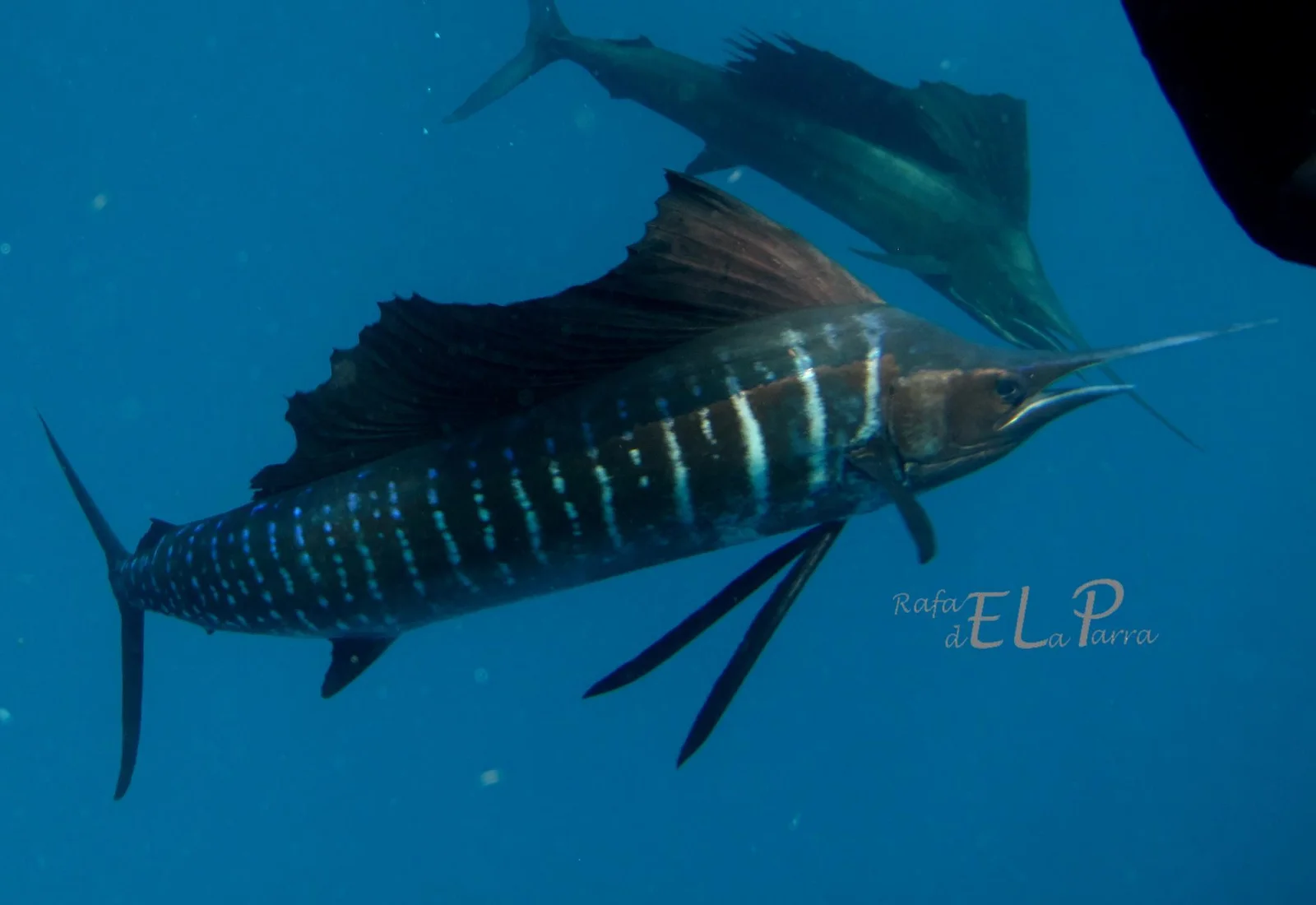
Indo-Pacific sailfish
Istiophorus platypterus · Istiophoridae
Indo-Pacific sailfish is a billfish of tropical and temperate Indo-Pacific waters, reaching about 45 to 50°N and 35 to 40°S in the western Pacific and 35°N to 35°S in the eastern Pacific. It lives from the surface to 200 m, reaches 348 cm FL and 100.2 kg, can live 13 years, and feeds on crustaceans, fish and molluscs. It is present year-round.
- Family
- Istiophoridae
- Max length
- 348 cm FL
- Max weight
- 100.2 kg
- Max age
- 13 years
- Depth
- 0–200 m
- IUCN
- VU
- Climate
- Subtropical
- Diet
- crustaceans, fishes, molluscs
Indo-Pacific sailfish (Istiophorus platypterus) is a fish of the family Istiophoridae. FishBase gives its range as: Indo-Pacific: tropical and temperate waters approximately 45°- 50°N and 40°-35°S in the western Pacific, 35°N and 35°S in the eastern Pacific; 45°S in western Indian Ocean and 35°S in eastern Indian Ocean. Entered Mediterranean Sea from Red sea via Suez Canal. It is recorded from 0 to 200 m, in subtropical water. The recorded maxima are 348 cm FL, 100.2 kg, 13 years. Diet includes crustaceans, fishes and molluscs. IUCN status: Vulnerable (VU). Chinese name: .
Seasonality
Other MX regulations
Same jurisdictionBefore you keep a fish
- Read the recorded value. It is copied from the notice; if the number and the notice disagree, the notice wins.
- Check the area. Federal, state and local waters can set different limits for the same fish.
- Check the date. Seasons, quotas and closures change; confirm the current notice before you go.
Common questions
- What is the bag limit for Indo-Pacific sailfish in Mexico?
- 1 fish per angler per day · counts as 5 fish against the 10-fish daily limit
- Where does this regulation apply?
- Mexican federal waters
- When was it checked?
- 2026-11-18, against NORMA Oficial Mexicana NOM-017-PESC-1994 (FONMAR reproduction).