
What fish are on your coast? — page 2 of 16
Choose the water you fish: shore, reef, surf or deep water. Then open a fish to see what it eats, when it comes in, and how to catch it.
Species records
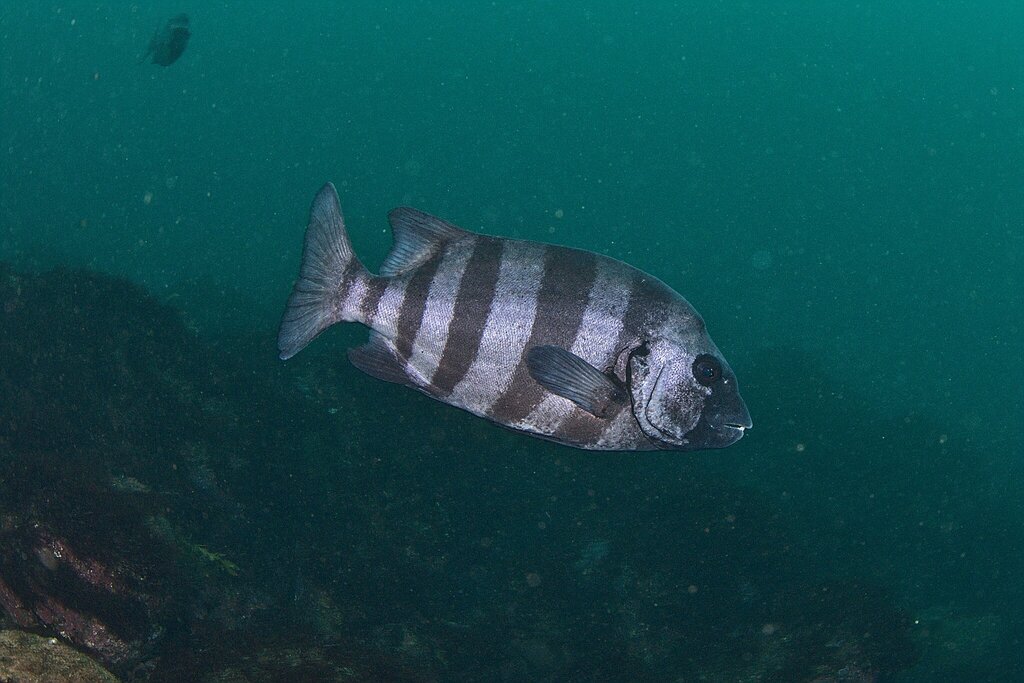
Barred knifejaw
Barred knifejaw is an oplegnathid of rocky northwest Pacific shores, from Japan and Korea to Taiwan. It lives from 1 to 10 m in temperate water, reaches 80 cm and 6.4 kg, and feeds on algae. Rock fishing or shore casting is the usual approach.
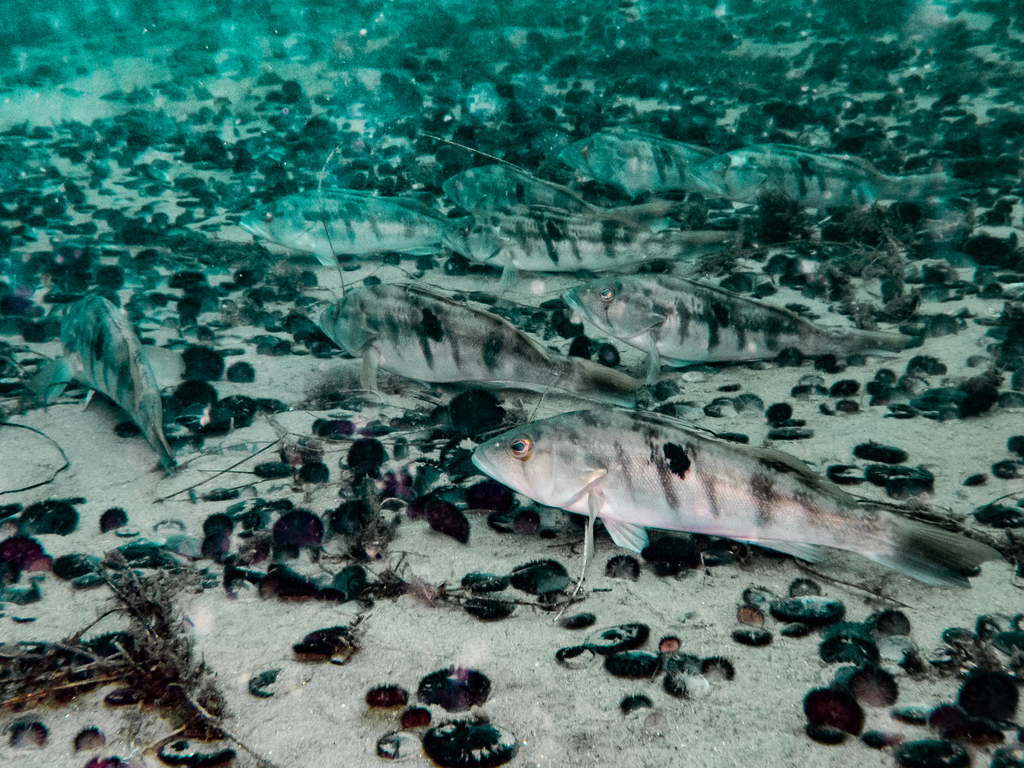
Barred sand bass
One spine separates this bass from the other two: the third dorsal spine runs about twice the length of the fourth. Add a summer gathering over sand next to rock, and it becomes the easiest of the three to overbag, which is why a separate four-fish cap took effect in 2025. In Southern California that combination is a management problem, not only an identification one.
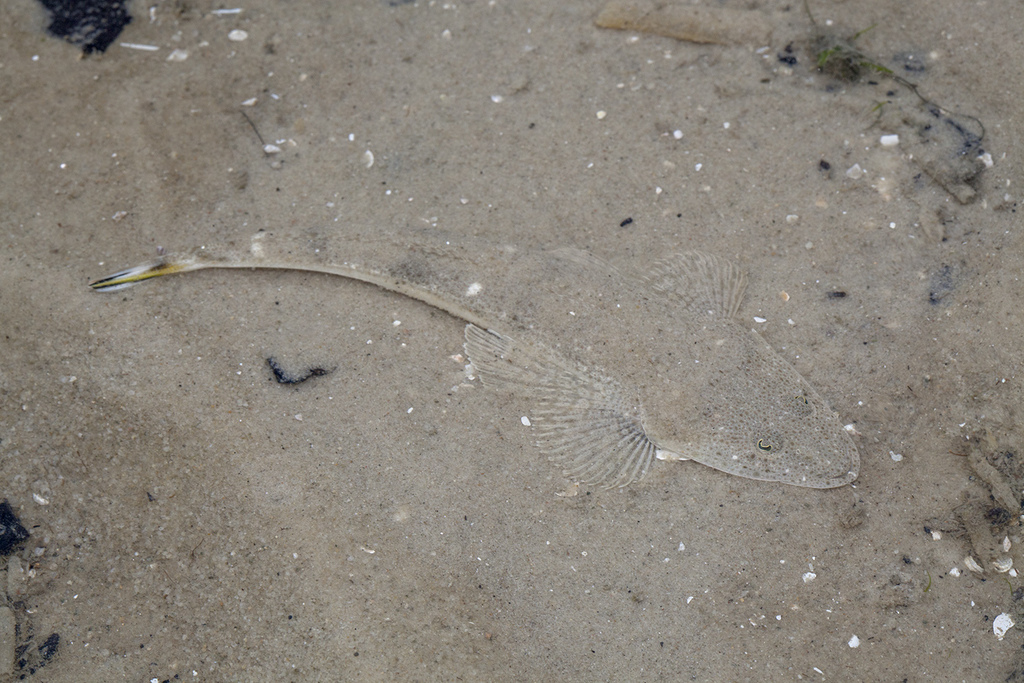
Bartail flathead
Bartail flathead is a bottom-hugging flathead of the Indo-West Pacific, lying on sand and mud in estuaries and along the coast. It reaches 100 cm TL and 3.5 kg and is worked between 20 and 200 m in subtropical water. The season covers most of the year, with June the one month missing. Sources even disagree about whether it enters fresh water: one field says no, another lists freshwater as a habitat keyword.
Bastard grunt
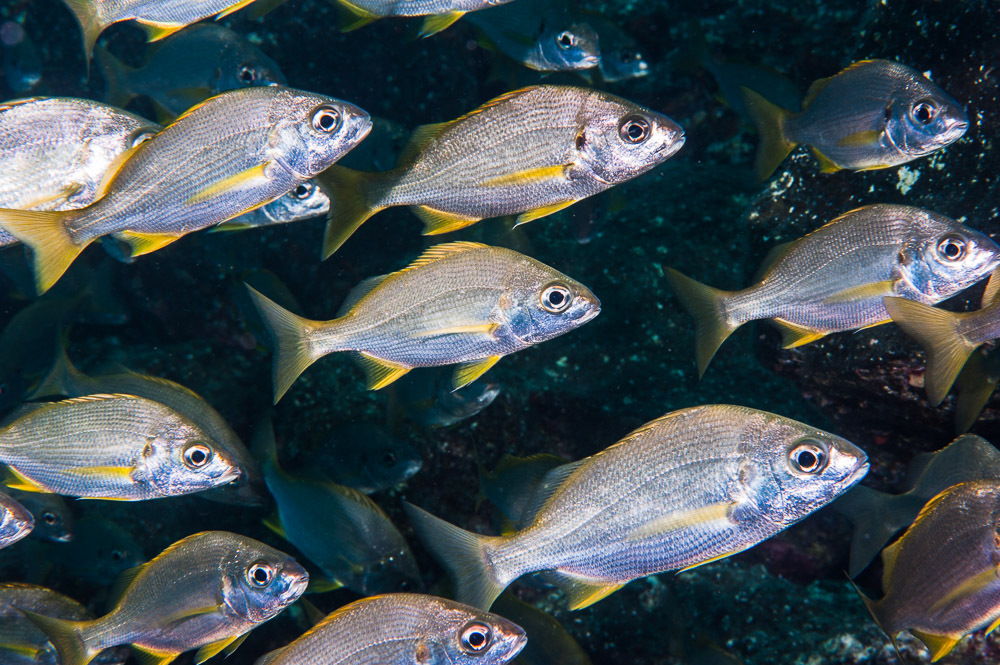
Bastard grunt is a haemulid of the eastern Atlantic and Mediterranean, ranging from Angola up to Spain. It is a shallow subtropical fish, caught between 10 and 100 m. Adults reach 53.5 cm TL and live about seven years. The season is short, June to August, so the fish is a summer target rather than a year-round one.
Bat ray
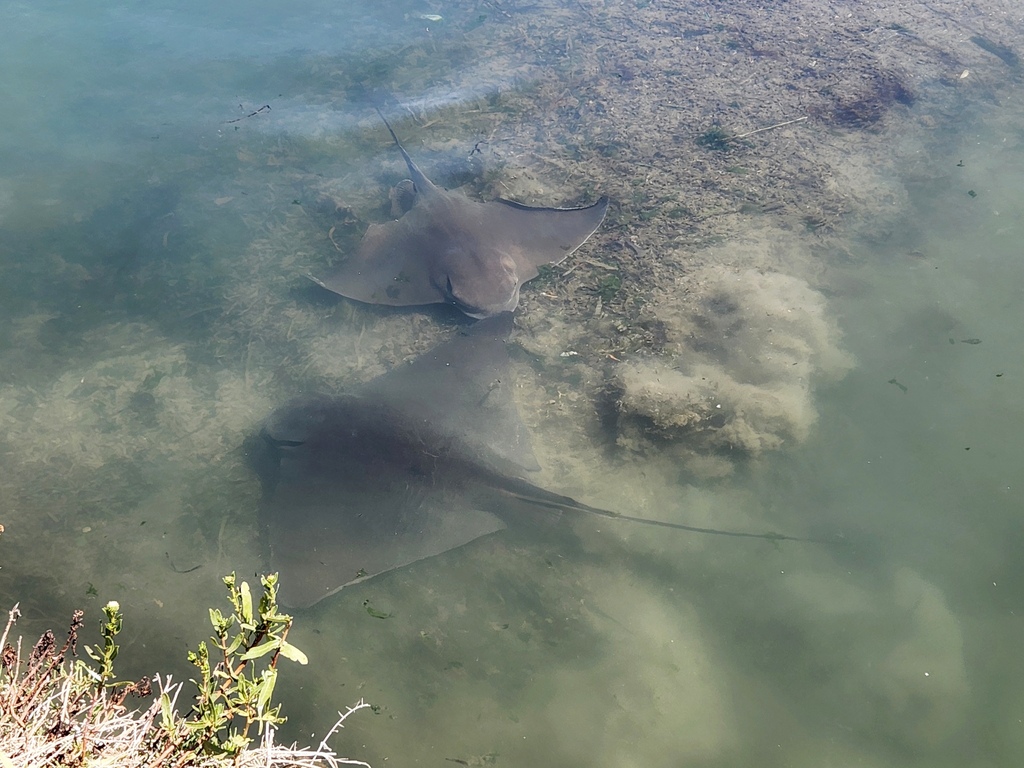
Almost nobody targets a bat ray. It arrives as bycatch while someone waits for a halibut on sand, and because it is not the target it is the fish most often dragged up dry, grabbed by the tail, or left on the beach too long. This entry is about release, not recipes. The pair of cephalic fins in front of the eyes is what separates it from a skate.
Beaked redfish
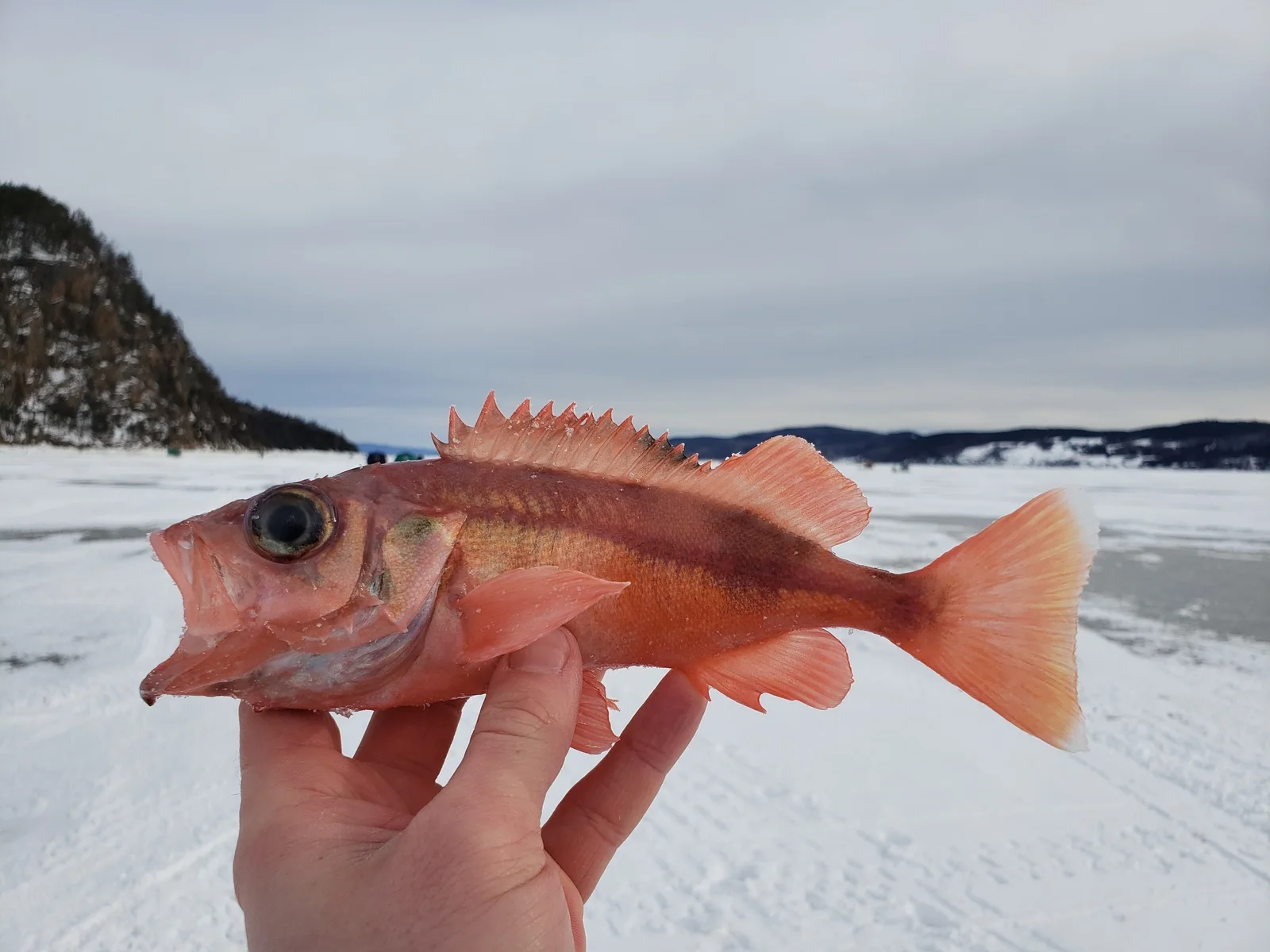
Beaked redfish is a deep-water rockfish of the North Atlantic on both sides, from the Norwegian Sea and the Iceland–Faroes Ridge across to Baffin Bay and Nova Scotia. It lives mostly between 350 and 500 m, down to 1,441 m, and grows slowly: the maximum recorded length is 77.5 cm and the oldest fish reached 75 years.
Big-scale sand smelt
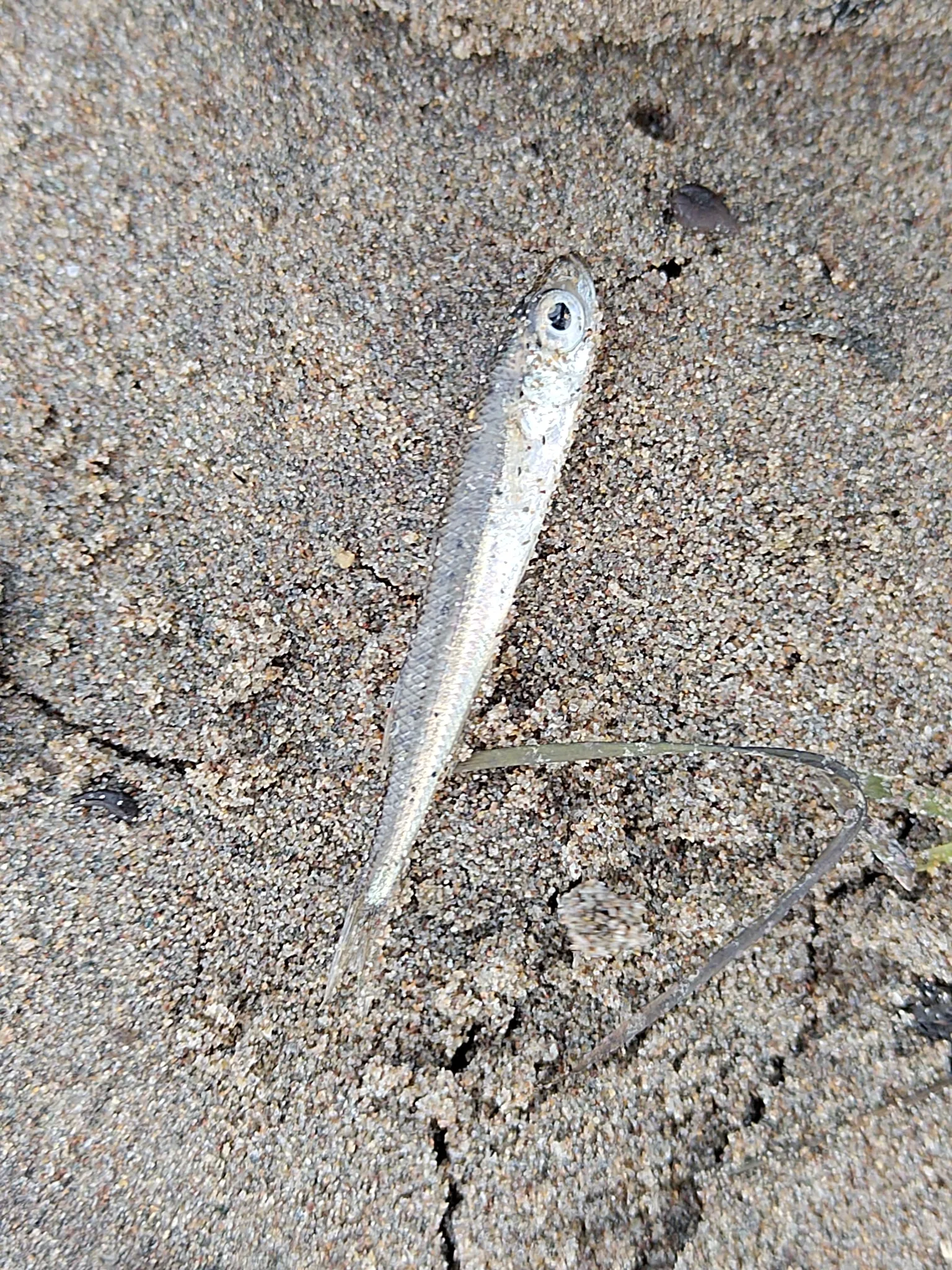
Big-scale sand smelt is a small silverside of the family Atherinidae, euryhaline and found across the eastern Atlantic, Mediterranean and Black Sea. Its range runs from Portugal and Madeira to Mauritania, with isolated populations on the coasts of England and the Netherlands, and it occupies estuaries and coastal water from about 1 m down. It reaches only 20 cm and lives around four years.
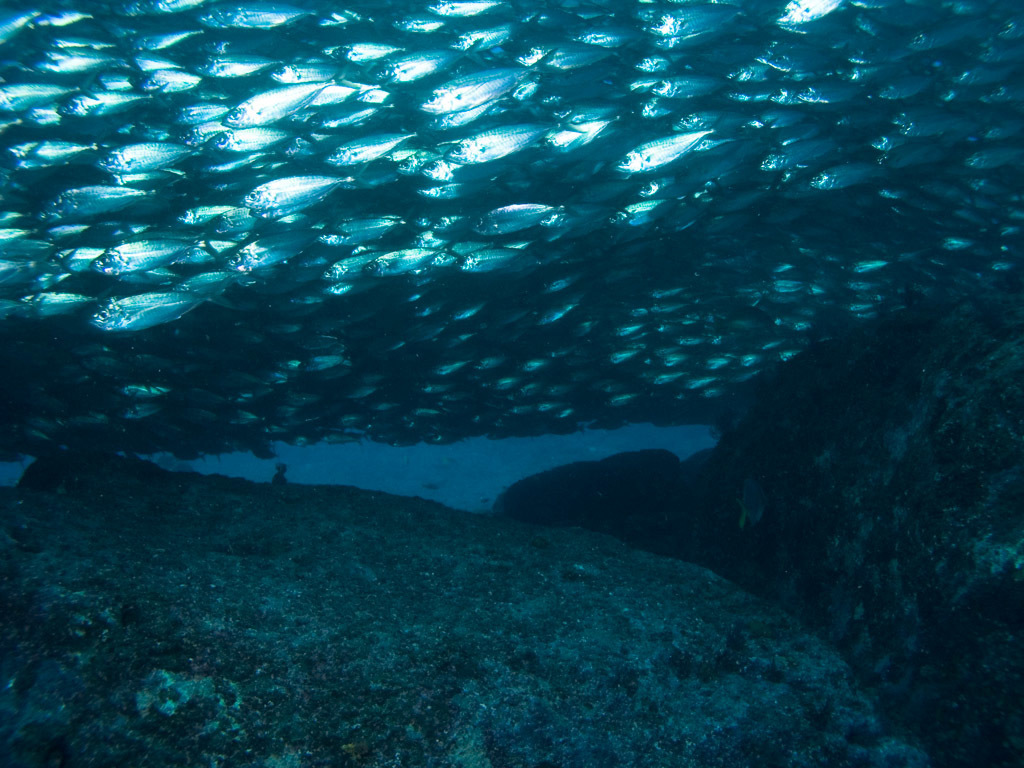
Bigeye scad
Fusiform, compressed, and about as plain as a jack outline gets. What separates it from its relatives is arithmetic: nine dorsal spines with 24 to 27 soft rays, three anal spines with 21 to 23 soft rays. The eye is large for the head and the names say so — Bigeye scad, goggle-eye, and the Chinese aliases and all describe the same feature.

Bigeye trevally
Bigeye trevally is a schooling carangid of Indo-Pacific reefs and estuaries, from the Red Sea and East Africa to Hawaii, southern Japan, Australia and New Caledonia. It reaches 120 cm and 18 kg, feeds on crustaceans and fish, and prefers water of 26 to 29 °C. Lure fishing or boat fishing is the usual approach.
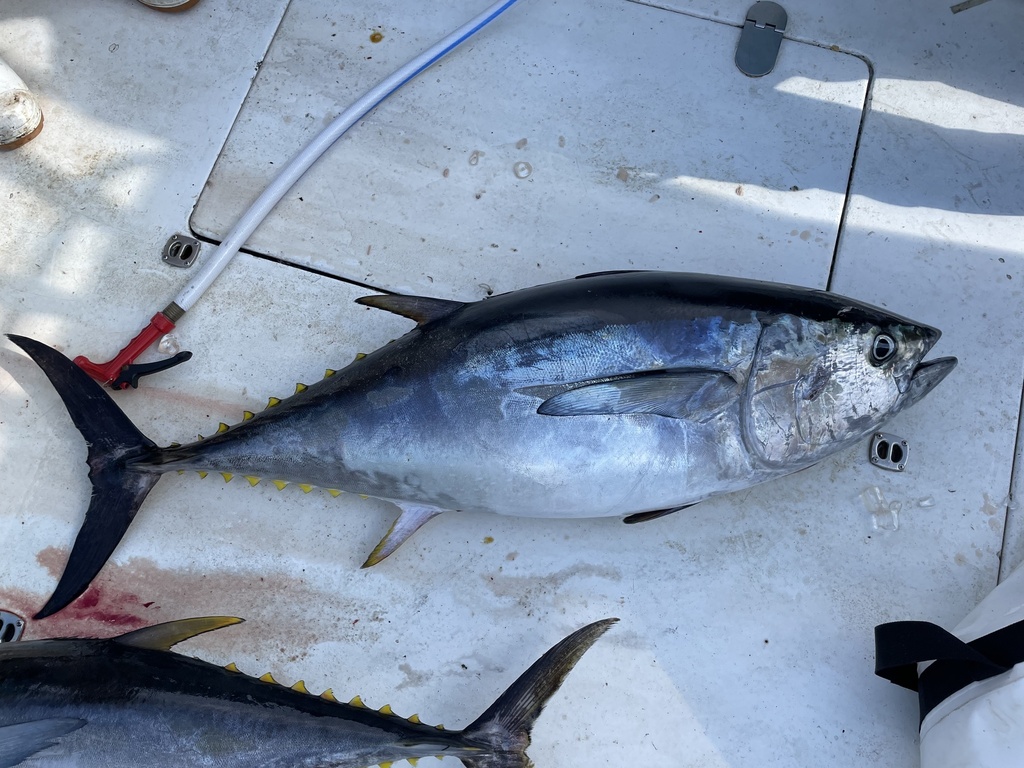
Bigeye tuna
Bigeye tuna is a large scombrid of tropical and subtropical waters in the Atlantic, Indian and Pacific oceans, including the Mediterranean. It lives from the surface to 1,500 m, reaches 250 cm TL and 210 kg, can live 17 years, and feeds on crustaceans, fish and molluscs. Trolling or jigging is the usual approach, and it is present year-round.
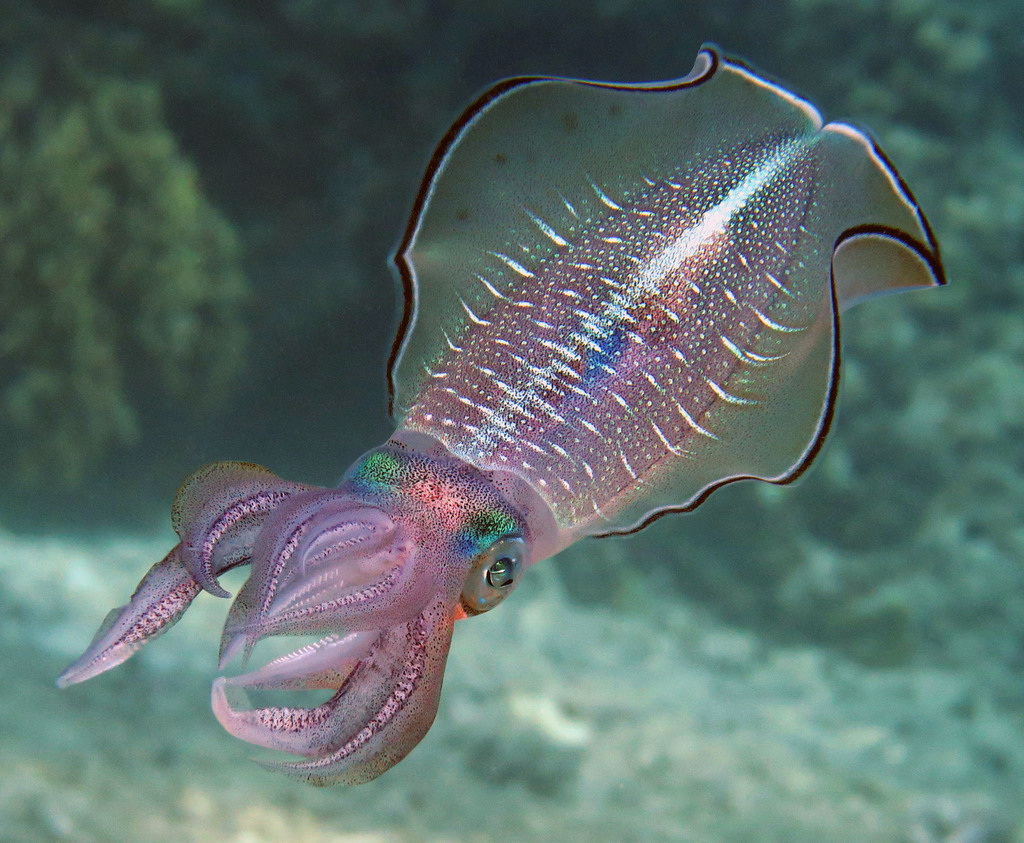
Bigfin reef squid
Bigfin reef squid is an inshore squid of the Indo-Pacific, from Japan and Australia to New Zealand, Hawaii and the East African coast. It lives from the surface to 100 m in tropical water, reaches 40.1 cm mantle length, and feeds on fish and algae. Eging, boat fishing or handline is the usual approach.
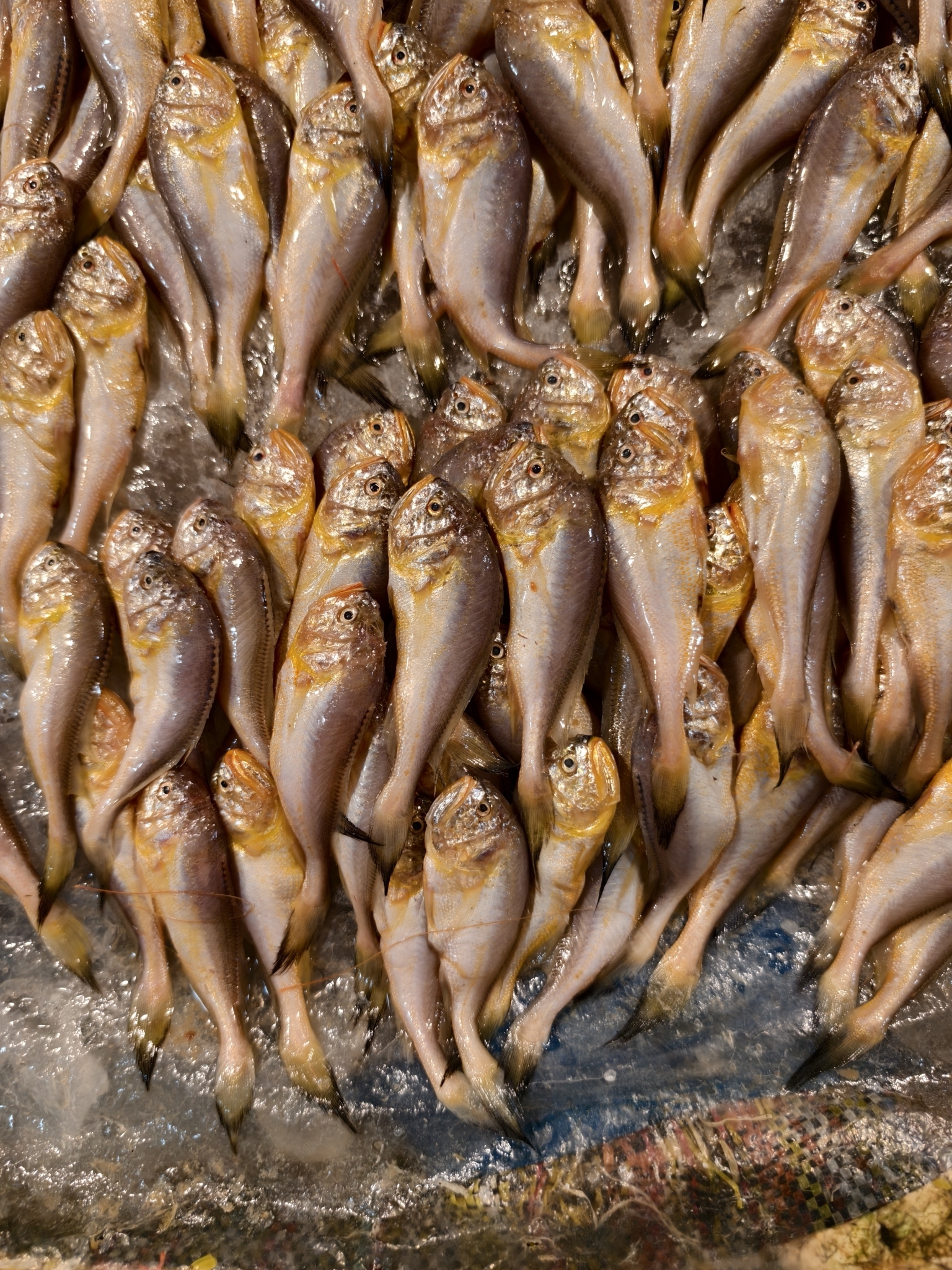
Bighead croaker
Bighead croaker is a small sciaenid of the western Pacific, from Kyushu and the South China Sea, living shallower than 90 m in subtropical water. It reaches 19.8 cm and 0.0771 kg. Shore fishing with a small hook rig is the usual approach, and the season runs January to December.

Bight redfish
Bight redfish is a berycid endemic to southern Australia, from off Lancelin in Western Australia to Bass Strait. It lives from 10 to 260 m in temperate water, reaches 66 cm TL, and can live 71 years. Its season runs January to May.
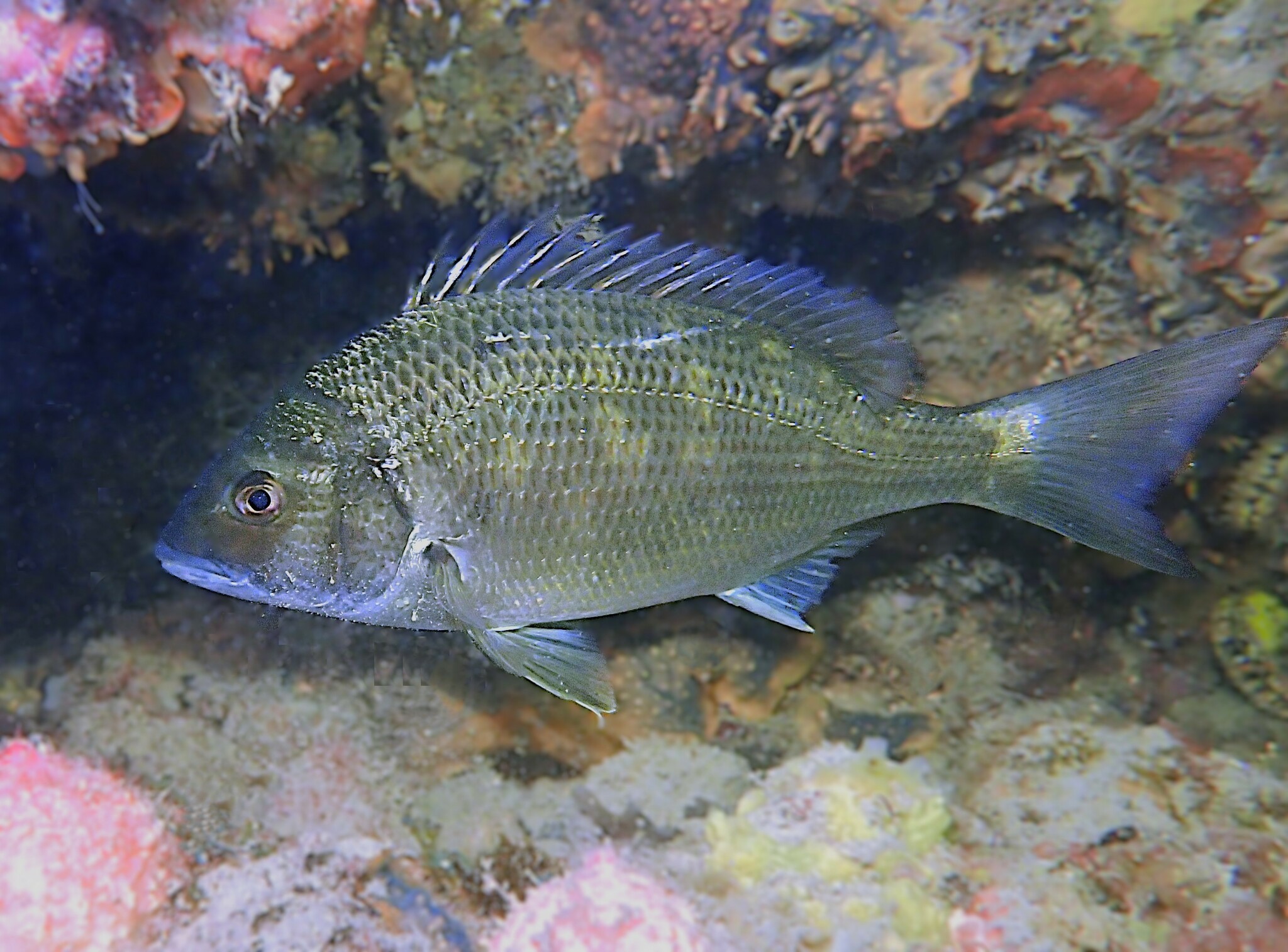
Black bream
Across the Indo-Pacific, from endemic to southern Australia, Black bream represents the family Sparidae. It lives in subtropical water. Adults run to 60 cm TL and 4 kg and prey on crustaceans, fishes, algae and worms. The usual approach is shore casting or boat fishing. The season runs January to December.

Black drum
Black drum is a heavy-bodied sciaenid of the western Atlantic, from Nova Scotia and Florida to northern Mexico. It lives deeper than 10 m in subtropical water, reaches 170 cm TL and 51.3 kg, can live 43 years, and feeds on crustaceans and fish. Boat bottom fishing is the usual approach, with the season running January to June.
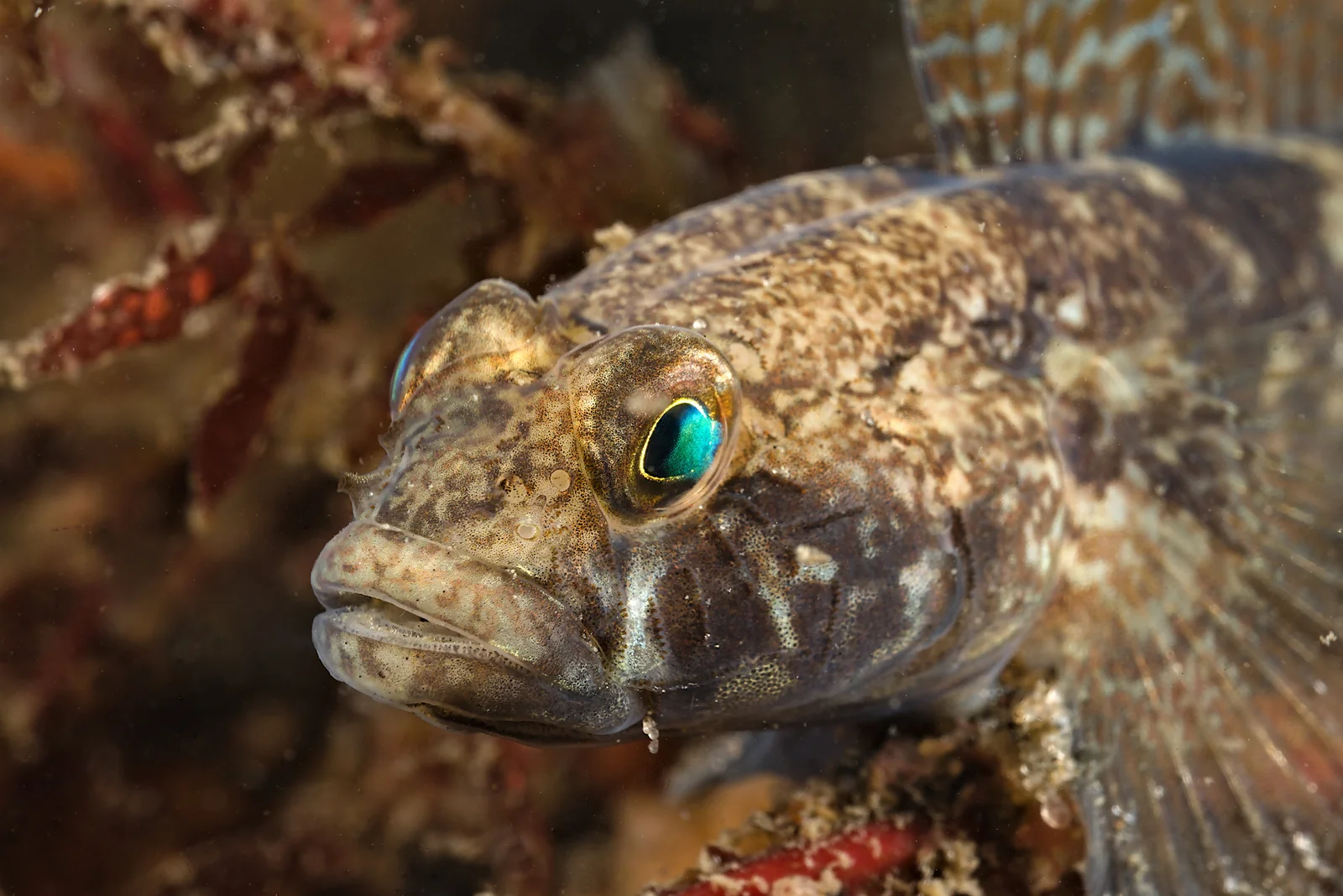
Black goby
The black goby is a large-bodied member of the Gobiidae, growing to 25.3 cm and living about five years. It occurs along the eastern Atlantic from Mauritania to Trondheim and throughout the Mediterranean and Black Sea, over sand, mud, estuaries and seagrass. FishBase puts it at 1–96 m, usually 1–50 m, in water of 8–24 °C.

Black grouper
Black grouper is a large epinephelid of the western Atlantic, from Bermuda and Massachusetts through the southern Gulf and Caribbean to southern Brazil. It lives from 60 to 250 m in subtropical water, reaches 150 cm TL and 100 kg, and feeds on crustaceans and fish. It is present year-round.
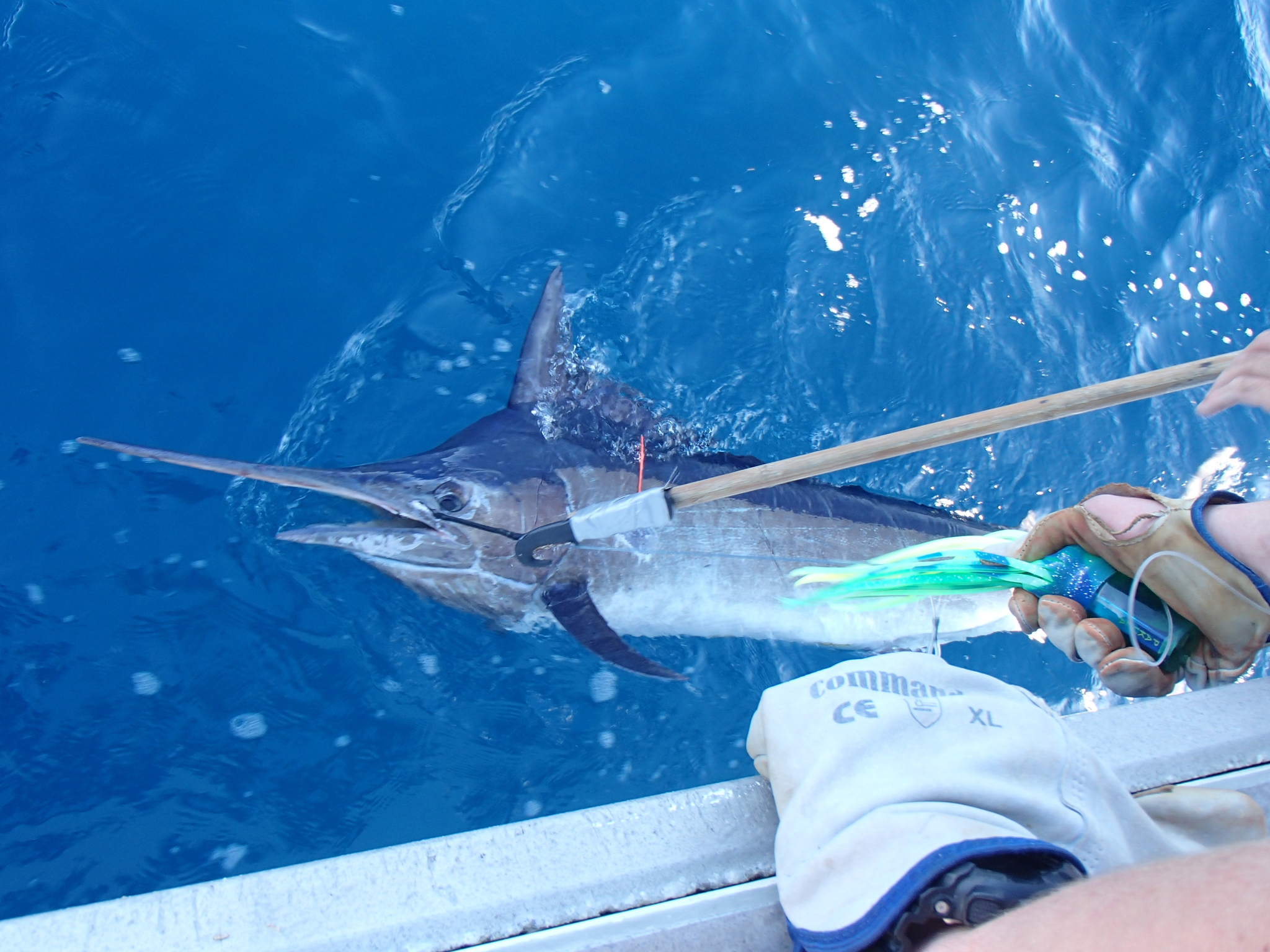
Black marlin
Black marlin is a large istiophorid billfish of the Indo-Pacific, from tropical and subtropical waters, with occasional strays into temperate seas. It lives from the surface to 915 m, reaches 465 cm FL and 750 kg, and feeds on crustaceans and fish. It is recorded in most months of the year, in water of 15 to 30 °C.

Black musselcracker
Black musselcracker is a monotypic South African sparid recorded from Natal to the Cape. It has a heavy body, a steep forehead and a swollen, fleshy snout, and adults run from dark grey-brown to almost black. It is recorded from 1 to 80 m, reaches 150 cm TL and 34.4 kg, matures at about 53 cm fork length and can live 45 years. Boat bottom fishing and bait are the methods listed.

Black rockfish
Black rockfish is recorded across the Eastern Pacific, from Amchitka Island, Aleutian Islands, Alaska to Paradise Cove, Baja California, Mexico, within the family Sebastidae. It tops out at 63 cm TL and 4.8 kg, on a diet of fishes and zooplankton. The standard approach is boat bottom fishing or slow pitch jigging. The season runs January to June, in water of 7 to 9 °C.

Black scabbardfish
Black scabbardfish is a long, eel-like deep-water species of the North Atlantic, recorded on both sides and at underwater rises from the Denmark Strait to Cape Verde. It lives between 200 and 2,300 m, reaches 151 cm, and feeds on crustaceans, fish and molluscs. Its season runs throughout the year.

Black scorpionfish
Black scorpionfish is a small ambush predator of the eastern Atlantic and Mediterranean, from the British Isles and the Azores down through Morocco and into the Black Sea. It is recorded from shallow water out to 800 m and preys on crustaceans, fish and algae. Adults run to 40.5 cm TL and 0.87 kg. April to September is the season.

Black scraper
Black scraper is a small filefish of the northwest Pacific and South China Sea, sold on market trays with the skin already off, which is why the local names mean peel-skin fish and horse-face. It works 50 to 110 m in tropical water of 10 to 28 degrees C. Adults reach 37.4 cm TL. The season covers May, June, August and September, so July is the gap.

Black sea bass
Black sea bass is recorded across the Western Atlantic, from Canada to Maine to northeastern Florida in USA and eastern Gulf of Mexico, within the family Serranidae. It lives in temperate water. Fish reach 66 cm TL and 4.3 kg. Anglers target it by boat bottom fishing or shore fishing. The season runs January to December.
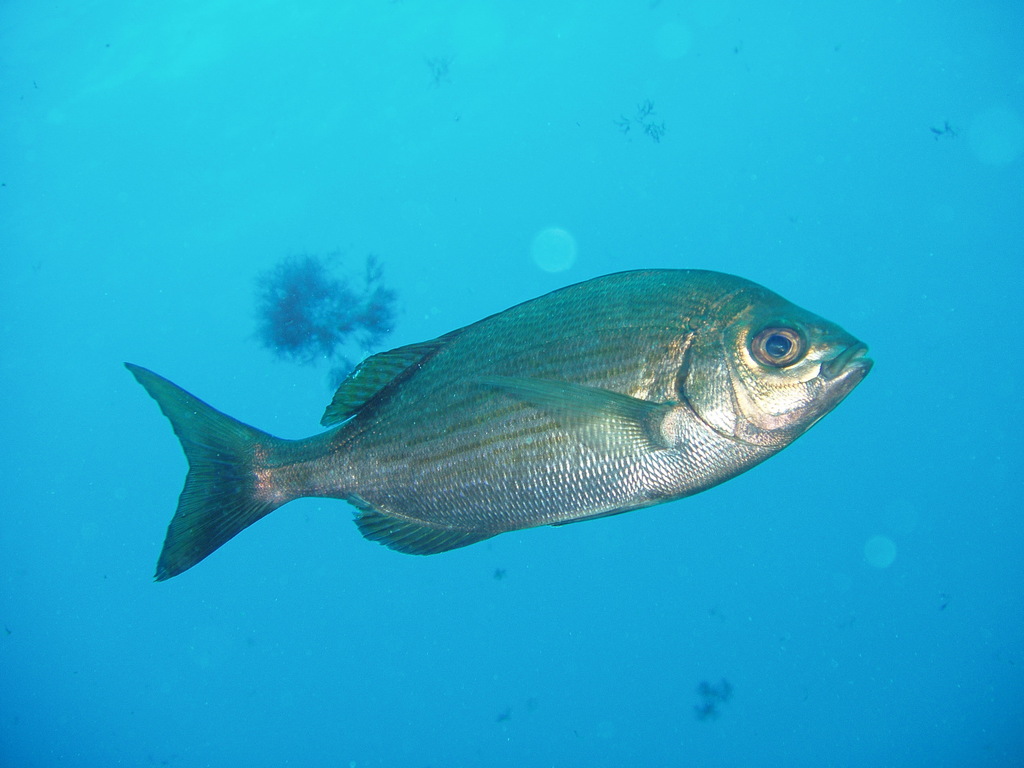
Black sea bream
Black sea bream is a member of the family Sparidae and ranges across the Eastern Atlantic, from Scandinavia to northern Namibia, including the Strait of Gibraltar, Mediterranean and the Black Sea, Madeira, Canary Islands, and Cape Verde. It lives from 5 to 300 m in subtropical water. Fish reach 60 cm SL and 1.2 kg, feeding on crustaceans, fishes and algae. The standard approach is shore casting or boat fishing. The season runs January to August.
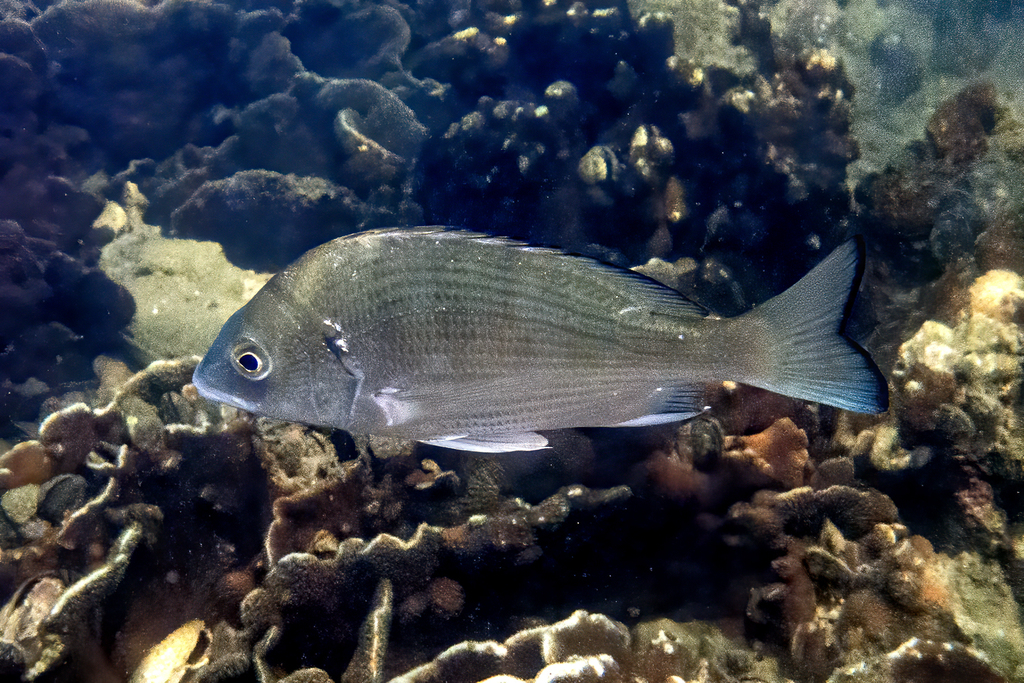
Black seabream
Black seabream is a member of the family Sparidae and ranges across the Northwest Pacific, from southern Hokkaido, Japan to the southern Korean Peninsula, middle and north coast of the Republic of China and Taiwan. It lives deeper than 15 m in subtropical water. Fish reach 50 cm SL and 3.2 kg, feeding on worms. Anglers target it by shore casting, rock fishing or boat fishing. The season runs February to December.
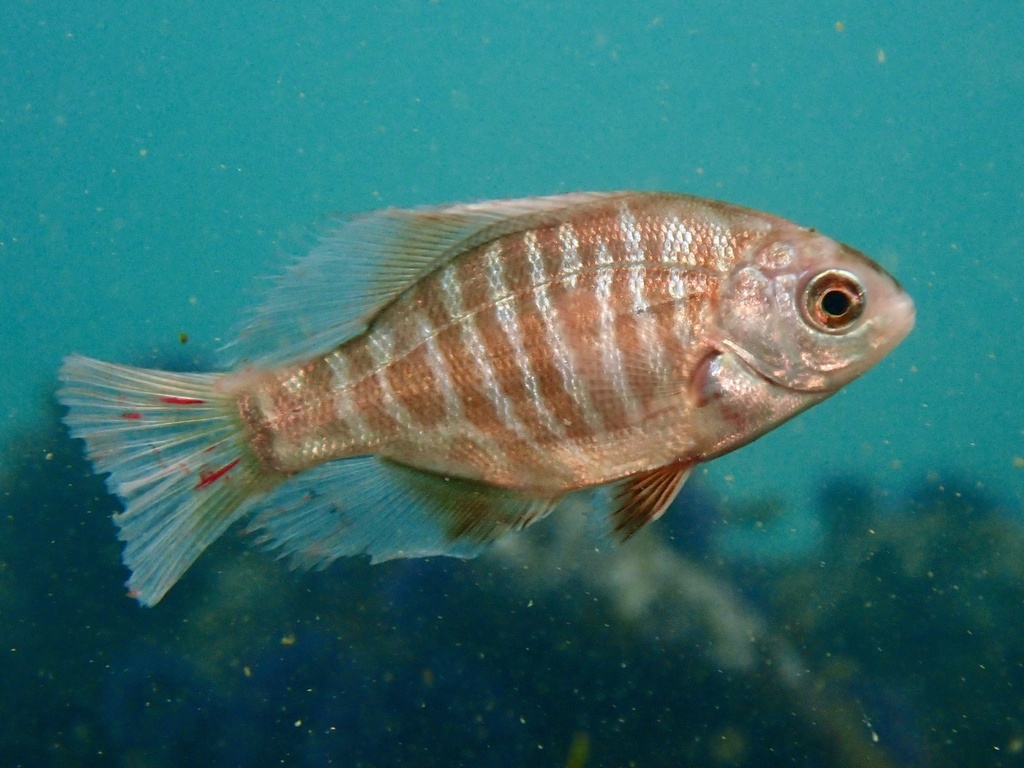
Black surfperch
Two oddities of the surfperch family meet in the black surfperch: it gives birth to fully formed young, and its lips are thick enough to work like a soft pad. A third fact matters at the rail — deep olive to near-black, with no bars on the flank. It holds around pier pilings, rock crevices and kelp edges, and crushes crab shells with a force its small size does not suggest.
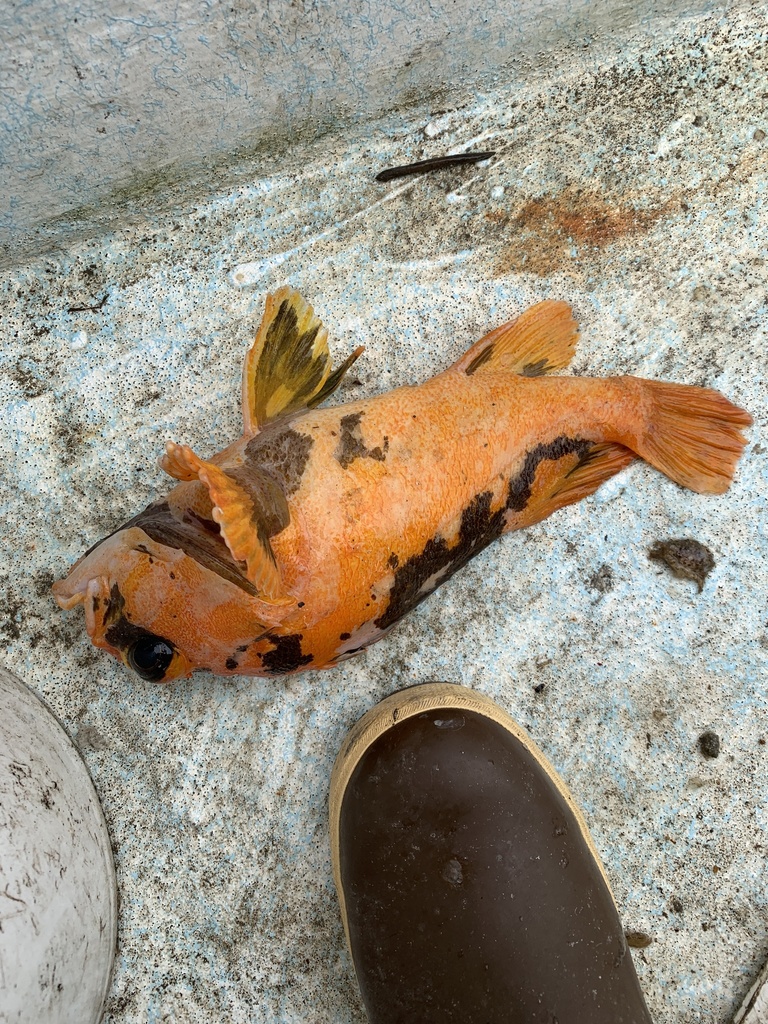
Black-and-yellow rockfish
Black-and-yellow rockfish is close in shape to the gopher rockfish and is separated in the field mainly by colour: a near-black body with bold yellow blotches. The FishBase summary carries no fin-ray or vertebral counts for this species, so counts serve only as a secondary check. Maximum total length is 39 cm, maturity is near 15 cm, and the recorded maximum age is 22 years.
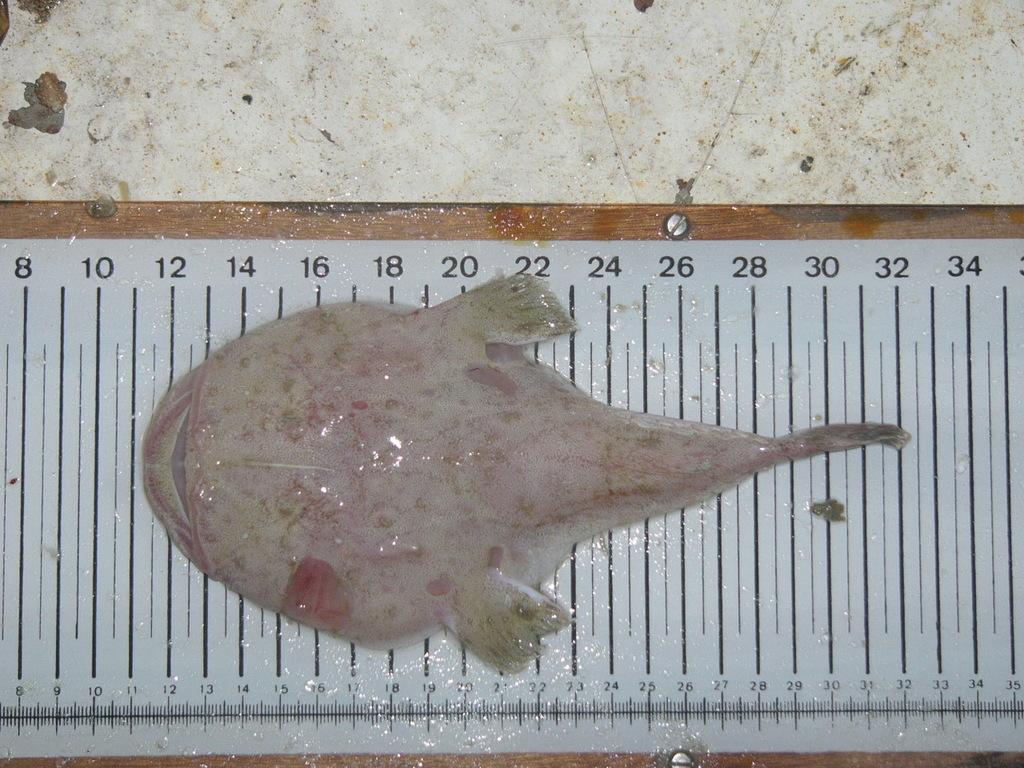
Black-bellied angler
The fish carries its own lure on its head, and the angler still has to put a bait in front of its mouth. The black-bellied angler barely chases anything; the whole method follows from how it ambushes: on the bottom, slowly, with the bait parked where the fish can open up and take it.
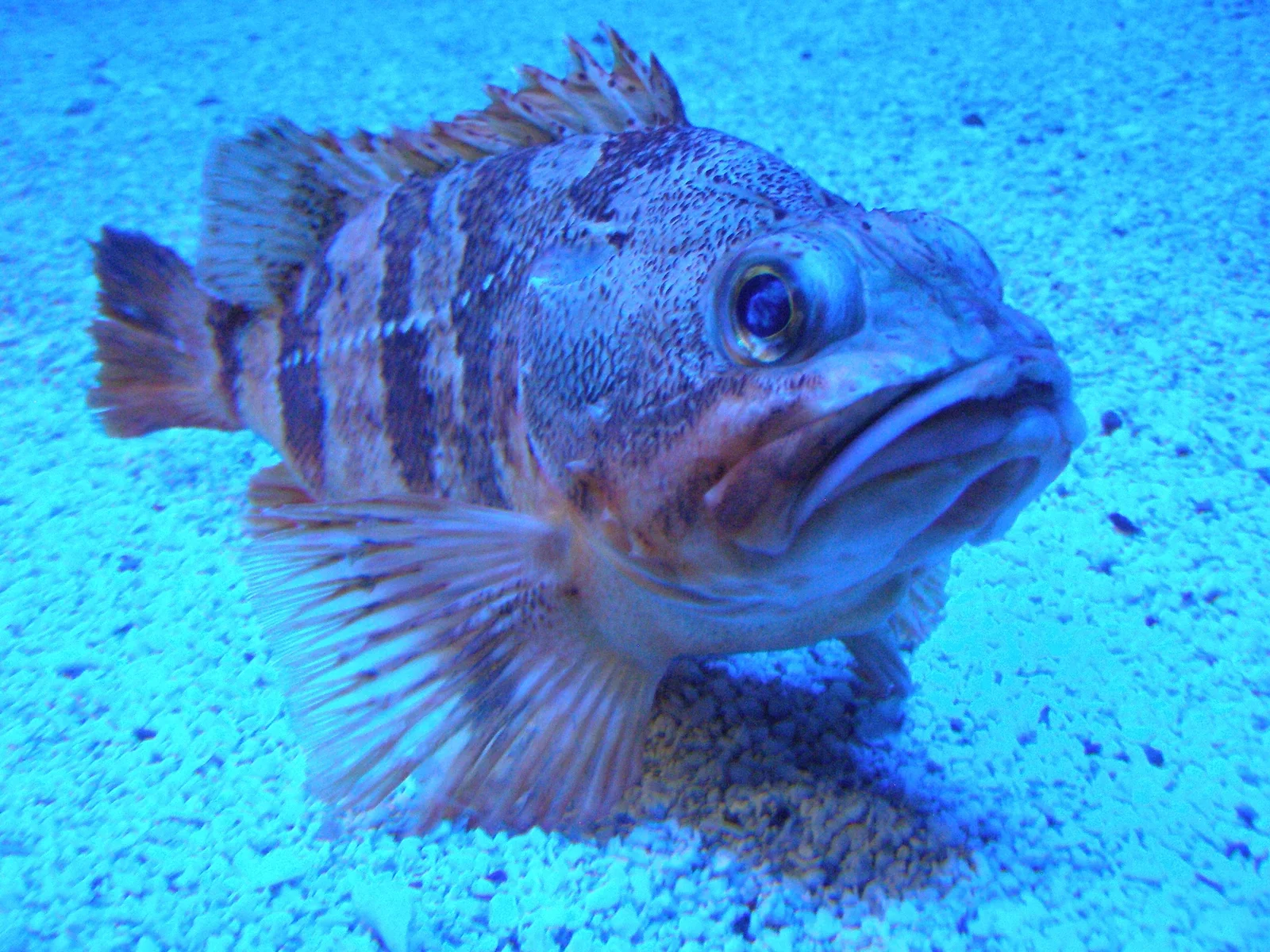
Blackbelly rosefish
The blackbelly rosefish belongs to the rockfish family Sebastidae and occurs on both sides of the Atlantic: from Nova Scotia to Venezuela in the west, and from Iceland and Norway through the Mediterranean to the Gulf of Guinea in the east. It is a slope fish, usually found between 150 and 600 metres, and grows to about 50 cm and 1.6 kg.
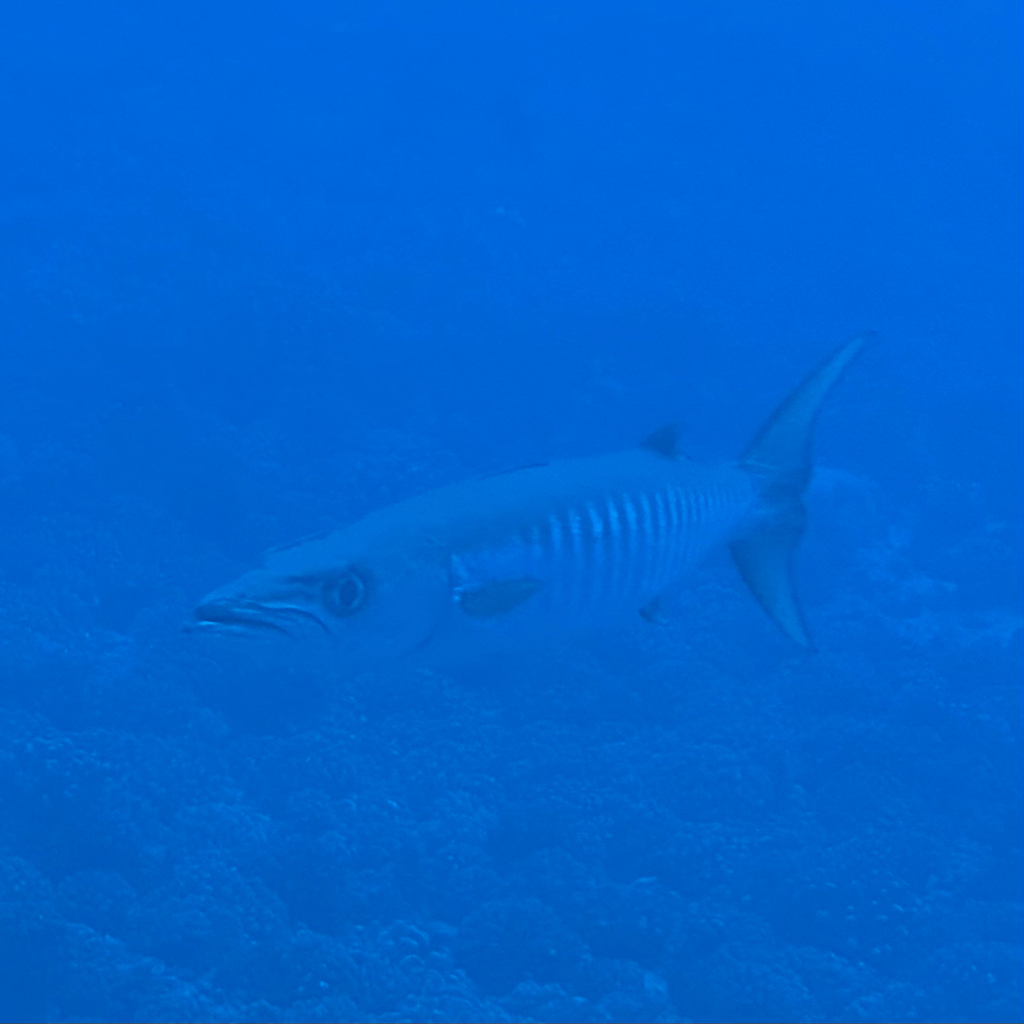
Blackfin barracuda
Open the page for this barracuda and two numbers sit next to each other: a maximum total length of 170 cm and a maximum published weight of 7.1 kg. No barracuda of that length weighs seven kilos. The record is not lying about either figure; it is showing that at least one of them belongs to a different fish, which is exactly what the same page warns about a few lines later.
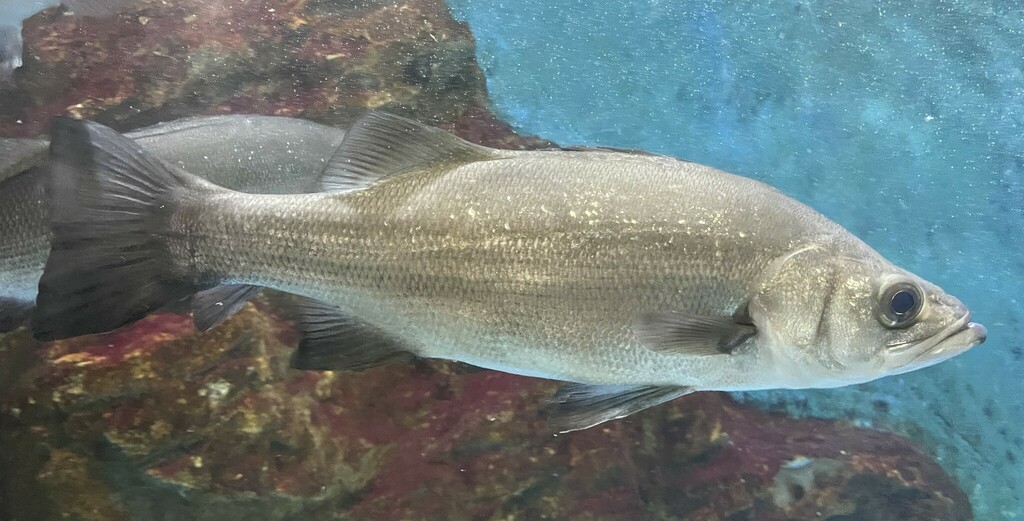
Blackfin seabass
How deep this species sits, how big a typical fish is, and when it spawns are three separate questions, and the answers sit in different places. This page follows each one back to the source that actually measured it instead of borrowing a number from a summary. That is the first thing to understand about the blackfin seabass — it is a fish you have to look up in more than one book.
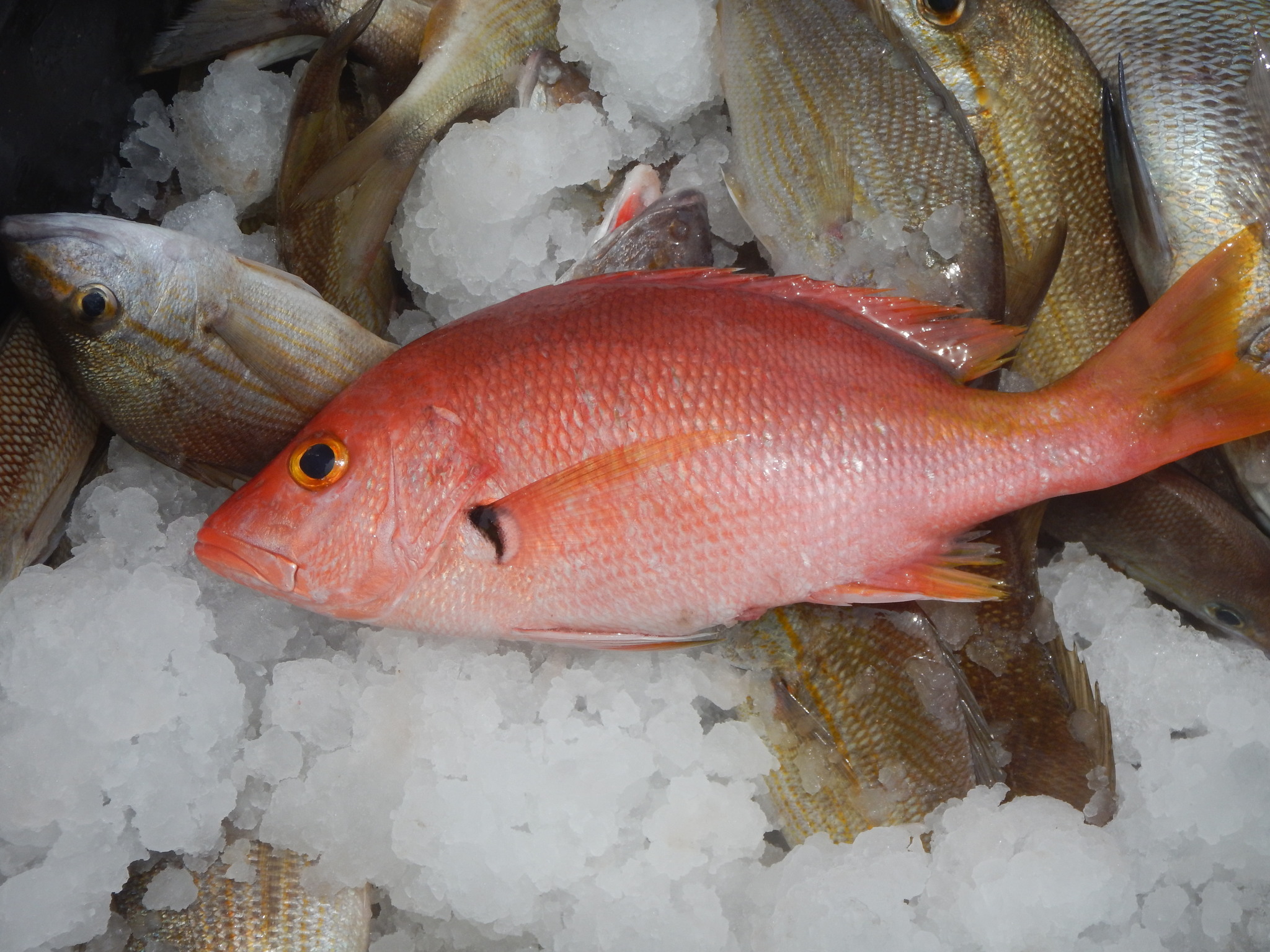
Blackfin snapper
Blackfin snapper is a Lutjanidae snapper of the 80–150 m slope, recorded from North Carolina and Bermuda through the Gulf and Caribbean to Brazil. It is red with a black pectoral blotch, reaches 75 cm and 14 kg, and is taken on cut bait fished tight to the bottom.
Blackfin tuna
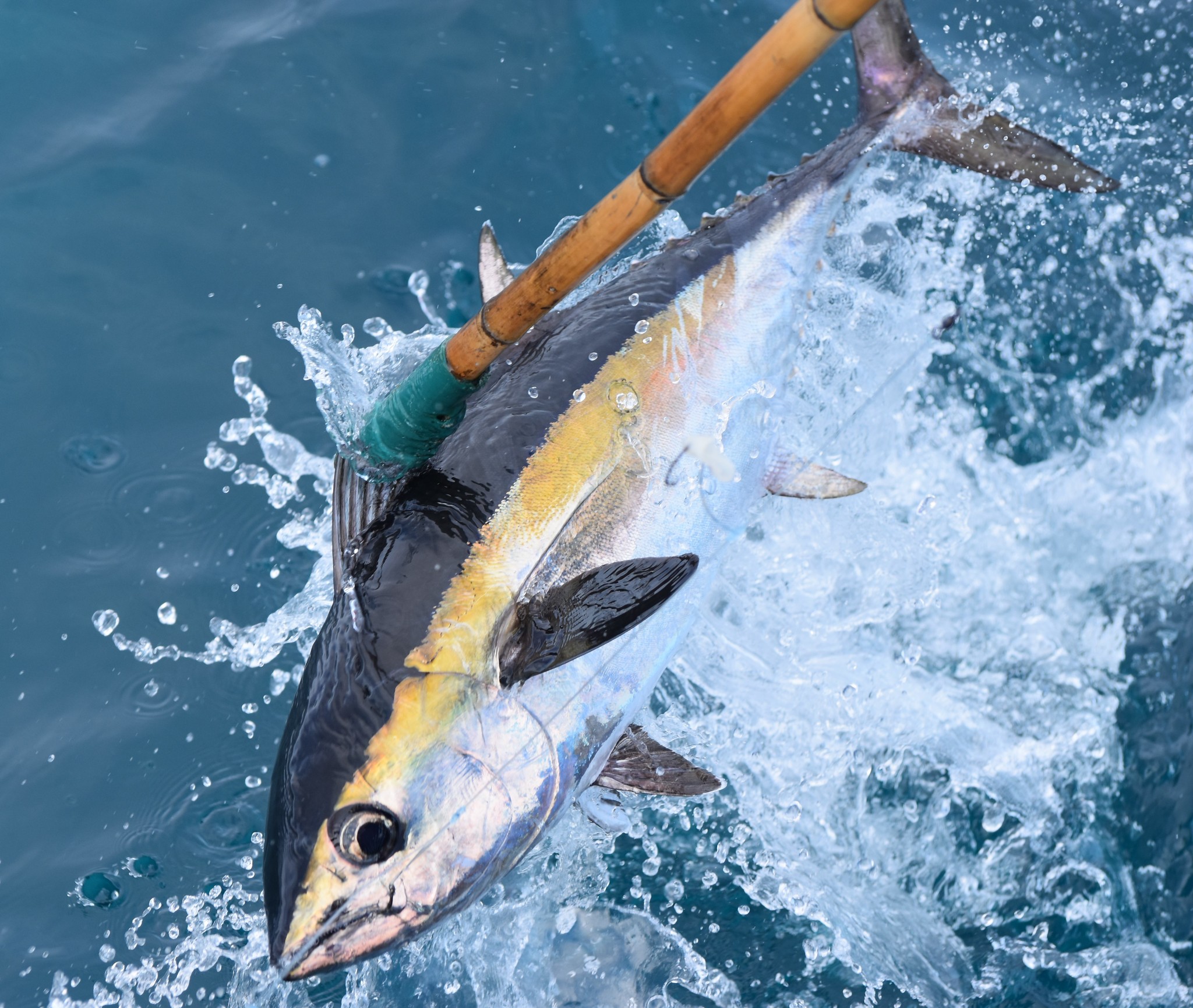
Blackfin tuna is a small scombrid of the western Atlantic, from Martha's Vineyard and Massachusetts south to Trinidad and Rio de Janeiro. It lives from the surface to 50 m in tropical water, reaches 108 cm FL and 20.6 kg, and feeds on fish. Trolling or jigging is the usual approach, with the season running April to November.
Blackmouth catshark
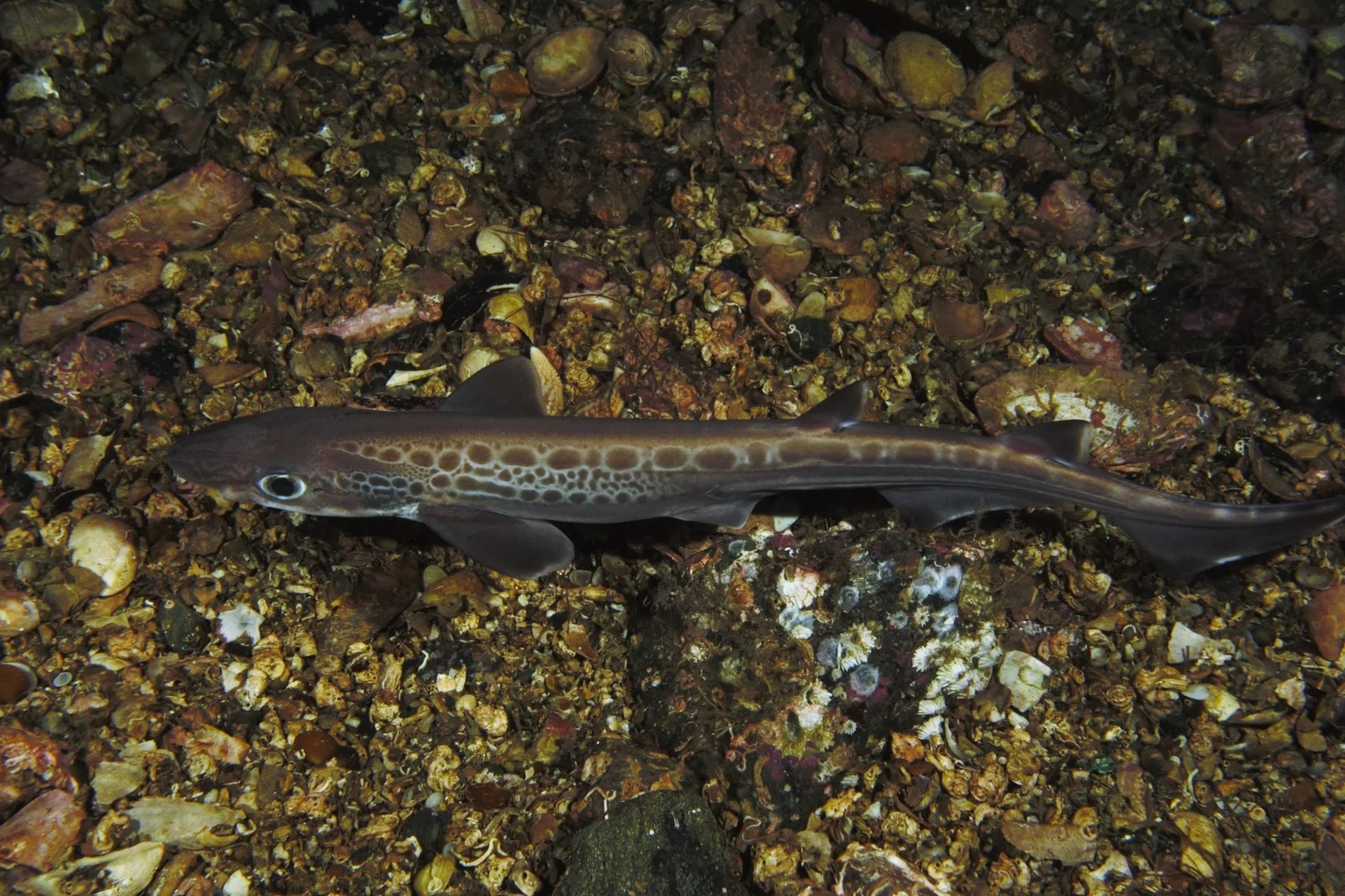
The blackmouth catshark is a small deep-slope shark in the family Pentanchidae, ranging through the Northeast Atlantic from the Faroe Islands and Trondheim south to Senegal and into the Mediterranean. Its depth record spans 55 to 1873 metres, though it is usually taken between 150 and 1200, which places most of the population beyond ordinary recreational range. Only a minor commercial fishery is recorded and there is no gamefish tag, so it is largely a bycatch and observation species.
Blackmouth croaker
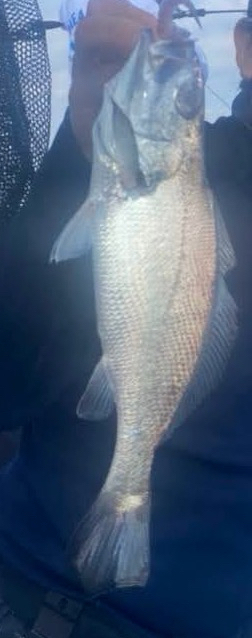
Blackmouth croaker is a deep-water sciaenid of the Indo-West Pacific, from Mozambique and Natal through India, China, Japan, the Philippines and Indonesia to northern Australia. It lives on sandy, muddy and gravelly ground at 45 to 200 m, usually to about 120 m, and is a commercial and boat-fishing target. It reaches 45 cm SL with a common length of 25 cm and maturity at about 14.5 cm.

Blacksaddle coral grouper
Blacksaddle coral grouper is one of the larger coral groupers of the Indo-Pacific, from Kenya and Mozambique east to the Tuamotus, north to the Ryukyus and south to Queensland. It lives from 4 to 100 m in tropical water, reaches 125 cm TL and 24.2 kg. Boat bottom fishing or slow-pitch jigging is the usual approach, with the season running October to November.
Blackspot grouper
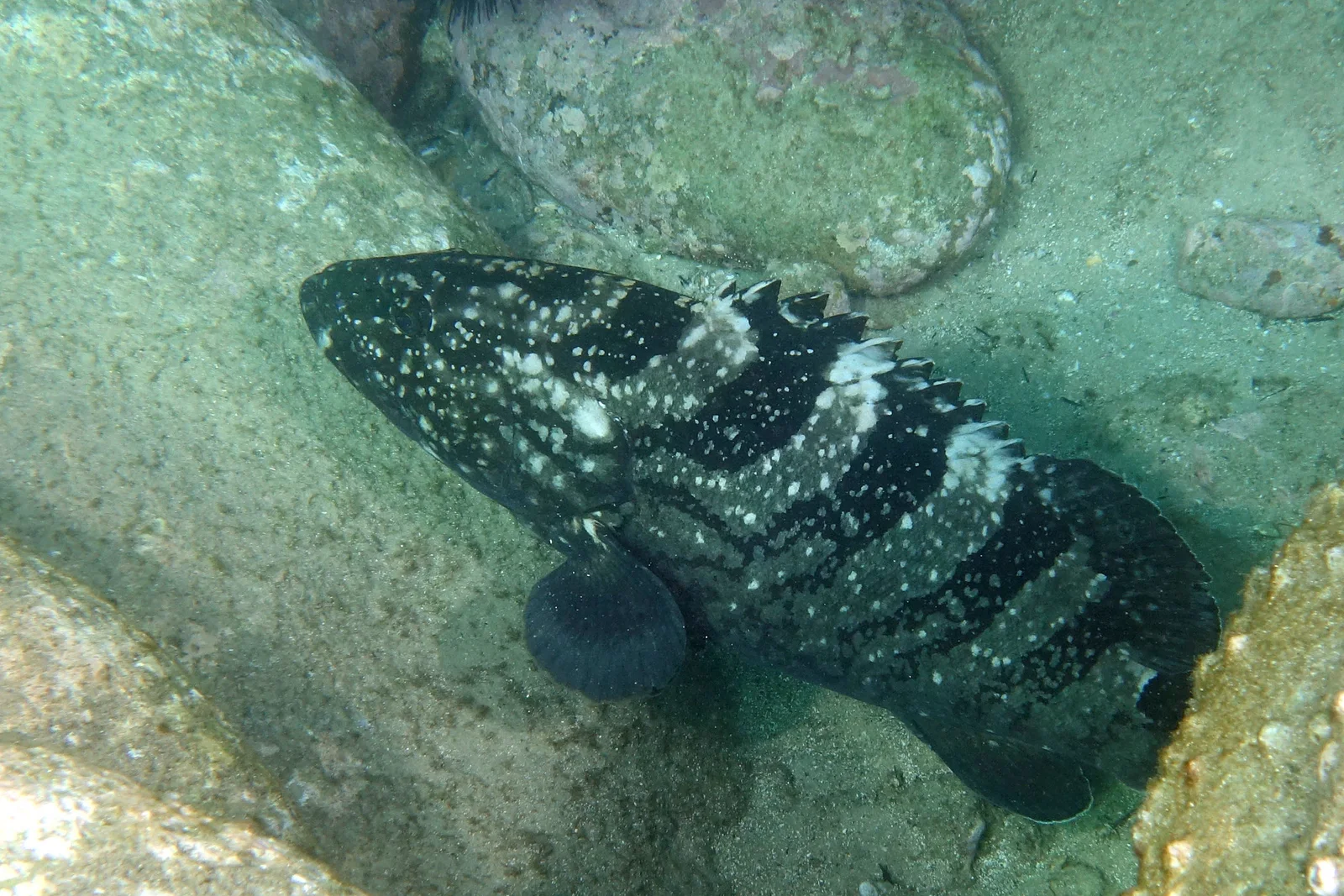
Blackspot grouper is a large reef grouper of the southwest Pacific, from Australia and Lord Howe, Norfolk and the Kermadec islands to New Zealand's North Island. It lives shallower than 50 m in subtropical water, reaches 200 cm and 68 kg, and feeds on fish. Boat bottom fishing or rock fishing is the usual approach.
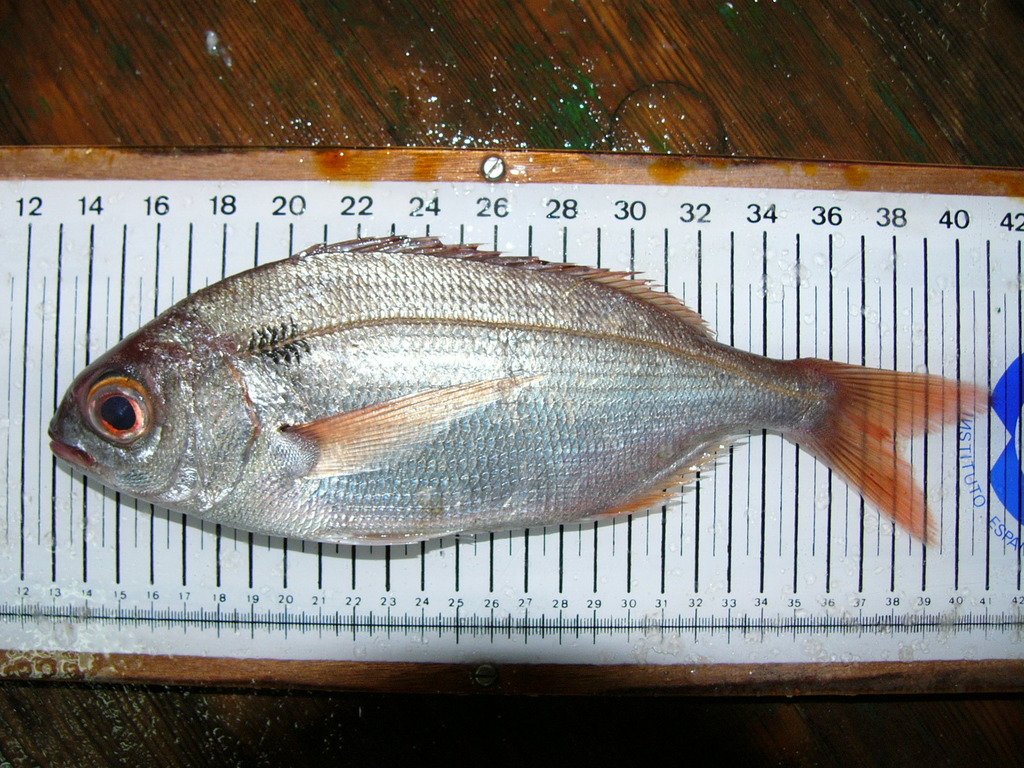
Blackspot seabream
Blackspot seabream is a deep-water sparid of the eastern Atlantic and Mediterranean, from Norway and Gibraltar to Mauritania, Madeira and the Canaries. It lives from 150 to 700 m in temperate water, reaches 70 cm and 4 kg, can live 15 years, and feeds on crustaceans, fish and worms. Boat bottom fishing is the usual approach, with the season running January to October.
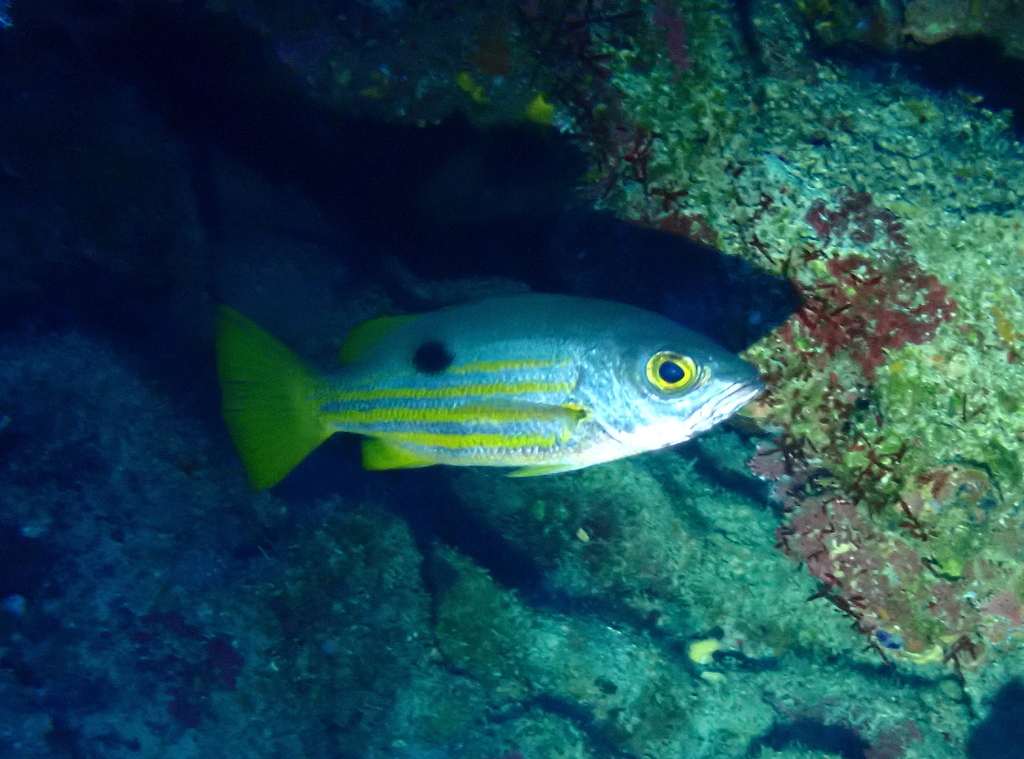
Blackspot snapper
The recorded depth range is 5 to 20 m. Fifteen metres of vertical room is the whole habitat, and that single fact reorganises everything else: no deep drop, no electric reel, no long run to the shelf. The species lives in the layer a shore angler can reach with a modest cast, and the question is not how deep to go but where inside that shallow band to stand.
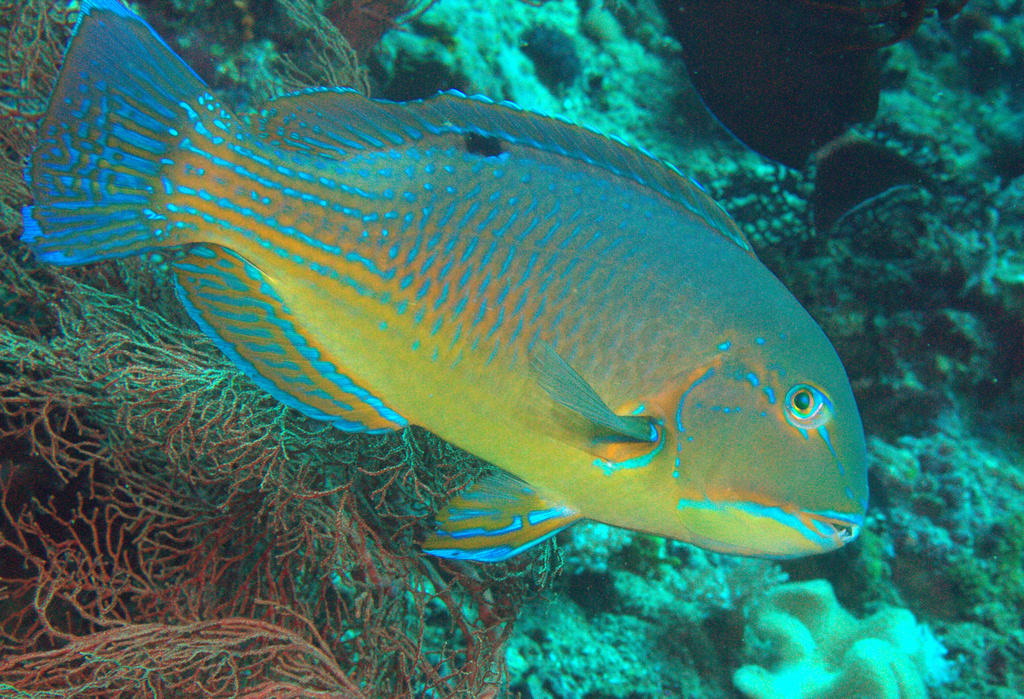
Blackspot tuskfish
Blackspot tuskfish is a labrid of the Indo-West Pacific, from the Ryukyu Islands south to Australia and Indonesia. It lives from 10 to 60 m in tropical water, reaches 100 cm TL and 15.5 kg, and feeds on crustaceans, fish and echinoderms. It is present year-round.

Blackspotted smooth-hound
A small shark that is presumably viviparous and matures late: females reach about 95 cm before they breed. The blackspotted smooth-hound usually arrives as bycatch on inshore bottom ground, and whether it goes back is not about one meal but about the next generation.
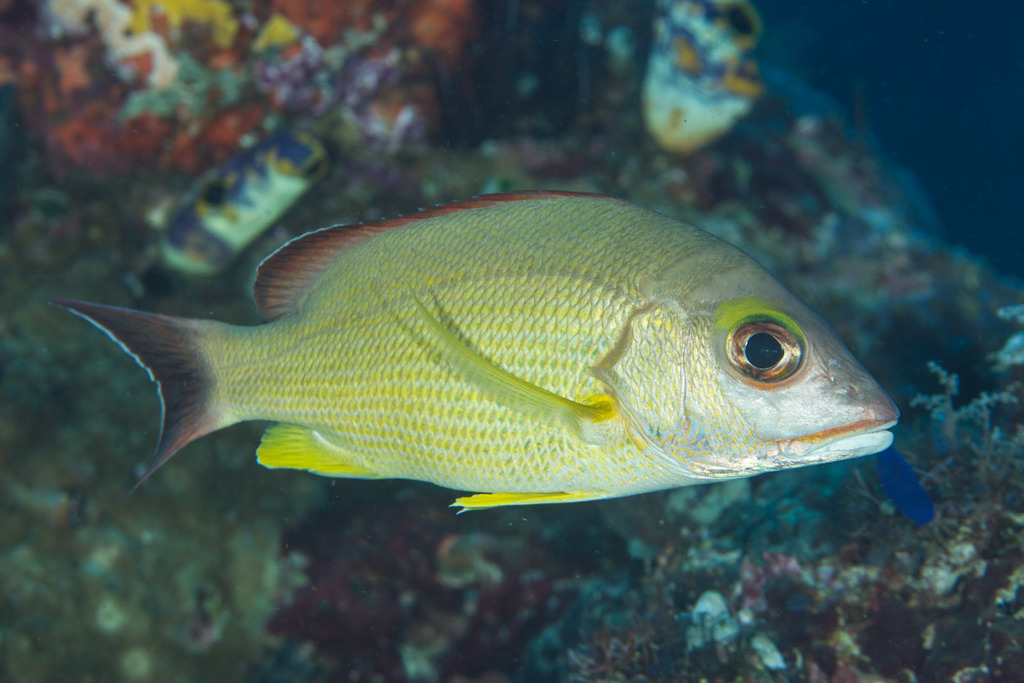
Blacktail snapper
Blacktail snapper is a small, fusiform lutjanid of the Indo-Pacific, from East Africa to the Marquesas and Line Islands, north to southern Japan and south to Australia. It works shallow reef from 1 to 80 m in water of 20 to 28 degrees C and feeds on fish and molluscs. Fish reach 40 cm TL and 0.82 kg, and it can live 34 years, a long life for a snapper of that size. It is present year-round.
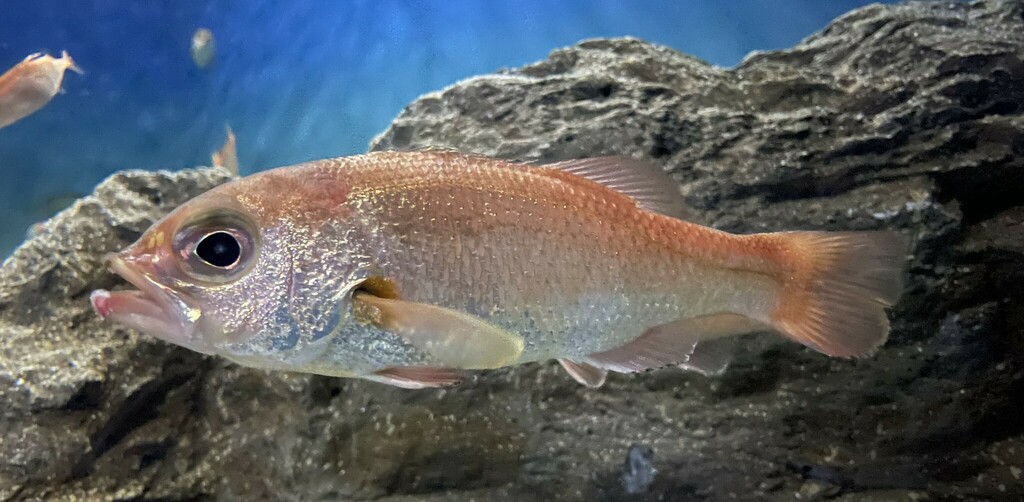
Blackthroat seaperch
Blackthroat seaperch is a heavy-bodied acropomatid of the eastern Indian Ocean and western Pacific, from northwest Japan to northwest Australia. It lives from 100 to 600 m in tropical water, reaches 40 cm TL, and feeds on crustaceans. Its dark throat gives it the Japanese name nodoguro.
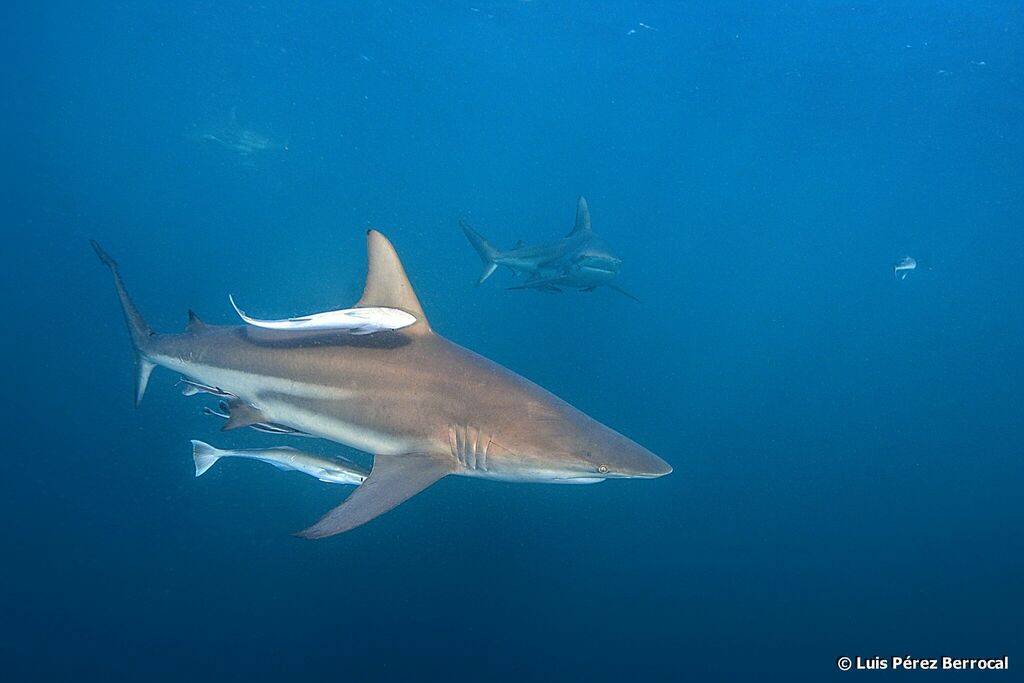
Blacktip shark
Blacktip shark is a requiem shark of warm coastal waters around the world, recorded from the surface to 140 m. It reaches 286 cm and 122.8 kg, lives up to 12 years, and feeds on crustaceans, fish and molluscs. Boat or shore fishing is the usual approach, with the season running April to December.
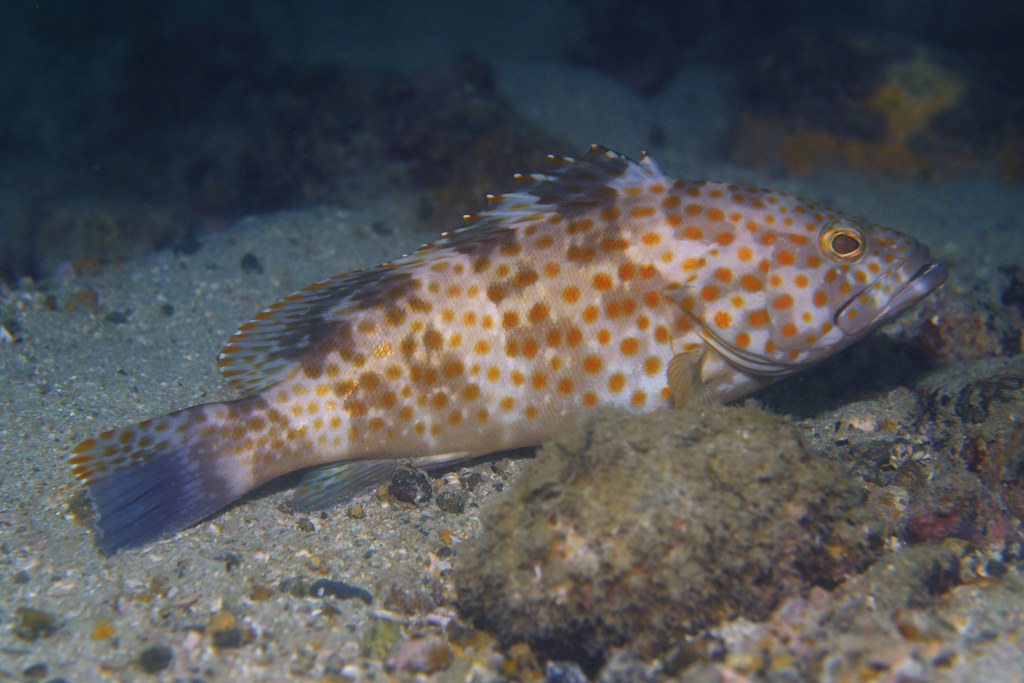
Bleeker's grouper
Bleeker's grouper is a reef and estuary-edge grouper of the Indo-West Pacific, from the Persian Gulf through Taiwan and Indonesia to northern Australia. It lives from 30 to 105 m in tropical water, reaches 76 cm, and feeds on fish. Boat bottom fishing is the usual approach.

Blonde ray
Blonde ray is a large rajid skate of the eastern Atlantic, from the Shetland Islands down to Morocco, Western Sahara and Madeira. It works shelf and slope ground between 10 and 380 m, with the shallow end of that range inside reach of small-boat sand marks. Fish reach 120 cm TL and 14.3 kg, and the season runs February to August.
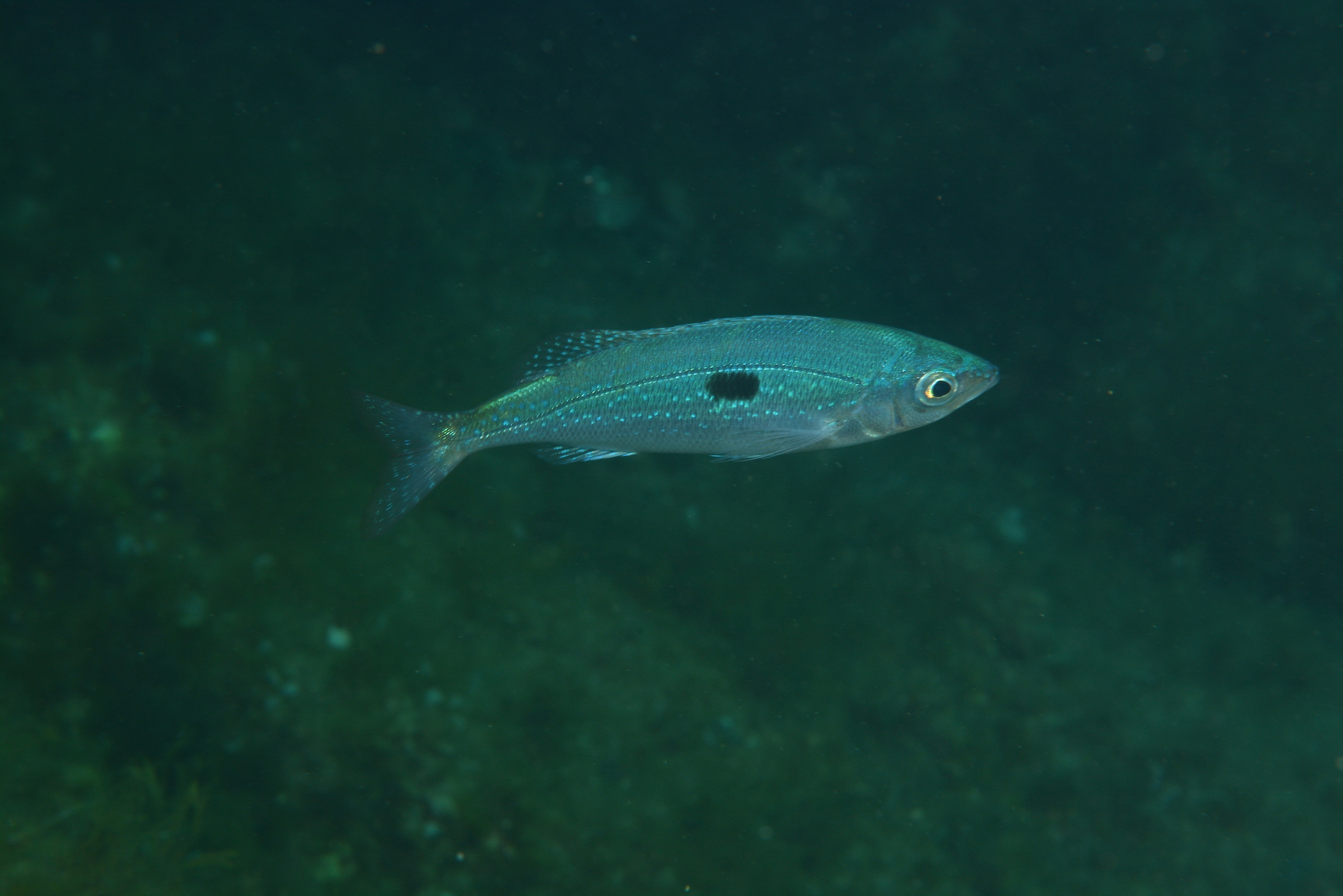
Blotched picarel
The blotched picarel earns its own entry for its sex life rather than its table value: it matures as a female and later turns male, so the biggest fish in a school has usually already changed. At the boat it is separated from the picarel by body depth, blotch size and lateral-line scale counts, none of which depends on colour.
No fish match this water on this page. Clear the filter or choose another habitat.