
What fish are on your coast? — page 15 of 16
Choose the water you fish: shore, reef, surf or deep water. Then open a fish to see what it eats, when it comes in, and how to catch it.
Species records
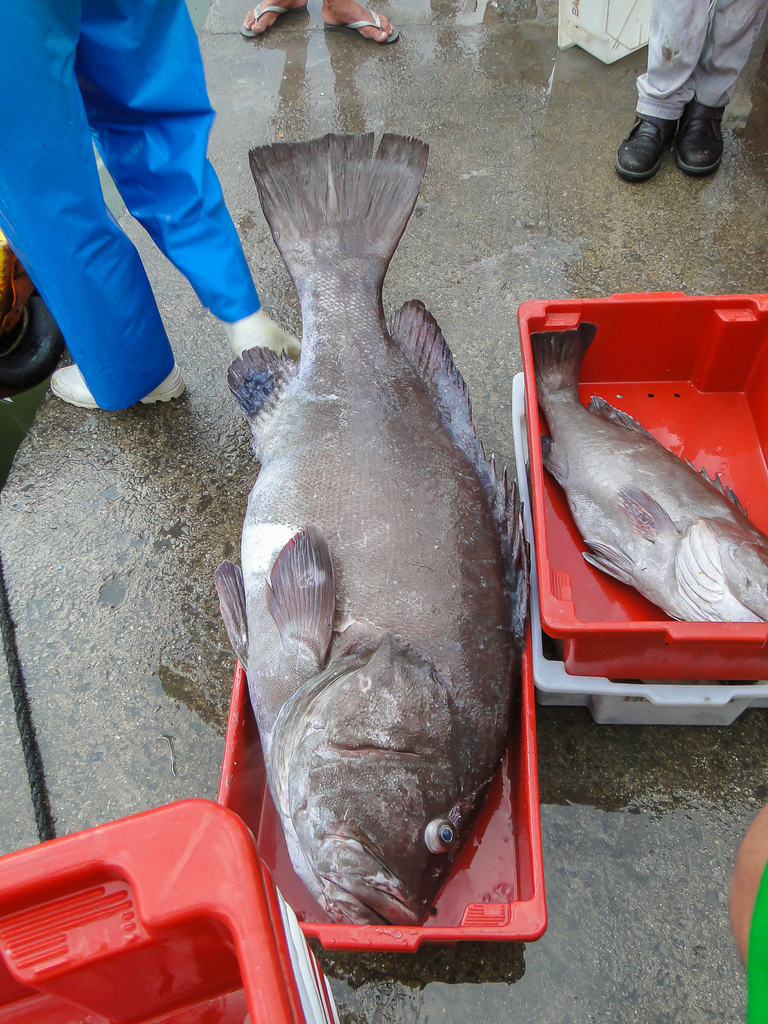
Warsaw grouper
Warsaw grouper is the largest western Atlantic grouper, recorded to 230 cm and 198.1 kg with a maximum age of 91 years. It lives on rocky bottom from 55 to 525 m, spawns off Cuba in April and May, and is managed under a federal limit of 1 fish per boat per day with no minimum size.
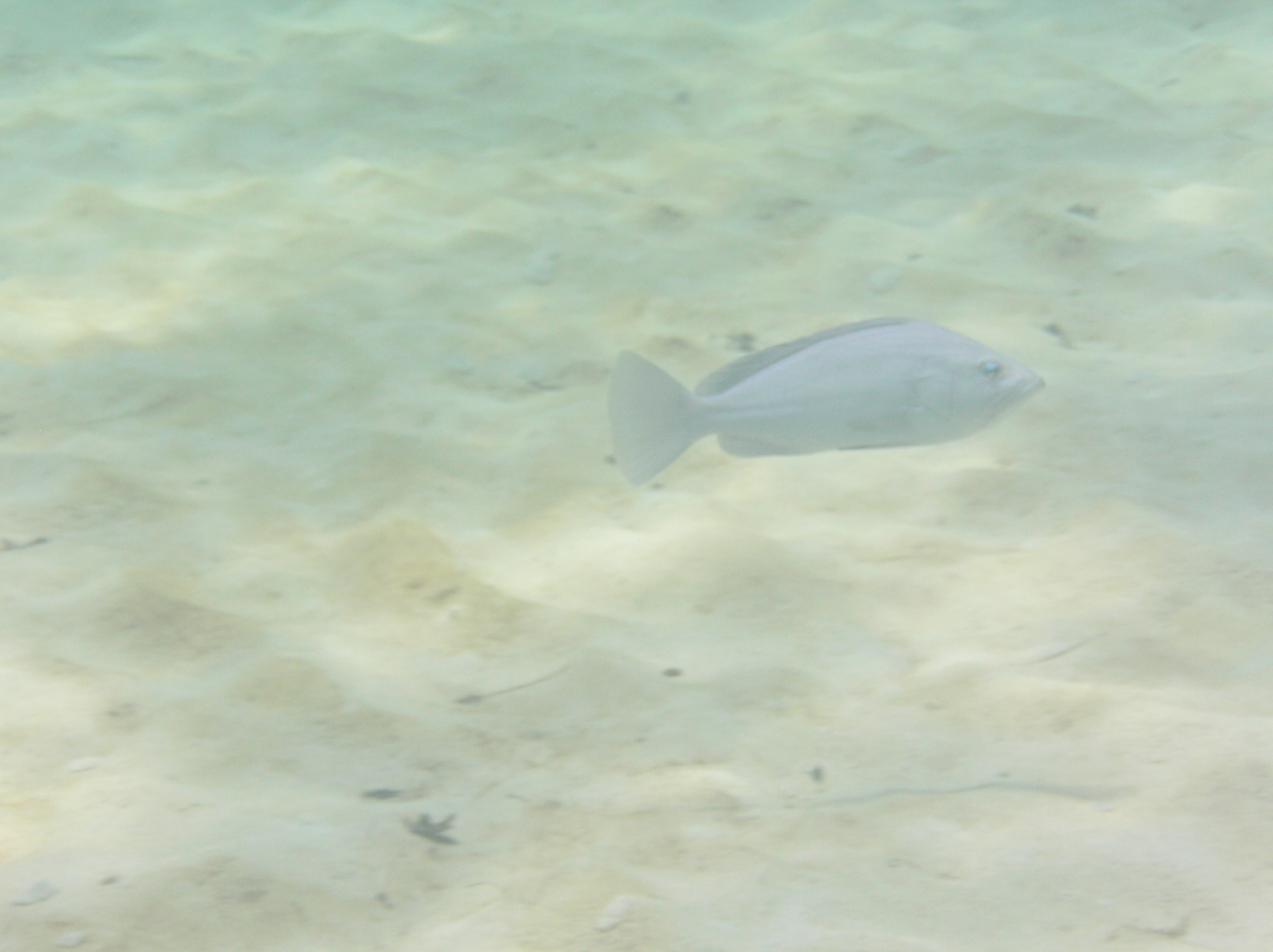
Wavy-lined grouper
Most grouper pages start with a reef. Epinephelus undulosus lives on muddy open substrate and uses holes in the mud, solid structures, shipwrecks and debris as cover. It is described as flighty, and as solitary. That single sentence changes the whole approach: the fish is not waiting on a coral head for a bait to drift past.
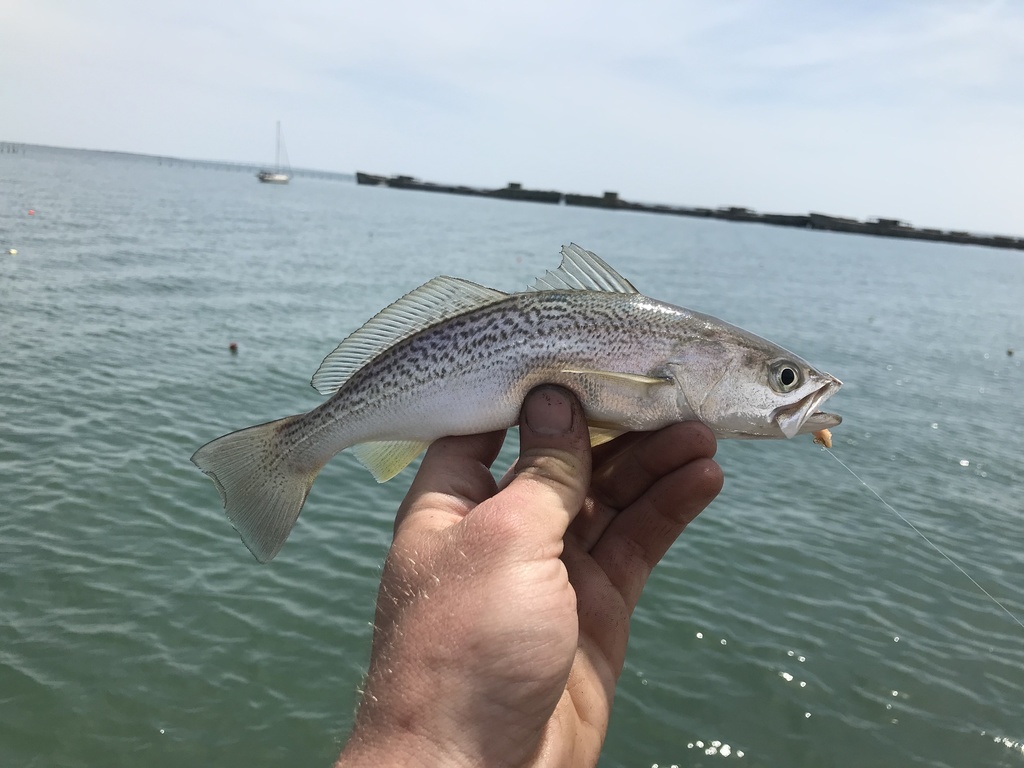
Weakfish
Weakfish is recorded across the Western Atlantic, from Nova Scotia, Canada to northern Florida, USA, within the family Sciaenidae. It tops out at 98 cm TL and 8.9 kg, on a diet of crustaceans and fishes. The standard approach is boat fishing or shore casting. The season runs March to September, in water of 17 to 27 °C.
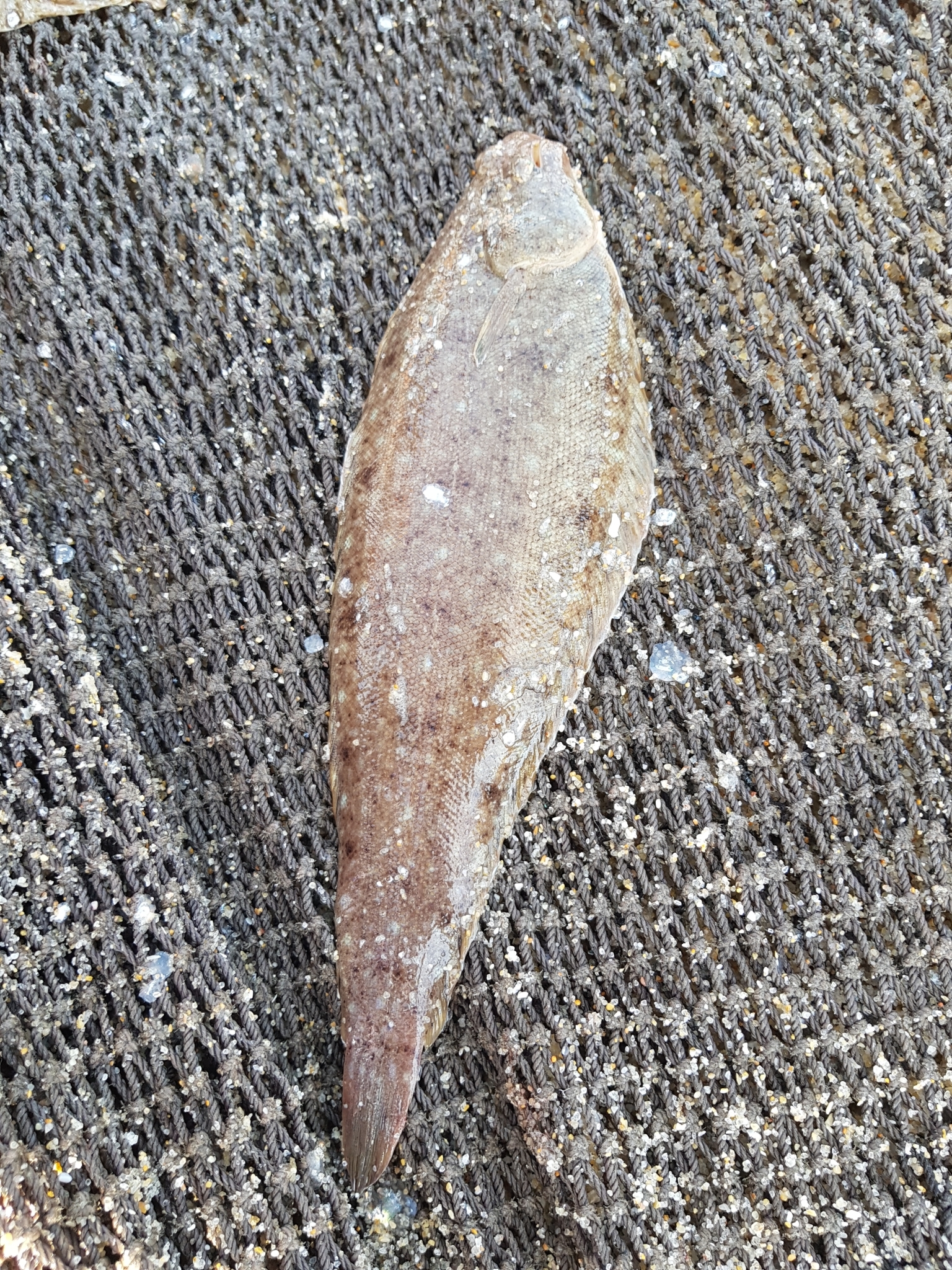
Wedge sole
Wedge sole is a small sole of the eastern Atlantic and the western Mediterranean, recorded from the Bay of Biscay south to the Cape of Good Hope. It reaches 30 cm SL with a common length of 20 cm TL and matures at 17.1 cm. It lives between 10 and 460 m. The season covers every month except October, and boat bottom fishing and shore casting are the methods listed.
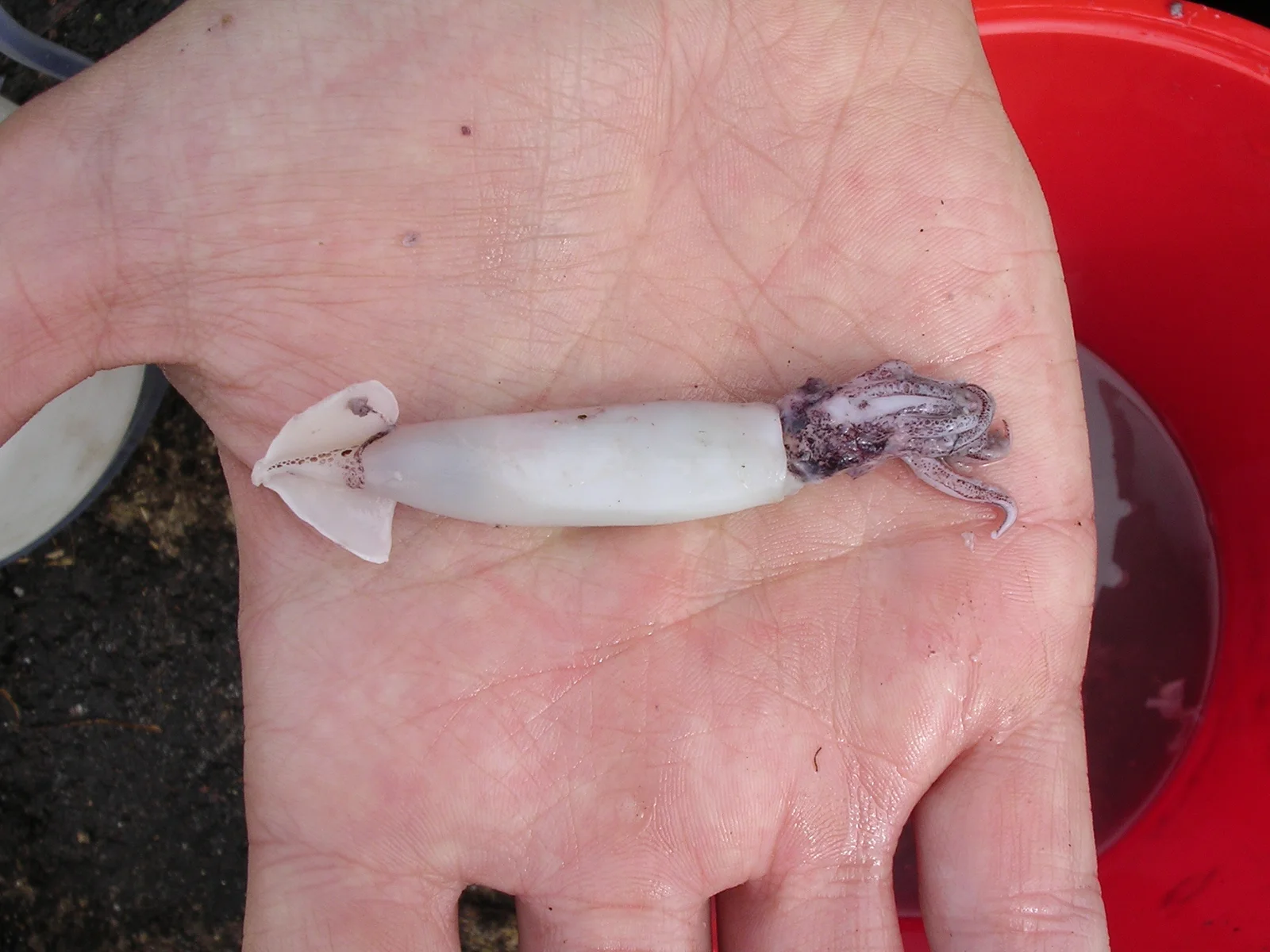
Wellington flying squid
Wellington flying squid is found across the Southwest Pacific, in the New Zealand. Its depth range is from 0 to 500 m, in temperate seas. Fish reach 42 cm ML and 1.8 kg. The standard approach is boat fishing, trolling or handline.
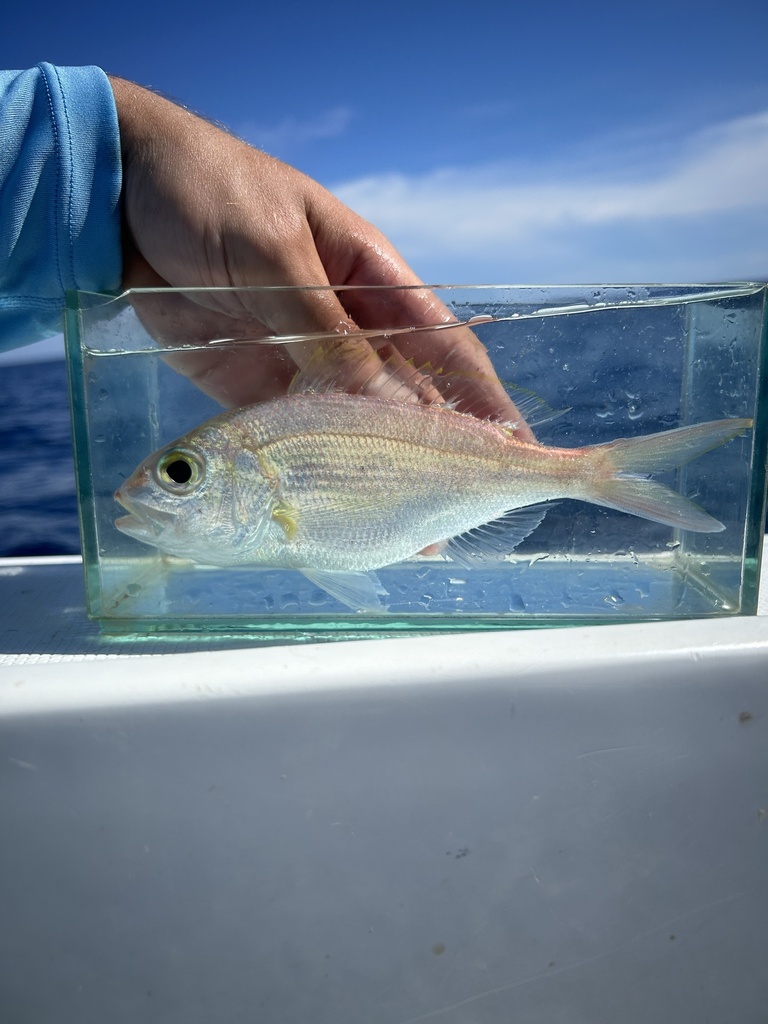
Wenchman
Wenchman is a Lutjanidae snapper of deep demersal water from 24 to 370 m, usually 50 to 250 m, reaching 56 cm and 2 kg with a common length near 20 cm. It feeds on small fish and is taken on small deep-drop rigs with squid or cut bait.
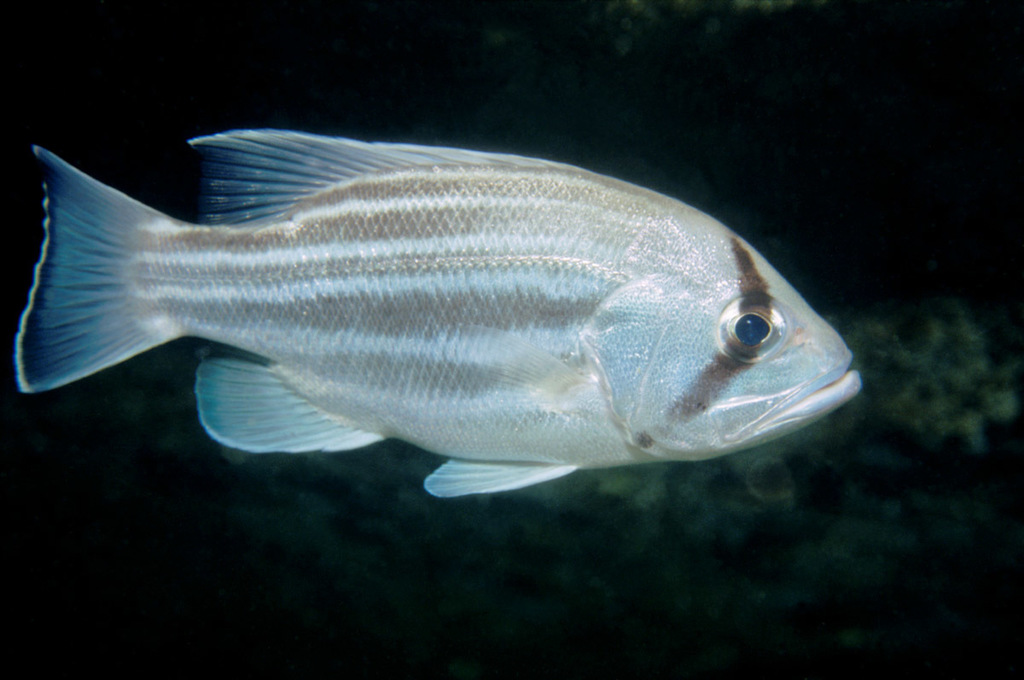
West Australian dhufish
West Australian dhufish is a big, broad-bodied reef fish of the eastern Indian Ocean, known to Western Australian anglers simply as dhufish. It lives from 1 m down to 200 m and feeds on fish, and large specimens reach 122 cm TL and 26 kg. The season runs from November through April, so the warm months either side of the new year are when it is targeted.

West Coast steenbras
West Coast steenbras is a southeast Atlantic sparid, from Angola to South Africa. It is a big, slow-lived fish: 100 cm TL, 19.3 kg, a maximum age of 50 years and first maturity at 46.4 cm. IUCN assessed it as Endangered in July 2024. Shore fishing and boat bottom fishing are the methods listed, and the depth given is only 1 m or deeper.

Western blue groper
Western blue groper is a large labrid of southern Australian reefs, also listed as blue groper, Gould's wrasse, parrotfish and western blue wrasse. It lives from 5 to 65 m in subtropical water, reaches 175 cm TL and 39 kg, and can live 70 years. It is recorded from June to October.
Whiparm octopus
Whiparm octopus (Octopus variabilis) is a cephalopod of the family Octopodidae. SeaLifeBase gives its range as: Northwest Pacific: Japan, Korea and China. It is recorded from 1 to 200 m, in temperate water. The recorded maximum is 70 cm TL.
White croaker
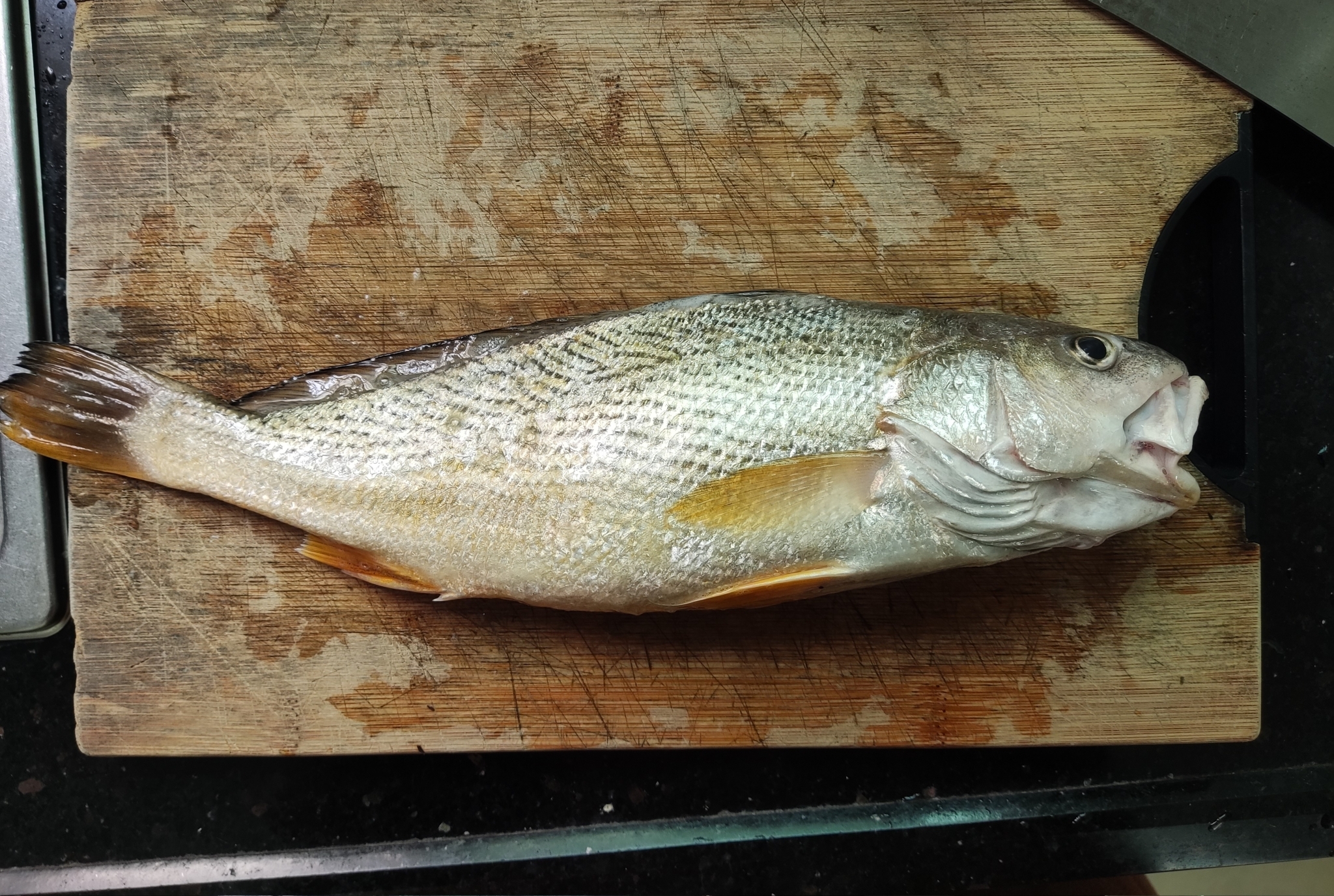
White croaker is recorded across the Northwest Pacific, from southern Japan and East China Sea, within the family Sciaenidae. It is caught from 25 to 80 m, in temperate water. Fish reach 43.5 cm SL and 1.5 kg. Anglers target it by boat bottom fishing or shore casting. The season runs May to August.
White grouper
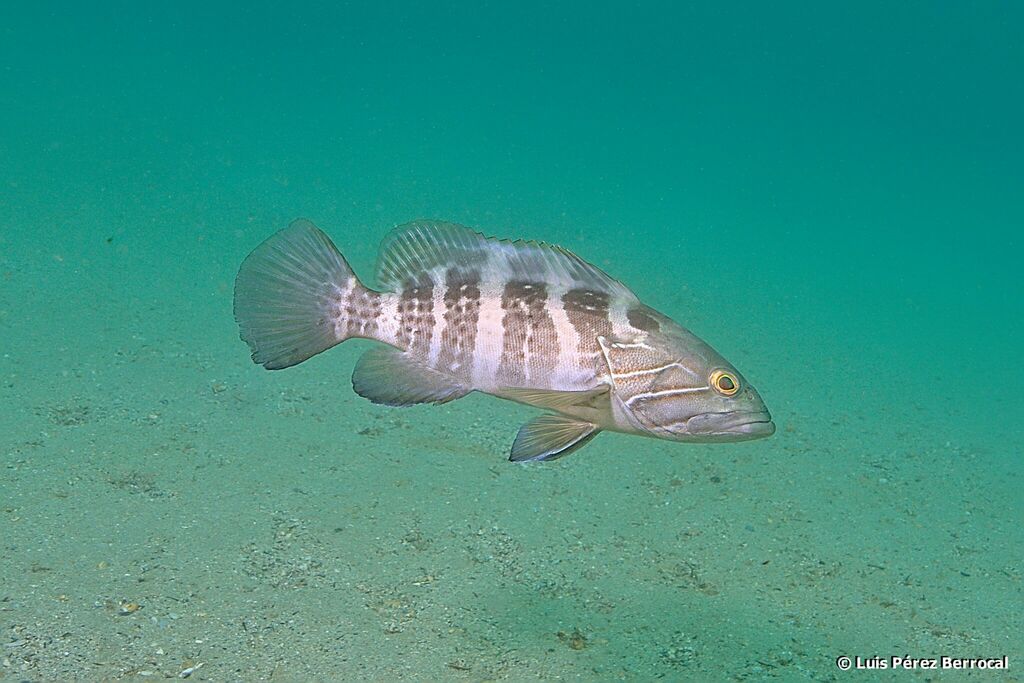
White grouper is a fish of moving salinity before it is a fish of any one rock. The record runs from estuary mud to the 200 m shelf edge and calls the species oceanodromous, so the first decision is where on that gradient the boat is working — find the water, then find the structure.
White grunt
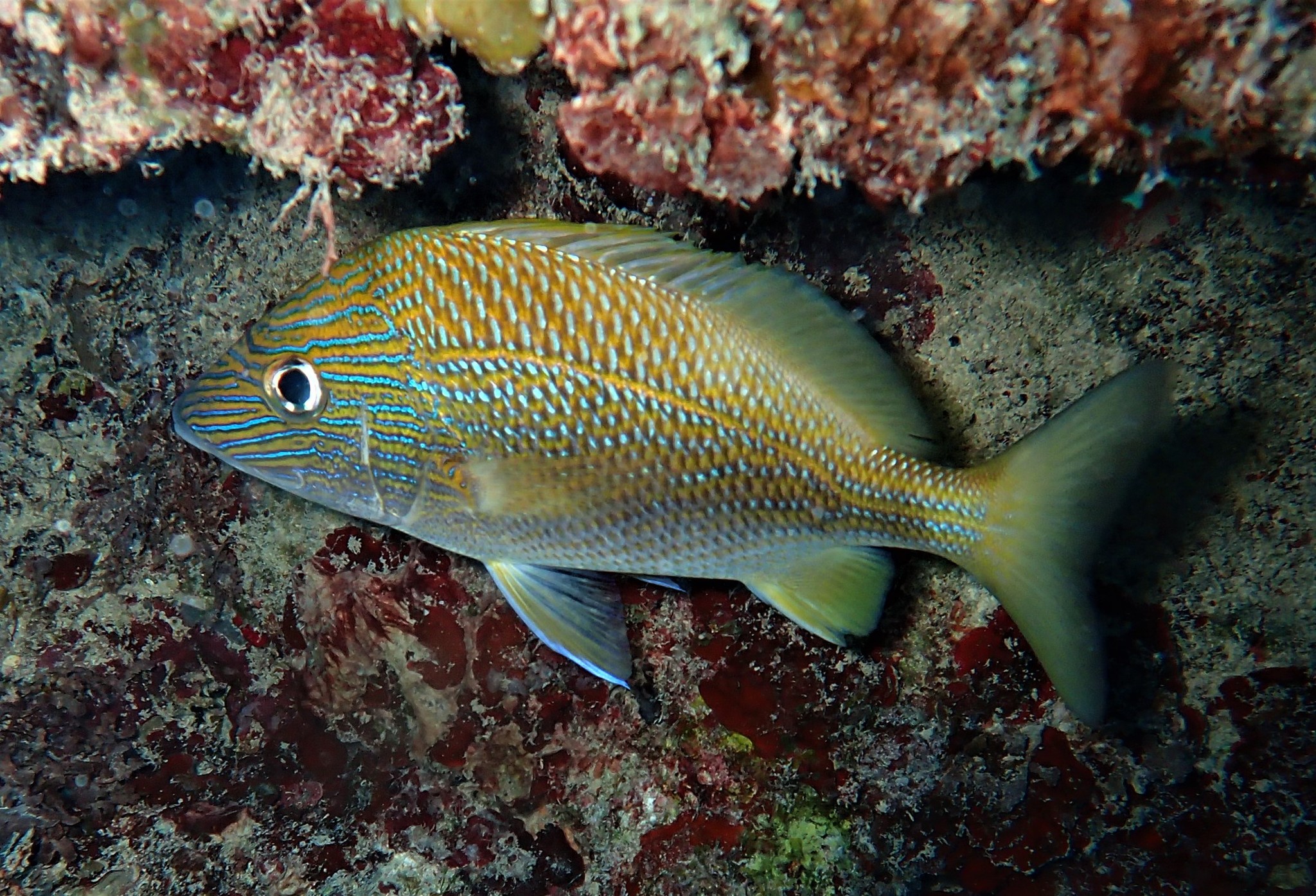
White grunt is a schooling haemulid of the western Atlantic, from Chesapeake Bay through the Gulf of Mexico and Caribbean down to Brazil. It is a shallow fish, caught between 3 and 40 m, and feeds on crustaceans and small fish. Adults reach 53 cm TL and 4.4 kg and live up to 13 years. It is present year-round, and faint yellow and blue stripes separate it from other grunts.

White hake
White hake is a large phycid of the northwest Atlantic, from Labrador and the Grand Banks of Newfoundland down to the coast of North Carolina. It is a deep-water fish, recorded from 100 to 1,000 m in temperate seas, feeding on crustaceans and fish. Adults reach 133 cm TL and 21 kg and can live 23 years. April to September is the season.

White seabream
White seabream is a member of the family Sparidae and ranges across the Eastern Atlantic from Brittany (France) to Gibraltar, and Madeira I. It lives from 0 to 50 m in subtropical water. Fish reach 45 cm TL and 1.9 kg. The usual approach is shore casting or boat fishing. It is present year-round.
White snook
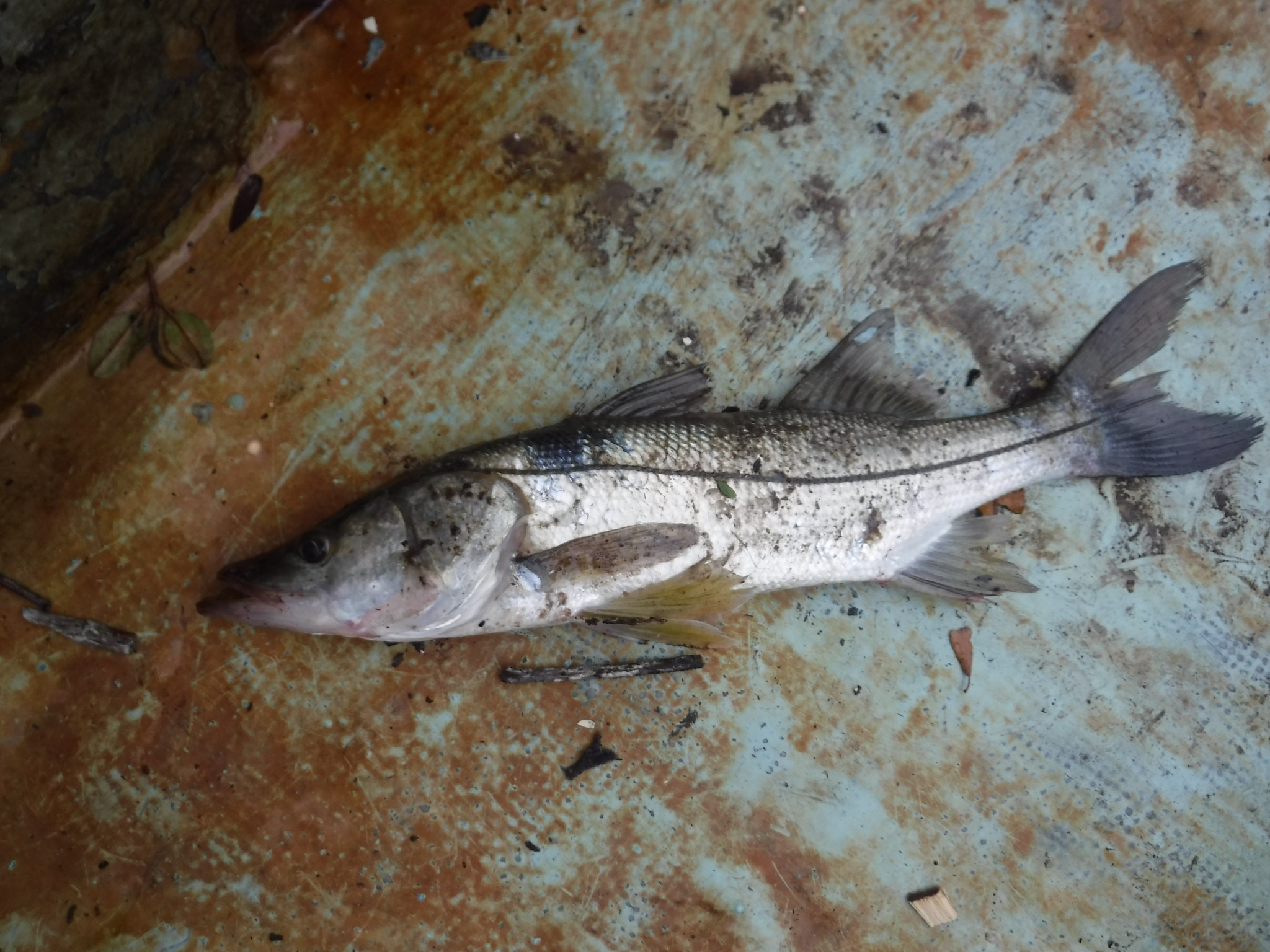
FishBase records the body as fusiform with a normal cross-section, and stops there. Within Centropomidae that description fits almost every member, so it does little to separate one snook from another. Two other lines do more work. The first is geography: in this stretch of the eastern tropical Pacific, a large snook can usually be narrowed by range alone.
White steenbras
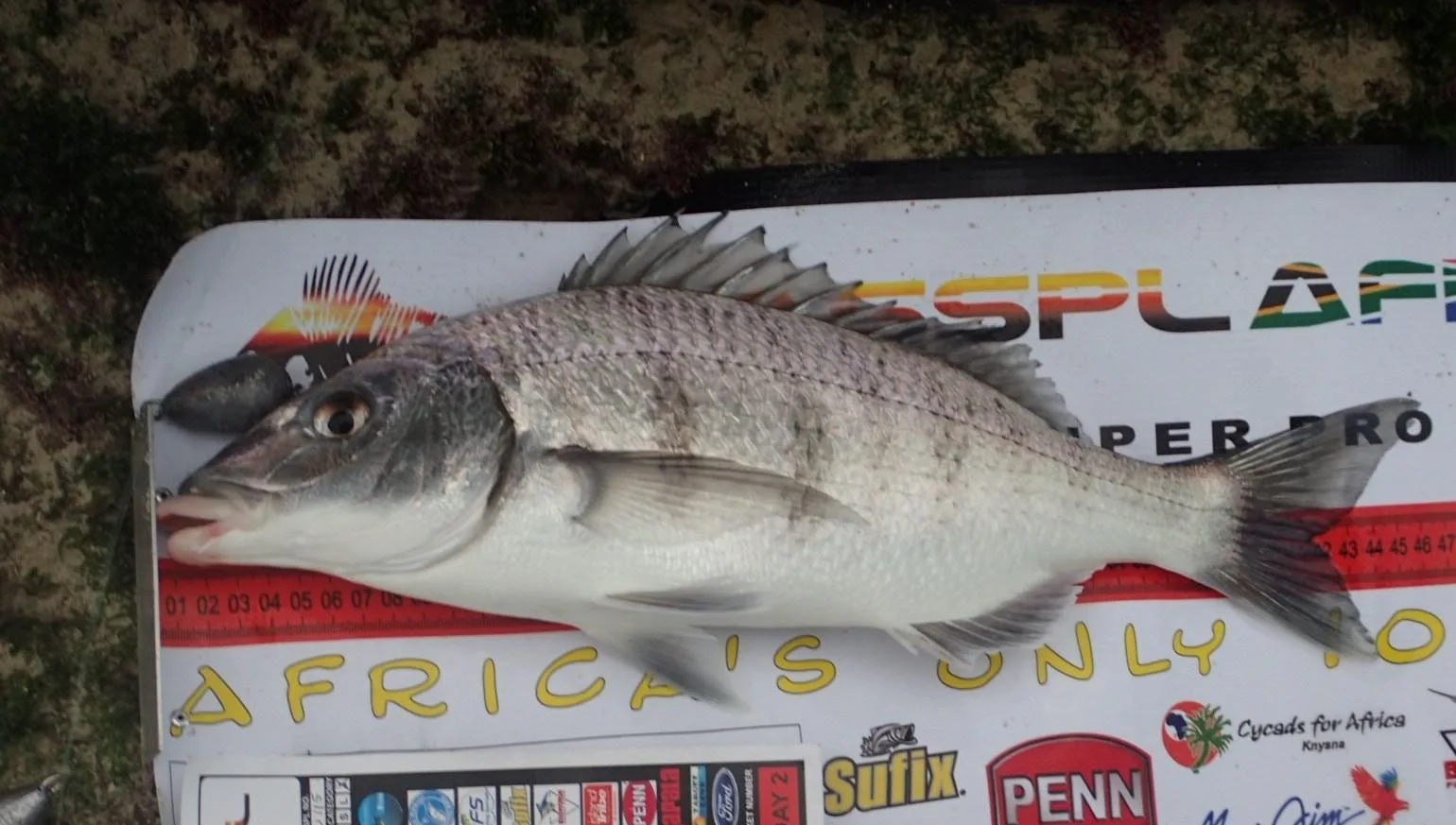
White steenbras is a sparid of the southeast Atlantic, known only from the Orange River mouth to Natal in South Africa. It lives shallower than 150 m in subtropical water, reaches 200 cm TL, and feeds on fish and worms. Its season runs June to August.

White stumpnose
Rhabdosargus globiceps is the white stumpnose, a sparid recorded to 65 cm TL, with 40 cm as the common length and maturity from 23 cm. It is a southern African fish, recorded from Angola around the coast to Natal. South Africa allows 10 per person per day at 25 cm TL, and IUCN assessed the species as Vulnerable on 11 July 2024.
White sturgeon
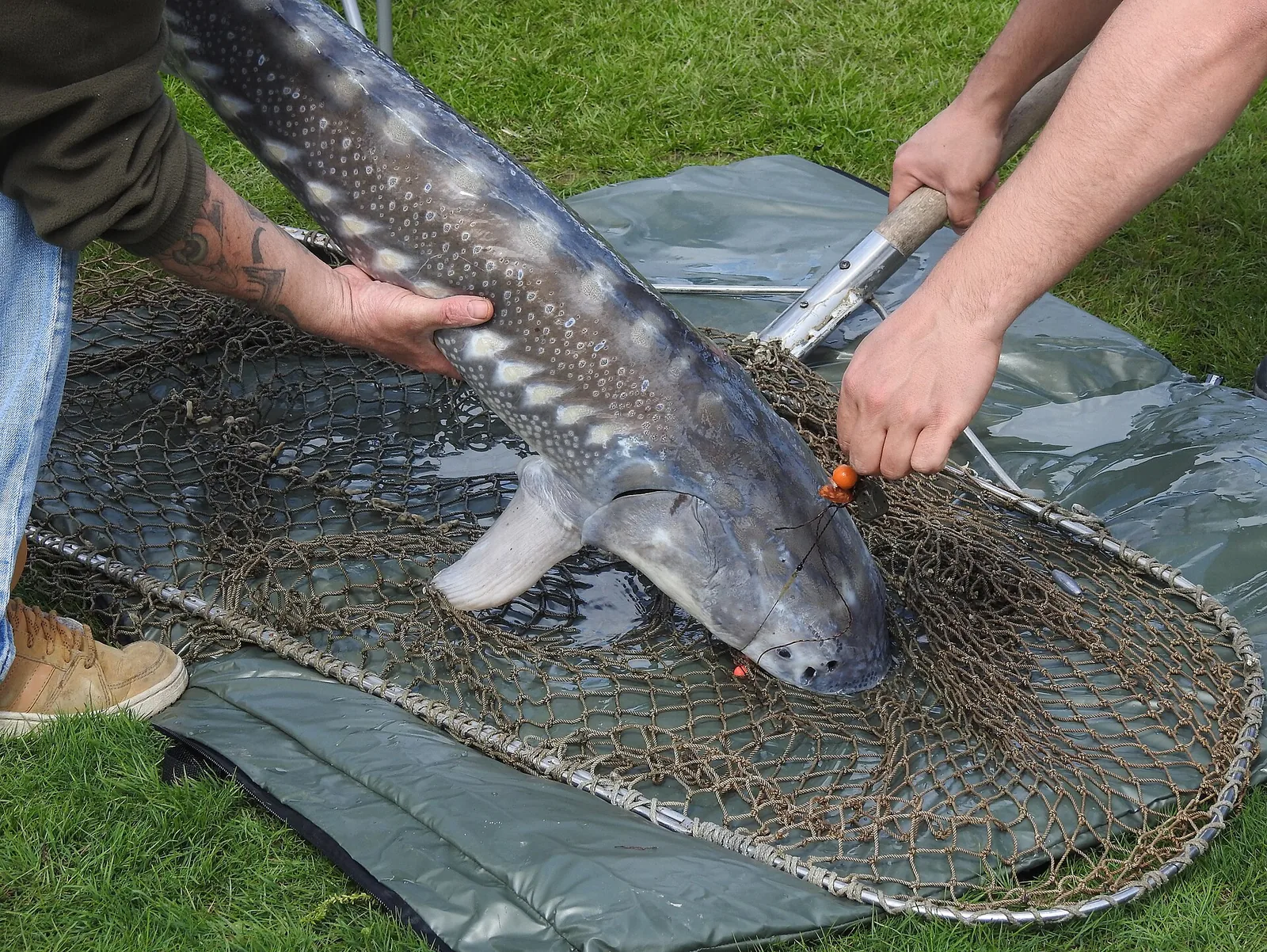
White sturgeon can reach six metres and still be hooked within sight of a city skyline. It is neither a freshwater fish nor a saltwater one; the fishable part of its life is the boundary between the two. The catalogue files it as marine, freshwater and brackish, anadromous, 1–122 m at 0–23 °C — four points on one salinity gradient.
White tilefish
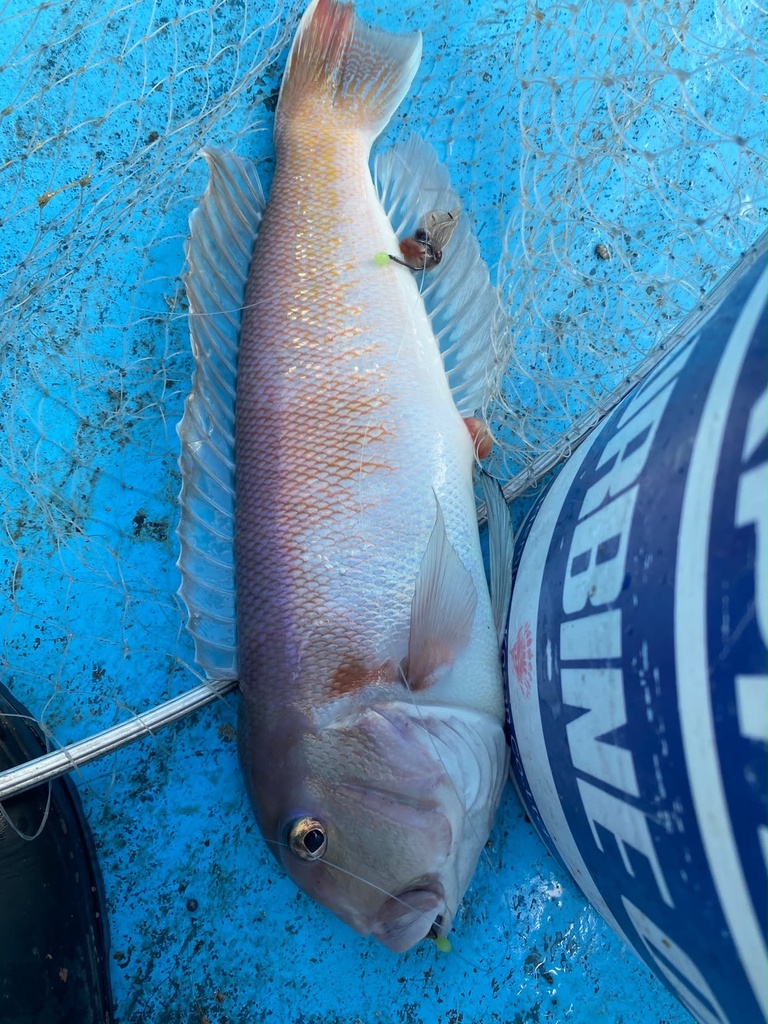
White tilefish is a deep-water branchiostegid of the Northwest Pacific, from southern Japan to the East China Sea, with records from Taiwan region, Hong Kong SAR, mainland China and Korea. It lives on sandy and muddy ground at 30–100 m and is taken by bottom trawl and deep-water boat fishing. FishBase gives a maximum of 45 cm total length.
White-edged rockfish
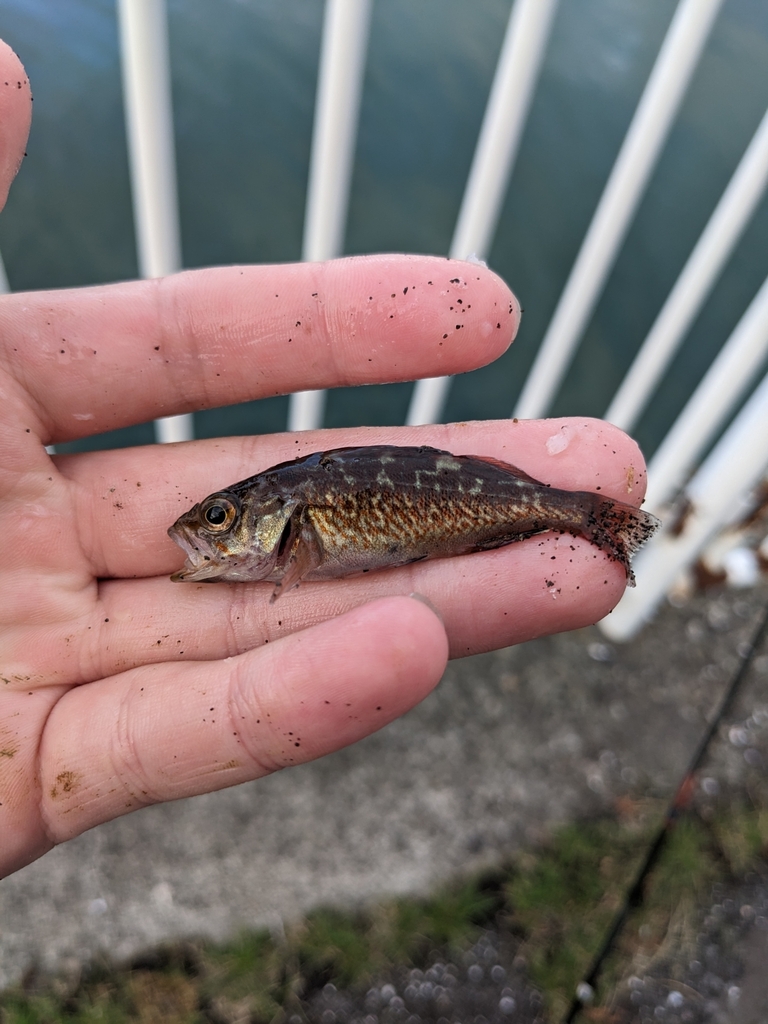
A mid-sized rockfish of Hokkaido and Tohoku, usually 20 to 30 cm, often sold simply as mebaru. It lives on rock and artificial reef from a couple of metres down to 355 m, is ovoviviparous, and is rated the best-eating fish among those the market groups as soi.
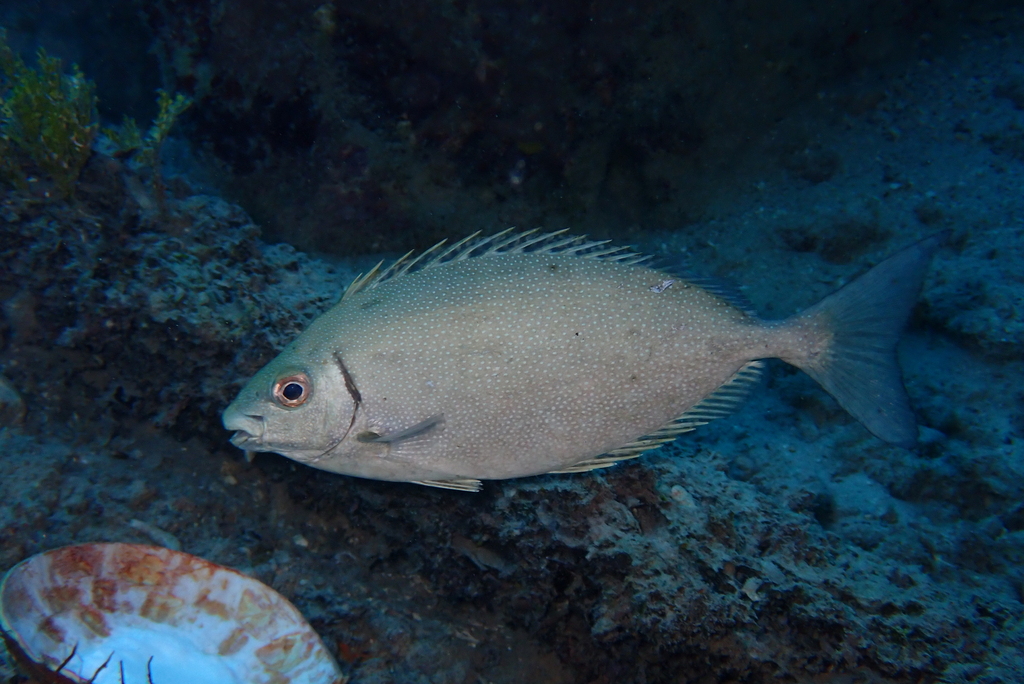
White-spotted spinefoot
Most inshore species are described by a bottom type or a depth. This one is described by a gradient. Siganus canaliculatus is recorded as oceanodromous, moving between brackish and fully marine water, and its habitat list runs from estuaries and large lagoons to inshore algae reefs.
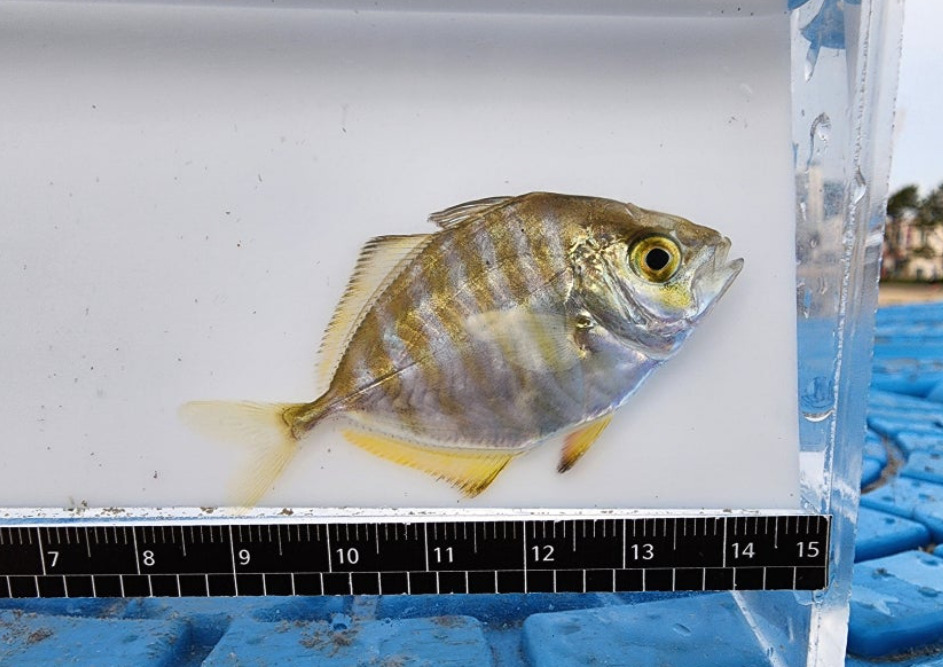
Whitefin trevally
A deep-bodied, diamond-shaped trevally and the only species in its genus. It lives on sand and mud inside 200 m, spawns in autumn, and is a standard boat-fishing target in Kanto and Kanagawa. It is small, but its flesh is compared with striped jack and red sea bream.
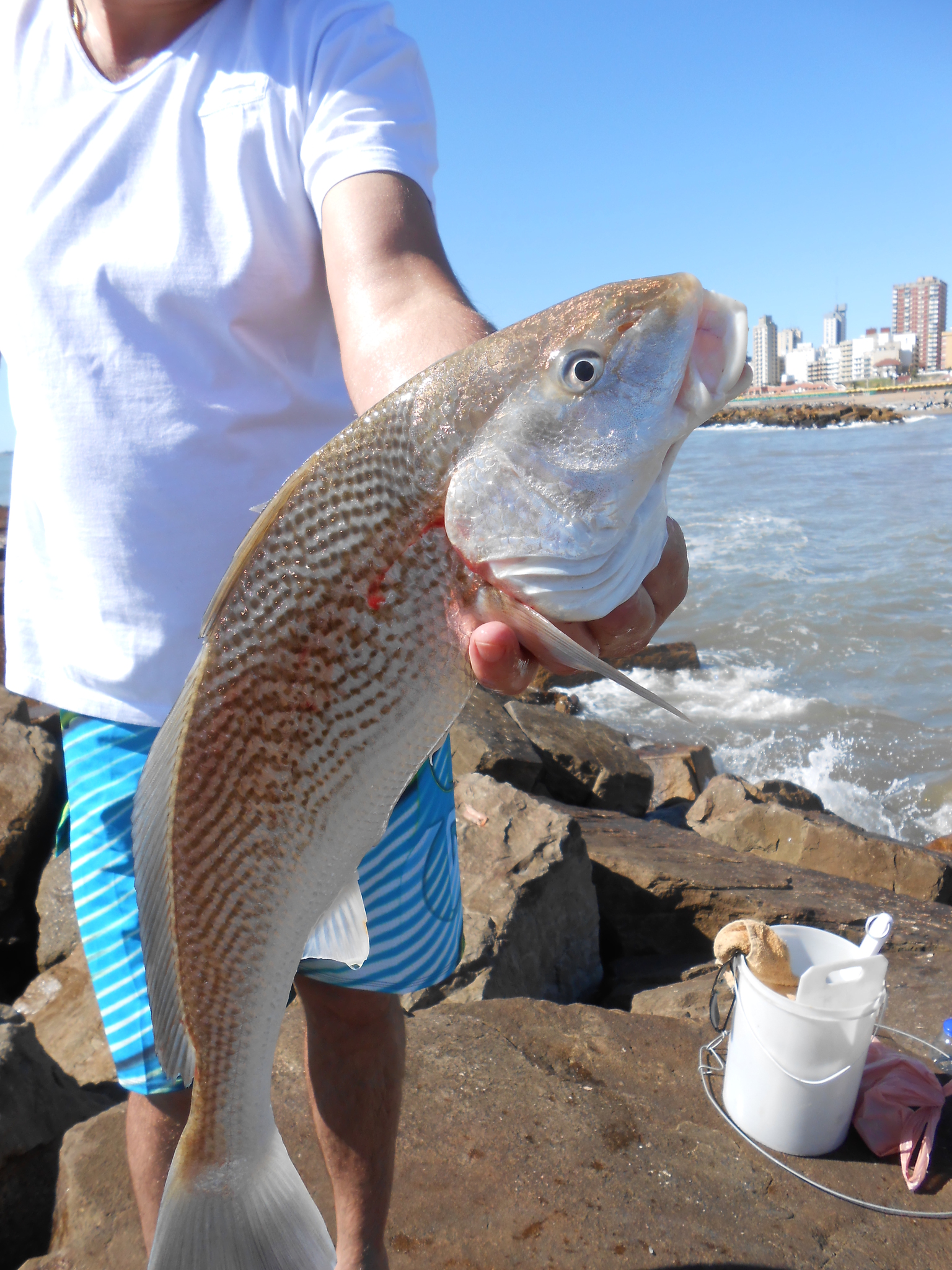
Whitemouth croaker
Micropogonias furnieri is the whitemouth croaker, and in the southern half of South America it is the fish behind the word corvina. Brazil sells it as corvina, Argentina qualifies it as corvina rubia, Uruguay as corvina blanca. It reaches 60 cm SL with 45 cm as the common length, matures at 30.6 cm and lives to about 7 years.

Whitesaddle goatfish
Start with the fin counts: the dorsal fin carries eight spines and nine soft rays, the anal fin seven soft rays, and the vertebral count is twenty-four. The pectoral fin usually carries fifteen rays, rarely fourteen or sixteen, and the gill rakers total thirty to thirty-four. Proportions: body depth close to one third of standard length, snout moderately long, barbels short at roughly a fifth of head length, and the posterior margin of each caudal lobe convex.

Whitespotted char
A cold-water salmonid that needs water below 15°C. Resident forms live in mountain streams and sea-run forms migrate through the north Pacific, and Japanese names separate the two. It is a lean, pale fish, valued far more as a sport fish than as food, and its freshwater rules are set prefecture by prefecture.

Whitespotted conger
Whitespotted conger is recorded across the Northwest Pacific, from Japan, Korean Peninsula and the East China Sea, within the family Congridae. It is caught from 320 to 830 m, in temperate water. Fish reach 100 cm TL. The usual approach is boat bottom fishing or night fishing.
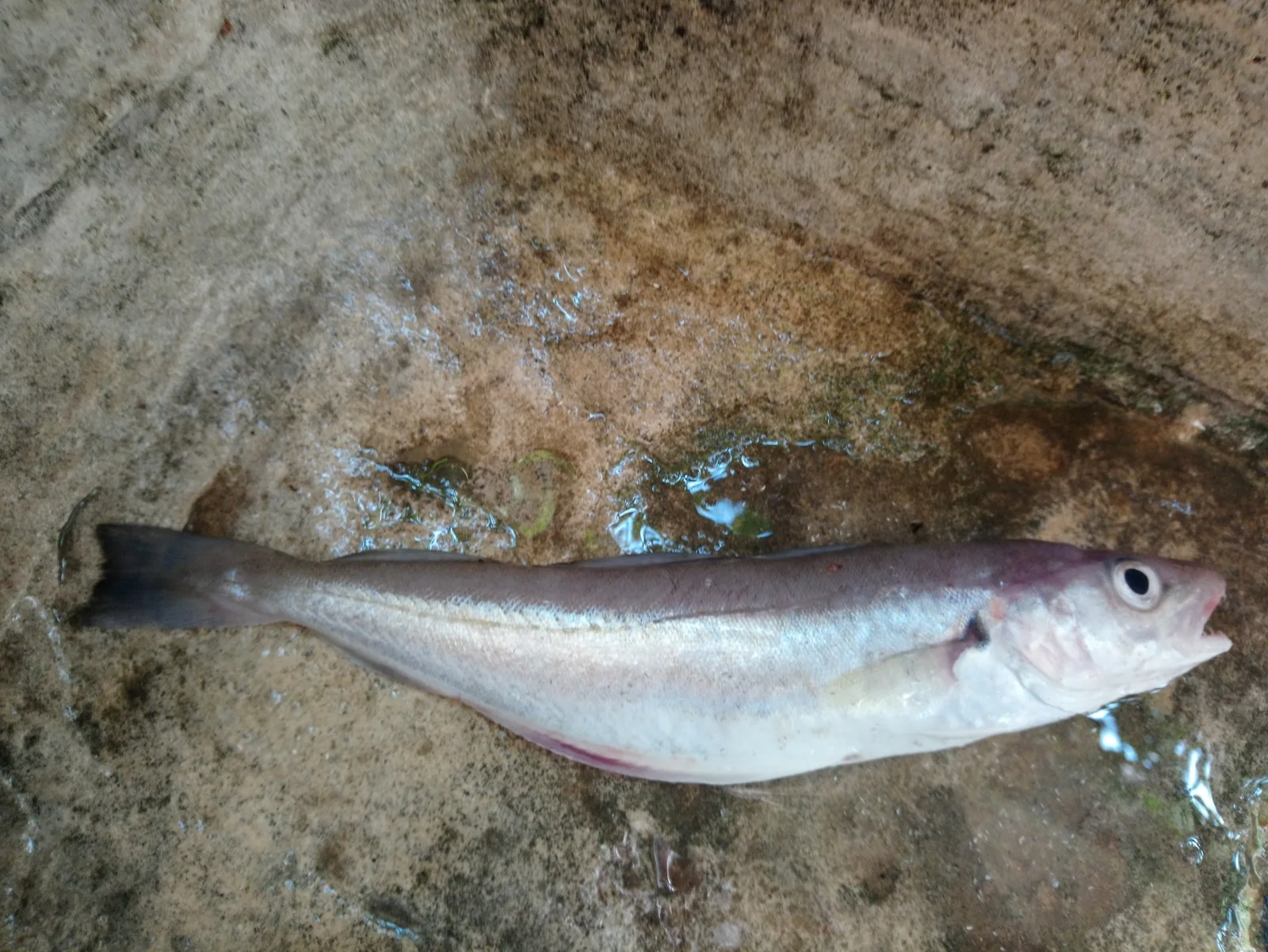
Whiting
Whiting is a slim gadid of the northeast Atlantic, from the Barents Sea and Iceland to Portugal, and into the Black, Aegean and Adriatic seas. It lives from 10 to 200 m in temperate water, reaches 91.5 cm and 3.1 kg, and feeds on fish, molluscs and worms. Boat bottom fishing is the usual approach, and fish are present year-round.
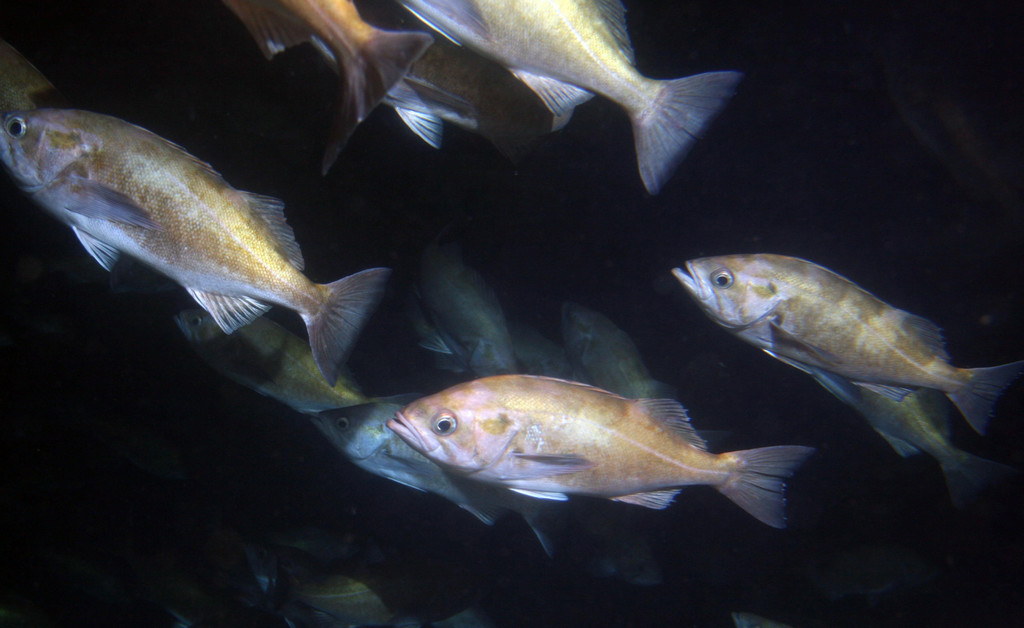
Widow rockfish
Widow rockfish is a temperate rockfish of the northeast Pacific, from the Gulf of Alaska to Todos Santos Bay in Baja California. It lives from the surface to 549 m, reaches 60 cm TL, can live 60 years, and feeds on crustaceans and fish. Boat bottom fishing is the usual approach, with the season running December to April.

Windowpane
The windowpane is the translucent flatfish of the northwest Atlantic, common on sandy bay bottoms from New Jersey to Massachusetts. Its thin, light-passing body gives the fish and the family their names. It is usually a bycatch of fluke and winter flounder trips, taken on small baits dragged slowly over clean sand in shallow water.
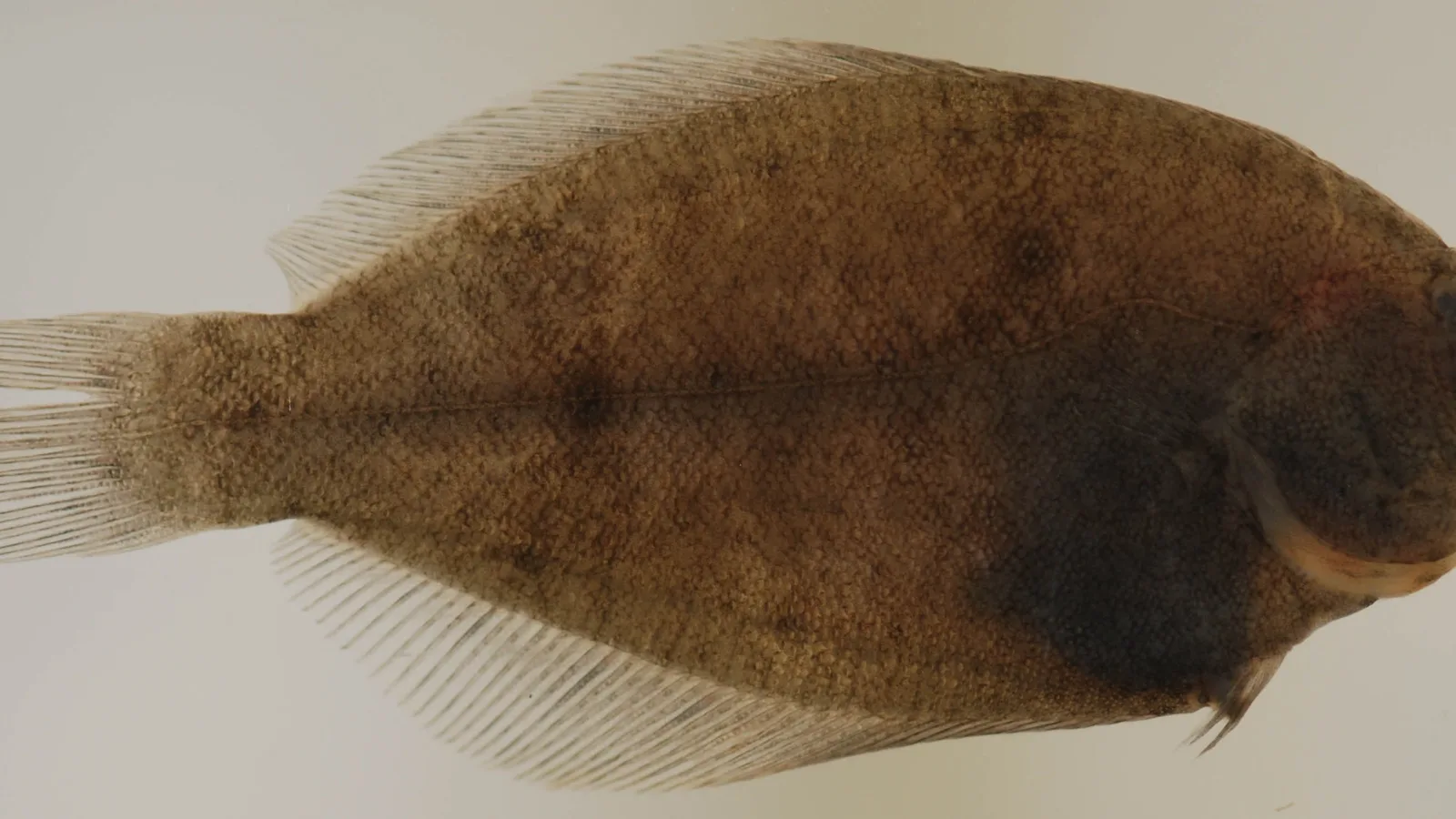
Winter flounder
Winter flounder is a record with holes: 64 cm, 3.6 kg, 14 years and maturity at 26.8 cm, but no common length, no temperature range, no fin-ray count and no observation total. Those absences shape the method rather than disqualify the fish. When a field is missing, the fishing has to be built from the fields that remain — shallow bays, small baits, slow presentations.
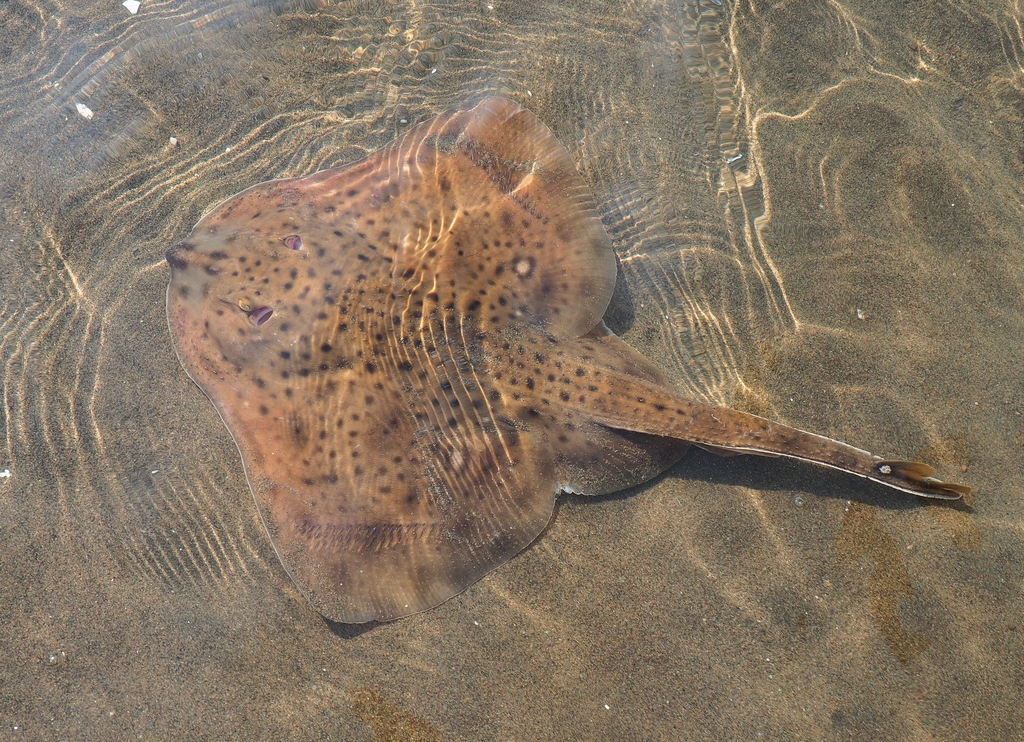
Winter skate
Winter skate is a large, round-disc rajid of the northwest Atlantic, ranging from the Newfoundland Banks and the southern Gulf of St Lawrence southward. It is a temperate fish recorded from 4 to 723 m, and it feeds on fish. The disc reaches 150 cm TL and the species can live 21 years.
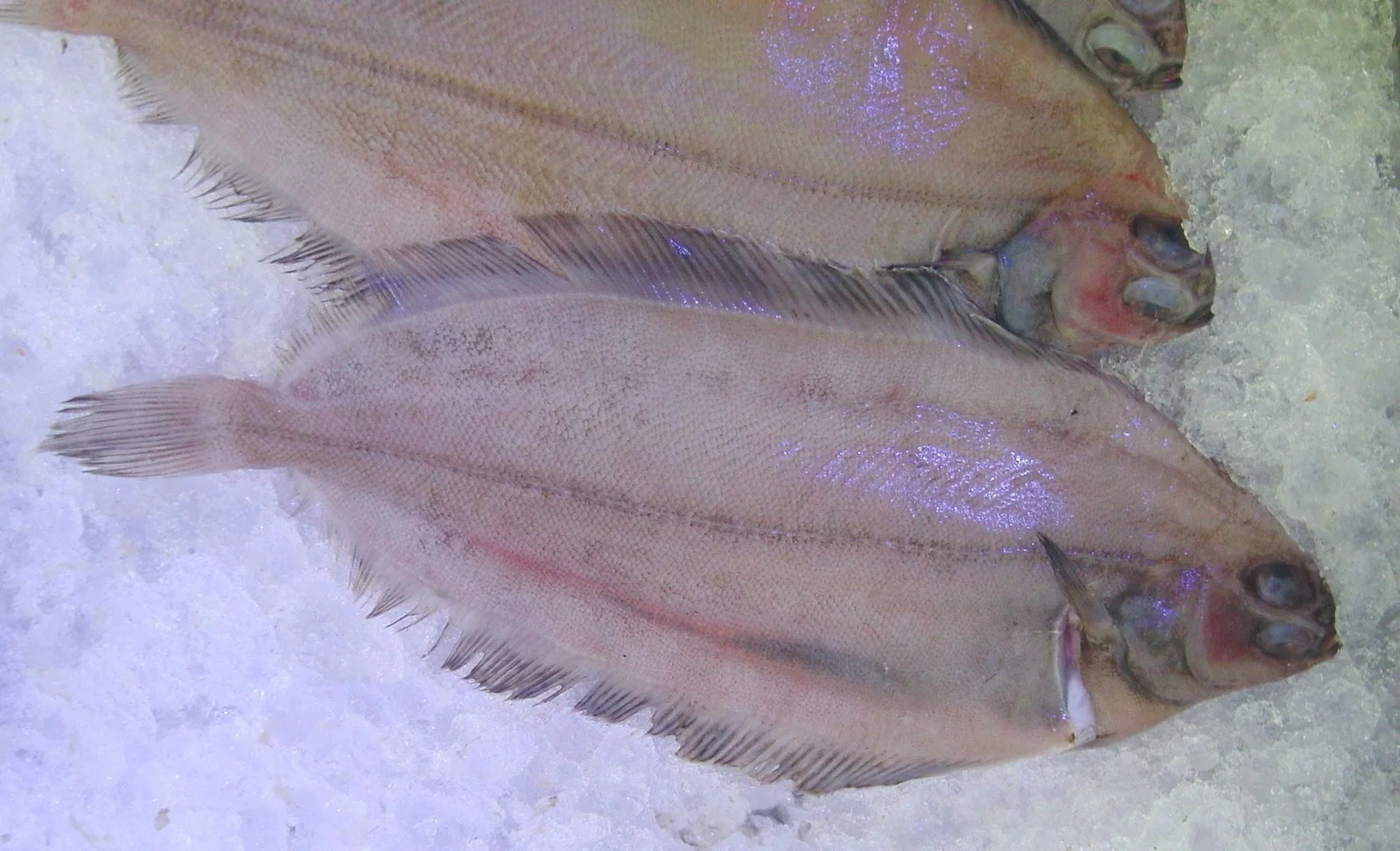
Witch flounder
Witch flounder is a slender, soft-bottom flatfish of the family Pleuronectidae, found on both shores of the North Atlantic and into the adjacent Arctic. It feeds over mud between roughly 18 and 1570 m, with an usual band of 45–366 m in cold water of 2–6 °C, and grows to about 60 cm and 2.5 kg. The species is assessed Vulnerable and is landed commercially as a food fish.
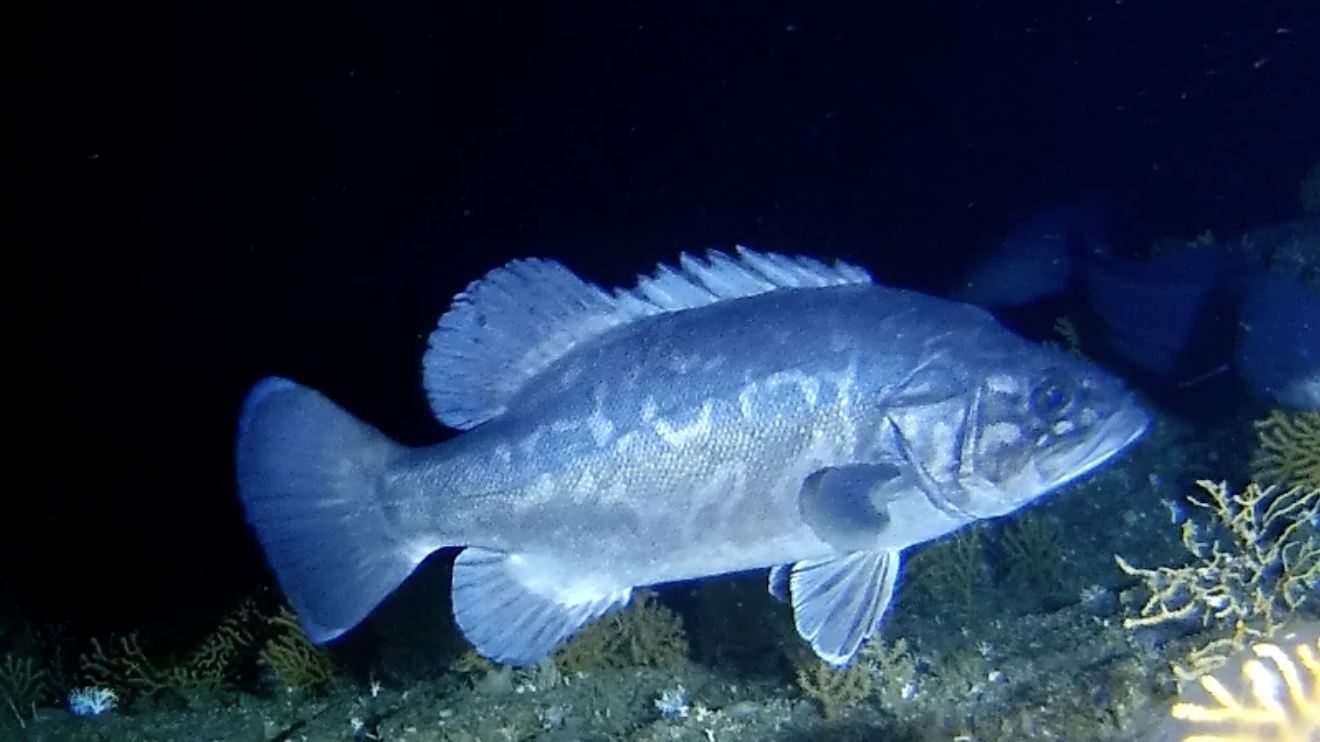
Wreckfish
Wreckfish is a depth fish before it is a wreck fish. The name points to rocky ledges and wrecks, but the number that shapes the fishery is 560: the vertical distance between the 40 m record and the 600 m limit of the documented range.
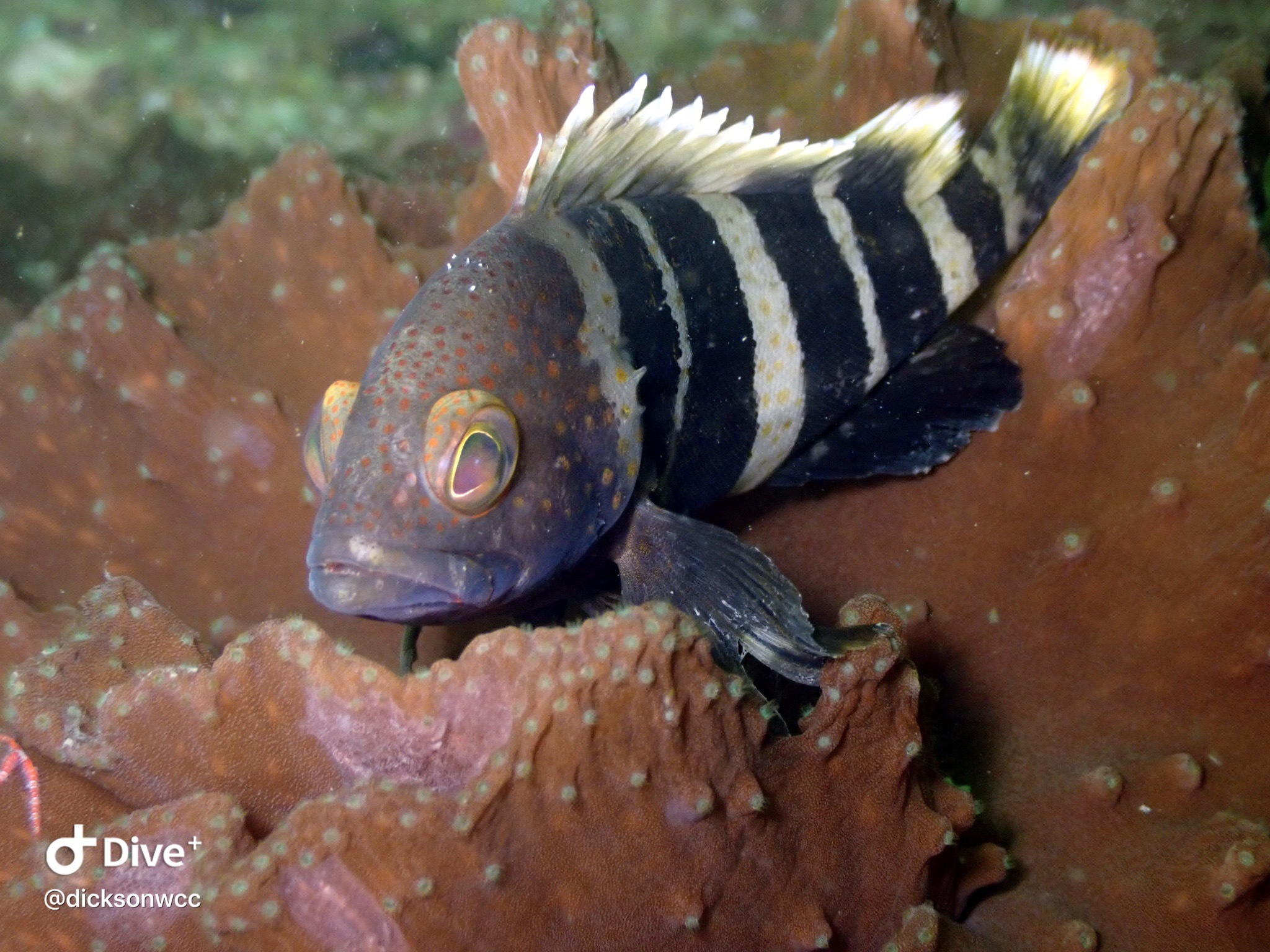
Yellow grouper
Yellow grouper is a reef grouper of the northwest Pacific, from Korea, Japan, Taiwan and China to Vietnam and the South China Sea islands. It lives from 10 to 50 m in tropical water, reaches 60 cm, and feeds on fish. Boat bottom fishing or rock fishing is the usual approach, with the season running February to May.

Yellow snapper
Yellow snapper is a lutjanid of the eastern Pacific, from southern California south to Peru, though rare north of Baja California. It lives from 3 to 60 m in subtropical water, reaches 71 cm TL and 13 kg, and feeds on fish. Its season runs April to November.
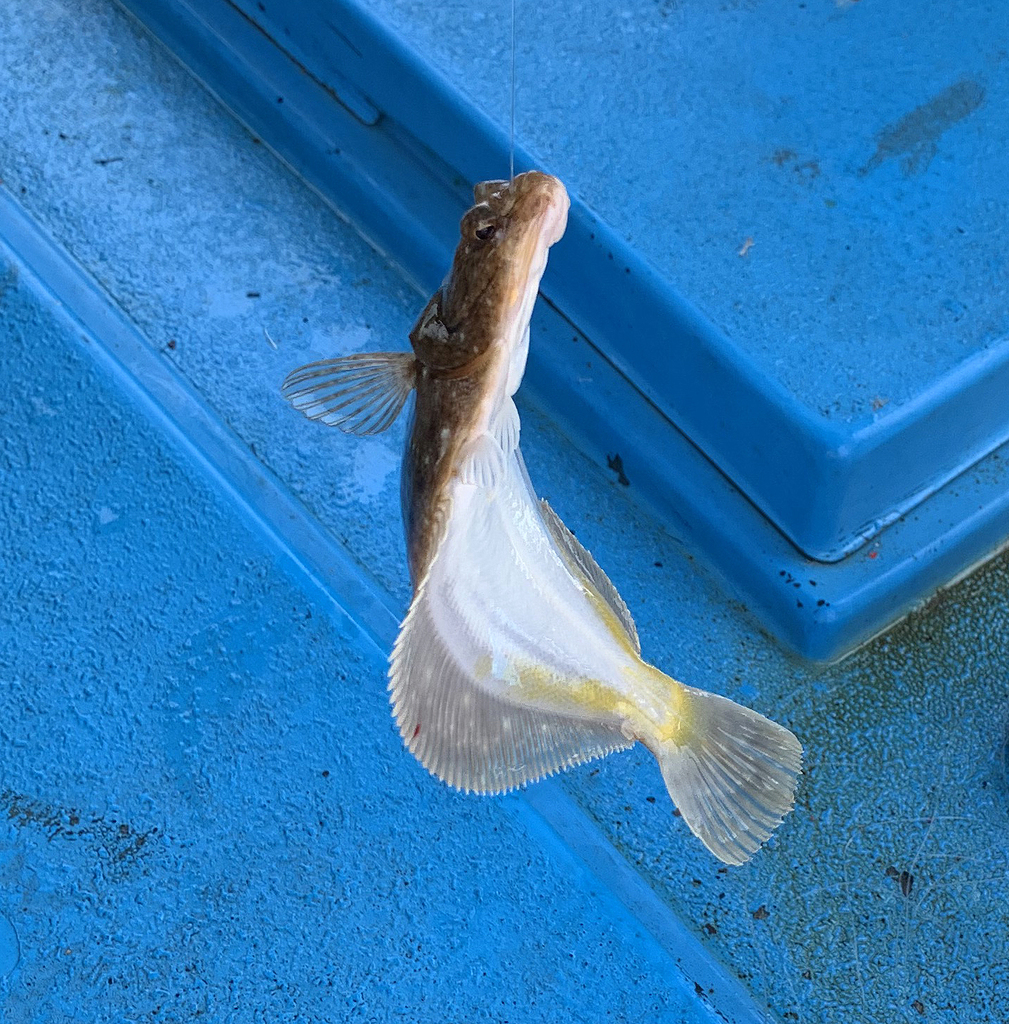
Yellow striped flounder
Three lines here mix two measurements: the maximum is 50 cm SL (standard length), a typical fish measures 28.5 cm TL (total length), and first maturity is 23.5 cm SL. A Japanese stock assessment then adds a third set of numbers — mature females at 16 cm body length, males at 14 cm — and a set of prefectural landing rules written in total length.
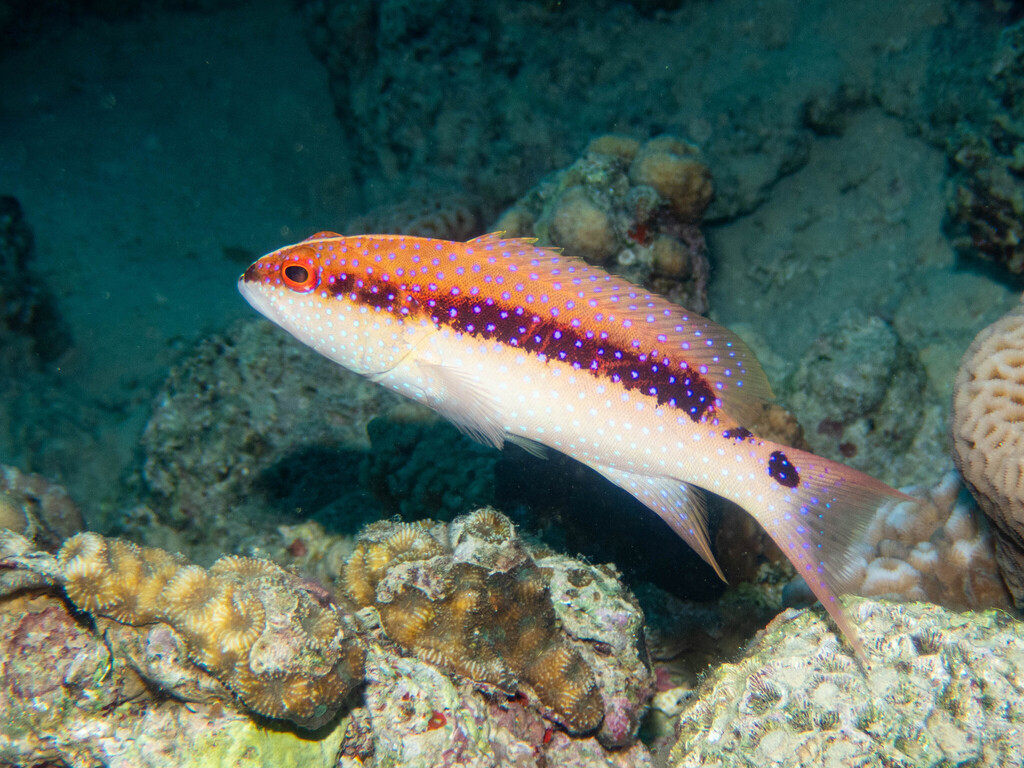
Yellow-edged lyretail
Everything above the tail says grouper: a robust oblong body, a rounded preopercle with fine serrations, three flat spines on the opercle, one to three large canines at the middle of the lower jaw, nine dorsal spines and thirteen or fourteen soft rays. Then the tail says something else. The caudal fin is lunate, with the upper and lower lobes produced to about twice the length of the middle rays.
Yellowback seabream
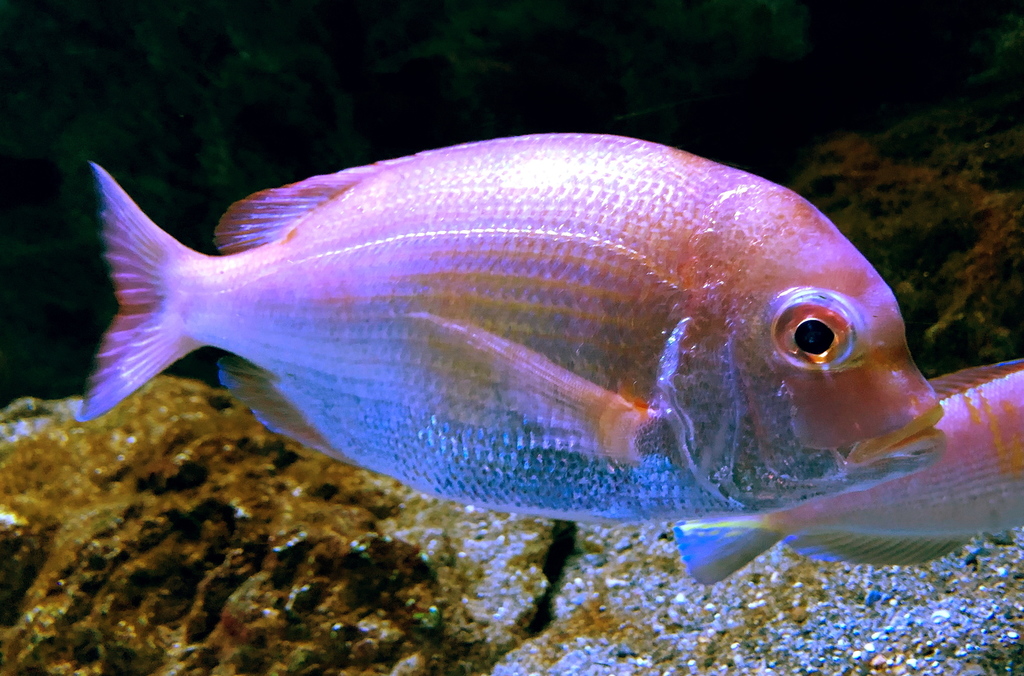
Yellowback seabream is a sparid of the western Pacific, from Hokkaido, Korea and Taiwan south to Macau. It lives from 30 to 346 m in subtropical water, reaches 35 cm, and feeds on fish. Boat bottom fishing is the usual approach, and fish are present year-round.
Yellowbelly flounder
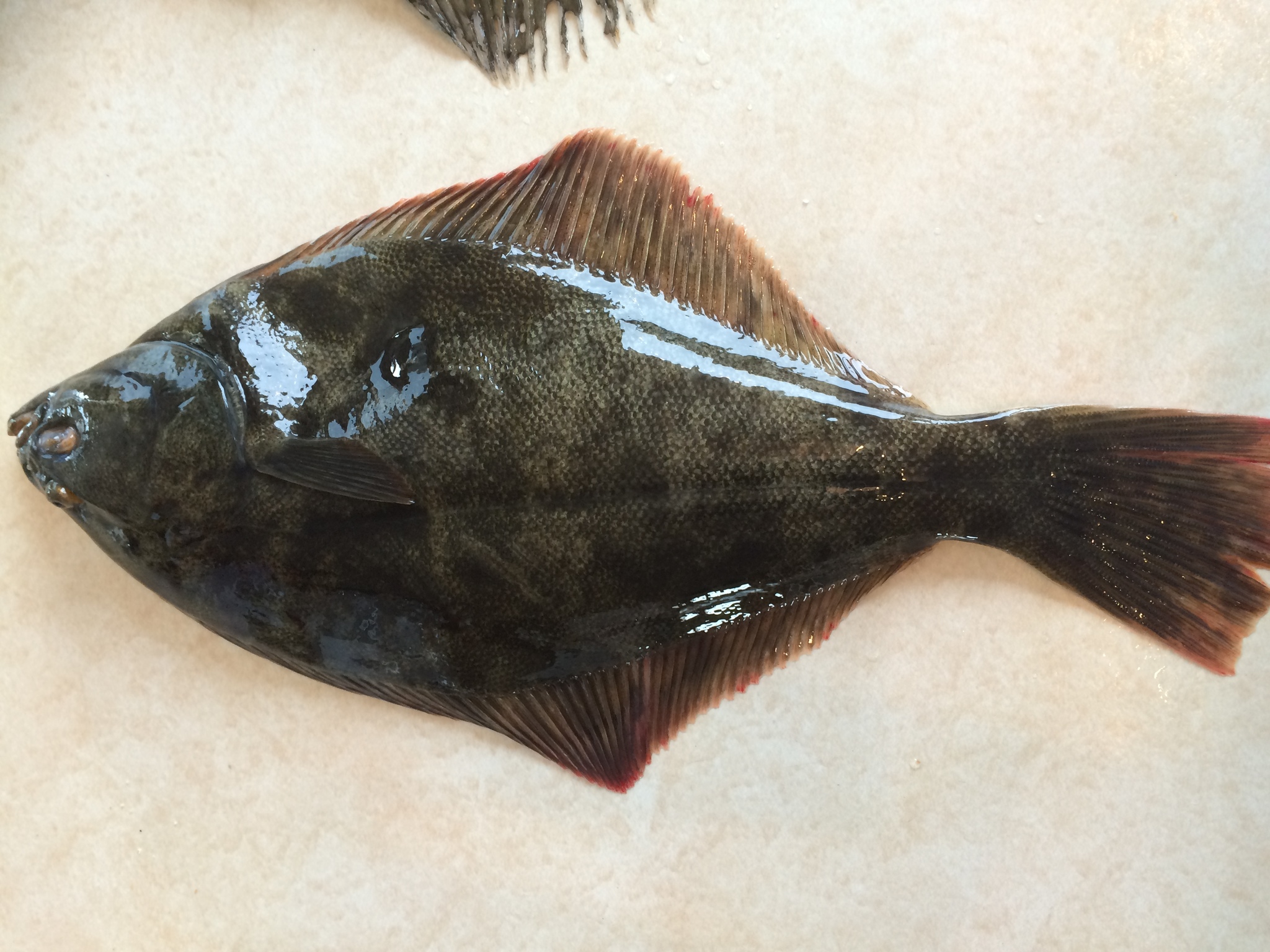
The yellowbelly flounder is a small shallow-water flatfish found only in New Zealand, fished from beaches, harbours and dinghies. Published biology stops at length, weight and depth, so the method has to come from the habitat: sand and mud flats, gentle current, and a bait or lure moved slowly along the bottom.
Yellowedge grouper
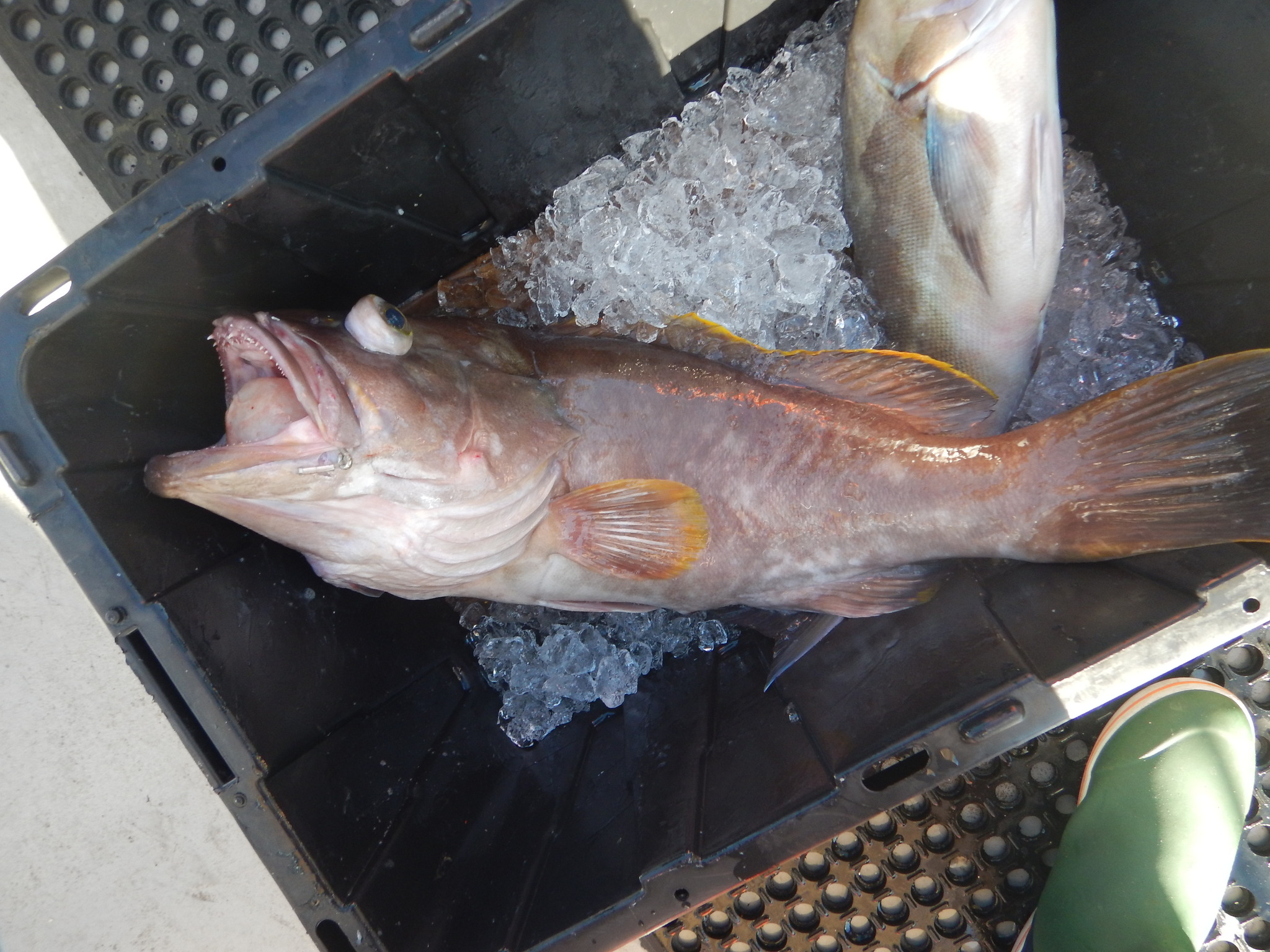
Yellowedge grouper is a deep-slope Epinephelidae of the Gulf of Mexico and the western Atlantic, found on rock and around excavations from 90 to 360 m. It reaches 115 cm and 18.6 kg, lives up to 35 years, and is caught on cut bait or squid with heavy lead and an electric reel.
Yelloweye mullet
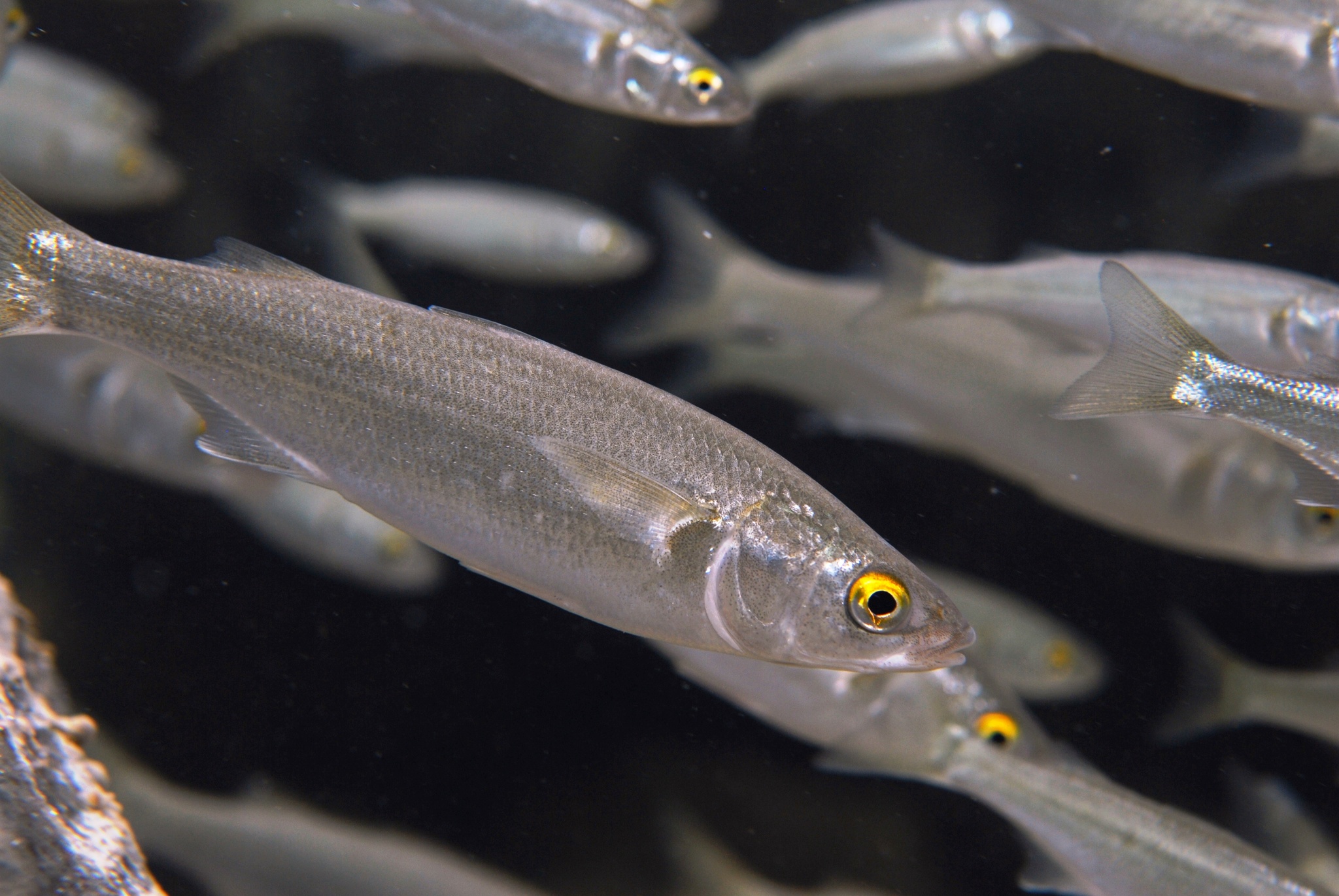
Yelloweye mullet is a mullet of southern Australia, New Zealand and the Chatham Islands, found from the surface to 50 m. It reaches 50 cm and 0.95 kg and feeds on algae and detritus. Shore casting or float fishing is the usual approach, and the season runs January to October.

Yelloweye rockfish
Yelloweye rockfish is one of the largest rockfish of the northeast Pacific, from the Gulf of Alaska to northern Baja California. It lives from 15 to 549 m in subtropical water, reaches 104 cm TL and 17.8 kg, can live 118 years, and feeds on crustaceans and fish. Boat bottom fishing is the usual approach, with the season running January to June.

Yellowfin bream
Yellowfin bream reaches the angler through three doors. Sydney shops call it sea bream; Queensland breakwaters call it surf bream; FishBase calls it a fish of the southwest Pacific. Its distribution line calls the species endemic to eastern Australia, from Townsville to the Gippsland Lakes, then adds that records from Japan, the Ryukyu Islands and Taiwan region "need verification." Both statements sit on the same page, and either one changes where you would plan a trip.
Yellowfin croaker
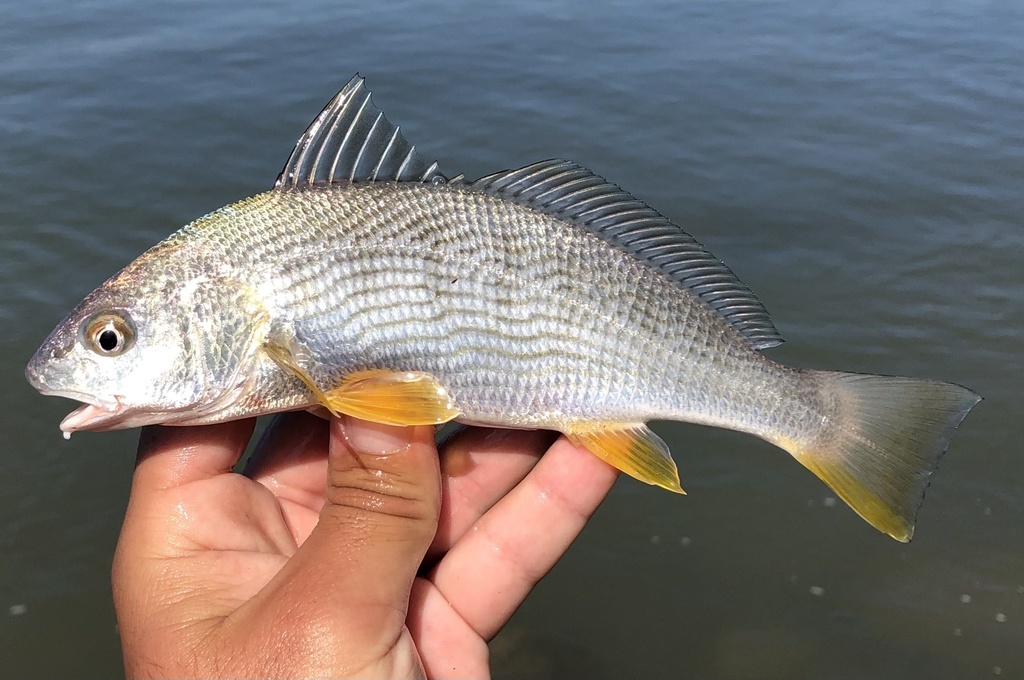
The yellowfin croaker asks for three checks at once: yellow fins, oblique wavy bars along the flank, and two heavy spines in the anal fin. Miss one and it becomes a corbina, which carries a single weak anal spine and dark pectoral fins. It works the sand inside the surf line and the flats inside a bay, bites softly, and fights harder than its size suggests.
Yellowfin goatfish
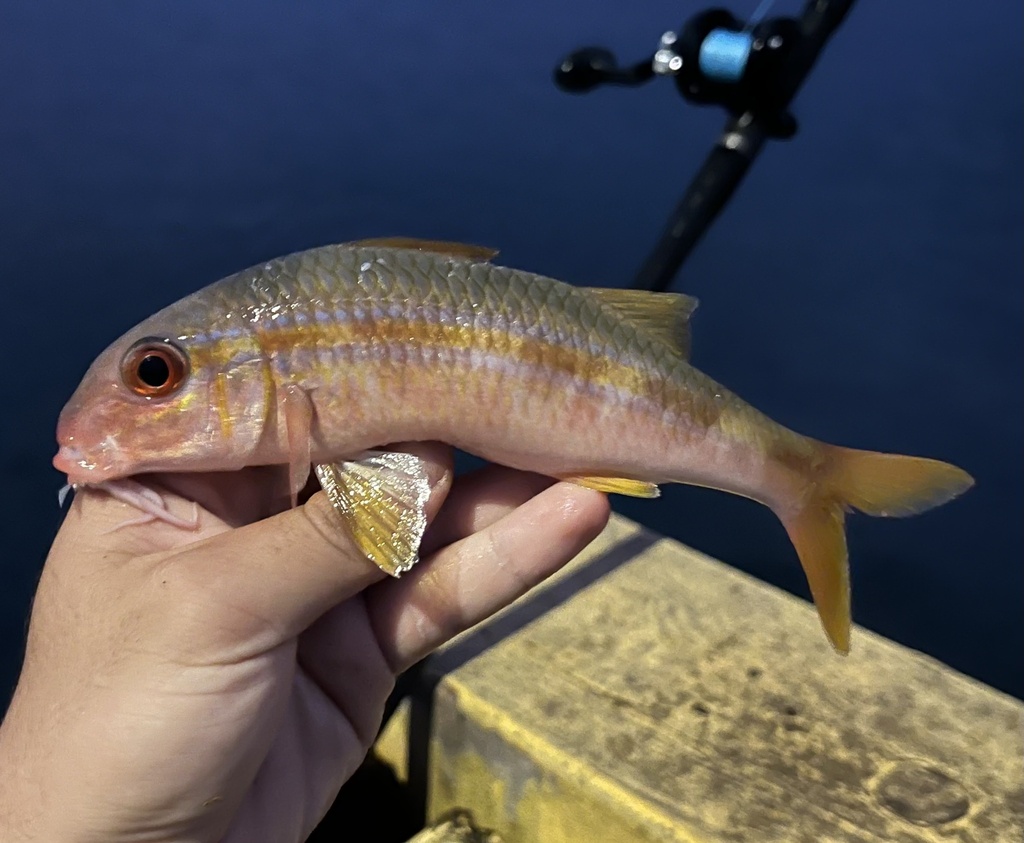
Count the fins: eight dorsal spines and nine soft rays, one anal spine and seven rays. The back is red-orange, the sides and belly whitish, and a yellow longitudinal band runs the length of the flank. The diagnostic detail is a negative one — there is no dark blotch under the middle of the first dorsal fin, which separates it from relatives that carry one.

Yellowfin goby
Yellowfin goby is a small, bottom-hugging goby of the northwest Pacific, from the Russian Far East and Korea through the Bohai, Yellow and East China seas to Japan. It tolerates fresh, brackish and salt water and pushes up estuaries, living in 1 to 6 m over soft bottom. Fish reach 30 cm, and the local season runs January to March.
Yellowfin grouper
Yellowfin grouper is an Epinephelidae grouper of rocky and coral reef from 5 to 35 m in the Gulf of Mexico, Bermuda and the Caribbean. It reaches 100 cm and 18.5 kg, carries bright yellow fin margins and red-brown spots, and is a strong if occasionally ciguatoxic food fish.
No fish match this water on this page. Clear the filter or choose another habitat.