
What fish are on your coast? — page 12 of 16
Choose the water you fish: shore, reef, surf or deep water. Then open a fish to see what it eats, when it comes in, and how to catch it.
Species records

Saffron cod
A small cold-water cod of the family Gadidae, called komai in Japan and fished through Hokkaido ice in winter. It tolerates water below zero with antifreeze compounds in the blood, spawns from January to March in near-freezing coastal water, and is eaten mostly as dried fish and roe because the fresh flesh travels badly.
Saithe
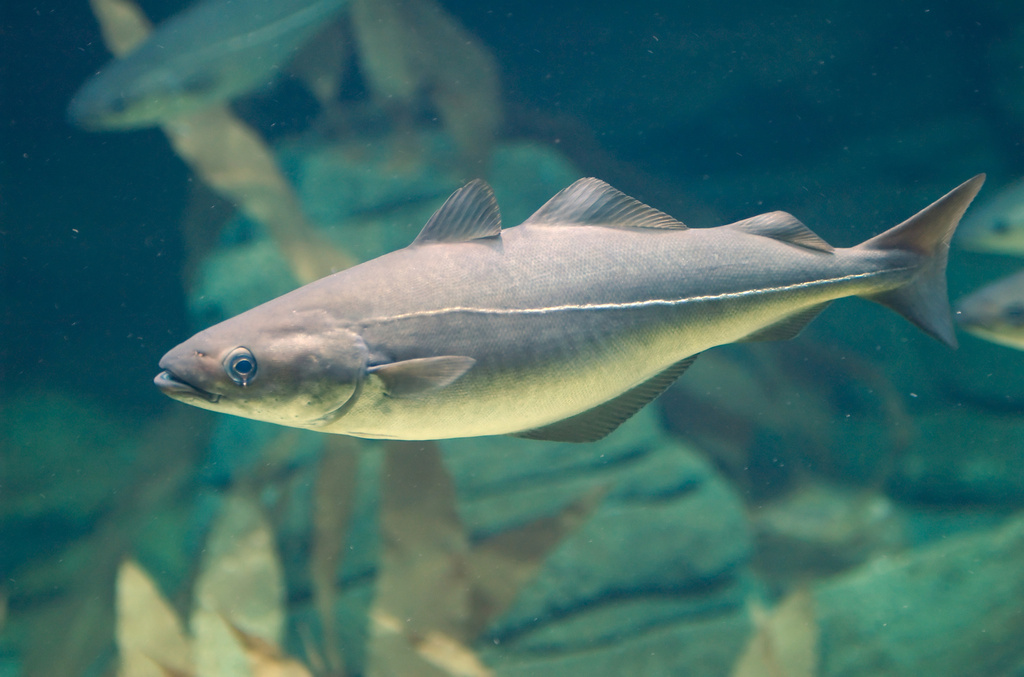
Saithe is recorded across the North Atlantic, from southwest Greenland, Hudson Strait to North Carolina, east to Bay of Biscay, Barents Sea and Spitsbergen, within the family Gadidae. It is caught from 37 to 364 m, in temperate water. It tops out at 130 cm TL and 32 kg, on a diet of crustaceans and fishes. The standard approach is boat bottom fishing or slow pitch jigging. The season runs January to December.

Salema
Salema is a sparid of the eastern Atlantic and Mediterranean, from the Bay of Biscay and Gibraltar to Sierra Leone, including Madeira, the Canaries and Cape Verde. It lives from 5 to 70 m in subtropical water, reaches 51 cm SL, and feeds on crustaceans and algae. Its season runs March to November.

Salmon shark
The body is fusiform with no spines in the dorsal or anal fins. The first dorsal fin is uniformly dark and has no pale rear tip, which is the fastest way to separate it from the porbeagle and other large lamnids at sea. The ventral surface is white with dusky blotches, and the boundary between dark back and pale belly is sharp.
Samsonfish
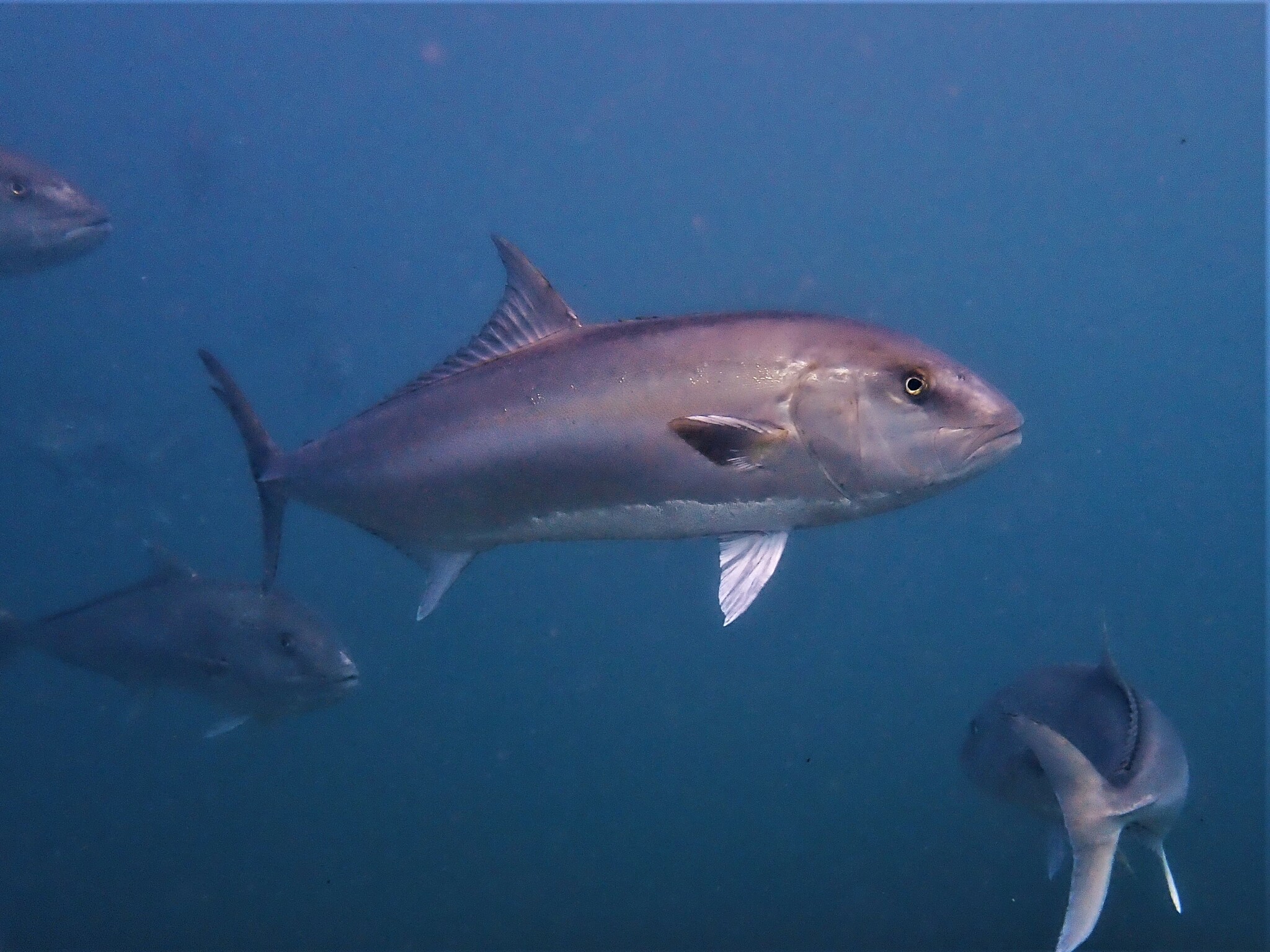
Samsonfish is recorded across the Indo-Pacific, from endemic to Australia, Norfolk Island and New Zealand, within the family Carangidae. Fish reach 150 cm TL and 53.1 kg. Anglers target it by jigging or trolling. It prefers water of 18 to 24 °C.
Sand flathead
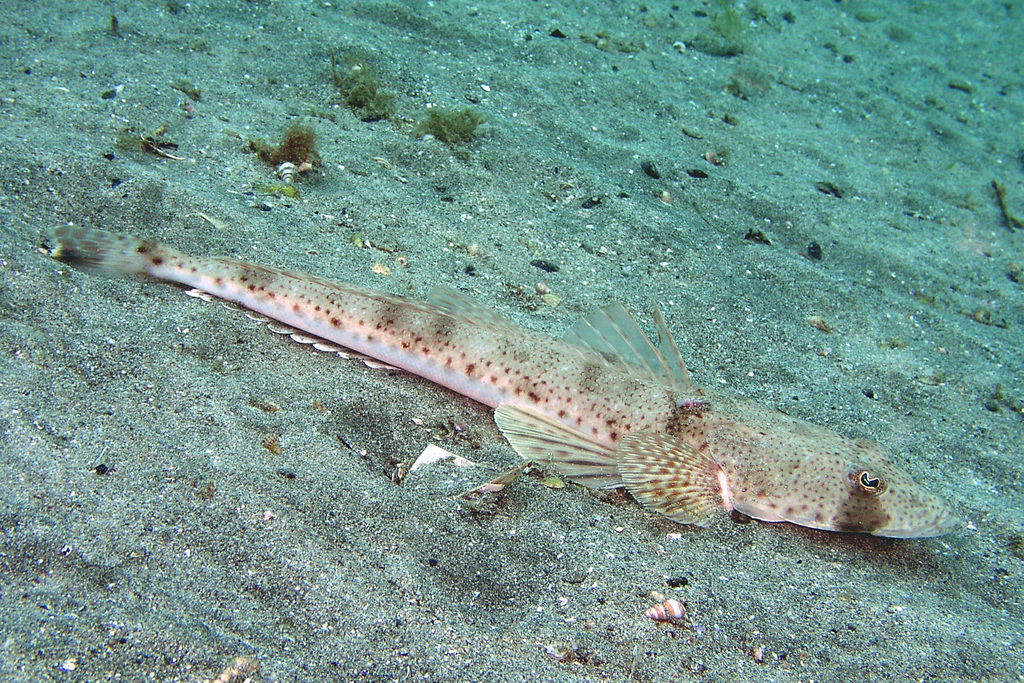
The sand flathead is southern Australia's jetty, estuary and small-boat flathead: a sand-coloured ambush predator with eyes on top and a shovel-shaped head. It is also a management problem, with the Tasmanian stock officially depleted and Victoria rebuilding slowly. Fish sand edges and drop-offs with soft plastics or bait hopped along the bottom.

Sand perch
Sand perch is a small Serranidae bass of bays, coastal grass and shallow banks in the United States, found from 1 to 80 m. It is solitary, feeds on small fish and is a synchronous hermaphrodite. It reaches 30 cm with a common length near 16 cm, and it is taken on small hooks with shrimp or squid near cover. Boat bottom fishing, jigging and drifting are the methods listed.
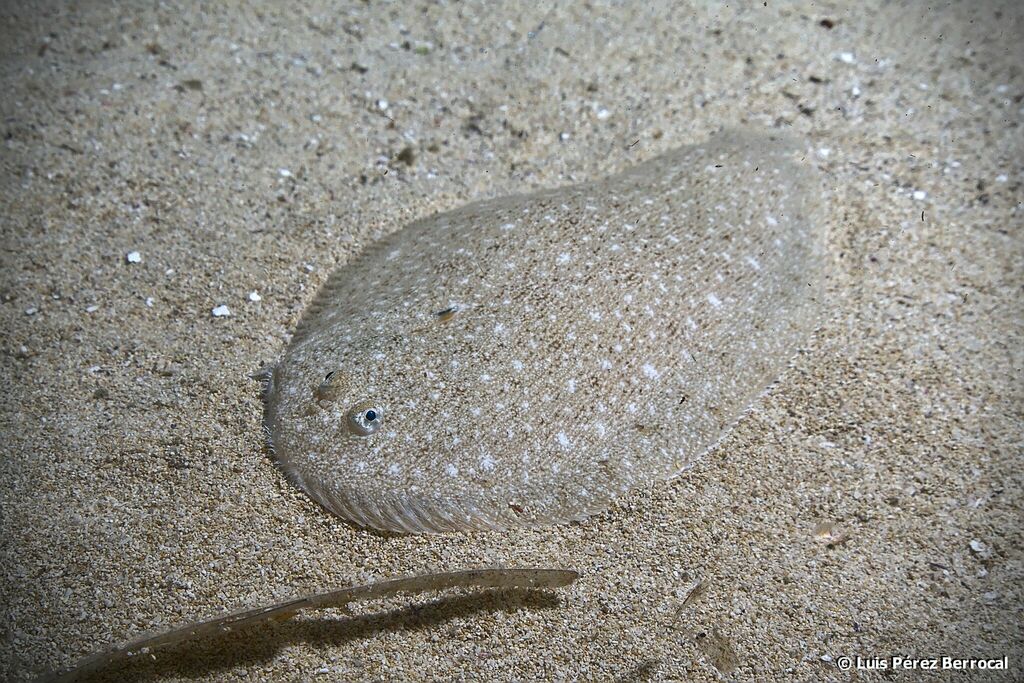
Sand sole
Sand sole is a Soleidae flatfish of the eastern Atlantic, from the north-eastern to the south-eastern Atlantic, through the Mediterranean, with the Suez Canal, Black Sea and Sea of Azov also listed. It reaches 40 cm SL with a common length of 30 cm TL and a maximum age of 15 years, and it lives between 5 and 350 m. May to July is the season, and shore casting and boat bottom fishing are the methods listed.

Sand steenbras
Across the Eastern Atlantic, from Bay of Biscay, Strait of Gibraltar, Mediterranean, and Black Sea, Madeira Is, Canary Is, Sand steenbras represents the family Sparidae. This is a subtropical-water fish, recorded from 0 to 150 m. Adults run to 55 cm TL and prey on crustaceans and worms. The standard approach is shore casting or boat fishing. It is present year-round.

Sand weakfish
Sand weakfish is a sciaenid of the western Atlantic, from Florida and the Gulf of Mexico to the Bay of Campeche. It lives in subtropical water, reaches 63.5 cm TL and 2.8 kg, can live five years, and feeds on fish.

Sand whiting
Sand whiting, a member of the family Sillaginidae, is found across the Western Pacific, from east coast of Australia from Cape York (rare) and the Great Barrier Reef, Queensland to eastern Victoria, Ulverstone on northeast coast of Tasmania. Its depth range is from 0 to 46 m, in tropical seas. It grows to 51 cm TL and 1.4 kg, with a diet of crustaceans and worms. Anglers target it by shore casting or boat fishing.

Santer seabream
Santer seabream is a sparid of the western Indian Ocean, from the Red Sea south to Mossel Bay and east to India and Sri Lanka. It lives from 20 to 300 m in tropical water and reaches 75 cm TL. Its season runs May to October.
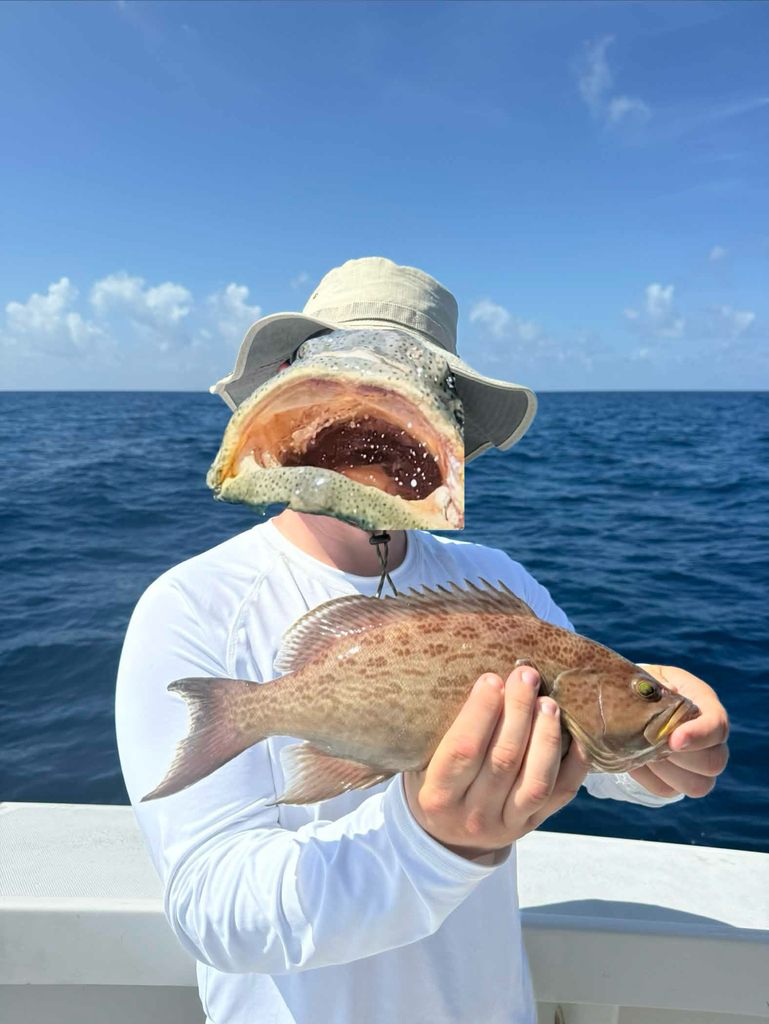
Scamp
Scamp is an Epinephelidae grouper of deep Gulf and southeastern US reef, found on ledges and high-relief rock from 30 to 100 m. It is slender, brown to yellow-brown and covered in small dark spots, reaches 107 cm and 14.2 kg, and is taken on live or cut bait fished tight to structure.
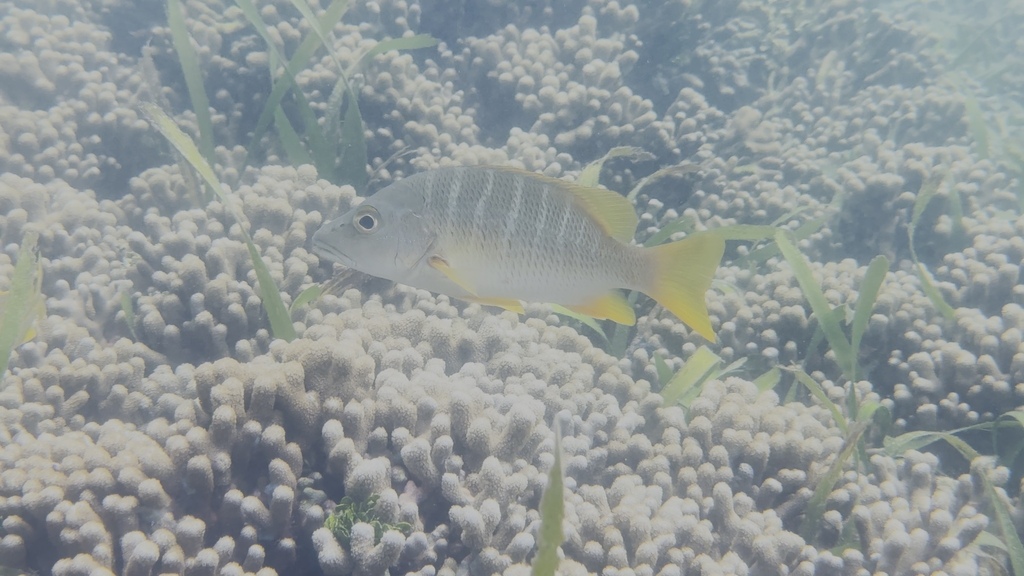
Schoolmaster snapper
The fin count is ten dorsal spines and fourteen soft rays, with three anal spines and eight rays — a routine lutjanid formula that only narrows the genus. The useful characters sit in the face. The snout is long and pointed, the mouth is large, and one pair of upper canines is enlarged enough to show while the jaws are closed. A blue line runs beneath the eye, solid or broken.

Scotsman
Scotsman is a western Indian Ocean sparid known only from Beira in Mozambique to Algoa Bay in South Africa. It lives between 20 and 100 m, reaches 90 cm TL with a common length of 35 cm and 7.8 kg, and no maturity length is published. South Africa allows one fish a day at 40 cm TL, a minimum sitting above the common length. Boat bottom fishing and jigging are the methods listed.

Scup
Scup is a sparid of the western Atlantic, from Nova Scotia to Florida. It lives deeper than 15 m in subtropical water, reaches 46 cm TL and 2.1 kg, and feeds on worms. Boat bottom fishing is the usual approach, with the season running May to August.

Sea raven
The sea raven is a bottom-dwelling sculpin of the northwest Atlantic, recorded by FishBase from Labrador in Canada to Chesapeake Bay in the United States. It reaches 68 cm TL and 3.2 kg, and is listed from 2 to 180 m over rocky and hard ground. It is not a mainstream recreational target, but it takes baits set for other bottom fish, and FishBase records it as a gamefish and, occasionally, as a bait species.
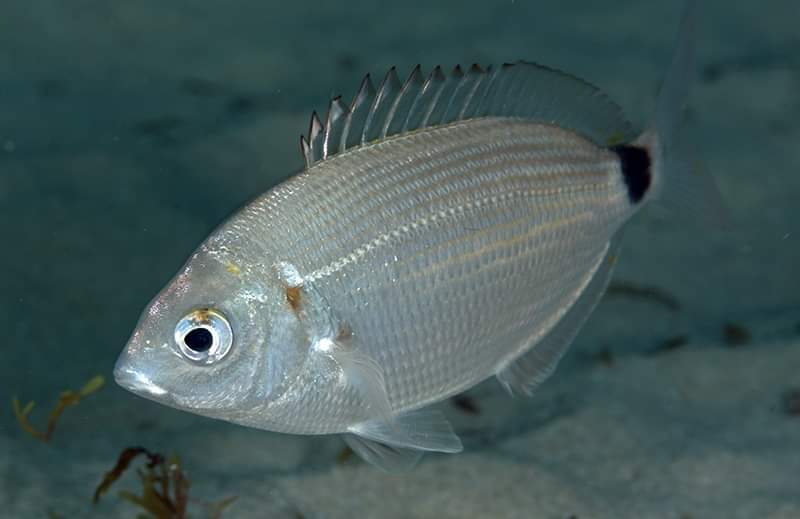
Senegal seabream
The Senegal seabream is a small sparid of the eastern Atlantic and the southwestern Mediterranean. FishBase records it from the Cape Verde Islands north to Cadiz in Spain, with a separate Mediterranean range from Malaga to Gibraltar, and gives a maximum length of 30 cm SL, a common length of 15 cm SL and a length at first maturity of 11.4 cm.
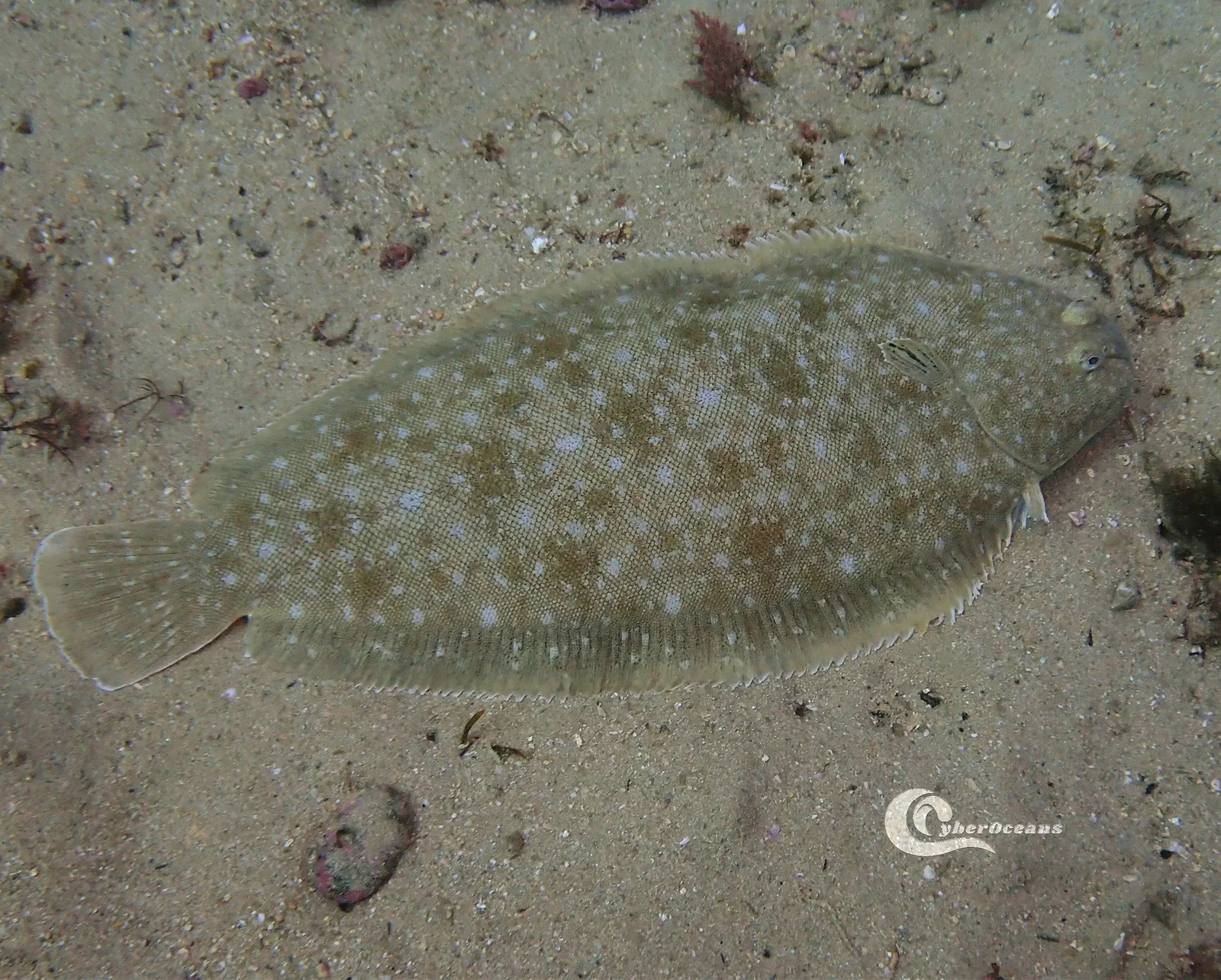
Senegalese sole
Senegalese sole is a flatfish of the eastern Atlantic, from France to Angola. It lives from 12 to 100 m on sandy and muddy ground in tropical water, reaches 60 cm SL, and feeds on crustaceans and molluscs. Boat bottom fishing is the usual approach.
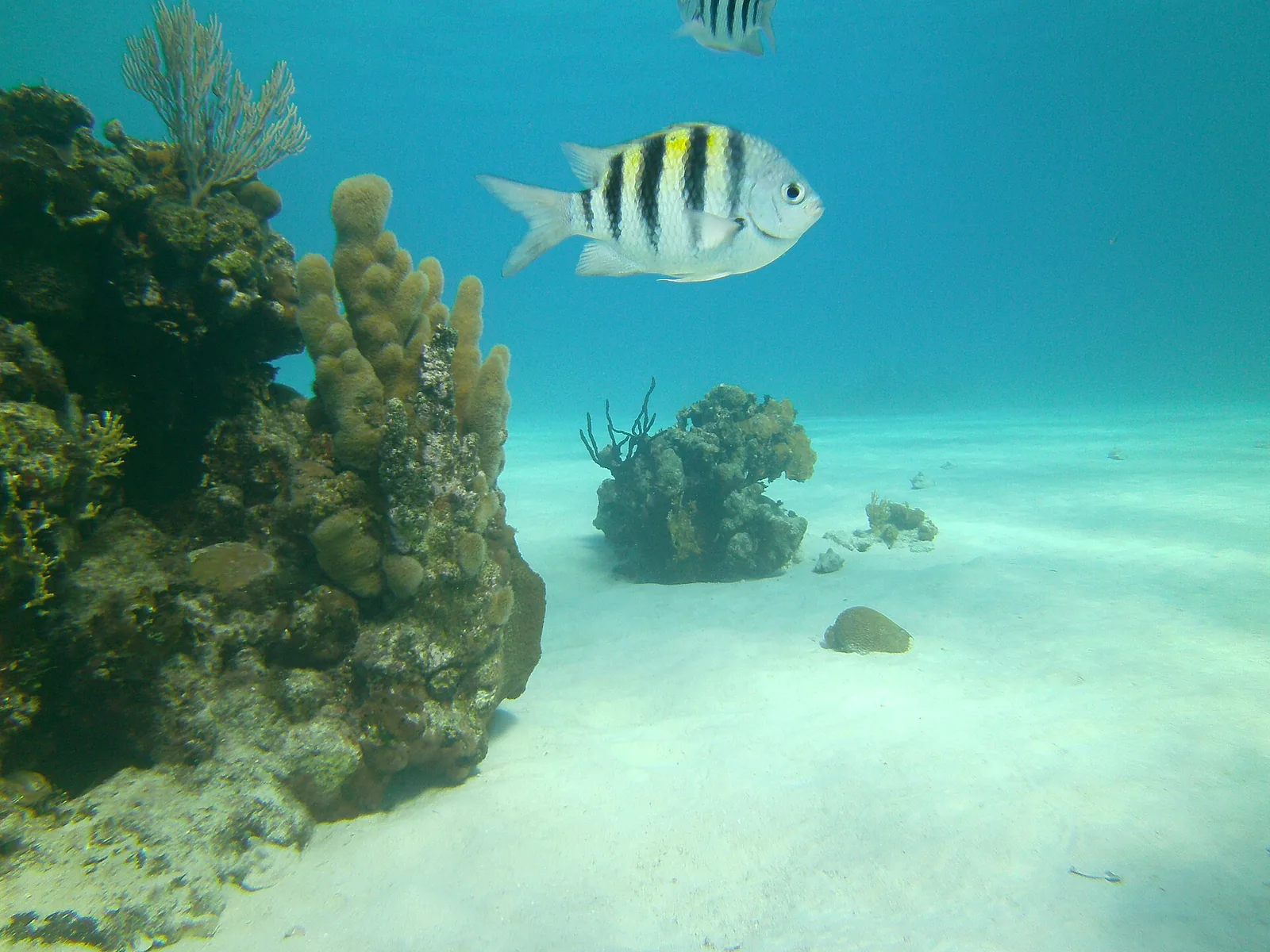
Sergeant-major
The sergeant major is a fifteen-centimetre Caribbean damselfish named for five dark bars that supposedly resemble a military rank. The bars are shared with close relatives, the rank exists in many armies, and the name explains almost nothing about the fish. It hovers over coral by day, nests on rock, and is far more often seen by snorkellers than targeted by anglers.

Serra Spanish mackerel
Serra Spanish mackerel is a large western Atlantic mackerel, recorded through the Caribbean and along the tropical coast. Adults reach 125 cm FL and 6.7 kg. Two columns in the record are empty, depth and habitat keyword, so there is no band to plan around and no bottom type to read; what is left is a fish that is present year-round, with six rows of spawning data behind it.
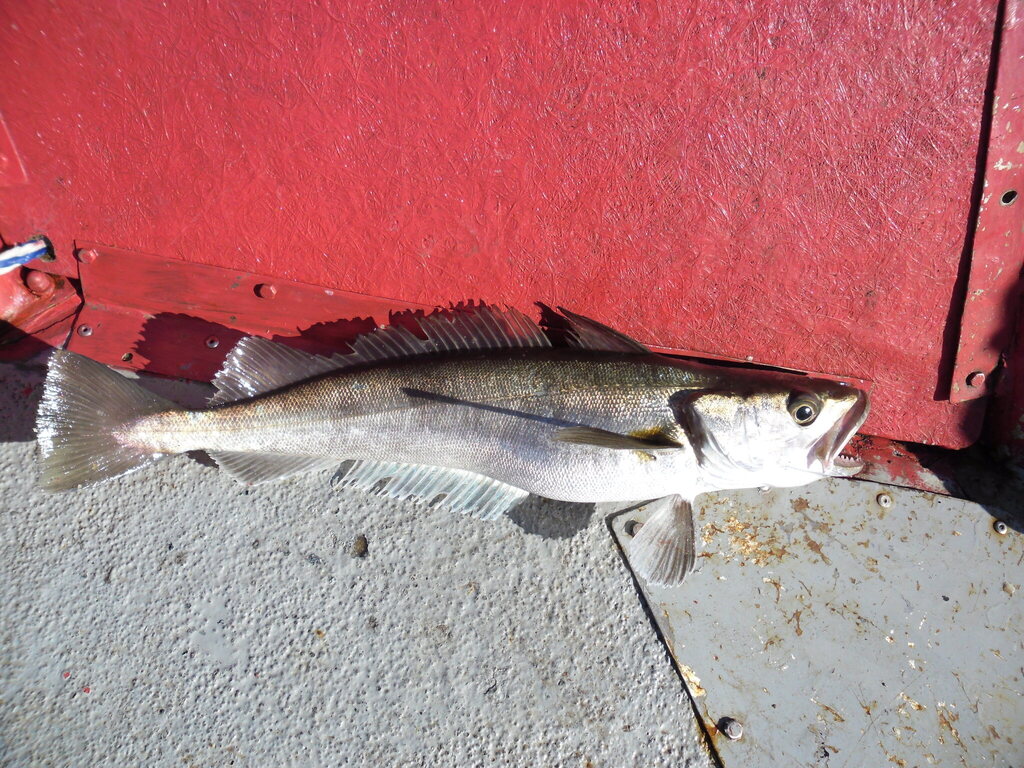
Shallow-water Cape hake
Fisheries paperwork for this fish asks for a weight and an age. The account supplies neither, and it also declines to name one water type, one sea region. What is filled is specific enough to work from: 140 cm TL maximum, 50 cm TL routine, 50–1000 m, and a coastline running through three countries. The blanks are treated here as instructions for the drop.
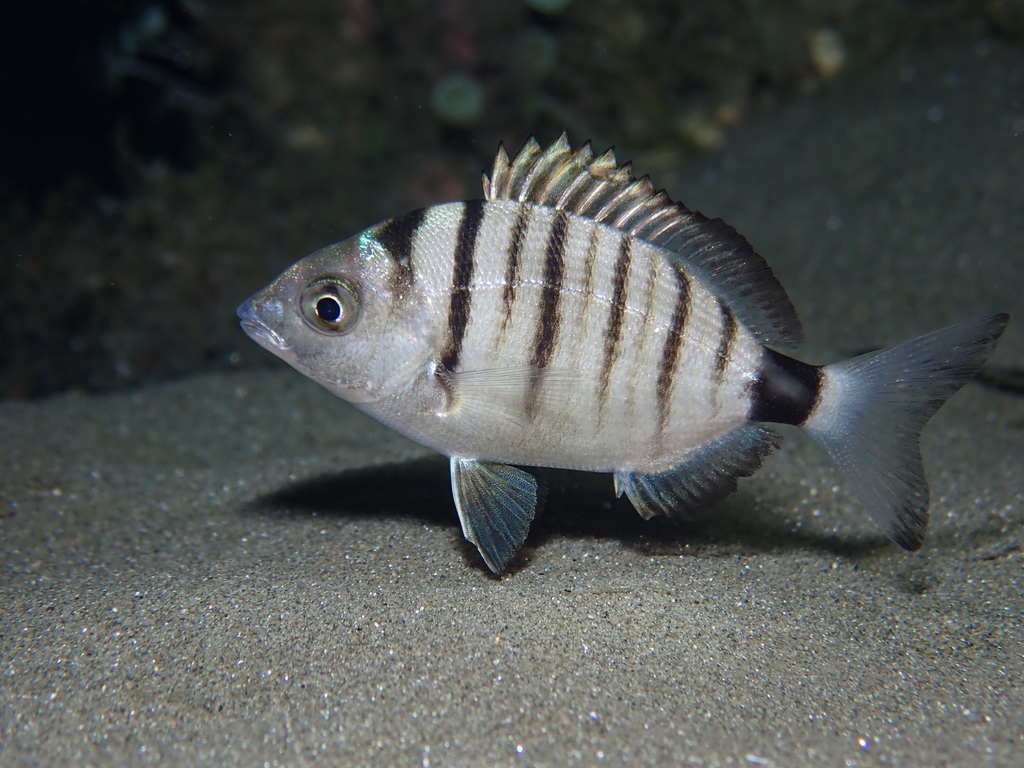
Sharpsnout seabream
Sharpsnout seabream is a sparid of the eastern Atlantic and Mediterranean, from the Bay of Biscay to Sierra Leone, the Canaries and Cape Verde, including the Black Sea. It lives from the surface to 150 m in subtropical water, reaches 60 cm TL and 1.7 kg, and feeds on algae and worms. It is present year-round.

Sharptooth jobfish
Between forty and a hundred and twenty metres nobody sees the reef. The sharptooth jobfish lives down there, in schools, over hard, rocky, uneven ground, feeding on bottom invertebrates and small fish. That sentence is the whole article. The species is not tied to a coastline, a season or a landmark you can photograph; it is tied to a texture.

Sheepshead
Sheepshead, a member of the family Sparidae, is found across the Western Atlantic, from Nova Scotia, Canada and northern Gulf of Mexico to Brazil. Its depth range is deeper than 15 m, in subtropical seas. It grows to 91 cm TL and 9.6 kg, with a diet of crustaceans and fishes. The standard approach is boat bottom fishing or shore fishing. The season runs January to April.
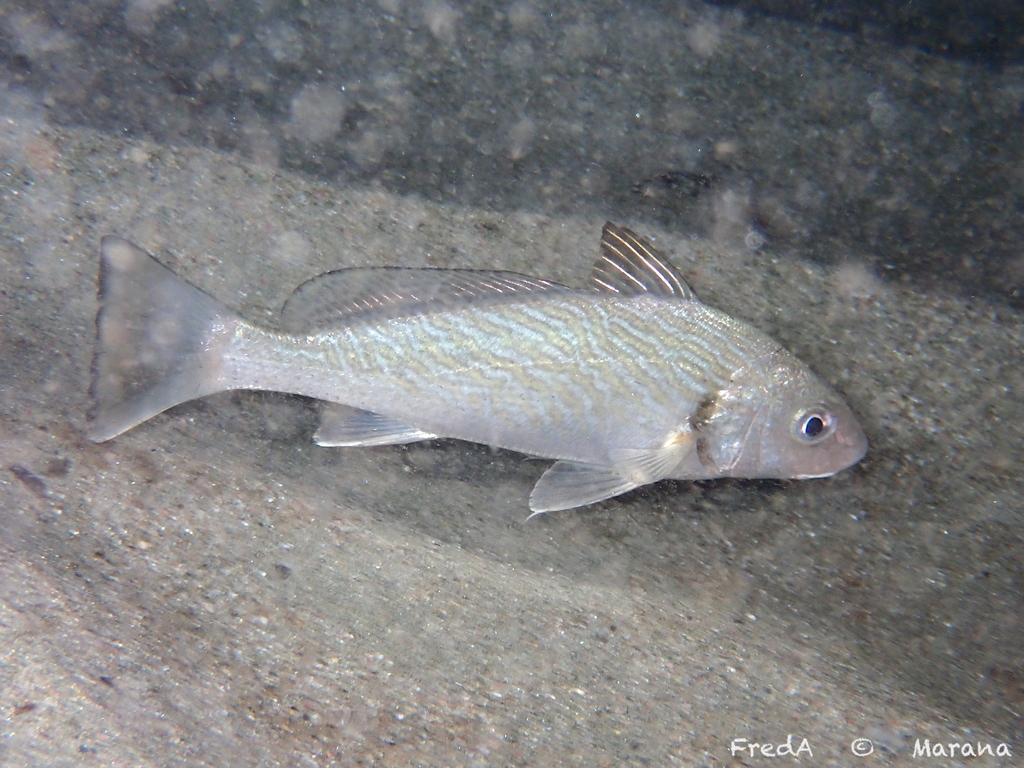
Shi drum
Shi drum is a large sciaenid of the eastern Atlantic and Mediterranean, from the Bay of Biscay and Gibraltar to southern Morocco, including the Black Sea and Sea of Azov. It lives from the surface to 100 m in subtropical water, reaches 104 cm TL and 11.1 kg, and can live 18 years. Boat bottom fishing is the usual approach, with the season running March to August.
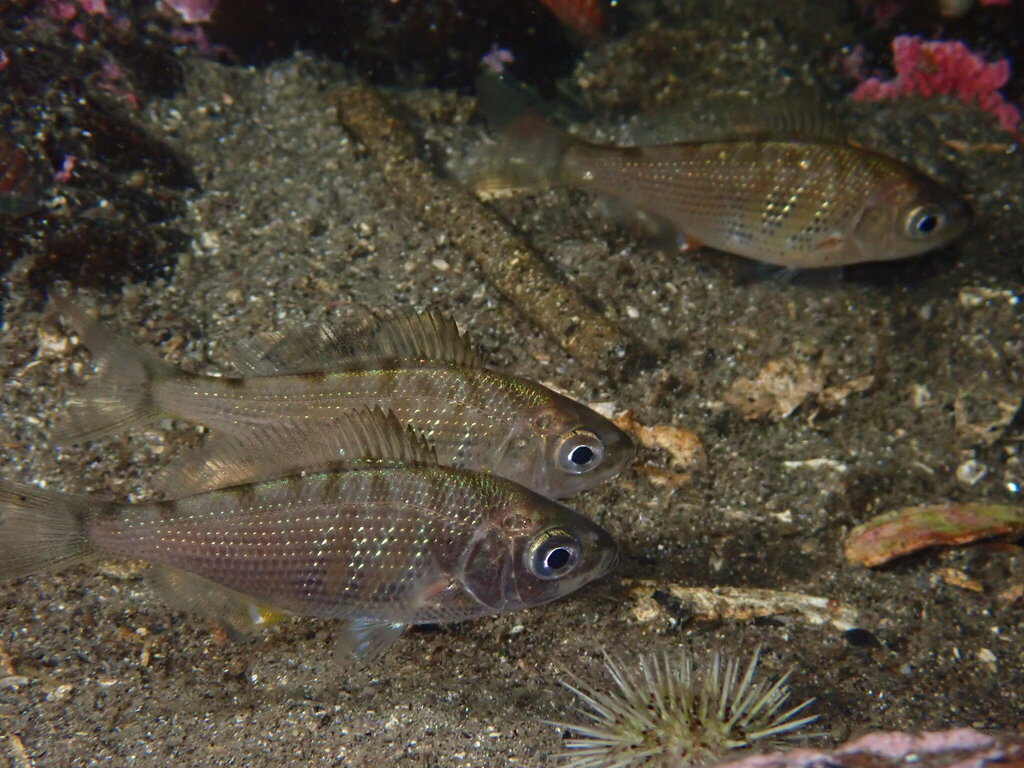
Shiner perch
The shiner perch carries the oddest rule in its family: 14 CCR § 28.59 gives it a separate 20-fish allowance that sits on top of the general bag. It is also the easiest small live bait in Southern California to collect in numbers, topping out around 20 cm and showing in loose schools along eelgrass and pilings. Most people who catch one were not fishing for it.
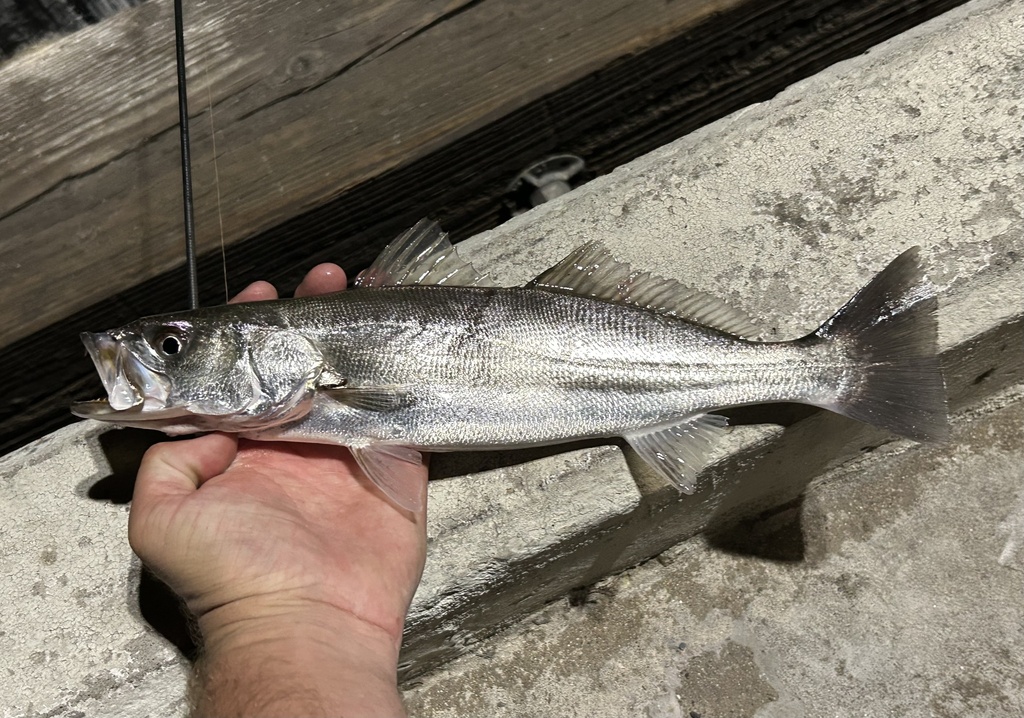
Shortfin corvina
The morphology field says only that the body is fusiform with a normal cross-section. Drums share that outline, and separating species inside the genus needs fin-ray and scale detail that the packet does not carry, so no photographic identification is claimed here. Length comes in two tiers, 40 cm common and 69 cm maximum, which makes a fish around 40 cm the likeliest encounter.

Shortfin mako
Shortfin mako is a large lamnid shark with a cosmopolitan range in temperate and tropical seas, recorded from the surface to 888 m. It reaches 445 cm TL with a common length of 270 cm, a published weight of 505.8 kg and a maximum age of 32 years. Size at maturity is about 278 cm. Trolling, boat fishing and jigging are the methods listed.
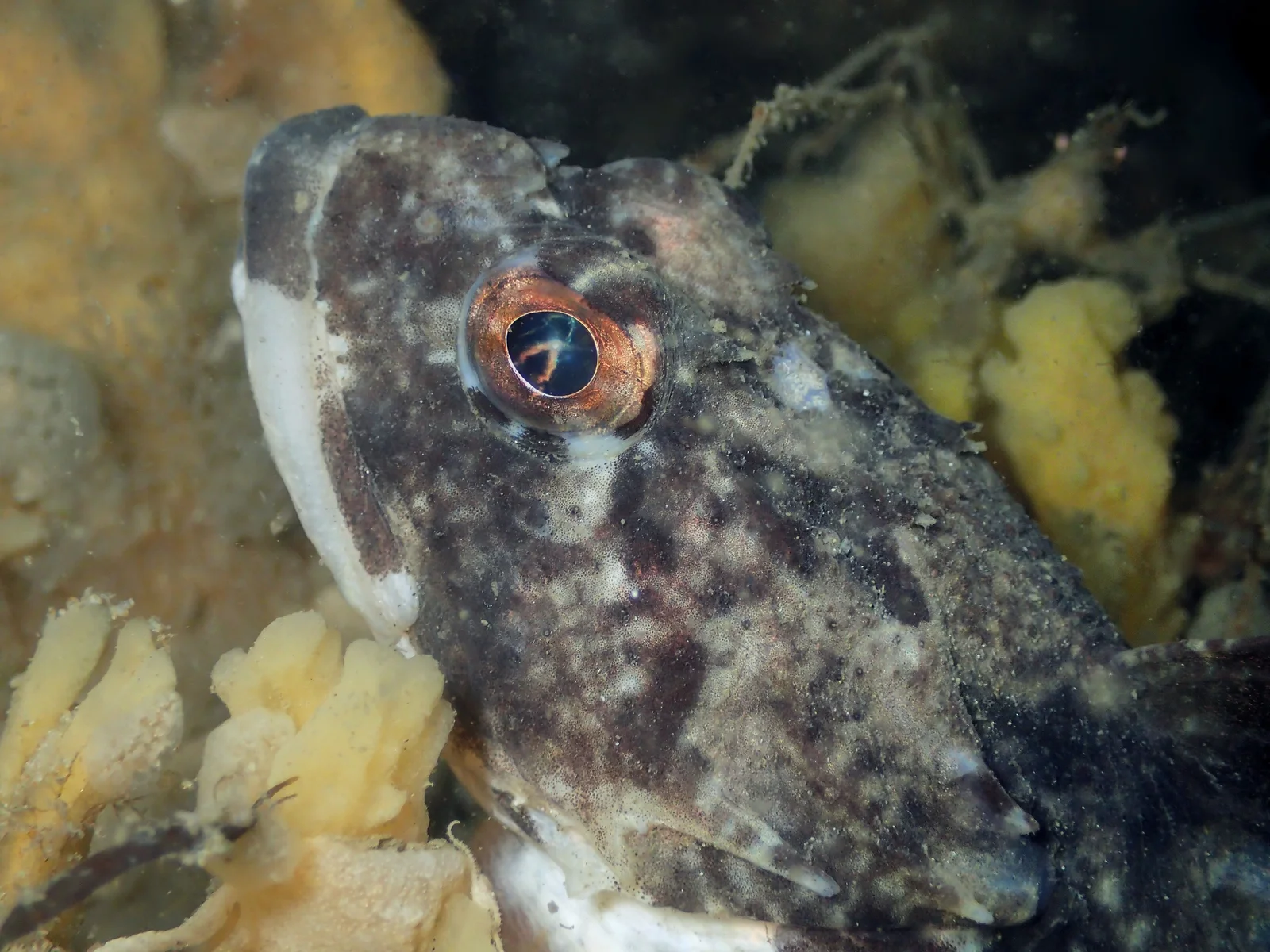
Shorthorn sculpin
Shorthorn sculpin is a cottid of the eastern and western North Atlantic and the Arctic, ranging from Greenland and Iceland to the Bay of Biscay and from James Bay to New York. It is demersal and unusually tolerant, occupying rocky, sandy and muddy ground from the surface to 451 m in polar and brackish water. The species reaches 78 cm and 18 years, with a common length near 24 cm.
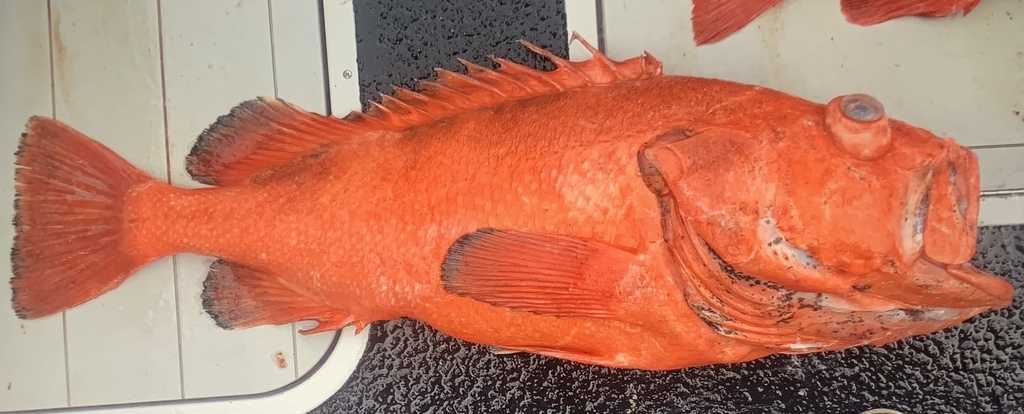
Shortraker rockfish
Dorsal fin with 13 spines and 13 soft rays, anal fin with 3 spines and 7 soft rays, and 27–31 vertebrae. Fewer than 2 spines sit on the lower orbital rim, and the pores on the lower jaw are very large, which separates it from close relatives. Colour is reddish pink to orange red, the mouth is red and may carry black blotches, and the caudal fin is moderately indented.
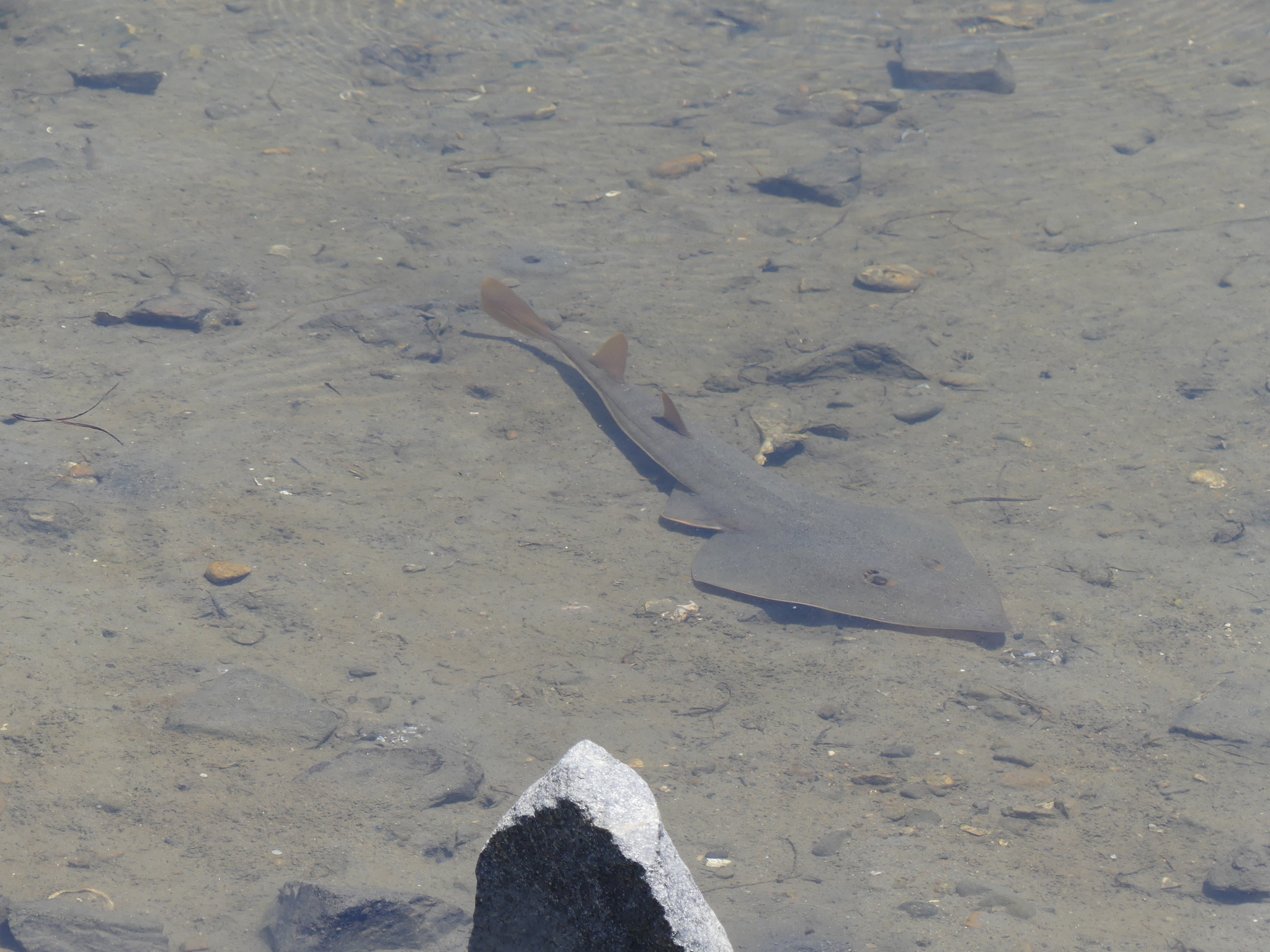
Shovelnose guitarfish
The disc is broad and longer than wide, with a dorsal surface that is smooth apart from a single row of thorns around the eyes that continues along the back and tail. The snout is long and pointed with a rounded tip, and the teeth are small, rounded and pebble-like.
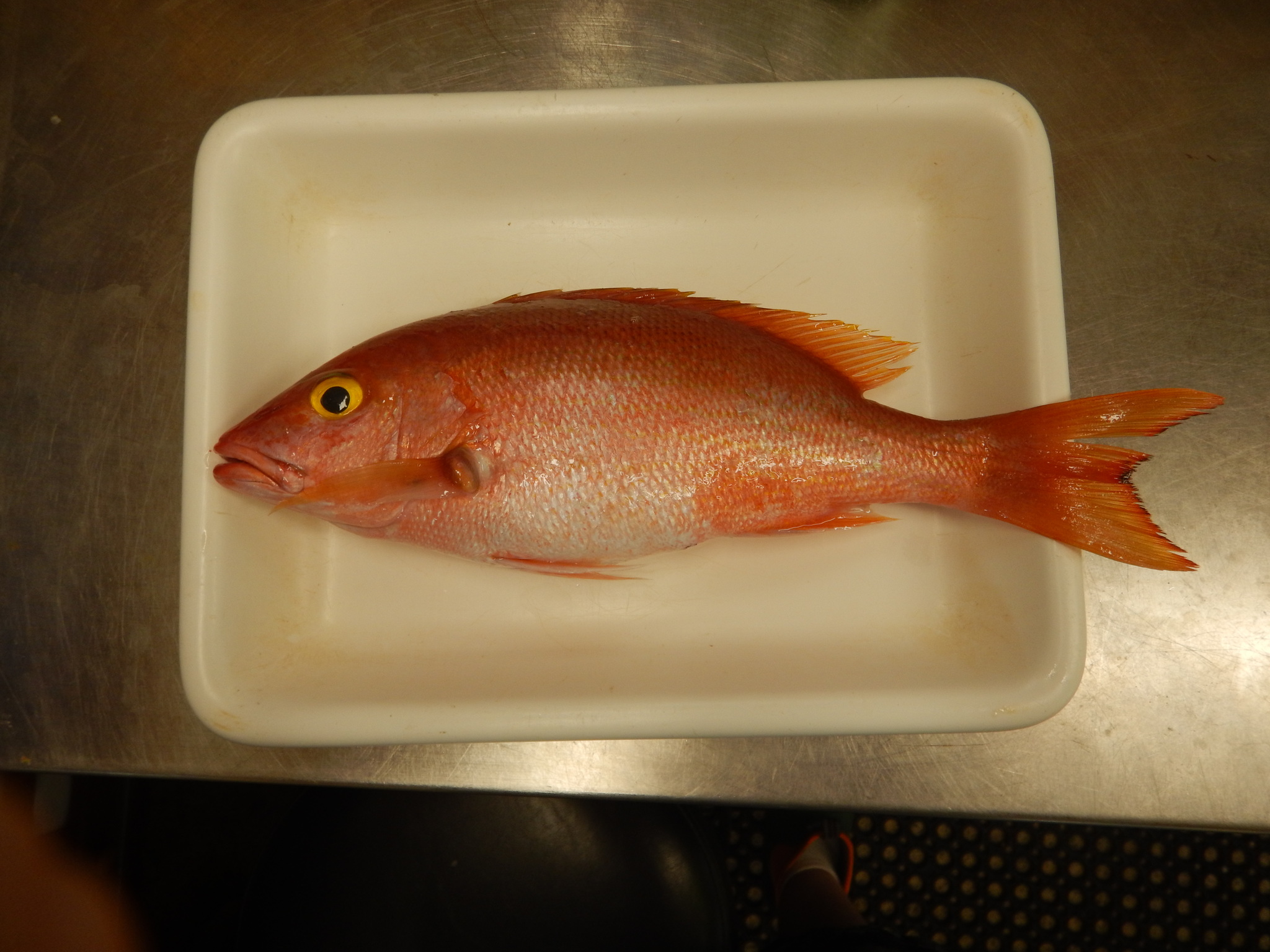
Silk snapper
Silk snapper is a deep-shelf lutjanid, recorded from North Carolina and Bermuda to southern Brazil and most abundant around the Antilles and Bahamas. It works 90 to 242 m, feeds on fish, crustaceans and cephalopods, and is red with a yellow eye and no pectoral blotch. It reaches 83 cm and 8.3 kg. Boat bottom fishing, drifting and electric reels are the methods listed.
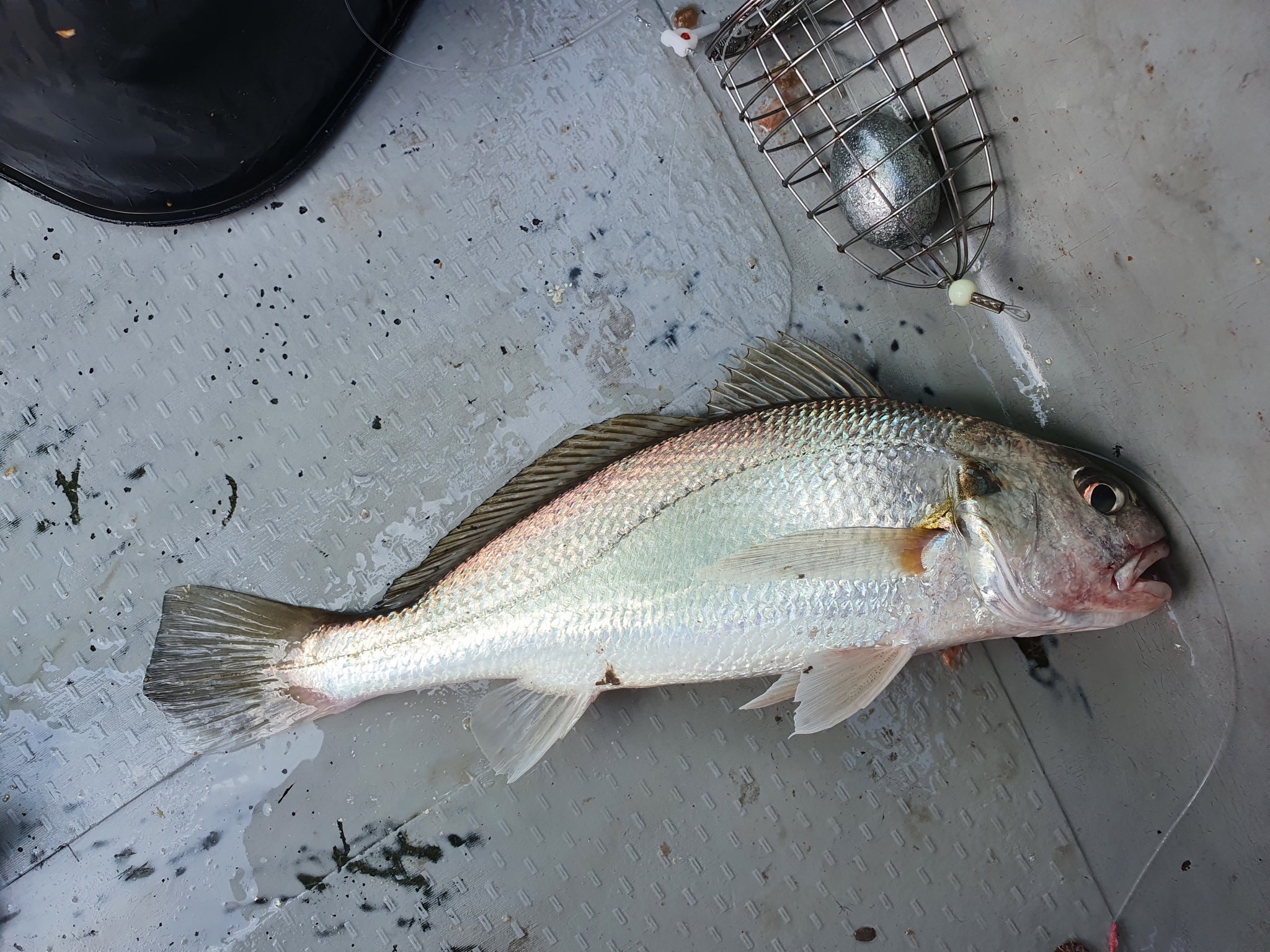
Silver croaker
Silver croaker is a bottom-dwelling sciaenid of the northwest Pacific, from Hong Kong and the northern Yellow Sea east to the Kii Peninsula in Japan. It works 20 to 140 m in temperate water and feeds on fish. Fish reach 40 cm SL, which is modest for the family. April to November is the season.
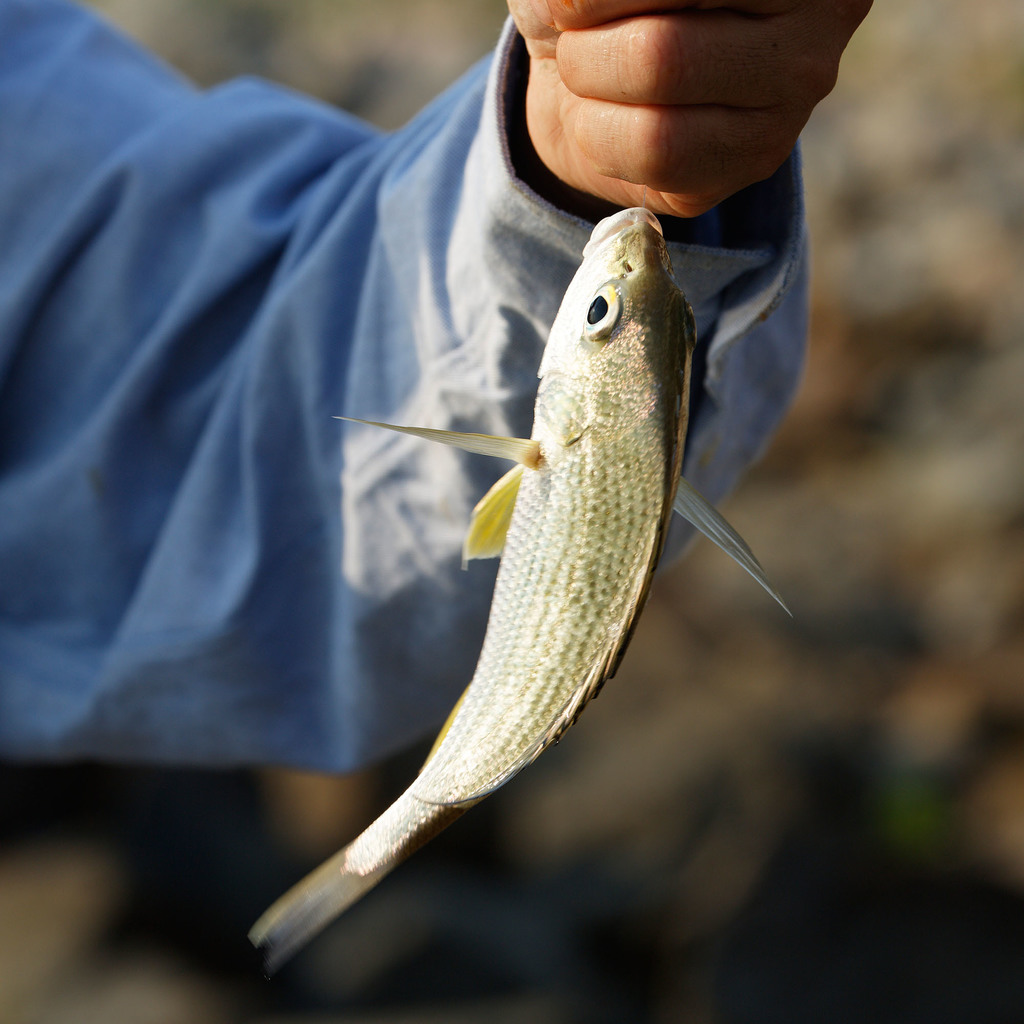
Silver grunt
Silver grunt is a haemulid with 12 dorsal spines and 13 to 14 soft rays, and three anal spines with seven soft rays. It is recorded from the United Arab Emirates and Oman, from 15 to 115 m in tropical water. It reaches 70 cm TL with a common length of 25 cm and a maximum age of 19 years. Boat bottom fishing and surf fishing are the methods listed.

Silver hake
Silver hake is a slim, large-mouthed merlucciid of the northwest Atlantic, from the Bell Isle Channel down to the Bahamas. It is a temperate fish recorded between 55 and 914 m, and it feeds on crustaceans and small fish. Adults reach 76 cm TL and 2.3 kg and live about 12 years. May to October is the season, with the silver body, dark back and long soft dorsal and anal fins marking it out.

Silver kob
FishBase records *Argyrosomus inodorus* at 145 cm TL maximum, 115 cm TL common, 36.3 kg published weight and first maturity at 34.4 cm. It is a Southeast Atlantic fish, running from Namibia around the Cape of Good Hope and north again to at least the Kei River, and the IUCN assessed it as Vulnerable on 9 November 2018.
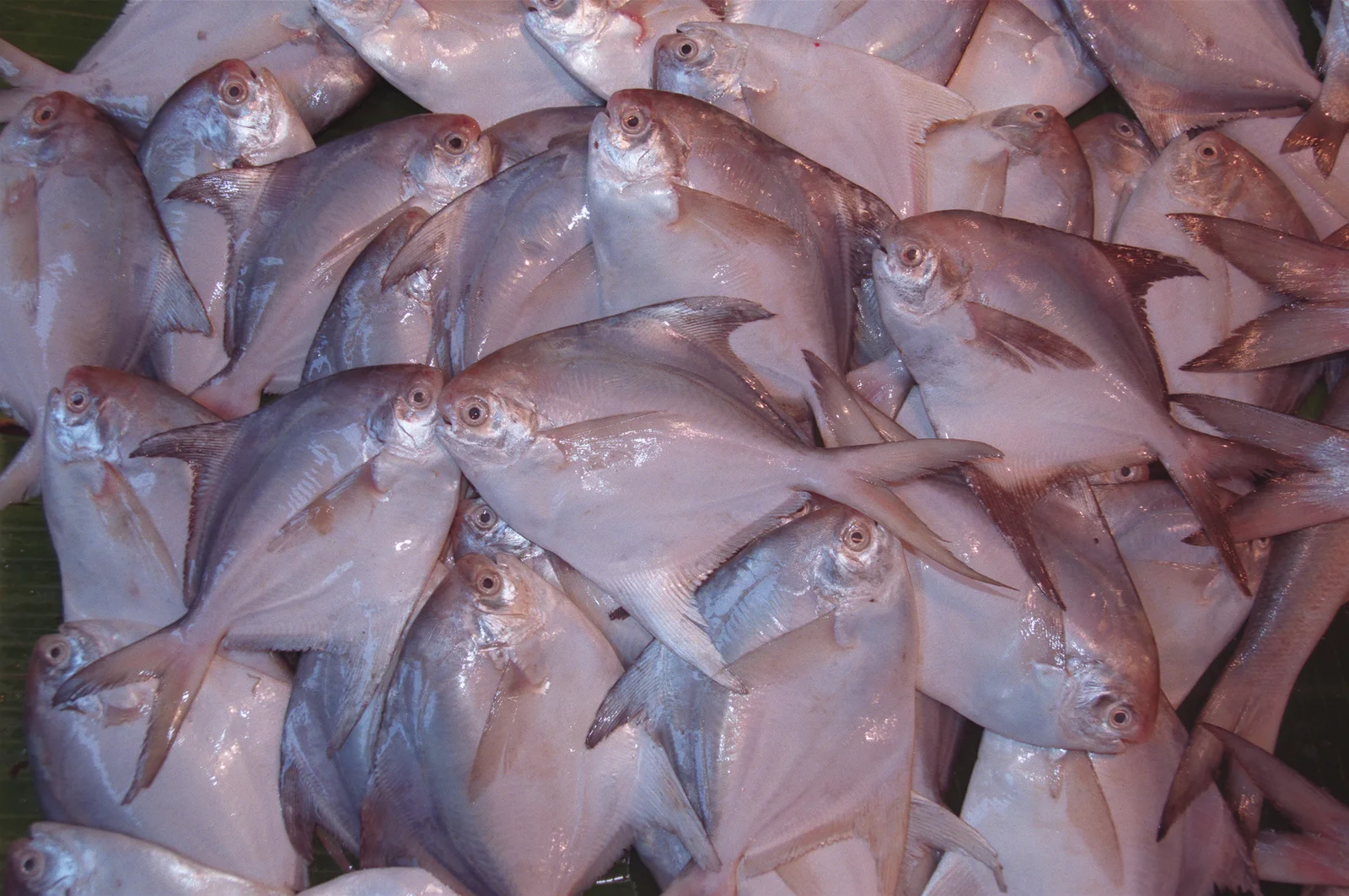
Silver pomfret
Silver pomfret is a stromateid of the Indo-West Pacific, from the Persian Gulf and Indonesia to Hokkaido. It lives from 5 to 110 m in subtropical water, reaches 60 cm, can live seven years, and feeds on fish and zooplankton. Boat bottom fishing or float fishing is the usual approach, and fish are present year-round.
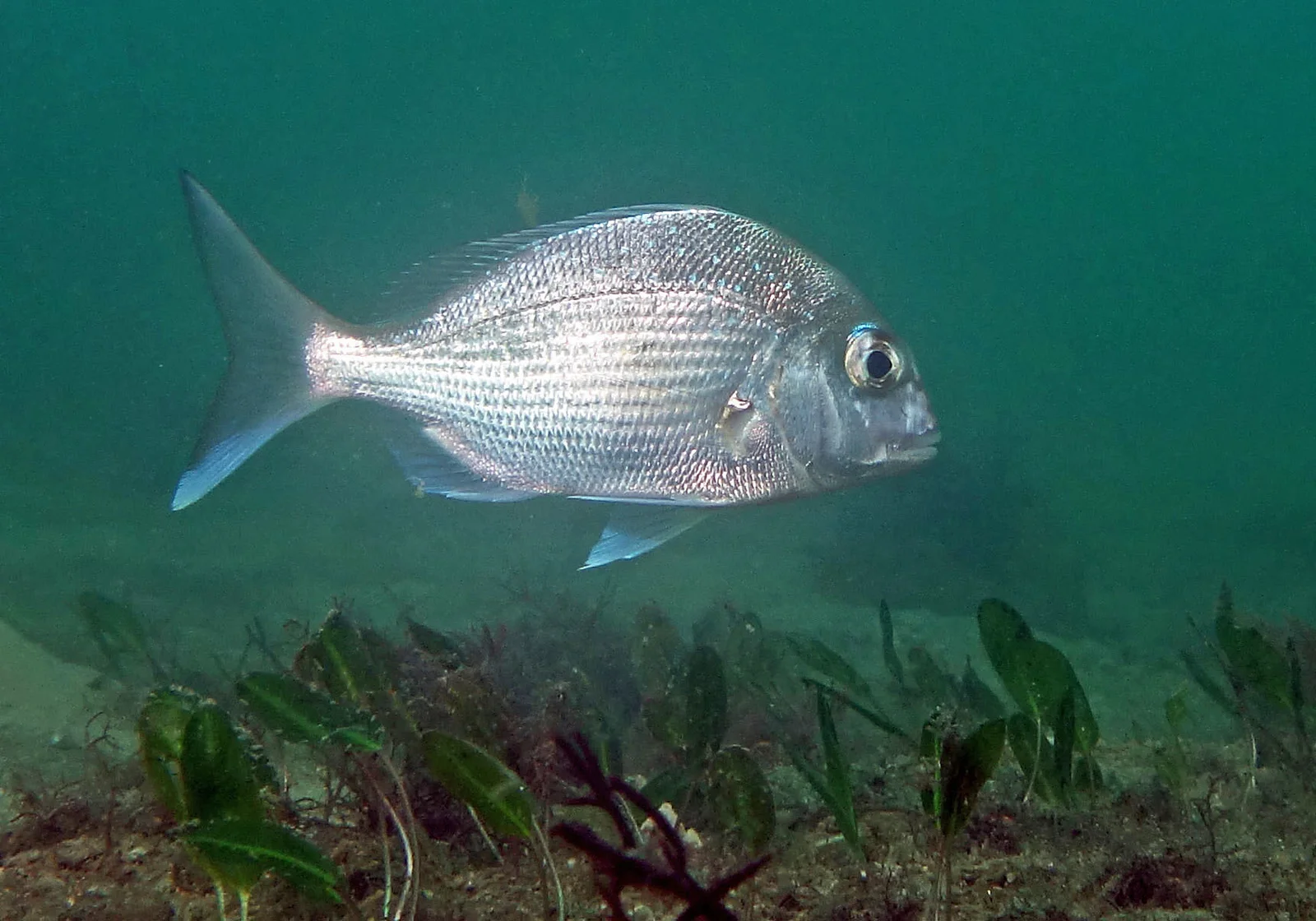
Silver seabream
Silver seabream is a large sparid of the Indo-Pacific, from New Zealand, Australia and the Philippines through Indonesia, China and Taiwan. It lives from the surface to 200 m in subtropical water, reaches 130 cm TL and 20 kg, can live 54 years, and feeds on crustaceans, fish, worms and echinoderms. Its season runs January to December.

Silver seatrout
Silver seatrout is a Sciaenidae croaker of shallow Gulf sand from 2 to 18 m, with a maximum of 36 cm and a common length near 25 cm. It feeds on crustaceans and small fish, spawns from May to December, and is caught on light jigs, shrimp and cut bait around passes and beach troughs.
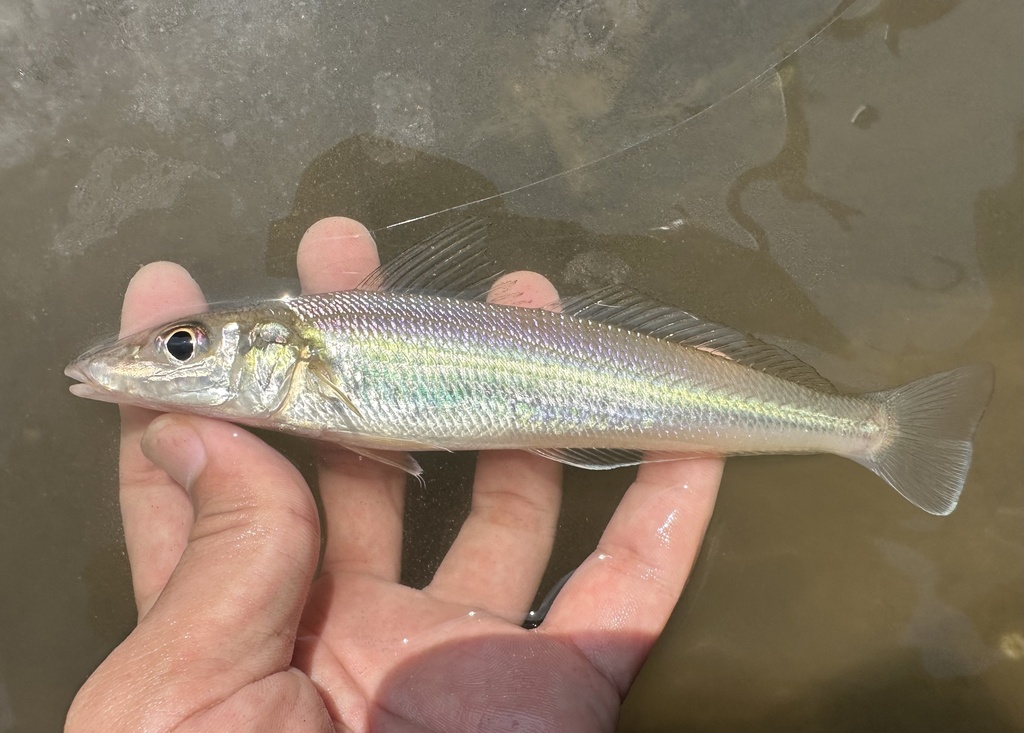
Silver sillago
FishBase gives this species two depth figures, and the distance between them is the article. The recorded range runs from 0 to 60 m; the usual depth runs from 0 to 2 m. One number describes what the fish can survive, the other describes where the records actually put it. For anyone fishing from a beach, only the second number comes with a casting range attached.
Silver trevally
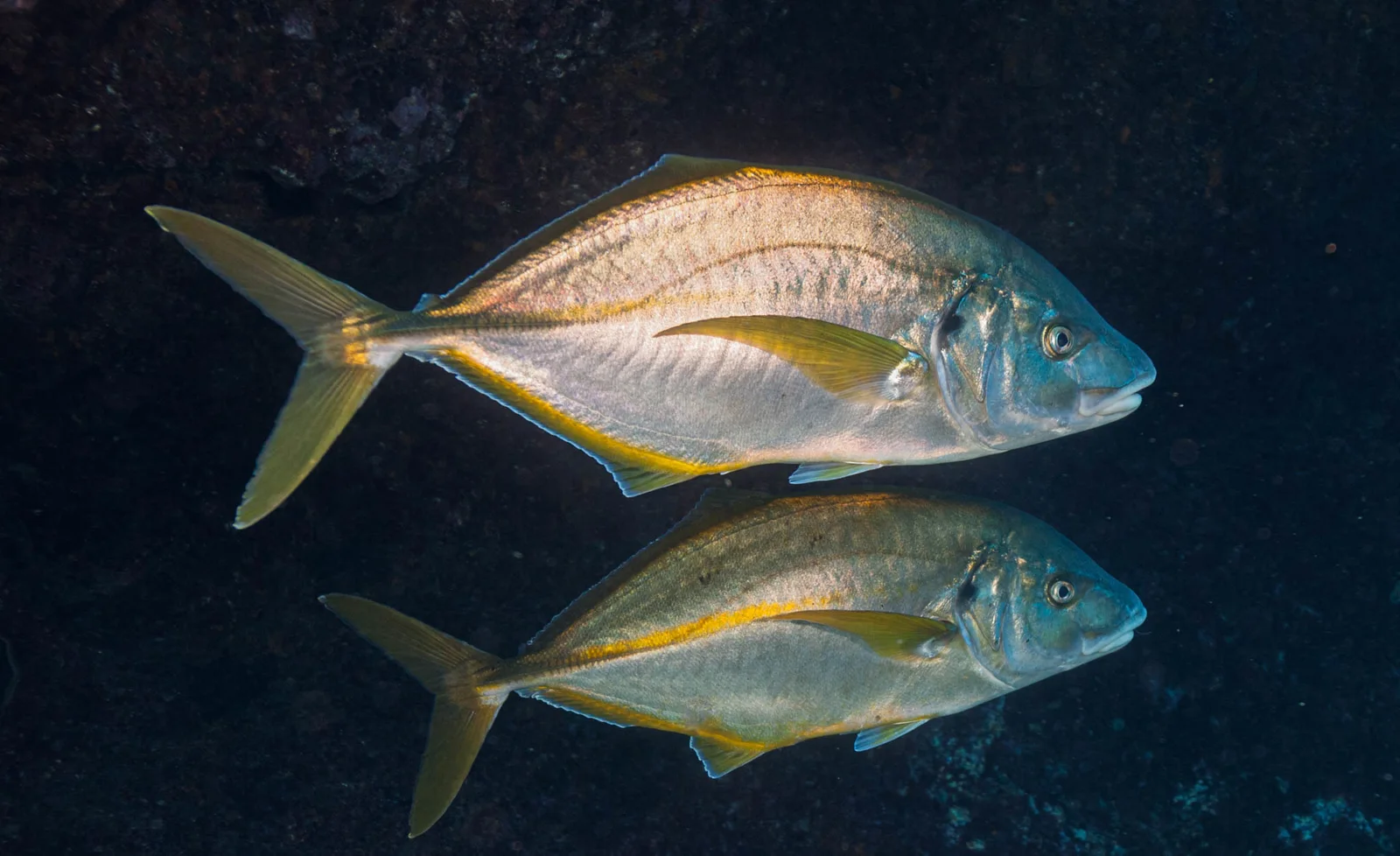
Silver trevally is a warm-water carangid of the western Atlantic, from North Carolina and Bermuda to southern Brazil. It lives from 10 to 238 m in tropical water, reaches 122 cm TL and 18.1 kg, can live 49 years, and feeds on fish and zooplankton. Jigging or trolling is the usual approach, with the season running January to December.
Silver warehou
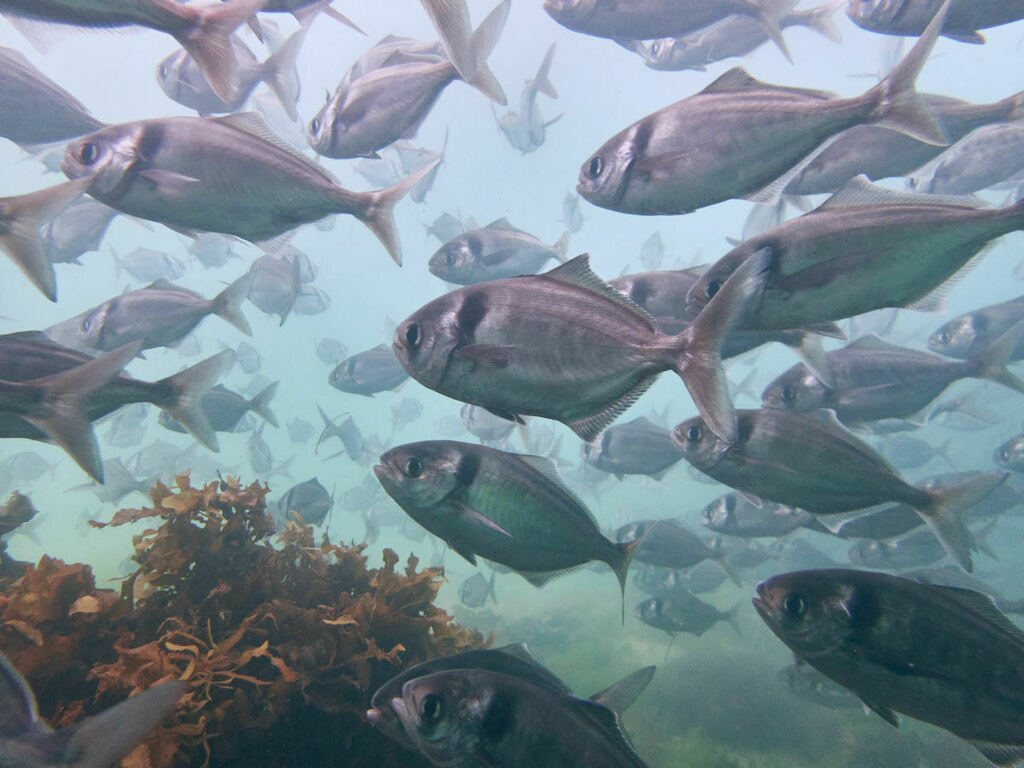
Across the Southwest Pacific, from confined to Australian and New Zealand seas, Silver warehou represents the family Centrolophidae. This is a temperate-water fish, recorded from 22 to 400 m. Fish reach 76 cm TL and 4 kg. Anglers target it by boat bottom fishing or trolling. The season runs June to November.
Silvergray rockfish
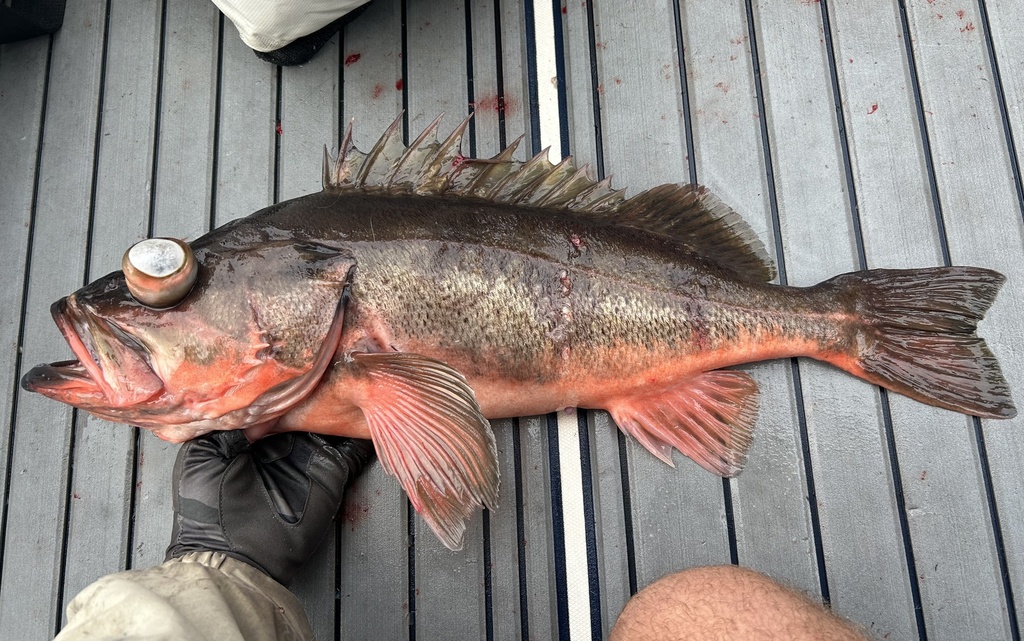
Dorsal fin with 13 spines and 15–17 soft rays, anal fin with 3 spines and 7–8 soft rays, and 33–36 vertebrae. Head spines are weak, with only the nasal, preocular and parietal spines obvious; the lower jaw is long and protrudes past the upper, and the maxillary reaches behind the eye. Colour is greenish to silver gray, white tinged with orange or pink below, and the lips are dusky.
Sixbar grouper
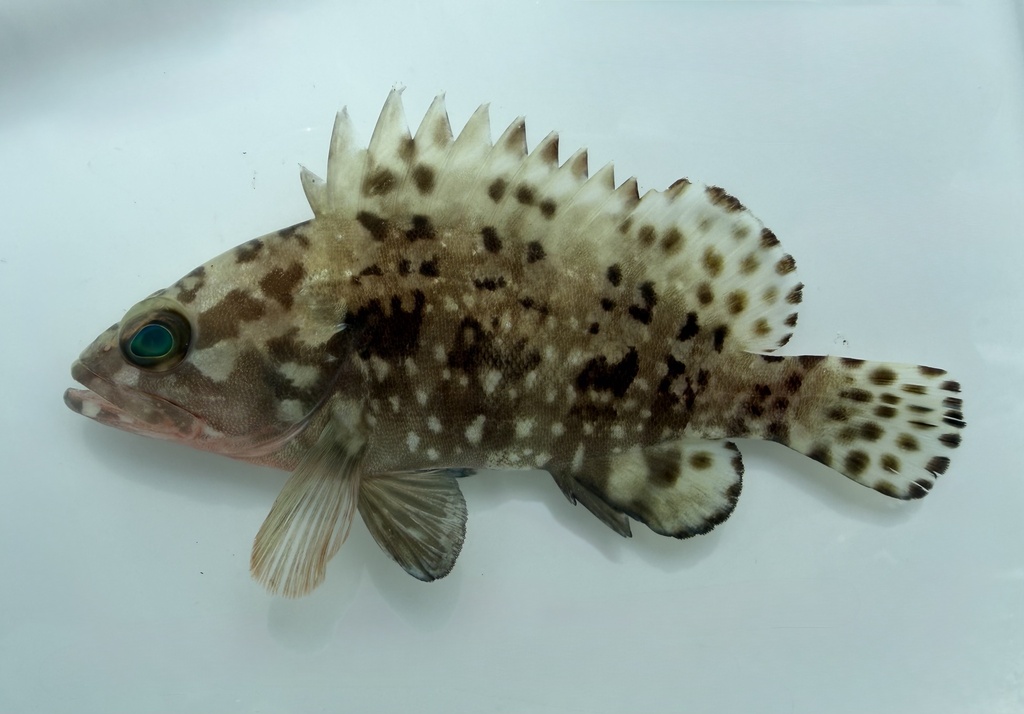
Sixbar grouper is a small grouper of the western-central Pacific, from Thailand and the Philippines to northern Australia. It lives from 10 to 80 m in tropical water, reaches 40 cm, and feeds on crustaceans and fish. Boat bottom fishing is the usual approach.

Skilfish
A large north Pacific deep-water fish, known in Japan as abura-bozu, roughly oil boss. It reaches 183 cm and 91 kg, lives on rocky ground in deep water, and carries so much fat that the flesh is white with it. Once dismissed as inedible, it is now understood as fatty rather than toxic, with a liver that should not be eaten.

Skipjack tuna
Skipjack tuna is a cosmopolitan scombrid of tropical and warm-temperate waters. It lives from the surface to 260 m, reaches 110 cm and 34.5 kg, and feeds on crustaceans, fish and molluscs. Trolling or jigging is the usual approach, and fish are present year-round in water of 15 to 30 °C.

Sky emperor
FishBase carries this Indian Ocean emperor as Endangered under criterion A2bd, assessed on 28 June 2018. The same page lists it as highly commercial and as a gamefish. Those two lines are the whole tension of the species: a fish whose past decline was large enough to meet the Endangered threshold, and a fish that still reaches markets and rod-and-line catches from the Red Sea to Sri Lanka.
No fish match this water on this page. Clear the filter or choose another habitat.